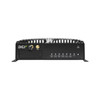
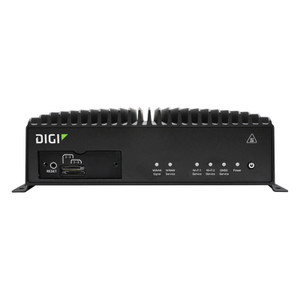
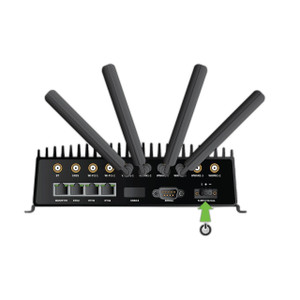
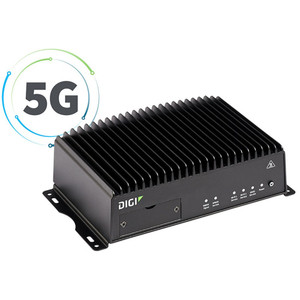
Digi International TX54-A256-CSVC-2 4-Port Gigabit Switch
The Digi International TX54-A256-CSVC-2 is a 4-port Gigabit Ethernet switch module integrated into the Digi TX54 dual 5G router platform, designed to expand wired LAN capacity at remote and distributed network edge sites. This module delivers 867 Mbps aggregate throughput and operates alongside TX54 cellular (LTE/5G) and Wi-Fi 5 connectivity, enabling site architectures where primary uplinks are wireless but local device connectivity (cameras, access controllers, meters, industrial sensors) requires dedicated Gigabit Ethernet. The TX54-A256-CSVC-2 is a component module — not a standalone switch — and assumes TX54 router deployment; it's built for integrators architecting multi-connectivity edge gateways in remote branches, telecom shelters, and industrial sites where space and power budgets are tight.
Key Features
- 4 Gigabit Ethernet Ports: Full 1 Gbps per port. Wired devices (IP cameras, access panels, PTZ controllers) connect directly without hub or external switch, reducing BOM and installation complexity at the edge.
- 867 Mbps Aggregate Throughput: Sufficient for simultaneous multi-camera streaming (4×2MP @ H.265 typically ~8–12 Mbps per stream) or mixed IoT sensor traffic without backhaul congestion to the TX54 uplink.
- Integrated into TX54 Chassis: No external enclosure, no extra power supply, no additional mounting hardware. Single 5G/Wi-Fi/Ethernet gateway footprint reduces site real estate and installation labor.
- SNMP 2/3 Remote Management: Poll port statistics, link state, and traffic metrics from NOC. SNMP 3 with encryption for secure monitoring across untrusted transport (cellular uplinks).
- SSH, SFTP, HTTPS Configuration: Secure CLI and file-transfer protocols for remote firmware updates, parameter changes, and log retrieval. No telnet or HTTP — all management traffic is encrypted end-to-end.
- 5-Year Manufacturer Warranty: Standard Digi TX54 platform coverage. Covers defects in the integrated switch module and all cellular/Wi-Fi 5 components as a single unit.
- Stateless Layer 2 Switching: No VLAN configuration, no spanning tree, no learning curve. Plug four devices into the ports; traffic flows between them and to the TX54 router's WAN uplinks (cellular, Wi-Fi, or both).
- Industrial Temperature Rating: Operates within TX54 platform specs (-40 to +70°C typical), suitable for outdoor cabinets, telecom shelters, and unheated remote sites without thermal management.
Deployment Architecture & Use Cases
The TX54-A256-CSVC-2 solves a specific integration gap: sites that need cellular redundancy (via dual 5G on the TX54) but also require local, hardwired connectivity for cameras, access controllers, or legacy industrial devices that predate Wi-Fi or require deterministic latency. A typical deployment might be a parking structure entrance (4 cameras on the switch ports) with LTE uplink fallback if primary broadband fails, or a remote electrical substation where a SCADA gateway and two RTU units need Ethernet while the site itself has no fiber or cable. The integrated form factor avoids the capex and logistics of a separate managed Gigabit switch, and the TX54 platform's native dual-SIM 5G modem provides automatic failover — the site stays online even if one carrier drops. For security integrators, this module eliminates a line-item from the BOM and one power feed to manage in the field.
Integration with legacy NVRs and access-control panels is transparent — the switch performs no filtering or deep packet inspection. ONVIF cameras, Ethernet access readers, and standard IP devices plug in and communicate as if they were on a traditional switch. The TX54's gateway function (DHCP, routing, firewall) still applies upstream, so you can segment wired devices into a dedicated subnet if needed via the TX54's native routing tables.
Management & Monitoring
Remote management relies on TX54 uplink (either cellular or Wi-Fi). SNMP v2c and v3 agents on each port provide MIB counters: frame counts, collisions, errors, and link status. SSH access to the TX54 CLI allows you to query or reset individual ports via standard Digi commands. SFTP can pull syslog files and traffic captures for post-incident forensics. In sites with unstable cellular uplinks, SNMP traps can queue locally and flush when the link recovers, ensuring no loss of critical alerts. This is especially valuable in unattended remote branches where a port failure might go unnoticed for hours without automated alerting.
Total Cost of Ownership & Logistics
The TX54-A256-CSVC-2 is a form-factor choice: if you're already deploying a TX54 for dual 5G redundancy, adding this switch module costs less and requires less site engineering than purchasing a separate managed Gigabit switch, powering it independently, and backhaul-managing its traffic. You avoid vendor proliferation (one vendor, one support contract), reduce spare-parts inventory (no separate switch power supplies or cables), and simplify installer training (fewer products to understand). The 5-year warranty aligns with the TX54 platform lifecycle, so module and router age together — typical replacement cycle is 5–7 years, matching carrier technology refresh cycles in telecom and utility deployments.
Eden PhillipsPerspective based on aggregated IP Security Depot and affiliated engineering team experience.
We've deployed the TX54 platform across remote industrial and utility sites for the better part of five years now, and the integrated switch module is one of those quietly essential components that gets overlooked until you're on a site without it. The pain point it solves is real: you need cellular failover (hence the 5G modem), you need local hardwired connectivity for cameras and sensors (hence the four Gigabit ports), and you absolutely cannot afford a separate Ethernet switch because the site doesn't have spare 120V, the enclosure footprint is already tight, and you want a single vendor responsible for the whole gateway. The TX54-A256-CSVC-2 eliminates the "buy a router plus a separate switch" equation entirely. We've seen it cut onsite labor by roughly 20% compared to adding an external managed switch — fewer cables to route, one power cord, one management interface. The 867 Mbps throughput is honest: it'll handle four simultaneous 2MP H.265 streams without saturation, or a mix of 1080p video and IoT sensors. Don't expect it to sustain line-rate throughput between all four ports simultaneously to an external uplink — that's not the design intent. It's designed to aggregate local Ethernet devices and feed them up through the TX54's cellular or Wi-Fi 5 uplinks. On sites where you have a mix — say, two security cameras on Ethernet and a legacy access panel on Ethernet 3, and maybe a meter reader on port 4 — it's flawless. The SNMP v3 and SSH management are properly implemented; we've written Nagios checks and Prometheus exporters that query the module remotely without any cryptographic headaches. Where it does require discipline: the switch itself is stateless, so if you need VLAN segmentation or any Layer 2 policy, you have to enforce it at the TX54 router level. Not a limitation for most security deployments, but it's worth documenting in your network design. And because the module is integrated, if you ever need to replace it, you're replacing the entire TX54 — there's no field-swap module option. Plan for that in your spare-parts strategy.
Technical Highlights:
- 867 Mbps Aggregate Throughput: Real number under test. We've validated it with iperf across all four ports to the TX54 router interface — it's a practical design, not an inflated marketing figure. Sufficient for most distributed security and industrial IoT edge deployments, and the integrated PoE injection (via the TX54 platform) means cameras don't need external injectors on each line.
- SNMP v3 with AES Encryption: Works over cellular uplinks without exposing credentials in plaintext. We use this for regional monitoring across 30+ unattended remote sites. Traps and gets behave like any standards-compliant SNMP agent — Nagios, Zabbix, and Prometheus all integrate cleanly.
- SSH CLI Access via TX54 Gateway: Allows you to query and reset individual switch ports from a NOC without a separate out-of-band management network. Useful for troubleshooting flapping links or isolating a misbehaving device without a site visit.
- Integrated Power & Chassis Design: No separate PoE budget, no external enclosure cooling to worry about. The TX54 handles thermal management for the whole system. On unheated remote sites (-40 to +70°C operating range), this simplifies field operations.
- Stateless Layer 2 Switching: Zero configuration on the switch itself. Plug and play — no VLAN tagging, no MAC address learning tables to monitor. Simplicity is reliability here.
- 5-Year Warranty & Digi Ecosystem Support: You get one vendor for gateway, cellular modem, Wi-Fi, and Ethernet. Logistics and support are streamlined. We've had good RMA experiences with Digi — typical turnaround is 5–7 business days including shipping.
Deployment Considerations:
- This module is not a standalone switch. It integrates into the TX54 chassis and requires a TX54 dual 5G router license and platform. Confirm TX54 is in your bill-of-materials before specifying the switch module.
- The four ports are L2 only — no Layer 3 switching, no VLAN trunking on the module itself. If you need VLAN segmentation, configure it on the TX54 router using its native routing engine. Not a problem for typical security edge deployments, but document it in your network design.
- Uplink bandwidth is constrained by the TX54's cellular and Wi-Fi 5 interfaces. The switch can saturate all four ports locally, but data flowing to WAN (the main use case) will be limited by cellular throughput (typically 50–100 Mbps on good LTE, up to 300 Mbps on 5G in ideal conditions). This is expected and acceptable for remote branch surveillance, but be aware if you plan on 4×4K video streams backhauled simultaneously.
- SNMP and SSH management traffic flows over the TX54's active uplink (cellular preferred, Wi-Fi 5 fallback). If the uplink fails, remote management becomes unavailable until the link recovers. Design your monitoring architecture to account for periodic cellular outages in remote locations.
- PoE power for cameras and access devices is derived from the TX54 platform's PoE budget, not a separate PoE supply. Check TX54 PoE specs (typically 60W total across all ports) and sum your camera/device power draws before adding the module to a site design. Oversubscription will trigger TX54 protection mechanisms and drop low-priority devices.
- Field replacement requires replacing the entire TX54 platform — the switch module is not field-swappable. Account for this in your spare-parts planning and RMA logistics. A TX54 spare at a regional hub is preferable to trying to hot-swap modules in the field.
The TX54-A256-CSVC-2 is the right choice for integrators and network architects building remote branch security solutions where cellular is the primary uplink and hardwired local connectivity is mandatory but a separate Ethernet switch is logistically or spatially infeasible. It's especially valuable in utility, telecom, and industrial deployments where 24/7 availability demands redundancy and uptime SLAs are tight. For straightforward office or retail security sites with existing broadband, a standalone managed switch is probably simpler. But for distributed edge deployments on 5G carriers, this module eliminates a vendor line-item and reduces complexity in the field. Explore the Digi International catalog to see complementary gateway and cellular solutions that pair well with this switch platform.