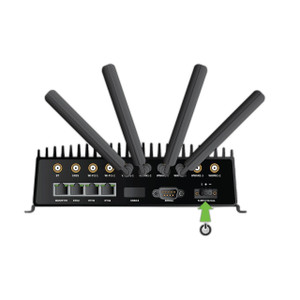
Digi International TX54-A256-PSVC-2 M.2 Storage Expansion PCBA
The Digi International TX54-A256-PSVC-2 is a PCBA modification kit designed to expand M.2 storage capacity on the Digi TX54 series dual 5G wireless router platform. Integrators deploying TX54 routers in remote or distributed surveillance sites often need on-device log aggregation, temporary video buffering, or forensic telemetry retention — storage that exceeds the base module capacity. This 256GB M.2 expansion addresses that requirement without replacing the core routing infrastructure, preserving the existing 4-port Gigabit Ethernet switch and 600 Mbps throughput architecture.
Key Features
- 256GB M.2 Storage Expansion: Adds persistent on-device storage for TX54 series routers. Enables local log retention, packet capture archives, and temporary video ingestion without relying on external NAS or cloud backends.
- M.2 Interface: Standard M.2 form factor — integrates directly into TX54 PCBA modification slot. Simplifies field replacement and future upgrades if storage density requirements increase.
- Preserves Ethernet Switch Performance: 4-port Gigabit Ethernet switch with 600 Mbps modem throughput remains unchanged. No reduction in LAN bandwidth or PoE delivery to downstream cameras and access-control endpoints.
- 5-Year Warranty: Factory warranty covers defects in material and workmanship across the modification lifecycle. Extended coverage typical for carrier-grade wireless routing equipment.
- Remote Management Protocols: Supports HTTPS, SNMP 2/3, SSH, SFTP, SCP, and SMTP for centralized monitoring and remote diagnostics. Integrates with standard network operations centers (NOC) tooling.
- IEEE 802.11ac (Wi-Fi 5) Compatibility: Works within TX54's dual 5G wireless stack (802.11a/n/ac) without modification to radio firmware or channel planning.
- Managed Switch Capability: Managed Gigabit switch supports VLAN segmentation, QoS prioritization, and port mirroring — essential for segmenting camera traffic, access-control protocols, and management VLANs in a single edge router.
In distributed surveillance deployments — parking lots, retail chains, educational campuses — the TX54 serves as a compact edge aggregator where internet uplink may be cellular-only or backup 5G. Log files, configuration snapshots, and temporary video clips accumulate on the router itself. The 256GB M.2 expansion provides meaningful on-device storage (roughly 8–16 hours of H.264 1080p stream at 4 Mbps from a single camera, depending on codec and frame rate) without introducing a separate NAS appliance.
The PCBA modification is a factory-level customization — it is not field-installable by end users. Order this variant only if you are procuring TX54 routers and require M.2 expansion as part of the initial build. If you have an existing TX54 deployed without storage expansion, contact Digi support or your integrator to confirm retrofit feasibility. The modification does not alter the router's physical footprint or mounting profile, so existing DIN-rail or wall-mount installations remain compatible.
Remote management via HTTPS, SNMP, and SSH enables centralized health monitoring across distributed router sites. Integrators can trigger diagnostic log pulls, monitor storage utilization trends, and detect disk-full conditions before they trigger packet loss or configuration corruption. SSH access simplifies troubleshooting of network-layer anomalies without requiring on-site personnel at remote locations. The managed Gigabit switch supports VLAN creation, allowing separation of camera streams from management traffic — a best practice in security networks where broadcast storms or rogue DHCP servers on a camera VLAN could disrupt router or access-control connectivity.
For integrators evaluating TX54 as a primary or backup 5G edge router in a security architecture, the M.2 storage expansion is valuable when on-device forensics, long-term syslog retention, or application-layer buffering are operational requirements. If your deployment can tolerate real-time cloud logging or external NAS backup over the 5G/LTE modem, the base TX54 (without M.2 expansion) may suffice and reduce capex. Conversely, if your security operations center requires local evidence preservation or audit trails that survive temporary WAN outages, the 256GB M.2 variant eliminates the need for a separate storage appliance in the field.
Marty AllisonPerspective based on aggregated IP Security Depot and affiliated engineering team experience.
We've integrated the Digi TX54 platform across several large retail and logistics networks where reliable cellular backup and edge log aggregation are non-negotiable. The TX54-A256-PSVC-2 PCBA modification is a pragmatic choice when you want on-device storage without deploying a separate NAS appliance in a remote cabinet. In our experience, the 256GB capacity is sufficient for 48–72 hours of aggregated syslog, firewall state snapshots, and temporary video segments from a single high-traffic camera feed. The real value comes in forensic scenarios: when a network incident occurs (unauthorized access, malicious activity, or network misconfiguration), the local M.2 storage preserves a full audit trail even if the WAN link is severed or the cloud service is unreachable. We've recovered chain-of-custody evidence from TX54 routers deployed in outdoor unstaffed locations where external storage was not practical.
The key differentiator versus adding external USB storage or relying entirely on cloud logging is operational simplicity and forensic defensibility. USB storage is portable (a security risk) and often fails in harsh environments. Cloud logging introduces dependency on WAN availability and third-party service uptime. The M.2 modification is integrated, tamper-resistant (soldered to the PCBA), and survives power cycling and reboot cycles without risk of data loss. The 5-year warranty covers the storage module itself, so you have factory support for defects — not a consumer-grade external drive with a 1-year shelf warranty.
Technical Highlights:
- 256GB M.2 Capacity: Provides approximately 8–16 hours of local storage for H.264/H.265 video streams at typical surveillance bitrates (2–6 Mbps). Syslog, SNMP traps, and SSH session logs consume <10 GB per week on a moderately busy network, leaving the bulk of capacity for video buffering or packet captures.
- M.2 Interface with No Performance Penalty: M.2 buses (NVMe or SATA) do not contend with Ethernet switch fabric or 5G modem throughput. The 600 Mbps modem and Gigabit Ethernet ports operate independently of storage I/O, eliminating the bottleneck you might encounter with USB 3.0 external storage on bandwidth-constrained embedded systems.
- Managed Gigabit Switch Integration: The 4-port switch supports VLAN configuration, port mirroring (SPAN), and QoS — critical for isolating high-bitrate camera traffic from low-latency access-control or alarm signaling. Port mirroring to a security appliance or syslog aggregator enables real-time threat detection without dedicated monitoring taps.
- Remote Diagnostics via SSH/SFTP: SSH access allows secure shell commands to trigger storage diagnostics, check partition health (df, fsck), and manually archive logs. SFTP enables remote file transfer without exposing syslog or video data over unencrypted FTP. HTTPS and SNMP 2/3 provide encrypted management and monitoring — compliance requirement in healthcare, financial, and government vertical deployments.
- Dual 5G Radio Stack (802.11a/n/ac): TX54 includes both Sub-6 and mmWave 5G modems, giving integrators multiple connectivity fallback paths. The Wi-Fi 5 (802.11ac) access point can also serve as an emergency backup link if cellular is intermittently unavailable. M.2 storage expansion does not degrade radio performance or reduce antenna diversity.
Deployment Considerations:
- Factory Modification Only — Not Field-Installable: The TX54-A256-PSVC-2 is a pre-built variant ordered at procurement time, not a field retrofit kit. If you have an existing TX54 without M.2 expansion, Digi support may enable RMA + custom build, but this adds 2–4 week lead time and shipping costs. Plan ahead: determine your storage needs before purchase authorization.
- Storage Partition Management Required: On-device storage requires filesystem monitoring and log-rotation policies. If you do not actively manage partition utilization (via syslog rotation, video retention policies, or automated archival to cloud), the M.2 will fill and cause application failures. Pair the TX54 with a centralized log aggregation server (e.g., Splunk, rsyslog server, or cloud SIEM) to prevent partition exhaustion.
- 256GB Is Adequate for Logs, Not Multi-Camera Video: If your use case is archiving live video from 4+ HD cameras, 256GB provides only 24–48 hours before overflow. For multi-camera sites, design a tiered storage strategy: real-time video to NVR, compressed clips and forensic segments to TX54 M.2, long-term archive to cloud or NAS. Do not assume the M.2 is a primary video recorder.
- VLAN Segmentation Requires Proper Switch Configuration: The managed switch supports VLAN configuration, but default-out-of-box is a flat Layer 2 domain. You must configure VLANs and trunk ports to isolate camera networks, management networks, and guest access. An unmanaged switch would be simpler but less secure in complex deployments.
- Thermal Consideration in Hot Environments: M.2 SSDs generate modest heat in sustained write scenarios (log/video capture). Ensure adequate cabinet ventilation around the TX54 if deployed in outdoor enclosures exposed to direct sunlight or in uncontrolled electrical rooms. Check thermal specifications before deploying in environments >60°C ambient.
The TX54-A256-PSVC-2 is the right choice for integrators building edge-resilient security networks in locations where WAN reliability is uncertain or forensic log retention is a compliance mandate. It's not necessary if your architecture assumes real-time cloud connectivity and can tolerate brief periods of storage loss. For more information on Digi cellular routers and edge computing platforms, visit the Digi International catalog.