
Zebra ZT61042-T0101A0Z vs Sato WWFX31241-WDB: Specification Comparison
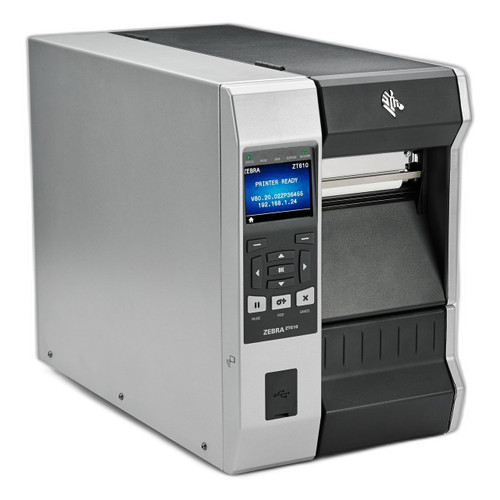
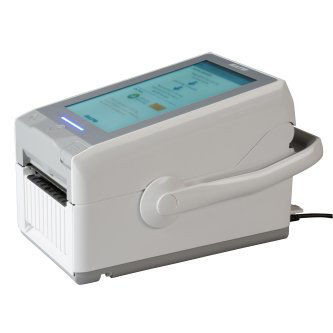
Both the Zebra ZT61042-T0101A0Z and the Sato WWFX31241-WDB (FX3) are 203 DPI direct thermal label printers, placing them in the same resolution tier. However, they diverge sharply in form factor, print width, power design, and intended deployment environment. The Zebra is a full-size 4-inch desktop unit with RFID encoding capability, while the Sato FX3 is a compact specialty printer with a maximum print width of 1.10 inches, a 7-inch touchscreen, and dual AC/battery power. This comparison evaluates where each fits in a labeling infrastructure.
In This Guide
Which printer handles your label width and encoding requirements?
The Zebra ZT61042-T0101A0Z supports a 4-inch print width at 203 DPI and is explicitly spec'd for both direct thermal and thermal transfer print modes, giving it flexibility across transient and durable label stock. It also includes integrated RFID encoding supporting ISO 18000-6C (UHF) and ISO 15693 (HF) read/write — a capability the Sato FX3 does not list in its specifications.
The Sato WWFX31241-WDB (FX3) is a narrow-format printer with a maximum print width of 1.10 inches and a media width range of 1" to 3.15". Print speed is specified at 6 ips; the Zebra specification does not list a print speed figure. The Sato supports only direct thermal; its spec sheet lists a max ribbon length of 984 ft but thermal transfer mode is not confirmed in the provided specifications. For high-volume wide-label or RFID applications, the Zebra is the only option of the two with documented support.
Which printer is designed for mobile or harsh-environment deployment?
The Sato FX3 is purpose-built for flexible deployment: it accepts either an AC adapter or a 14.4V 1950 mAh Li-ion battery, enabling cordless operation. It carries an IPx2 splash-proof rating and an IK06 vandal-resistance rating, and its operating temperature range is documented at 41°F to 104°F. The anti-microbial casing and slip-resistant surface are spec-listed features, making it suitable for clinical or food-service environments.
The Zebra ZT61042-T0101A0Z is a desktop unit. No battery option, IP rating, vandal rating, or operating temperature range is provided in its specifications. At 50 lbs / 22.7 kg, it is a stationary installation. Buyers requiring mobile labeling, splash resistance, or antimicrobial surfaces will find no documented support for those requirements in the Zebra's provided spec set.
Which printer integrates more broadly into your network and workflow?
The Zebra ZT61042-T0101A0Z provides USB, Serial (RS-232), and Ethernet connectivity. The RS-232 serial port is relevant for legacy PLC or industrial control system integration. RFID read/write via the integrated encoder adds an asset-tracking integration pathway not available on the Sato.
The Sato WWFX31241-WDB adds Wi-Fi and Bluetooth to USB and Ethernet, making it the broader wireless connectivity option of the two. It also includes a 7-inch full-color touchscreen display, 512 MB flash, 256 MB SDRAM, and 256 MB user storage, supporting standalone PC-less operation. HTTPS encryption is listed as a supported feature. The Zebra specification does not document a display, onboard memory figures, or wireless interfaces.
Which should you choose: the ZT61042-T0101A0Z or the WWFX31241-WDB?
Our take: The ZT61042-T0101A0Z is the stronger choice when wide-format label printing, RFID encoding, or thermal transfer durability is required. Its 4-inch print width dwarfs the FX3's 1.10-inch maximum, it is the only unit of the two with documented RFID support (ISO 18000-6C UHF / ISO 15693 HF), and it supports thermal transfer in addition to direct thermal — a key advantage for labels requiring long-term outdoor or chemical resistance. Conversely, the Sato FX3 leads on mobility (14.4V Li-ion battery, 5.0 lb weight vs. 50 lbs), environmental resilience (IPx2, IK06), wireless reach (Wi-Fi, Bluetooth), and operator self-service via its 7-inch touchscreen. Choose the Zebra for fixed-station, wide-label, or RFID-tagging workflows; choose the Sato FX3 for narrow-tag clinical, retail, or field labeling where mobility, splash resistance, and touchscreen-driven operation matter.
Side-by-Side Comparison
Spec-for-spec, from manufacturer data.
| Specification | Zebra ZT61042-T0101A0Z | Sato WWFX31241-WDB |
|---|---|---|
| Print Width | 4 inches | 1.10 inches (max) |
| Media Width Range | — | 1" to 3.15" |
| Resolution | 203 DPI | 203 DPI |
| Print Mode | Direct Thermal & Thermal Transfer | Direct Thermal |
| Print Speed | — | 6 ips |
| RFID Support | ISO 18000-6C (UHF) / ISO 15693 (HF) | — |
| Connectivity | USB, RS-232 Serial, Ethernet | USB, Ethernet, Wi-Fi, Bluetooth |
| Display | — | 7" full-color touchscreen |
| Power Options | AC (desktop) | AC adapter or 14.4V Li-ion battery |
| Battery Capacity | — | 1950 mAh |
| Weight | 50 lbs / 22.7 kg | 5.0 lbs |
| IP Rating | — | IPx2 |
| Vandal Rating | — | IK06 |
| Special Features | Integrated tear-off mechanism | Anti-microbial, slip-resistant, tool-free replacement |
| Onboard Memory (Flash) | — | 512 MB |
| Warranty | 1-year | 1-year |
Frequently Asked Questions
Which should you choose: the ZT61042-T0101A0Z or the WWFX31241-WDB?
The ZT61042-T0101A0Z is the stronger choice when wide-format label printing, RFID encoding, or thermal transfer durability is required. Its 4-inch print width dwarfs the FX3's 1.10-inch maximum, it is the only unit of the two with documented RFID support (ISO 18000-6C UHF / ISO 15693 HF), and it supports thermal transfer in addition to direct thermal — a key advantage for labels requiring long-term outdoor or chemical resistance. Conversely, the Sato FX3 leads on mobility (14.4V Li-ion battery, 5.0 lb weight vs. 50 lbs), environmental resilience (IPx2, IK06), wireless reach (Wi-Fi, Bluetooth), and operator self-service via its 7-inch touchscreen. Choose the Zebra for fixed-station, wide-label, or RFID-tagging workflows; choose the Sato FX3 for narrow-tag clinical, retail, or field labeling where mobility, splash resistance, and touchscreen-driven operation matter.
Does either printer support RFID label encoding?
Yes — the Zebra ZT61042-T0101A0Z includes an integrated RFID encoder supporting ISO 18000-6C (UHF) and ISO 15693 (HF) read/write. The Sato WWFX31241-WDB does not list RFID capability in its specifications.
Can the Sato FX3 run without being plugged into the wall?
Yes. The Sato WWFX31241-WDB is spec'd to run on either an AC adapter or a 14.4V 1950 mAh Li-ion battery. The Zebra ZT61042-T0101A0Z is a desktop unit; no battery option is listed in its provided specifications.
Which printer is better suited for a clinical or food-handling environment?
The Sato WWFX31241-WDB is the documented choice: its specifications include an anti-microbial casing, slip-resistant surface, IPx2 splash-proof rating, and IK06 vandal resistance. None of those environmental or hygiene ratings appear in the Zebra ZT61042-T0101A0Z's provided specifications.
More Label Printer Comparisons
- Sato WWCLP1701-WAR vs Zebra ZD421
- Sato WWCLP1701-WAR vs Sato WWCLP1C01-WAR
- Sato WWCLP1701-WAR vs Sato WWFX31241-WDB
- Sato WWCLP1C01-WAR vs Zebra ZD421
- Sato WWCLP1C01-WAR vs Sato WWFX31241-WDB
- Zebra ZD421 vs Sato WWFX31241-WDB
Label Printer Buying Guides
Get a Second Opinion on Your Camera Choice
Share your site layout, coverage goals, and budget. Our team will validate the camera selection, flag anything we would change, and recommend products that match the use case.