
Sato WWCLP1C01-WAR vs Zebra ZD421: Specification Comparison
Both the Sato CL4NX Plus (WWCLP1C01-WAR) and the Zebra ZD421 (ZD4A042-D01E00EZ) are 203 dpi thermal label printers supporting direct thermal and thermal transfer print methods, with matching 4.09-inch maximum print widths and identical resolution. A buyer choosing between them is navigating the gap between an industrial-class RFID-capable workhorse and a compact desktop-class printer—both solving the same core label output problem but at meaningfully different scales of throughput, footprint, and feature depth.
In This Guide
- Which printer delivers faster throughput and built-in RFID encoding capability?
- How do footprint, memory, and media handling compare for the deployment environment?
- What connectivity, printer language support, and operating environment does each model offer?
- Which should you choose: the WWCLP1C01-WAR or the ZD421?
- Side-by-Side Specs
- FAQ
Which printer delivers faster throughput and built-in RFID encoding capability?
Print speed is one of the sharpest divides between these two models. The Sato CL4NX Plus is rated at 14 ips, while the Zebra ZD421 is rated at 6 ips at 203 dpi—a 133% speed advantage for the Sato in sustained label runs. For high-volume environments printing thousands of labels per shift, this gap translates directly into throughput capacity.
On RFID, the Sato CL4NX Plus integrates UHF encoding at 860–960 MHz per the EPC C1G2 (Gen 2) standard, making it a single-device solution for simultaneous print-and-encode workflows in supply chain, retail, and warehouse applications. The Zebra ZD421 spec sheet as provided lists no RFID capability; buyers requiring UHF RFID encoding from a ZD421 would need to source a separate encoder or a different Zebra SKU. This is a decisive functional differentiator for any RFID deployment.
How do footprint, memory, and media handling compare for the deployment environment?
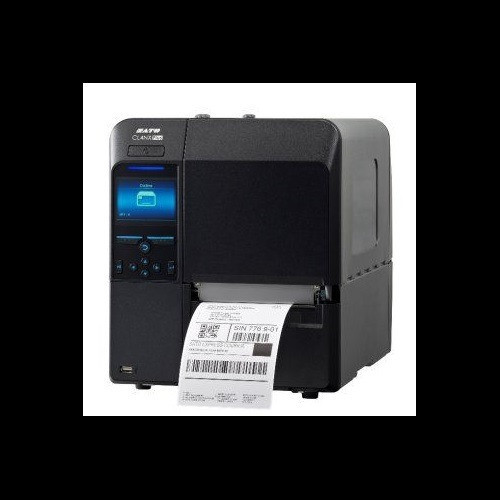
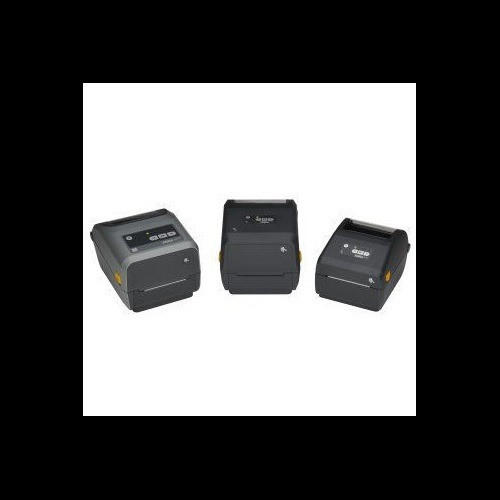
The Sato CL4NX Plus is a significantly larger and heavier unit: 10.66" × 17.99" × 12.63" and 33 lbs (15 kg). The Zebra ZD421 in direct thermal configuration measures 8.69" × 6.98" × 5.93" and weighs just 2.98 lbs (1.35 kg)—roughly 11× lighter. The ZD421 is clearly designed for desktop or counter-mount placement; the CL4NX Plus is an industrial floor or shelf unit requiring dedicated space and handling.
On memory, the Sato provides 2 GB Flash and 256 MB SDRAM with 100 MB user storage. The Zebra offers 512 MB Flash and 256 MB SDRAM, with 64 MB non-volatile and 8 MB SDRAM user-available. The Sato carries a 4× Flash advantage and more user storage headroom, relevant for storing large font libraries, graphics, or format templates on-device.
Media handling also diverges. The Sato supports roll diameters up to 10" and media widths from 0.87" to 5.04". The ZD421 supports roll diameters up to 5.00" and media widths from 0.585" to 4.25". Larger roll capacity on the Sato means fewer roll changes in high-volume runs. The ZD421's narrower minimum width (0.585" vs 0.87") gives it a slight edge for very narrow label formats.
What connectivity, printer language support, and operating environment does each model offer?
Both units share Ethernet, Wi-Fi, and USB connectivity. The Sato CL4NX Plus spec also lists Bluetooth and NFC (per the tilde-prefixed sourced fields). The Zebra ZD421 specifies USB 2.0, USB Host, Ethernet, 802.11ac Wi-Fi, and Bluetooth 4.1—with Bluetooth version explicitly documented. USB Host on the Zebra allows direct connection of peripherals such as scanners or keyboards, a feature not explicitly listed for the Sato in the provided spec set.
Printer language support is explicitly enumerated only for the Zebra: ZPL II, EPL 2, XML, ZBI, and PDF Direct. The Sato's supported printer languages are not specified in the provided specs. For IT/integration teams deploying into existing Zebra ZPL-based label ecosystems, the ZD421's native ZPL II compatibility is a direct operational advantage requiring no middleware.
Operating temperature ranges are effectively equivalent: Sato 41°F–104°F (5°C–40°C); Zebra 40°F–105°F (4.4°C–41°C). The Zebra spec additionally documents storage temperature (−40°F to 140°F) and operating humidity (10%–90% non-condensing), environmental data not present in the Sato's provided spec set. Both units run on universal AC 100–240V, 50/60 Hz power. The Sato carries a 1-year warranty; the Zebra ZD421 carries a two-year standard warranty.
Which should you choose: the WWCLP1C01-WAR or the ZD421?
Our take: The WWCLP1C01-WAR is the stronger choice when the deployment requires integrated UHF RFID print-and-encode, high sustained throughput, or large on-device media rolls. Its 14 ips print speed is 133% faster than the ZD421's 6 ips, its 10" maximum roll diameter doubles the ZD421's 5" capacity, and its 2 GB Flash exceeds the ZD421's 512 MB by 4×—all pointing to an industrial-volume use case. The Zebra ZD421, by contrast, is the stronger fit for desktop label printing in ZPL-based environments: it weighs under 3 lbs versus 33 lbs for the Sato, natively supports ZPL II and EPL 2 without middleware, and carries a two-year warranty versus one year for the Sato. Buyers integrating into an existing Zebra/ZPL label infrastructure or needing a compact counter-top unit will find the ZD421 a lower-friction deployment. Buyers running RFID-tagged supply chain, warehouse, or retail workflows at volume should specify the CL4NX Plus.
Side-by-Side Comparison
Spec-for-spec, from manufacturer data.
| Specification | Sato WWCLP1C01-WAR | Zebra ZD421 |
|---|---|---|
| Resolution | 203 dpi | 203 dpi / 8 dots per mm |
| Print Method | Direct Thermal / Thermal Transfer | Direct Thermal / Thermal Transfer |
| Print Speed | 14 ips | 6 ips (at 203 dpi) |
| Max Print Width | 4.09 in. | 4.09 in. / 104 mm |
| Max Media Width | 5.04 in. | 4.25 in. / 108 mm |
| Min Media Width | 0.87 in. | 0.585 in. / 15 mm |
| Max Media Roll Diameter | 10 in. | 5.00 in. / 127 mm |
| RFID | UHF 860–960 MHz, EPC C1G2 | — |
| Flash Memory | 2 GB | 512 MB |
| SDRAM | 256 MB | 256 MB |
| User Storage | 100 MB | 64 MB non-volatile / 8 MB SDRAM |
| Display | 3.5" Full-Color LCD | — |
| Connectivity | Ethernet, Wi-Fi, USB, Bluetooth, NFC | USB 2.0, USB Host, Ethernet, 802.11ac Wi-Fi, Bluetooth 4.1 |
| Printer Languages | — | ZPL II, EPL 2, XML, ZBI, PDF Direct |
| Weight | 33 lbs / 15 kg | 2.98 lbs / 1.35 kg (direct thermal config) |
| Warranty | 1 year | 2 years (standard) |
Frequently Asked Questions
Which should you choose: the WWCLP1C01-WAR or the ZD421?
The WWCLP1C01-WAR is the stronger choice when the deployment requires integrated UHF RFID print-and-encode, high sustained throughput, or large on-device media rolls. Its 14 ips print speed is 133% faster than the ZD421's 6 ips, its 10" maximum roll diameter doubles the ZD421's 5" capacity, and its 2 GB Flash exceeds the ZD421's 512 MB by 4×—all pointing to an industrial-volume use case. The Zebra ZD421, by contrast, is the stronger fit for desktop label printing in ZPL-based environments: it weighs under 3 lbs versus 33 lbs for the Sato, natively supports ZPL II and EPL 2 without middleware, and carries a two-year warranty versus one year for the Sato. Buyers integrating into an existing Zebra/ZPL label infrastructure or needing a compact counter-top unit will find the ZD421 a lower-friction deployment. Buyers running RFID-tagged supply chain, warehouse, or retail workflows at volume should specify the CL4NX Plus.
Does the Zebra ZD421 support RFID encoding like the Sato CL4NX Plus?
No. Based on the provided specifications, the Zebra ZD421 (ZD4A042-D01E00EZ) has no listed RFID capability. The Sato CL4NX Plus integrates UHF RFID encoding at 860–960 MHz per EPC C1G2 (Gen 2). If RFID print-and-encode is required, the CL4NX Plus is the only option of these two.
Is the Sato CL4NX Plus or Zebra ZD421 better for a high-volume label operation?
The Sato CL4NX Plus is specified at 14 ips versus the ZD421's 6 ips at 203 dpi, and supports media rolls up to 10" diameter versus 5" for the ZD421. Both factors favor the CL4NX Plus for sustained high-volume runs with fewer roll changes. The ZD421 is positioned as a desktop unit and is better suited to lower-volume or intermittent label output.
Will the Zebra ZD421 integrate into an existing ZPL-based label system without re-coding?
Yes, per the provided specs. The ZD421 natively supports ZPL II, EPL 2, XML, ZBI, and PDF Direct. If your existing infrastructure sends ZPL II label commands, the ZD421 should accept them directly. The Sato CL4NX Plus's supported printer languages are not specified in the provided spec data, so compatibility with ZPL-based systems cannot be confirmed from specs alone—consult Sato's documentation or technical support.
More Label Printer Comparisons
- Sato WWCLP1701-WAR vs Zebra ZD421
- Sato WWCLP1701-WAR vs Sato WWCLP1C01-WAR
- Sato WWCLP1701-WAR vs Sato WWFX31241-WDB
- Sato WWCLP1C01-WAR vs Sato WWFX31241-WDB
- Zebra ZD421 vs Sato WWFX31241-WDB
- Zebra ZD421 vs Zebra ZD421
Label Printer Buying Guides
Get a Second Opinion on Your Camera Choice
Share your site layout, coverage goals, and budget. Our team will validate the camera selection, flag anything we would change, and recommend products that match the use case.