
Sato WWCLP1C01-WAR vs Sato WWFX31241-WDB: Specification Comparison
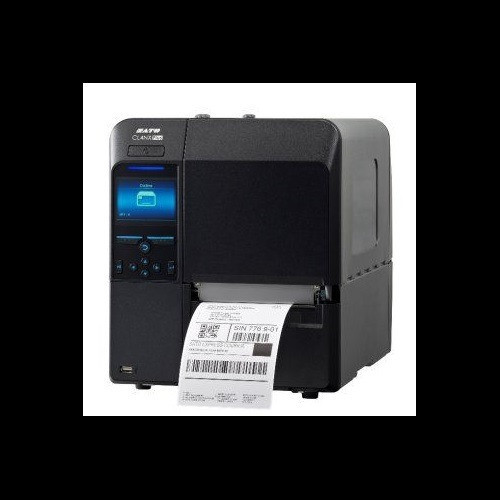
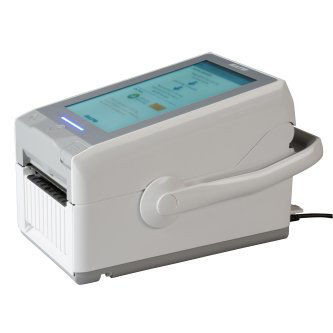
Both the Sato CL4NX Plus (WWCLP1C01-WAR) and the Sato FX3 (WWFX31241-WDB) are 203 DPI thermal label printers from the same manufacturer, making them plausible cross-shop candidates for buyers evaluating label printing solutions. However, they target meaningfully different deployment profiles: the CL4NX Plus is a large-format, industrial desktop/fixed-mount unit with UHF RFID encoding capability, while the FX3 is a compact specialty printer with battery power and ruggedization ratings suited to mobile or clinical environments. This comparison examines where each printer's specifications align and where they diverge across throughput, media handling, and deployment environment.
In This Guide
- Which printer delivers higher throughput and how does print speed affect production volume?
- How do power options, durability ratings, and operating environment specs compare between these two printers?
- Which printer offers broader connectivity and specialized encoding features such as RFID?
- Which should you choose: the WWCLP1C01-WAR or the WWFX31241-WDB?
- Side-by-Side Specs
- FAQ
Which printer delivers higher throughput and how does print speed affect production volume?
The CL4NX Plus (WWCLP1C01-WAR) prints at 14 ips with a maximum print width of 4.09 inches, supporting media widths from 0.87 to 5.04 inches and a maximum media roll diameter of 10 inches. These figures position it as a high-volume, wide-format industrial printer capable of handling large label stock continuously.
The FX3 (WWFX31241-WDB) operates at 6 ips—less than half the CL4NX Plus's speed—with a maximum print width of 1.10 inches and media widths from 1 to 3.15 inches. Its maximum media roll diameter is 5.3 inches. The FX3 is specified for narrow-label, lower-volume output, consistent with point-of-care, retail shelf, or mobile tagging scenarios rather than production-line throughput.
For buyers prioritizing output volume and wider label formats, the CL4NX Plus holds a clear numerical advantage. The FX3's narrower media range and lower speed reflect its specialty, not a deficiency in its intended use class.
How do power options, durability ratings, and operating environment specs compare between these two printers?
The CL4NX Plus requires AC power (100–240V, 50/60Hz) and is specified for stationary installation. It weighs 33 lbs (15 kg), reinforcing its fixed-location deployment profile. No IP or IK ratings are listed in the provided specifications for this model.
The FX3 supports both AC adapter and a 14.4V, 1950 mAh Li-ion battery, enabling cordless mobile operation. It carries an IPx2 splash-proof rating and an IK06 vandal-resistance rating, and it is noted as having an anti-microbial casing and slip-resistant surface. It weighs 5.0 lbs. These specifications directly support healthcare, food service, or field environments where mobility, hygiene, and incidental moisture exposure are operational requirements.
No IP or IK rating is stated for the CL4NX Plus in the provided specifications. Buyers requiring environmental certifications should treat the FX3 as the only model with documented ratings in this comparison.
Which printer offers broader connectivity and specialized encoding features such as RFID?
The CL4NX Plus includes Ethernet, Wi-Fi, and USB per the structured specifications. The tilde-prefixed (supplemental) data also lists Bluetooth and NFC, though these do not appear in the underscore-prefixed spec block. It integrates UHF RFID encoding at 860–960 MHz conforming to EPC Class 1 Gen 2, which is a significant capability for supply chain, warehouse, and asset-tracking applications requiring RFID label encoding at print time. Memory is 2 GB Flash plus 256 MB SDRAM, with 100 MB user storage.
The FX3 includes Ethernet, Wi-Fi, Bluetooth, and USB per both spec tiers, with HTTPS encryption noted. No RFID capability is listed for the FX3 in the provided specifications. Memory is 512 MB Flash plus 256 MB SDRAM, with 256 MB user storage—more user storage than the CL4NX Plus despite the smaller footprint.
The CL4NX Plus is the only model in this comparison with a documented RFID encoding function. Buyers whose workflow requires simultaneous label printing and RFID tag encoding have no equivalent capability listed for the FX3.
Which should you choose: the WWCLP1C01-WAR or the WWFX31241-WDB?
Our take: The WWCLP1C01-WAR is the stronger choice when the deployment demands high-volume, wide-format label production with integrated UHF RFID encoding in a fixed industrial setting. It prints at 14 ips versus the FX3's 6 ips, handles media up to 5.04 inches wide compared to the FX3's 3.15 inches, and supports media rolls up to 10 inches in diameter versus 5.3 inches—all translating to longer uninterrupted runs and broader label stock compatibility. Its integrated EPC C1G2 RFID encoding (860–960 MHz) has no equivalent in the FX3's listed specifications. Conversely, the WWFX31241-WDB is the appropriate choice for mobile, healthcare, or field environments: it runs on a Li-ion battery, carries IPx2 and IK06 ratings, weighs only 5.0 lbs, and includes an anti-microbial housing. Neither spec set lists a price. Both carry a 1-year warranty.
Side-by-Side Comparison
Spec-for-spec, from manufacturer data.
| Specification | Sato WWCLP1C01-WAR | Sato WWFX31241-WDB |
|---|---|---|
| Print Resolution | 203 DPI | 203 DPI |
| Print Method | Direct Thermal / Thermal Transfer | Direct Thermal |
| Print Speed | 14 ips | 6 ips |
| Max Print Width | 4.09" | 1.10" |
| Media Width Range | 0.87" to 5.04" | 1" to 3.15" |
| Max Media Roll Diameter | 10" | 5.3" |
| RFID | UHF 860–960 MHz, EPC C1G2 | — |
| Display | 3.5" Full-Color LCD | 7" Full-Color Touchscreen |
| Connectivity | Ethernet, Wi-Fi, USB | Ethernet, Wi-Fi, Bluetooth, USB |
| Power | AC 100–240V, 50/60Hz | AC Adapter or 14.4V Li-ion Battery |
| Battery Capacity | — | 1950 mAh |
| IP Rating | — | IPx2 |
| Vandal Rating | — | IK06 |
| Flash Memory | 2 GB | 512 MB |
| SDRAM | 256 MB | 256 MB |
| User Storage | 100 MB | 256 MB |
| Weight | 33 lbs (15 kg) | 5.0 lbs |
| Operating Temperature | 41°F to 104°F (5°C to 40°C) | 41°F to 104°F |
| Warranty | 1-year | 1-year |
Frequently Asked Questions
Which should you choose: the WWCLP1C01-WAR or the WWFX31241-WDB?
The WWCLP1C01-WAR is the stronger choice when the deployment demands high-volume, wide-format label production with integrated UHF RFID encoding in a fixed industrial setting. It prints at 14 ips versus the FX3's 6 ips, handles media up to 5.04 inches wide compared to the FX3's 3.15 inches, and supports media rolls up to 10 inches in diameter versus 5.3 inches—all translating to longer uninterrupted runs and broader label stock compatibility. Its integrated EPC C1G2 RFID encoding (860–960 MHz) has no equivalent in the FX3's listed specifications. Conversely, the WWFX31241-WDB is the appropriate choice for mobile, healthcare, or field environments: it runs on a Li-ion battery, carries IPx2 and IK06 ratings, weighs only 5.0 lbs, and includes an anti-microbial housing. Neither spec set lists a price. Both carry a 1-year warranty.
Is the WWCLP1C01-WAR or WWFX31241-WDB better for a warehouse or supply chain operation that needs RFID label encoding?
Based on the provided specifications, only the WWCLP1C01-WAR supports RFID encoding—UHF at 860–960 MHz, EPC Class 1 Gen 2. The WWFX31241-WDB has no RFID capability listed. For any workflow requiring simultaneous label printing and RFID tag encoding, the CL4NX Plus is the only option documented here.
Can the WWFX31241-WDB be used without a fixed power outlet, and is it rated for clinical or food-service environments?
Yes, per the provided specifications the FX3 supports a 14.4V, 1950 mAh Li-ion battery in addition to an AC adapter, enabling cordless operation. It carries an IPx2 splash-resistance rating, an IK06 vandal-resistance rating, and is noted as having an anti-microbial casing and slip-resistant surface—specifications relevant to healthcare and food-service settings. The CL4NX Plus has no equivalent battery option or environmental ratings listed in its specifications.
Both printers are 203 DPI—does that mean print quality is the same?
Both the WWCLP1C01-WAR and WWFX31241-WDB are specified at 203 DPI resolution, so pixel density is identical. However, the CL4NX Plus prints at 14 ips versus the FX3's 6 ips; at equivalent DPI, higher speeds can influence effective print quality on some media types, though neither specification document provides test-result data. The CL4NX Plus also supports thermal transfer in addition to direct thermal, while the FX3 is listed as direct thermal only—a distinction that affects label durability and media selection independent of DPI.
More Label Printer Comparisons
- Sato WWCLP1701-WAR vs Zebra ZD421
- Sato WWCLP1701-WAR vs Sato WWCLP1C01-WAR
- Sato WWCLP1701-WAR vs Sato WWFX31241-WDB
- Sato WWCLP1C01-WAR vs Zebra ZD421
- Zebra ZD421 vs Sato WWFX31241-WDB
- Zebra ZD421 vs Zebra ZD421
Label Printer Buying Guides
Get a Second Opinion on Your Camera Choice
Share your site layout, coverage goals, and budget. Our team will validate the camera selection, flag anything we would change, and recommend products that match the use case.