
Sato WWCLP1701-WAR vs Zebra ZD421: Specification Comparison
Both the Sato WWCLP1701-WAR and the Zebra ZD421 (ZD4A042-D01E00EZ) are 203 dpi thermal label printers supporting direct thermal and thermal transfer print methods, with matching 4.09-inch maximum print widths and compatible connectivity suites. However, they occupy meaningfully different tiers: the Sato is an industrial-class RFID-capable unit targeting high-throughput smart-label production, while the Zebra is a compact desktop printer aimed at general-purpose label applications. Buyers in regulated logistics, retail tagging, or asset-tracking environments would realistically cross-shop these two.
In This Guide
- Which printer handles higher-volume and wider media runs?
- Does either printer support RFID encoding, and how does each handle operator interaction?
- How do the two printers compare on physical footprint, operating environment, and connectivity options?
- Which should you choose: the WWCLP1701-WAR or the ZD421?
- Side-by-Side Specs
- FAQ
Which printer handles higher-volume and wider media runs?
Print speed is the starkest throughput differentiator. The Sato WWCLP1701-WAR is rated at 14 ips at 203 dpi, while the Zebra ZD421 is rated at 6 ips at 203 dpi — the Sato prints at more than twice the linear speed. For high-volume label runs this translates directly to cycle time per batch.
Media capacity also diverges significantly. The Sato accepts rolls up to 10 inches in outer diameter and ribbons up to 1,968 feet long, reducing changeover frequency in industrial settings. The Zebra ZD421 accepts rolls up to 5.00 inches in outer diameter with a ribbon diameter of 2.6 inches (300 m) — roughly half the roll capacity. On minimum media width, the Zebra accepts narrower stock at 0.585 inches versus the Sato's 0.87 inches, giving the Zebra a slight edge for very narrow label formats. Maximum media width is 5.04 inches (Sato) versus 4.25 inches (Zebra).
Does either printer support RFID encoding, and how does each handle operator interaction?
The Sato WWCLP1701-WAR includes integrated UHF RFID capability operating across 860–960 MHz and conforming to the EPC Class 1 Gen 2 standard, with SATO RF Analyze referenced in the spec sheet. This enables simultaneous label printing and RFID inlay encoding in a single pass — a requirement for GS1-compliant smart-label workflows in retail, healthcare, and logistics.
The Zebra ZD421 spec as provided does not list any RFID capability. Buyers who require RFID encoding cannot substitute the ZD421 for the Sato in that workflow without an external encoding station.
On operator interface, the Sato provides a 3.5-inch full-color LCD touchscreen described as supporting guided operations. The Zebra ZD421 spec does not describe a display or touchscreen; no display size is listed in the provided specifications.
How do the two printers compare on physical footprint, operating environment, and connectivity options?
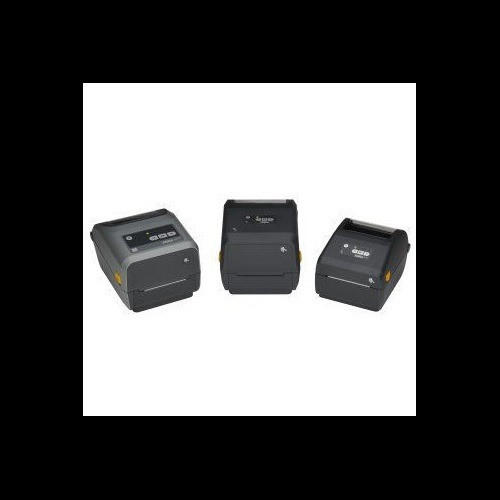
The physical size difference is substantial. The Sato WWCLP1701-WAR measures 10.66 x 17.99 x 12.63 inches and weighs 33 lbs — a floor- or heavy-bench-mount industrial unit. The Zebra ZD421 in direct thermal configuration measures 8.69 x 6.98 x 5.93 inches and weighs 2.98 lbs, fitting comfortably on a desktop. In thermal transfer roll configuration the Zebra grows to 10.5 x 8.0 x 7.44 inches at 4.52 lbs. Installers must account for this difference in workspace planning.
Operating temperature ranges are similar: Sato 41°F to 104°F; Zebra 40°F to 105°F. The Zebra additionally specifies storage temperature (−40°F to 140°F) and humidity tolerances (10–90% operating, 5–95% storage); these are not listed in the Sato spec provided.
Connectivity is broadly comparable. Both offer USB 2.0, Ethernet, and Wi-Fi. The Zebra adds USB Host, Bluetooth 4.1, and 802.11ac Wi-Fi, and specifies printer language support for ZPL II, EPL 2, XML, ZBI, and PDF Direct. The Sato spec does not enumerate printer languages in the provided data. Memory differs: Sato lists 2 GB Flash and 256 MB SDRAM with 100 MB user storage; Zebra lists 512 MB Flash, 256 MB SDRAM, with 64 MB non-volatile and 8 MB SDRAM user-available memory. Both units run on AC 100–240V, 50/60 Hz. Warranty is one year (Sato) versus two years (Zebra).
Which should you choose: the WWCLP1701-WAR or the ZD421?
Our take: The WWCLP1701-WAR is the stronger choice when the deployment requires UHF RFID inlay encoding, high-throughput output, or large-roll media capacity. At 14 ips versus the ZD421's 6 ips, the Sato delivers more than twice the print speed — a decisive advantage in volume label environments. Its 10-inch roll diameter versus the Zebra's 5-inch limit cuts changeover frequency roughly in half, and its integrated EPC C1G2 RFID encoder is entirely absent from the ZD421 spec. The ZD421 is the stronger choice when floor space, portability, and budget are priorities: it weighs under 3 lbs in direct thermal mode versus 33 lbs for the Sato, adds Bluetooth 4.1 and USB Host connectivity not listed for the Sato, carries a two-year warranty versus one year, and suits desktop label printing where RFID and high-speed output are not required. Platform qualifier: ZPL II language support on the Zebra simplifies integration with existing Zebra infrastructure.
Side-by-Side Comparison
Spec-for-spec, from manufacturer data.
| Specification | Sato WWCLP1701-WAR | Zebra ZD421 |
|---|---|---|
| Print Resolution | 203 dpi | 203 dpi / 8 dots per mm |
| Print Speed (203 dpi) | 14 ips | 6 ips |
| Print Method | Direct Thermal / Thermal Transfer | Direct Thermal / Thermal Transfer |
| Max Print Width | 4.09 in. | 4.09 in. / 104 mm |
| Max Media Width | 5.04 in. | 4.25 in. / 108 mm |
| Min Media Width | 0.87 in. | 0.585 in. / 15 mm |
| Max Media Roll Diameter | 10 in. | 5.00 in. / 127 mm |
| Max Ribbon Length / Ribbon Diameter | 1,968 ft | 2.6 in. / 66 mm (300 m) |
| RFID | UHF 860–960 MHz, EPC C1G2 | — |
| Display | 3.5-inch full-color LCD | — |
| Connectivity | Ethernet, Wi-Fi, USB 2.0 | USB 2.0, USB Host, Ethernet, 802.11ac Wi-Fi, Bluetooth 4.1 |
| Printer Languages | — | ZPL II, EPL 2, XML, ZBI, PDF Direct |
| Flash Memory | 2 GB | 512 MB |
| SDRAM | 256 MB | 256 MB |
| User Storage | 100 MB | 64 MB non-volatile / 8 MB SDRAM |
| Dimensions (L x W x H) | 10.66 x 17.99 x 12.63 in. | 8.69 x 6.98 x 5.93 in. (DT) / 10.5 x 8.0 x 7.44 in. (TT Roll) |
| Weight | 33 lbs | 2.98 lbs (DT) / 4.52 lbs (TT Roll) |
| Operating Temperature | 41°F to 104°F | 40°F to 105°F / 4.4°C to 41°C |
| Power | AC 100–240V, 50/60 Hz | 100–240VAC, 50–60 Hz |
| Warranty | 1 year | 2 years |
Frequently Asked Questions
Which should you choose: the WWCLP1701-WAR or the ZD421?
The WWCLP1701-WAR is the stronger choice when the deployment requires UHF RFID inlay encoding, high-throughput output, or large-roll media capacity. At 14 ips versus the ZD421's 6 ips, the Sato delivers more than twice the print speed — a decisive advantage in volume label environments. Its 10-inch roll diameter versus the Zebra's 5-inch limit cuts changeover frequency roughly in half, and its integrated EPC C1G2 RFID encoder is entirely absent from the ZD421 spec. The ZD421 is the stronger choice when floor space, portability, and budget are priorities: it weighs under 3 lbs in direct thermal mode versus 33 lbs for the Sato, adds Bluetooth 4.1 and USB Host connectivity not listed for the Sato, carries a two-year warranty versus one year, and suits desktop label printing where RFID and high-speed output are not required. Platform qualifier: ZPL II language support on the Zebra simplifies integration with existing Zebra infrastructure.
Is the WWCLP1701-WAR or the ZD421 better for RFID smart-label production?
The WWCLP1701-WAR is the only option of the two for RFID smart-label production. It includes integrated UHF RFID (860–960 MHz, EPC C1G2) for simultaneous print-and-encode in a single pass. The ZD421 spec does not list any RFID capability.
Which printer is more suitable for a small office or point-of-use desktop location?
The Zebra ZD421 is far better suited to a desktop or point-of-use location. In direct thermal configuration it weighs 2.98 lbs and measures under 9 inches in length. The Sato WWCLP1701-WAR weighs 33 lbs and is nearly 18 inches deep, requiring a dedicated heavy bench or industrial stand.
Does the higher print speed of the WWCLP1701-WAR justify the added size and cost for a mid-volume operation?
If throughput is the bottleneck, the Sato's 14 ips versus the Zebra's 6 ips is a real operational difference — over twice the linear output per second at the same 203 dpi resolution. For mid-volume operations not requiring RFID, buyers should weigh whether that speed delta, the larger 10-inch roll capacity, and the 3.5-inch touchscreen interface justify the considerably larger physical footprint and the Sato's one-year warranty compared to the Zebra's two-year standard warranty.
More Label Printer Comparisons
- Sato WWCLP1701-WAR vs Sato WWCLP1C01-WAR
- Sato WWCLP1701-WAR vs Sato WWFX31241-WDB
- Sato WWCLP1C01-WAR vs Zebra ZD421
- Sato WWCLP1C01-WAR vs Sato WWFX31241-WDB
- Zebra ZD421 vs Sato WWFX31241-WDB
- Zebra ZD421 vs Zebra ZD421
Label Printer Buying Guides
Get a Second Opinion on Your Camera Choice
Share your site layout, coverage goals, and budget. Our team will validate the camera selection, flag anything we would change, and recommend products that match the use case.