
Zebra ZT41142-T5100A0Z vs Sato WWHC04041-NHN: Specification Comparison
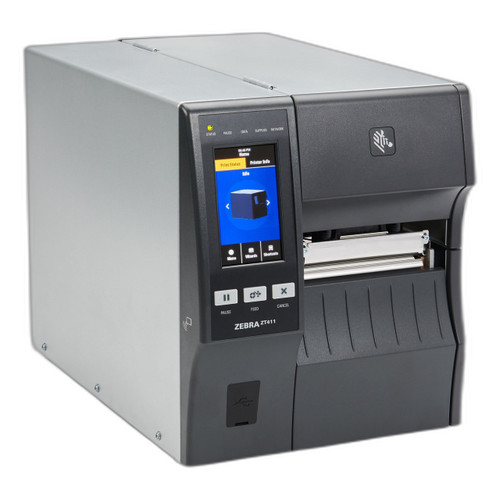
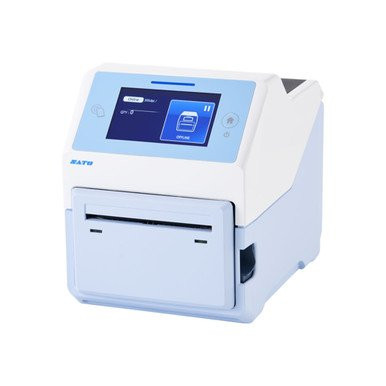
Both the Zebra ZT41142-T5100A0Z and the Sato WWHC04041-NHN (CT4-LX-HC) are 4-inch thermal label printers targeting professional labeling workflows, making them legitimate cross-shop candidates. The Zebra is a mobile unit with an integrated 2D scan engine and RFID capability, while the Sato is a healthcare-optimized desktop unit with an antimicrobial housing and a full-color touchscreen. This comparison evaluates print performance, form factor and environment suitability, and connectivity and ancillary features to help buyers allocate budget appropriately.
In This Guide
- Which printer delivers higher throughput and resolution flexibility for your label workload?
- Does the physical design, housing, and operating environment match your deployment site?
- Which unit offers broader connectivity, scanning, and special-function support for your integration stack?
- Which should you choose: the ZT41142-T5100A0Z or the WWHC04041-NHN?
- Side-by-Side Specs
- FAQ
Which printer delivers higher throughput and resolution flexibility for your label workload?
The Zebra ZT41142-T5100A0Z prints at 14 ips at 203 dpi and supports switchable resolution across three settings: 203, 300, and 600 dpi. This gives operators the ability to dial resolution up for small or complex labels (GS1 DataMatrix, high-density barcodes) without changing hardware. Maximum print width is 4 inches.
The Sato WWHC04041-NHN (CT4-LX-HC) prints at 8 ips and offers a fixed native resolution of 305 dpi — higher than the Zebra's base 203 dpi but below the Zebra's 600 dpi ceiling. Maximum print width is 4.09 inches. The Sato supports both Direct Thermal and Thermal Transfer print methods; the Zebra's spec listing identifies it as Thermal but does not explicitly state DT/TT dual-mode capability in the provided data.
For raw speed, the Zebra holds a significant advantage at 14 ips versus 8 ips — a 75% throughput edge that matters in high-volume dispatch, warehouse, or logistics environments. For fixed-resolution sharpness at a single setting, the Sato's 305 dpi native output is crisper than the Zebra's 203 dpi base mode, though the Zebra surpasses it at 600 dpi.
Does the physical design, housing, and operating environment match your deployment site?
The Zebra ZT41142-T5100A0Z is classified as a mobile thermal printer in a handheld mobile form factor. At 48.7 lb (22.09 kg) this weight figure appears anomalous for a device described as mobile — buyers should verify against the physical datasheet, as this likely reflects a shipping or pallet weight rather than a unit weight. No operating temperature range is specified in the provided data.
The Sato WWHC04041-NHN is a desktop unit weighing 8.0 lbs with physical dimensions of 7.0" x 9.375" x 8.4375". It is built with antimicrobial, disinfectant-resistant plastic housing — a spec directly relevant to clinical and healthcare environments where surfaces are regularly wiped down with harsh agents. Operating temperature is specified at 32°F to 104°F (0°C to 40°C). It features a 4.3" full-color touchscreen display for on-device menu navigation and job management.
For clinical, laboratory, pharmacy, or patient-care settings, the Sato's antimicrobial housing and desktop mount are purpose-matched to the environment. The Zebra's mobile form factor suits field, warehouse, or logistics deployments where portability is required. The Sato also includes 4 GB flash and 1 GB DDR3 RAM with 2 GB user storage — no comparable memory specs are provided for the Zebra.
Which unit offers broader connectivity, scanning, and special-function support for your integration stack?
The Zebra ZT41142-T5100A0Z includes Wi-Fi, Bluetooth 4.1 (MFi certified), USB, Serial, Ethernet, and an integrated 2D imager capable of reading QR Code, Data Matrix, PDF417, Code 128, Code 39, UPC, and EAN symbologies. It also supports On-Metal RFID encoding and printing — a capability with no equivalent listed for the Sato. NFC is noted as On-Metal RFID in the spec data.
The Sato WWHC04041-NHN offers Ethernet, Wi-Fi, Bluetooth, and USB connectivity. No scan engine is listed in the provided specifications, and no RFID capability is mentioned. The Sato supports Thermal Transfer ribbon up to 984 ft and accepts media widths from 1" to 4.1" on a 1.5" core with a maximum roll diameter of 5". Power input is AC 100–240V, 50/60 Hz.
The Zebra outperforms the Sato on ancillary capabilities by a wide margin: integrated 2D scanning, RFID encoding, and Serial port support give it substantially broader integration options for asset tracking, verification workflows, and legacy system connectivity. The Sato's strengths lie in its display, on-device storage, and healthcare-specific housing rather than scanning or RFID.
Which should you choose: the ZT41142-T5100A0Z or the WWHC04041-NHN?
Our take: The ZT41142-T5100A0Z is the stronger choice when throughput, mobile deployment, 2D scan verification, and RFID encoding are required — the Zebra prints at 14 ips versus the Sato's 8 ips (a 75% speed advantage), supports switchable 203/300/600 dpi resolution versus the Sato's fixed 305 dpi, and adds an integrated 2D imager plus On-Metal RFID capability that the Sato does not list. The WWHC04041-NHN is the stronger choice for stationary clinical or healthcare environments: its antimicrobial, disinfectant-resistant housing is a specified, tested feature directly relevant to infection-control protocols, its 4.3" full-color touchscreen simplifies operator interaction at the point of care, and its 4 GB flash / 1 GB DDR3 / 2 GB user storage support richer on-device label template libraries. Buyers in healthcare desktop labeling should specify the Sato; buyers in logistics, field service, or asset-tracking workflows requiring speed, mobility, scanning, and RFID should specify the Zebra.
Side-by-Side Comparison
Spec-for-spec, from manufacturer data.
| Specification | Zebra ZT41142-T5100A0Z | Sato WWHC04041-NHN |
|---|---|---|
| Form Factor | Mobile Thermal Printer | Desktop |
| Print Speed | 14 ips | 8 ips |
| Print Resolution | 203 / 300 / 600 dpi (switchable) | 305 dpi (fixed) |
| Max Print Width | 4.0" | 4.09" |
| Print Method | Thermal (DT/TT not specified in provided data) | Direct Thermal / Thermal Transfer |
| Connectivity | Wi-Fi, Bluetooth 4.1, USB, Serial, Ethernet | Ethernet, Wi-Fi, Bluetooth, USB |
| Bluetooth Version | 4.1 (MFi certified) | Not specified |
| Integrated Scan Engine | 2D imager (QR, Data Matrix, PDF417, Code 128/39, UPC, EAN) | — |
| RFID | On-Metal RFID encoding and printing | — |
| Display | — | 4.3" Full-Color Touchscreen |
| Housing | Not specified | Antimicrobial, disinfectant-resistant plastic |
| Memory / Storage | — | 4 GB flash, 1 GB DDR3, 2 GB user storage |
| Max Ribbon Length | — | 984 ft |
| Media Width Range | — | 1" to 4.1" |
| Operating Temperature | Not specified | 32°F to 104°F (0°C to 40°C) |
| Warranty | 1-year | 1-year |
Frequently Asked Questions
Which should you choose: the ZT41142-T5100A0Z or the WWHC04041-NHN?
The ZT41142-T5100A0Z is the stronger choice when throughput, mobile deployment, 2D scan verification, and RFID encoding are required — the Zebra prints at 14 ips versus the Sato's 8 ips (a 75% speed advantage), supports switchable 203/300/600 dpi resolution versus the Sato's fixed 305 dpi, and adds an integrated 2D imager plus On-Metal RFID capability that the Sato does not list. The WWHC04041-NHN is the stronger choice for stationary clinical or healthcare environments: its antimicrobial, disinfectant-resistant housing is a specified, tested feature directly relevant to infection-control protocols, its 4.3" full-color touchscreen simplifies operator interaction at the point of care, and its 4 GB flash / 1 GB DDR3 / 2 GB user storage support richer on-device label template libraries. Buyers in healthcare desktop labeling should specify the Sato; buyers in logistics, field service, or asset-tracking workflows requiring speed, mobility, scanning, and RFID should specify the Zebra.
Is the ZT41142-T5100A0Z or WWHC04041-NHN better for a hospital or clinical labeling station?
Based on the provided specifications, the Sato WWHC04041-NHN is the purpose-built choice for clinical environments. Its housing is explicitly specified as antimicrobial and disinfectant-resistant plastic — a direct match for infection-control requirements. It also includes a 4.3" full-color touchscreen and desktop mount suited to stationary point-of-care use. The Zebra ZT41142-T5100A0Z does not list antimicrobial housing or a display in the provided specs.
Which printer is faster, and does speed matter for my use case?
The Zebra ZT41142-T5100A0Z prints at 14 ips; the Sato WWHC04041-NHN prints at 8 ips. The Zebra is 75% faster by rated speed. Speed matters most in high-volume batch label runs — shipping, receiving, warehouse picking, or manufacturing lines. For low-to-moderate volume clinical label printing (patient wristbands, specimen labels, pharmacy), the Sato's 8 ips is typically sufficient and the speed delta is not a decision driver.
Can either printer encode RFID tags, and does that affect which one I should buy?
Only the Zebra ZT41142-T5100A0Z lists RFID capability — specifically On-Metal RFID encoding and printing. The Sato WWHC04041-NHN does not list any RFID support in the provided specifications. If your workflow requires printing and simultaneously encoding RFID inlays (asset tracking, inventory management, access control labels), the Zebra is the only option of the two supported by the available spec data.
More Label Printer Comparisons
- Sato WWCT04241-NAR vs Zebra ZD4A043-D01X01EZ
- Sato WWCT04241-NAR vs Zebra ZT41142-T010000Z
- Sato WWCT04241-NAR vs Zebra ZT41142-T31A000Z
- Sato WWCT04241-NAR vs Sato WWCT04441-WCN
- Sato WWCT04241-NAR vs Sato WWHC03041-WAN
- Sato WWCT04441-WCN vs Zebra ZD4A043-D01X01EZ
Label Printer Buying Guides
Get a Second Opinion on Your Camera Choice
Share your site layout, coverage goals, and budget. Our team will validate the camera selection, flag anything we would change, and recommend products that match the use case.