
Sato WWCT04241-NAR vs Sato WWCT04441-WCN: Specification Comparison
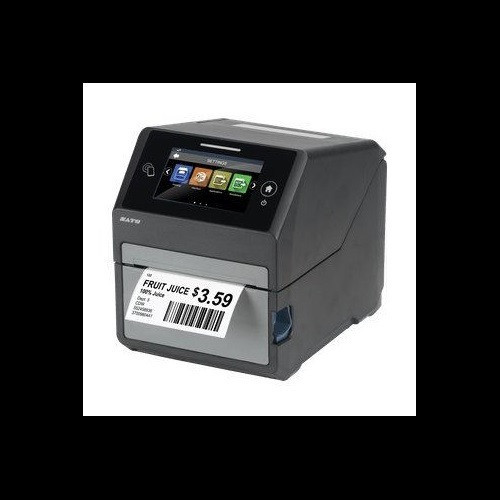
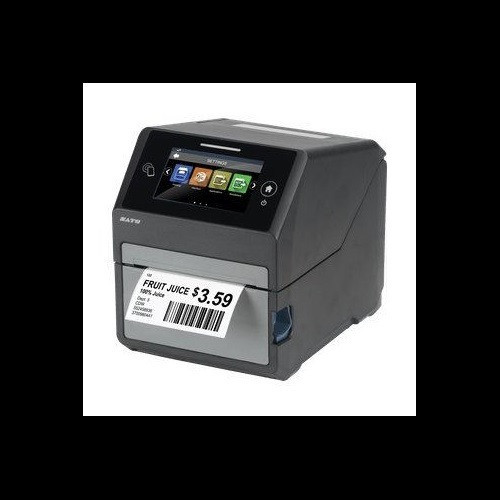
Both the Sato CT4-LX WWCT04241-NAR and WWCT04441-WCN are desktop direct thermal/thermal transfer label printers sharing the same CT4-LX platform. They occupy the same product class and device type — desktop RFID-capable thermal label printers — and a buyer would legitimately cross-shop them when selecting between UHF and HF/NFC RFID encoding frequencies for a label printing deployment. The comparison centers on RFID technology tier, connectivity parity, and media handling, all of which are identical except for the RFID subsystem.
In This Guide
- Which RFID frequency and standard does each printer support, and what does that mean for tag compatibility?
- How do print speed, resolution, and media handling compare across both models?
- Do the two models differ in connectivity options, memory, or operator interface?
- Which should you choose: the WWCT04241-NAR or the WWCT04441-WCN?
- Side-by-Side Specs
- FAQ
Which RFID frequency and standard does each printer support, and what does that mean for tag compatibility?
The WWCT04241-NAR encodes UHF tags operating in the 860–960 MHz band and conforms to the EPC Class 1 Generation 2 (EPC C1G2) standard. UHF RFID is the dominant standard in supply-chain, warehouse, and retail inventory applications, offering read ranges measured in meters and compatibility with the broadest ecosystem of EPC-compliant inlays and readers.
The WWCT04441-WCN encodes HF tags at 13.56 MHz. Its spec sheet further notes NFC support at this frequency. HF/NFC RFID operates at shorter read ranges (typically centimeters to tens of centimeters) and is used in item-level tracking, access credentials, smart packaging, and consumer-facing NFC tap interactions. The EPC C1G2 standard is not listed for the WCN model; NFC compatibility with ISO 14443 / ISO 15693 tags is implied by the 13.56 MHz frequency and the spec's NFC notation.
This is the single most consequential differentiator between the two units: the NAR encodes UHF (EPC C1G2, 860–960 MHz) while the WCN encodes HF/NFC (13.56 MHz). Tag stock, reader infrastructure, and use-case must be matched to the printer — these two frequencies are not interchangeable in the field.
How do print speed, resolution, and media handling compare across both models?
Both printers are spec-identical on every print-performance and media-handling dimension. Each supports direct thermal and thermal transfer print methods at 305 dpi resolution and 8 inches per second (ips) print speed. Maximum print width is 4.09 inches on both units.
Media width range is 1.0 inch to 4.1 inches on both models. Maximum media roll diameter is 5 inches and maximum ribbon length is 984 ft on both. Media core size of 1.5 inches is explicitly stated only in the WCN spec; the NAR spec does not list a core dimension.
Physical footprint and weight are identical: 7.0" × 9.375" × 8.4375" and 7.3 lb (3.3 kg). Both are desktop-mount units. No buyer gains a print-throughput or media-handling advantage by choosing one model over the other — selection should be driven entirely by RFID frequency requirements.
Do the two models differ in connectivity options, memory, or operator interface?
Connectivity is spec-identical: Ethernet, Wi-Fi, Bluetooth, and USB (specified as USB 2.0 in the enriched spec for both models). Both units include a 4.3-inch touchscreen; the WCN spec explicitly labels it 'full-color,' while the NAR spec lists the touchscreen size without a color qualifier — neither spec contradicts the other on this point, but the color designation is only confirmed in WCN documentation.
Memory is identical on both: 4 GB Flash, 1 GB DDR3, and 2 GB user storage. Power requirements are the same: AC 100–240 V, 50/60 Hz, making both globally deployable without voltage conversion.
Operating temperature range is 32°F to 104°F (0°C to 40°C) on both models. Warranty is 1 year on both. The NAR spec additionally lists auto antenna optimization as a feature; this is not mentioned in the WCN spec, which is consistent with UHF antenna tuning being an NAR-specific RFID function not applicable to HF.
Which should you choose: the WWCT04241-NAR or the WWCT04441-WCN?
Our take: The WWCT04241-NAR is the stronger choice when the deployment requires UHF RFID encoding for supply-chain, warehouse, or EPC-compliant inventory applications; the WWCT04441-WCN is the correct selection when the application demands HF or NFC tag encoding for item-level tracking, access credentials, or consumer NFC interactions. The sole spec delta between these two otherwise identical CT4-LX units is RFID frequency: the NAR encodes at 860–960 MHz UHF (EPC C1G2) versus the WCN's 13.56 MHz HF/NFC. All other measured specs — 305 dpi, 8 ips, 4.09" max print width, 4 GB Flash / 1 GB DDR3 / 2 GB user storage, Ethernet/Wi-Fi/Bluetooth/USB connectivity, 4.3" touchscreen, 7.3 lb, and 1-year warranty — are identical. Choose the NAR for EPC barcode-label and pallet/case tagging environments; choose the WCN where 13.56 MHz readers and NFC infrastructure are already deployed.
Side-by-Side Comparison
Spec-for-spec, from manufacturer data.
| Specification | Sato WWCT04241-NAR | Sato WWCT04441-WCN |
|---|---|---|
| SKU | WWCT04241-NAR | WWCT04441-WCN |
| Platform | CT4-LX | CT4-LX |
| Print Method | Direct Thermal / Thermal Transfer | Direct Thermal / Thermal Transfer |
| Print Resolution | 305 dpi | 305 dpi |
| Print Speed | 8 ips | 8 ips |
| Max Print Width | 4.09" | 4.09" |
| RFID Frequency | 860–960 MHz (UHF) | 13.56 MHz (HF/NFC) |
| RFID Standard | EPC C1G2 | NFC (HF); EPC C1G2 not specified |
| Connectivity | Ethernet, Wi-Fi, Bluetooth, USB 2.0 | Ethernet, Wi-Fi, Bluetooth, USB 2.0 |
| Touchscreen | 4.3" | 4.3" full-color |
| Memory | 4 GB Flash / 1 GB DDR3 / 2 GB user | 4 GB Flash / 1 GB DDR3 / 2 GB user |
| Media Width Range | 1" – 4.1" | 1" – 4.1" |
| Max Media Roll Diameter | 5" | 5" |
| Max Ribbon Length | 984 ft | 984 ft |
| Operating Temperature | 32°F – 104°F (0°C – 40°C) | 32°F – 104°F |
| Weight | 7.3 lb (3.3 kg) | 7.3 lb (3.3 kg) |
| Power | AC 100–240V, 50/60 Hz | AC 100–240V, 50/60 Hz |
| Warranty | 1 year | 1 year |
Frequently Asked Questions
Which should you choose: the WWCT04241-NAR or the WWCT04441-WCN?
The WWCT04241-NAR is the stronger choice when the deployment requires UHF RFID encoding for supply-chain, warehouse, or EPC-compliant inventory applications; the WWCT04441-WCN is the correct selection when the application demands HF or NFC tag encoding for item-level tracking, access credentials, or consumer NFC interactions. The sole spec delta between these two otherwise identical CT4-LX units is RFID frequency: the NAR encodes at 860–960 MHz UHF (EPC C1G2) versus the WCN's 13.56 MHz HF/NFC. All other measured specs — 305 dpi, 8 ips, 4.09" max print width, 4 GB Flash / 1 GB DDR3 / 2 GB user storage, Ethernet/Wi-Fi/Bluetooth/USB connectivity, 4.3" touchscreen, 7.3 lb, and 1-year warranty — are identical. Choose the NAR for EPC barcode-label and pallet/case tagging environments; choose the WCN where 13.56 MHz readers and NFC infrastructure are already deployed.
Can I use the WWCT04241-NAR or WWCT04441-WCN with my existing RFID readers?
It depends entirely on your reader infrastructure. The WWCT04241-NAR encodes UHF tags at 860–960 MHz (EPC C1G2), which requires UHF RFID readers. The WWCT04441-WCN encodes HF tags at 13.56 MHz with NFC support, requiring HF or NFC readers. The two frequencies are incompatible — a UHF reader cannot read an HF tag and vice versa. Confirm your existing reader frequency before selecting a model.
Is there any difference in print quality or speed between the WWCT04241-NAR and WWCT04441-WCN?
No. Both models are spec-identical on every print performance metric: 305 dpi resolution, 8 ips print speed, 4.09-inch maximum print width, and support for both direct thermal and thermal transfer print methods. Media handling — 1" to 4.1" width range, 5" max roll diameter, 984 ft max ribbon length — is also identical across both units.
Which model is better suited for retail item-level tracking versus distribution center pallet or case labeling?
The WWCT04441-WCN (13.56 MHz HF/NFC) is better suited for item-level retail tracking and consumer-facing NFC applications, where short-range reads and NFC tap interactions are the norm. The WWCT04241-NAR (860–960 MHz UHF, EPC C1G2) is the appropriate choice for distribution center pallet and case labeling, where longer read ranges, high-volume throughput scanning, and EPC supply-chain standards are required.
More Label Printer Comparisons
- Sato WWCT04241-NAR vs Zebra ZD4A043-D01X01EZ
- Sato WWCT04241-NAR vs Zebra ZT41142-T010000Z
- Sato WWCT04241-NAR vs Zebra ZT41142-T31A000Z
- Sato WWCT04241-NAR vs Sato WWHC03041-WAN
- Sato WWCT04441-WCN vs Zebra ZD4A043-D01X01EZ
- Sato WWCT04441-WCN vs Zebra ZT41142-T010000Z
Label Printer Buying Guides
Get a Second Opinion on Your Camera Choice
Share your site layout, coverage goals, and budget. Our team will validate the camera selection, flag anything we would change, and recommend products that match the use case.