
Sato WWCT04441-WCN vs Zebra ZT41142-T010000Z: Specification Comparison
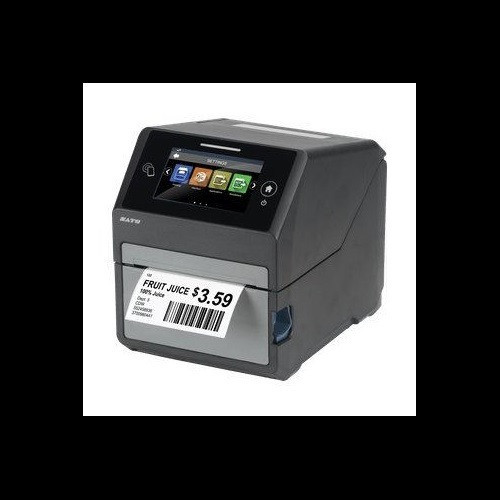
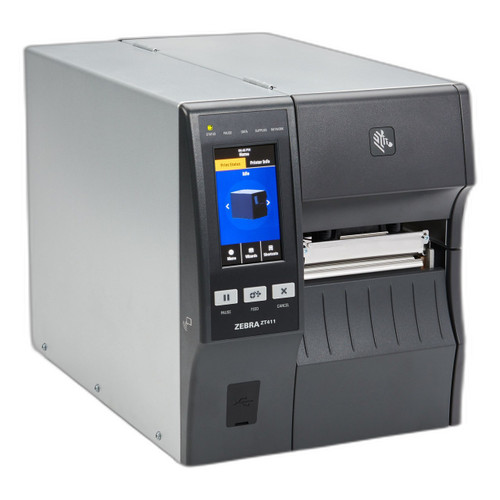
Both the Sato CT4-LX WWCT04441-WCN and the Zebra ZT41142-T010000Z are desktop-class 4-inch industrial thermal label printers aimed at distribution, warehousing, and manufacturing environments. The Sato unit differentiates through integrated HF/NFC RFID encoding at 13.56 MHz, while the Zebra unit differentiates through an integrated 2D barcode scan engine and a higher maximum print speed. Buyers evaluating either model are typically weighing label throughput, specialty encoding or scanning capability, connectivity breadth, and memory resources against their workflow requirements.
In This Guide
- Which printer delivers faster throughput and higher resolution for demanding label volumes?
- Which unit is better equipped for RFID encoding or integrated barcode verification?
- How do the two units compare on connectivity, memory, and physical footprint?
- Which should you choose: the WWCT04441-WCN or the ZT41142-T010000Z?
- Side-by-Side Specs
- FAQ
Which printer delivers faster throughput and higher resolution for demanding label volumes?
Print speed is a clear differentiator: the Zebra ZT41142-T010000Z is rated at 14 ips, versus 8 ips for the Sato WWCT04441-WCN — a 75 percent speed advantage that meaningfully reduces cycle time on high-volume label runs. A 4×6 shipping label, for example, completes in under two seconds on the Zebra per its specification.
Resolution capability also favors the Zebra. The ZT41142-T010000Z supports 203, 300, and 600 dpi print modes, giving operators flexibility from fast draft to fine-detail pharmaceutical or compliance labels. The Sato WWCT04441-WCN is specified at 305 dpi (its governing resolution); a secondary '_Print Resolution: 203' field appears in the raw spec data and is internally inconsistent — buyers should verify with Sato documentation. Both units support Direct Thermal and Thermal Transfer print methods per the Sato spec; the Zebra spec lists only 'Thermal' without explicitly distinguishing DT/TT — confirm with Zebra if ribbon-based TT is required.
Maximum print width is effectively equivalent: 4.09 inches on the Sato and 4 inches (nominal) on the Zebra, making both suitable for standard 4-inch label stock.
Which unit is better equipped for RFID encoding or integrated barcode verification?
The Sato WWCT04441-WCN is the only model here with integrated RFID encoding, operating at 13.56 MHz HF with NFC support. This makes it directly applicable to item-level tracking programs using HF/NFC tags — pharmaceutical pedigree, retail inventory, or access-card personalization workflows where UHF RFID is not required. The Zebra ZT41142-T010000Z carries no RFID specification; buyers needing RFID must look elsewhere in Zebra's lineup.
Conversely, the Zebra ZT41142-T010000Z integrates a 2D scan engine supporting QR Code, Data Matrix, PDF417, Code 128, Code 39, UPC, and EAN symbologies. This enables print-and-verify workflows — the printer can confirm a label was printed correctly without a separate handheld scanner — a significant operational advantage in compliance-sensitive labeling. The Sato WWCT04441-WCN has no integrated scan engine specified.
In summary: RFID encoding needs point exclusively to the Sato; integrated barcode scan-and-verify needs point exclusively to the Zebra. Workflows requiring both capabilities would need separate peripherals paired with whichever unit is chosen.
How do the two units compare on connectivity, memory, and physical footprint?
The Sato WWCT04441-WCN offers the broader wired and wireless connectivity suite as specified: Ethernet, Wi-Fi, Bluetooth, and USB 2.0 all included. It also provides a 4.3-inch full-color touchscreen for guided operator interaction. Memory resources are explicitly detailed — 4 GB Flash, 1 GB DDR3 RAM, and 2 GB user storage — supporting large format libraries and complex templates.
The Zebra ZT41142-T010000Z specifies Wi-Fi 802.11ac and Bluetooth 4.1 MFi as its wireless interfaces; package contents reference USB, Serial, Ethernet, and Bluetooth as standard inclusions, suggesting wired Ethernet and serial are present but the spec listing is less explicit. Memory is stated as 256 MB SDRAM — substantially less than the Sato's 1 GB DDR3 / 4 GB Flash. No touchscreen display size is specified for the Zebra.
Physically, the Sato weighs 7.3 lbs / 3.3 kg with a desktop mount type and dimensions of 7.0" × 9.375" × 8.4375". The Zebra's listed weight of 36–40 lbs / 16–18 kg is inconsistent with a standard 4-inch desktop printer and may reflect a specification data error — buyers must confirm physical dimensions and weight directly with Zebra before procurement. Both carry a 1-year warranty. The Sato specifies AC 100–240 V, 50/60 Hz universal power; no power spec is provided for the Zebra.
Which should you choose: the WWCT04441-WCN or the ZT41142-T010000Z?
Our take: The WWCT04441-WCN is the stronger choice when HF/NFC RFID encoding at 13.56 MHz is a hard workflow requirement — no comparable encoding capability is specified for the ZT41142-T010000Z. The Sato also provides substantially more on-board memory (1 GB DDR3 RAM, 4 GB Flash vs. 256 MB SDRAM on the Zebra) and an explicit 4.3-inch color touchscreen for operator guidance. However, the ZT41142-T010000Z holds concrete advantages in throughput (14 ips vs. 8 ips — 75 percent faster) and is the only unit with an integrated 2D scan engine supporting QR, Data Matrix, PDF417, and linear symbologies, enabling print-and-verify without an external scanner. Buyers running high-volume GS1 or shipping label operations without an RFID requirement will favor the Zebra; RFID-dependent item-level tracking deployments point to the Sato. Verify the Zebra's physical weight specification and the Sato's dual resolution listing with each manufacturer before finalizing.
Side-by-Side Comparison
Spec-for-spec, from manufacturer data.
| Specification | Sato WWCT04441-WCN | Zebra ZT41142-T010000Z |
|---|---|---|
| Print Speed | 8 ips | 14 ips |
| Print Resolution | 305 dpi | 203 / 300 / 600 dpi |
| Max Print Width | 4.09" | 4" |
| Print Method | Direct Thermal / Thermal Transfer | Thermal (DT/TT not explicitly specified) |
| RFID Encoding | 13.56 MHz HF / NFC | — |
| Integrated Scan Engine | — | 2D (QR, Data Matrix, PDF417, Code 128, Code 39, UPC, EAN) |
| Display | 4.3" full-color touchscreen | — |
| Connectivity | Ethernet, Wi-Fi, Bluetooth, USB 2.0 | Wi-Fi 802.11ac, Bluetooth 4.1 MFi, USB, Serial, Ethernet |
| Bluetooth Version | — | Bluetooth 4.1 MFi |
| RAM | 1 GB DDR3 | 256 MB SDRAM |
| Flash / Storage | 4 GB Flash / 2 GB user storage | — |
| Weight | 7.3 lbs / 3.3 kg | 36–40 lbs / 16–18 kg (verify with manufacturer) |
| Dimensions | 7.0" × 9.375" × 8.4375" | — |
| Power | AC 100–240 V, 50/60 Hz | — |
| Mount Type | Desktop | Rack (per spec — verify with manufacturer) |
| Warranty | 1-year | 1-year |
Frequently Asked Questions
Which should you choose: the WWCT04441-WCN or the ZT41142-T010000Z?
The WWCT04441-WCN is the stronger choice when HF/NFC RFID encoding at 13.56 MHz is a hard workflow requirement — no comparable encoding capability is specified for the ZT41142-T010000Z. The Sato also provides substantially more on-board memory (1 GB DDR3 RAM, 4 GB Flash vs. 256 MB SDRAM on the Zebra) and an explicit 4.3-inch color touchscreen for operator guidance. However, the ZT41142-T010000Z holds concrete advantages in throughput (14 ips vs. 8 ips — 75 percent faster) and is the only unit with an integrated 2D scan engine supporting QR, Data Matrix, PDF417, and linear symbologies, enabling print-and-verify without an external scanner. Buyers running high-volume GS1 or shipping label operations without an RFID requirement will favor the Zebra; RFID-dependent item-level tracking deployments point to the Sato. Verify the Zebra's physical weight specification and the Sato's dual resolution listing with each manufacturer before finalizing.
Can the Sato WWCT04441-WCN or the Zebra ZT41142-T010000Z encode RFID tags?
Only the Sato WWCT04441-WCN includes integrated RFID encoding, operating at 13.56 MHz HF with NFC support. The Zebra ZT41142-T010000Z has no RFID encoding capability specified. If HF/NFC tag encoding is required, the Sato is the only option between these two models.
Which printer is faster for high-volume label runs — the WWCT04441-WCN or the ZT41142-T010000Z?
The Zebra ZT41142-T010000Z is rated at 14 ips compared to 8 ips for the Sato WWCT04441-WCN, making the Zebra 75 percent faster. For operations printing large batches of shipping, compliance, or warehouse labels where throughput is the primary constraint, the Zebra has a clear speed advantage based on published specifications.
Does either the WWCT04441-WCN or the ZT41142-T010000Z include a built-in barcode scanner?
Yes — the Zebra ZT41142-T010000Z integrates a 2D scan engine supporting QR Code, Data Matrix, PDF417, Code 128, Code 39, UPC, and EAN. This allows print-and-verify workflows without a separate scanner. The Sato WWCT04441-WCN does not include an integrated scan engine per its published specifications.
More Label Printer Comparisons
- Sato WWCT04241-NAR vs Zebra ZD4A043-D01X01EZ
- Sato WWCT04241-NAR vs Zebra ZT41142-T010000Z
- Sato WWCT04241-NAR vs Zebra ZT41142-T31A000Z
- Sato WWCT04241-NAR vs Sato WWCT04441-WCN
- Sato WWCT04241-NAR vs Sato WWHC03041-WAN
- Sato WWCT04441-WCN vs Zebra ZD4A043-D01X01EZ
Label Printer Buying Guides
Get a Second Opinion on Your Camera Choice
Share your site layout, coverage goals, and budget. Our team will validate the camera selection, flag anything we would change, and recommend products that match the use case.