
Sato WWCT04241-NAR vs Zebra ZT41142-T31A000Z: Specification Comparison
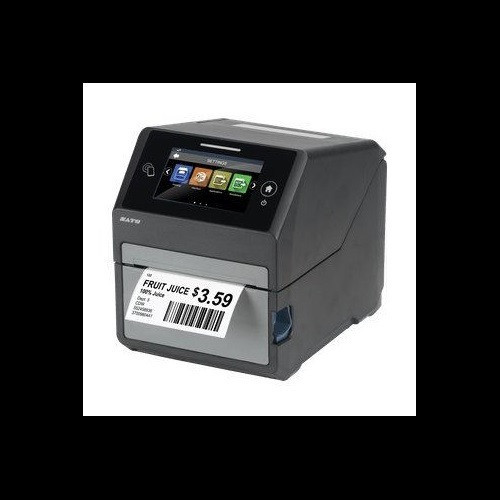
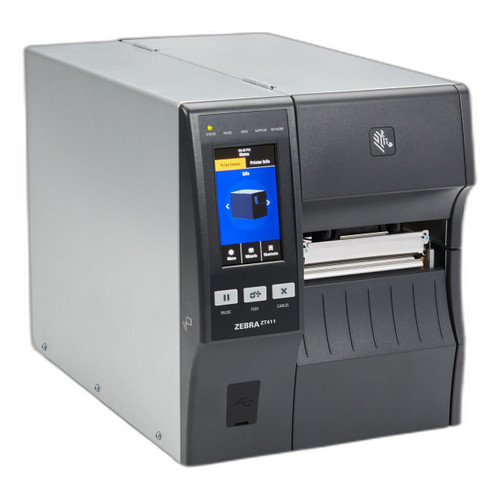
Both the SATO CT4-LX (WWCT04241-NAR) and the Zebra ZT41142-T31A000Z are 4-inch desktop thermal label printers supporting direct thermal and thermal transfer output with multi-protocol connectivity. The comparison covers a SATO mid-range RFID-capable unit against a Zebra industrial-grade printer, both targeting warehouse, manufacturing, and logistics label production environments where print speed, resolution flexibility, and connectivity breadth are primary procurement criteria.
In This Guide
- Which printer delivers better print speed and resolution flexibility for high-volume label runs?
- Which unit supports RFID encoding or integrated scanning, and does that capability match the deployment requirement?
- How do the two printers compare on connectivity options, onboard memory, and day-to-day operator usability?
- Which should you choose: the WWCT04241-NAR or the ZT41142-T31A000Z?
- Side-by-Side Specs
- FAQ
Which printer delivers better print speed and resolution flexibility for high-volume label runs?
The Zebra ZT41142-T31A000Z offers a rated print speed of 14 ips versus the SATO CT4-LX's 8 ips — a 75% throughput advantage that is material in high-volume batch or continuous print operations. For shift-level label volumes in warehousing or distribution, this gap can translate directly to line throughput.
On resolution, the Zebra provides three selectable options — 203, 300, and 600 dpi — giving operators the ability to produce both coarse logistics labels and fine-detail compliance or pharmaceutical labels from a single device. The SATO CT4-LX is fixed at 305 dpi (the spec sheet also references 203 dpi in one field, but the headline and datasheet both cite 305 dpi as the operative resolution). Neither printer's spec data includes minimum print speed.
Max print width is effectively equivalent: 4.09 inches on the SATO versus 4 inches on the Zebra, presenting no practical difference for standard 4-inch label stock.
Which unit supports RFID encoding or integrated scanning, and does that capability match the deployment requirement?
The SATO CT4-LX (WWCT04241-NAR) includes a built-in UHF RFID encoder operating at 860–960 MHz per the EPC Class 1 Gen 2 standard. The spec also notes auto antenna optimization. This makes it a print-and-encode solution for item-level RFID tagging without a separate encoder peripheral — relevant for retail, healthcare supply chain, or asset-tracking programs mandating EPC RFID labels.
The Zebra ZT41142-T31A000Z does not carry any RFID specification in the provided data. However, it does include an integrated 2D barcode scan engine supporting QR Code, Data Matrix, PDF417, Code 128, Code 39, UPC, and EAN — a capability absent from the SATO spec sheet. This scan engine enables label verify-after-print or scan-triggered workflows without an external handheld.
Buyers whose program requires RFID encode-and-print must select the SATO. Buyers who need inline barcode verification or scan-triggered dispatch gain value from the Zebra's integrated 2D engine.
How do the two printers compare on connectivity options, onboard memory, and day-to-day operator usability?
Both printers support Ethernet, Wi-Fi, and Bluetooth. The SATO CT4-LX adds USB and specifies Bluetooth without a version; the Zebra ZT41142-T31A000Z specifies Bluetooth 4.1 with MFi certification, which is relevant for iOS-device pairing in field or retail environments. The Zebra's Wi-Fi is identified as 802.11ac; the SATO spec does not state a Wi-Fi standard.
Memory is substantially higher on the SATO: 4 GB Flash, 1 GB DDR3, and 2 GB user storage. The Zebra spec lists only 256 MB SDRAM. This difference affects the volume of stored label formats, fonts, and graphics the printer can hold locally — a factor for deployments with large template libraries or offline operation requirements.
The SATO CT4-LX includes a 4.3-inch touchscreen. No touchscreen or display size is specified for the Zebra ZT41142-T31A000Z. The SATO also provides an operating temperature range of 32–104°F (0–40°C); no operating temperature range is specified for the Zebra in the provided data.
Which should you choose: the WWCT04241-NAR or the ZT41142-T31A000Z?
Our take: The ZT41142-T31A000Z is the stronger choice when raw print throughput and resolution flexibility are the primary requirements, delivering 14 ips versus the CT4-LX's 8 ips and offering 203/300/600 dpi selection versus the SATO's fixed 305 dpi — advantages that favor high-volume industrial label lines. However, the CT4-LX is the only option when UHF RFID encode-and-print is required (860–960 MHz, EPC C1G2), a capability entirely absent from the Zebra spec. The SATO also carries substantially more onboard memory (4 GB Flash, 1 GB DDR3, 2 GB user storage versus 256 MB SDRAM) and adds a 4.3-inch touchscreen for operator interaction. Choose the Zebra for speed-critical, barcode-only label production or where MFi Bluetooth pairing to iOS devices is needed; choose the SATO for RFID tag encoding programs, memory-intensive template libraries, or deployments requiring a touchscreen-driven interface.
Side-by-Side Comparison
Spec-for-spec, from manufacturer data.
| Specification | Sato WWCT04241-NAR | Zebra ZT41142-T31A000Z |
|---|---|---|
| Print Method | Direct Thermal / Thermal Transfer | Thermal (Direct Thermal / Thermal Transfer) |
| Print Speed | 8 ips | 14 ips |
| Print Resolution | 305 dpi | 203 / 300 / 600 dpi (selectable) |
| Max Print Width | 4.09" | 4" |
| RFID Encoding | UHF 860–960 MHz, EPC C1G2 | — |
| Integrated Barcode Scanner | — | 2D (QR Code, Data Matrix, PDF417, Code 128, Code 39, UPC, EAN) |
| Connectivity | Ethernet, Wi-Fi, USB, Bluetooth | Ethernet, Wi-Fi 802.11ac, Bluetooth 4.1 MFi |
| Bluetooth Version / Certification | Not specified | Bluetooth 4.1, MFi certified |
| Onboard Memory | 4 GB Flash, 1 GB DDR3, 2 GB user storage | 256 MB SDRAM |
| Touchscreen | 4.3" | — |
| Max Media Width | 4.1" | — |
| Min Media Width | 1" | — |
| Max Media Roll Diameter | 5" | — |
| Max Ribbon Length | 984 ft | — |
| Operating Temperature | 32–104°F (0–40°C) | — |
| Warranty | 1-year | 1-year |
Frequently Asked Questions
Which should you choose: the WWCT04241-NAR or the ZT41142-T31A000Z?
The ZT41142-T31A000Z is the stronger choice when raw print throughput and resolution flexibility are the primary requirements, delivering 14 ips versus the CT4-LX's 8 ips and offering 203/300/600 dpi selection versus the SATO's fixed 305 dpi — advantages that favor high-volume industrial label lines. However, the CT4-LX is the only option when UHF RFID encode-and-print is required (860–960 MHz, EPC C1G2), a capability entirely absent from the Zebra spec. The SATO also carries substantially more onboard memory (4 GB Flash, 1 GB DDR3, 2 GB user storage versus 256 MB SDRAM) and adds a 4.3-inch touchscreen for operator interaction. Choose the Zebra for speed-critical, barcode-only label production or where MFi Bluetooth pairing to iOS devices is needed; choose the SATO for RFID tag encoding programs, memory-intensive template libraries, or deployments requiring a touchscreen-driven interface.
Is the WWCT04241-NAR or ZT41142-T31A000Z better for a warehouse running high-speed label printing on a conveyor line?
Based on the provided specs, the Zebra ZT41142-T31A000Z is rated at 14 ips versus the SATO CT4-LX's 8 ips. For conveyor-paced or high-volume batch printing, the Zebra's 75% speed advantage is the deciding factor, assuming RFID encoding is not required.
Can either printer encode UHF RFID tags, or do I need a separate encoder?
Only the SATO CT4-LX (WWCT04241-NAR) includes a built-in UHF RFID encoder (860–960 MHz, EPC Class 1 Gen 2). The Zebra ZT41142-T31A000Z has no RFID specification in the provided data. If your labels require EPC RFID encoding, the SATO is the only option of the two.
Which printer is better suited for a deployment where operators use iPhones or iPads to send print jobs wirelessly?
The Zebra ZT41142-T31A000Z specifies Bluetooth 4.1 with MFi (Made for iPhone/iPad) certification, which is the Apple-sanctioned pairing standard for iOS devices. The SATO CT4-LX lists Bluetooth connectivity but does not specify a Bluetooth version or MFi certification in the provided specs. For confirmed iOS compatibility, the Zebra's MFi certification is the documented spec; the SATO's iOS compatibility cannot be confirmed from the available data.
More Label Printer Comparisons
- Sato WWCT04241-NAR vs Zebra ZD4A043-D01X01EZ
- Sato WWCT04241-NAR vs Zebra ZT41142-T010000Z
- Sato WWCT04241-NAR vs Sato WWCT04441-WCN
- Sato WWCT04241-NAR vs Sato WWHC03041-WAN
- Sato WWCT04441-WCN vs Zebra ZD4A043-D01X01EZ
- Sato WWCT04441-WCN vs Zebra ZT41142-T010000Z
Label Printer Buying Guides
Get a Second Opinion on Your Camera Choice
Share your site layout, coverage goals, and budget. Our team will validate the camera selection, flag anything we would change, and recommend products that match the use case.