
Zebra ZD4A042-301X01EZ vs Brother RJ2050: Specification Comparison
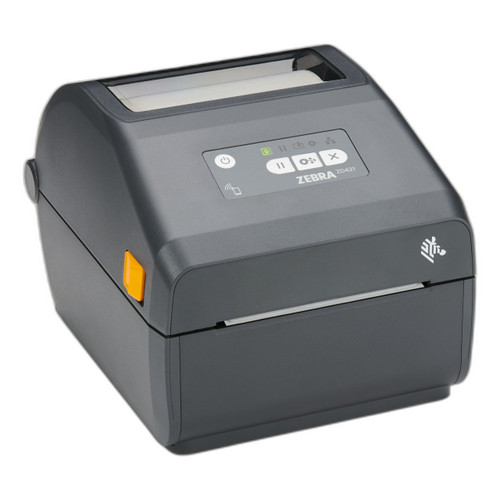
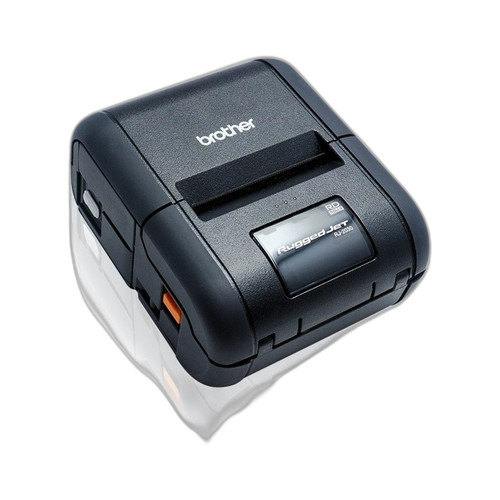
Both the Zebra ZD4A042-301X01EZ and the Brother RJ2050 are mobile/portable thermal printers designed for field and on-demand label or receipt printing. However, they differ substantially in print technology, print width, and feature depth: the Zebra uses thermal transfer (ribbon-based) at 4-inch width with an integrated 2D scanner and 300 DPI resolution, while the Brother is a ribbon-free direct thermal unit with a 2-inch print width at 6 ips. This comparison addresses which unit better fits a given mobile printing deployment.
In This Guide
- Which printer delivers higher-quality, more versatile output for barcode and label applications?
- Which unit offers more capable connectivity and on-device intelligence for mobile workflows?
- Which printer is better suited for extended mobile and field use in terms of power and form factor?
- Which should you choose: the ZD4A042-301X01EZ or the RJ2050?
- Side-by-Side Specs
- FAQ
Which printer delivers higher-quality, more versatile output for barcode and label applications?
The Zebra ZD4A042-301X01EZ uses thermal transfer (ribbon-based) technology at 300 DPI print resolution, producing durable, scan-ready barcodes that meet GS1 readability standards per the provided specs. Its 4-inch maximum label width supports a broader range of label formats. Print speed is specified at 4 in./sec (102 mm/sec) at 300 DPI. Supported symbologies include 1D (Code 128, Code 39, UPC, EAN) and 2D (QR Code, Data Matrix, PDF417).
The Brother RJ2050 uses direct thermal technology—ribbon-free—which reduces consumable overhead in the field. Its print width is 2 inches, half that of the Zebra, limiting label format options. Print speed is specified at 6 ips (inches per second), which is faster than the Zebra's stated 4 in./sec. Resolution for the RJ2050 is not specified in the provided data. Media types supported include receipt stock, shipping labels, and tags.
For applications requiring wider labels, higher confirmed resolution, or thermal transfer durability (e.g., outdoor asset tags, GS1-compliant barcodes), the Zebra holds a clear documented advantage. For high-speed receipt or narrow-label printing without ribbon management, the Brother's direct thermal approach and faster rated speed are relevant advantages.
Which unit offers more capable connectivity and on-device intelligence for mobile workflows?
The Zebra ZD4A042-301X01EZ specifies Wi-Fi 802.11, Bluetooth Low Energy (BLE) with NFC (Print Touch tag), and runs the Link-OS operating system. It includes 512 MB Flash and 256 MB SDRAM—on-device memory that supports Link-OS field applications and enterprise software integration. Critically, the Zebra integrates a 2D imager capable of reading QR Code, Data Matrix, PDF417, Code 128, and UPC barcodes, eliminating the need for a separate scanner in verify-and-print workflows.
The Brother RJ2050 specifies Wi-Fi (802.11b/g/n) and Bluetooth dual connectivity. No NFC, no on-device operating system, and no integrated scanner are documented in the provided specs. Memory specifications are not provided for the RJ2050.
For deployments requiring scan-and-print workflows, enterprise OS integration, or NFC pairing, the Zebra's documented feature set is substantially richer. The Brother's dual-band Wi-Fi and Bluetooth cover baseline connectivity needs for simpler receipt or label dispatch scenarios.
Which printer is better suited for extended mobile and field use in terms of power and form factor?
The Zebra ZD4A042-301X01EZ specifies a 2750 mAh Lithium-Ion battery. Its form factor is described as a handheld printer. Storage humidity tolerance is noted as 5% to 95% non-condensing. An optional field-installable cutter is referenced in the specs. The product also supports wall or rack mounting via a mounting plate accessory.
The Brother RJ2050 is described as a portable/mobile form factor printer. No battery capacity specification is provided in the supplied data. No ruggedization ratings, operating temperature ranges, or humidity tolerances are documented in the provided specs. An LCD display is specified, which is absent from the Zebra's documented specs.
On power, only the Zebra provides a documented battery figure (2750 mAh). The Brother's battery capacity is not specified, making a direct runtime comparison impossible from available data. The Brother's LCD display is a noted differentiator for standalone usability. Neither unit provides a documented IP/MIL-STD ruggedization rating in the supplied specs.
Which should you choose: the ZD4A042-301X01EZ or the RJ2050?
Our take: The ZD4A042-301X01EZ is the stronger choice when label width, print resolution, integrated scanning, and enterprise OS depth are the primary decision criteria. The Zebra prints at a documented 300 DPI on 4-inch media versus the Brother's unspecified resolution on 2-inch media—a 2× width advantage that directly expands supportable label formats. Its integrated 2D imager (QR, Data Matrix, PDF417) and Link-OS platform with 512 MB Flash/256 MB SDRAM enable scan-and-print workflows that the Brother cannot replicate without additional hardware. The Brother RJ2050 holds a documented speed edge at 6 ips versus Zebra's 4 in./sec, and its ribbon-free direct thermal operation eliminates ribbon consumable management—meaningful advantages for high-volume receipt printing or cost-sensitive narrow-label field kits. Buyers running GS1 barcode compliance, 4-inch asset or shipping labels, or Link-OS enterprise integrations should specify the Zebra. Buyers prioritizing speed, receipt media, and ribbon-free simplicity on a 2-inch format should evaluate the Brother.
Side-by-Side Comparison
Spec-for-spec, from manufacturer data.
| Specification | Zebra ZD4A042-301X01EZ | Brother RJ2050 |
|---|---|---|
| Print Technology | Thermal Transfer (ribbon-based) | Direct Thermal (ribbon-free) |
| Print Resolution | 300 DPI (8 dots/mm) | Not specified |
| Max Print/Media Width | 4 inches | 2 inches |
| Print Speed | 4 in./sec at 300 DPI | 6 ips |
| Connectivity | Wi-Fi 802.11, BLE, NFC (Print Touch) | Wi-Fi 802.11b/g/n, Bluetooth |
| Integrated Scanner | 2D imager (QR, Data Matrix, PDF417, Code 128, UPC) | — |
| 1D Symbologies | Code 128, Code 39, UPC, EAN | Not specified |
| 2D Symbologies | QR Code, Data Matrix, PDF417 | Not specified |
| Battery Capacity | 2750 mAh Lithium-Ion | Not specified |
| On-Device OS | Link-OS | — |
| Memory | 512 MB Flash / 256 MB SDRAM | Not specified |
| Display | — | LCD |
| Media Types | Labels | Receipts, shipping labels, tags |
| Cutter Option | Field-installable | Not specified |
| Form Factor | Handheld | Portable/Mobile |
| Warranty | 1-year | Manufacturer Warranty (duration not specified) |
Frequently Asked Questions
Which should you choose: the ZD4A042-301X01EZ or the RJ2050?
The ZD4A042-301X01EZ is the stronger choice when label width, print resolution, integrated scanning, and enterprise OS depth are the primary decision criteria. The Zebra prints at a documented 300 DPI on 4-inch media versus the Brother's unspecified resolution on 2-inch media—a 2× width advantage that directly expands supportable label formats. Its integrated 2D imager (QR, Data Matrix, PDF417) and Link-OS platform with 512 MB Flash/256 MB SDRAM enable scan-and-print workflows that the Brother cannot replicate without additional hardware. The Brother RJ2050 holds a documented speed edge at 6 ips versus Zebra's 4 in./sec, and its ribbon-free direct thermal operation eliminates ribbon consumable management—meaningful advantages for high-volume receipt printing or cost-sensitive narrow-label field kits. Buyers running GS1 barcode compliance, 4-inch asset or shipping labels, or Link-OS enterprise integrations should specify the Zebra. Buyers prioritizing speed, receipt media, and ribbon-free simplicity on a 2-inch format should evaluate the Brother.
Is the ZD4A042-301X01EZ or RJ2050 better for printing GS1-compliant shipping labels?
Based on the provided specs, the Zebra ZD4A042-301X01EZ is the documented fit: it prints at 300 DPI on up to 4-inch media and the specs explicitly reference GS1 readability standards. The Brother RJ2050 supports only 2-inch media and its print resolution is not specified in the available data, making GS1 compliance verification impossible from spec alone.
Do I still need a separate barcode scanner if I buy the ZD4A042-301X01EZ?
No—per the provided specs, the Zebra ZD4A042-301X01EZ integrates a 2D imager that reads QR Code, Data Matrix, PDF417, Code 128, and UPC barcodes directly. The Brother RJ2050 has no integrated scanner documented in its specs, so a separate scanning device would be required for verify-and-print workflows.
Which printer is faster, the ZD4A042-301X01EZ or the RJ2050?
The Brother RJ2050 is specified at 6 ips (inches per second). The Zebra ZD4A042-301X01EZ is specified at 4 in./sec (102 mm/sec) at 300 DPI. On the documented figures, the Brother prints faster. Note that the Zebra's speed is stated at its maximum 300 DPI resolution; no lower-DPI speed figures are provided in the supplied specs.
More Label Printer Comparisons
- TSC 99-082A101-1001 vs Zebra ZD4A042-301X01EZ
- TSC 99-082A101-1001 vs Zebra ZD4A042-D01X01EZ
- TSC 99-082A101-1001 vs Zebra ZD4AH42-D01X01EZ
- TSC 99-082A101-1001 vs Zebra ZD4A022-D01X01EZ
- TSC 99-082A101-1001 vs TSC 99-083A501-0011
- TSC 99-082A101-1001 vs TSC 99-052A003-0411
Label Printer Buying Guides
Get a Second Opinion on Your Camera Choice
Share your site layout, coverage goals, and budget. Our team will validate the camera selection, flag anything we would change, and recommend products that match the use case.