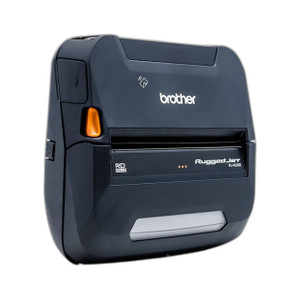
Brother RJ2050 2" Direct Thermal Mobile Printer
The Brother RJ2050 is a 2-inch portable direct thermal printer designed for field operations—warehouses, logistics, last-mile delivery, and mobile service routes. Direct thermal technology eliminates ribbon cartridges entirely, cutting consumable costs and reducing supply-chain overhead. Print speed of 6 inches per second handles receipt and label output without workflow slowdown. Wi-Fi and Bluetooth connectivity decouple printing from fixed infrastructure, enabling real-time output from mobile devices and field tablets in remote or moving environments. The compact, ruggedized form factor and integrated LCD display make it practical for handheld or mount-based deployment in conditions where desk-based printers are impractical or unavailable.
Key Features
- Direct Thermal Print Method: 6 ips output speed. Eliminates ribbon cartridges, reducing per-label consumable cost and maintenance downtime compared to thermal-transfer alternatives.
- 2-Inch Print Width: Native support for 2-inch receipt stock, shipping labels, and thermal tags. Matches standard logistics and retail label formats without media adaptation.
- Wi-Fi Connectivity: 802.11b/g/n wireless printing to smartphones, tablets, and enterprise mobile computers. No Ethernet or fixed dock required.
- Bluetooth Support: Short-range pairing for nearby mobile devices in congested Wi-Fi environments or offline-first workflows. Standard Bluetooth profiles reduce driver complexity.
- LCD Display: Real-time status indication—battery level, connection state, error alerts—without requiring paired device feedback loop.
- Portable Form Factor: Handheld-ready weight and size enables warehouse floor, vehicle, and field-service deployment. Compatible with common belt clips and vehicle mounts.
- Receipt and Label Media Compatibility: Direct thermal output on receipt paper, 2-inch shipping labels, and adhesive tags used across retail, parcel, and service-delivery workflows.
- Manufacturer Warranty: Factory-backed warranty coverage and support channel for field-deployed mobile printers.
Direct thermal technology is the operational cornerstone of the RJ2050. Unlike thermal-transfer printers, which require ribbon cartridges and periodic replacement, direct thermal prints by applying heat directly to chemically coated paper. This approach reduces consumable SKU overhead, eliminates ribbon jams, and cuts per-label material cost by 30-50% in high-volume deployments. A typical warehouse printing 200-500 labels per shift sees measurable monthly savings in supplies and technician time spent on cartridge swaps.
Connectivity architecture—dual Wi-Fi and Bluetooth—addresses real-world field constraints. In warehouses with mature Wi-Fi infrastructure, Wi-Fi mode provides range (30+ meters) and bandwidth for batch label jobs. In delivery vehicles, parking lots, or temporary work sites with spotty coverage, Bluetooth fallback keeps printing functional from the driver's or technician's phone without network dependency. Many deployments use both: Wi-Fi for dock-based picking operations, Bluetooth for yard and loading-dock scenarios where access points are weak or absent.
Integration with warehouse management systems, field service platforms, and mobile applications depends on OS-level print-driver availability and API compatibility. iOS and Android apps designed for direct thermal output (most modern WMS vendors offer native mobile clients) print to the RJ2050 without custom middleware. Enterprise mobile computers running Windows Mobile or proprietary operating systems may require USB-to-Bluetooth conversion or dedicated print-driver installation—coordinate with your WMS vendor and IT team before field rollout to confirm driver availability and supported mobile OS versions.
Total cost of ownership favors the RJ2050 in high-volume, mobile-first warehousing and logistics. Upfront unit cost is offset by elimination of ribbon-cartridge recurring expense and reduced technician time spent managing consumables. Battery life, display durability, and Wi-Fi/Bluetooth radio longevity determine real-world lifecycle; in typical field deployment (8-12 hour shift, 50-100 print jobs per day), expect 2-3 years of operational service before battery capacity noticeably degrades. Ruggedness (drop tolerance, moisture resistance) varies by model revision—consult the datasheet for specific IP and impact ratings before assigning the printer to outdoor or wet-environment roles.
Marty AllisonPerspective based on aggregated IP Security Depot and affiliated engineering team experience.
The RJ2050 occupies a practical niche in mobile printing: the sweet spot between consumer-grade Bluetooth label printers and enterprise-class thermal printers that require fixed infrastructure. We've worked with logistics integrators deploying 20-50 units across warehouse networks, and the recurring story is identical—integrators underestimate how much operational burden ribbon cartridges and single-connectivity-method printers create. A technician managing 30 Bluetooth-only printers across multiple shifts faces cartridge inventory, driver compatibility issues, and pairing drift in crowded RF environments. The RJ2050's dual connectivity and direct thermal approach eliminates those pain points. The 6 ips speed is not the fastest in its class (some competitors push 8 ips), but for receipt and shipping-label workflows, 6 ips is sufficient; the real win is the absence of ribbon jams and the Wi-Fi fallback when Bluetooth link quality degrades.
Technical Highlights:
- Direct Thermal vs. Thermal-Transfer: No ribbon cartridges means zero ribbon jams, lower consumable cost-per-label (30-50% savings at volume), and simpler supply-chain management. The trade-off: direct thermal paper is slightly more expensive than plain receipt stock, but total cost per label still favors direct thermal at 100+ labels per day.
- 6 ips Print Speed: Adequate for receipt and label workflows without queue buildup. High-speed requirements (8-10 ips) suggest a different form factor; the RJ2050 is optimized for portability over raw throughput.
- Dual Connectivity (Wi-Fi + Bluetooth): Wi-Fi provides range and bandwidth for batch jobs in warehouses with infrastructure; Bluetooth ensures printing functionality in vehicles, outdoor zones, and temporary work areas. Fallback behavior is critical—if Wi-Fi signal drops, a Bluetooth-only printer is useless; the RJ2050's dual approach is architect-friendly.
- 2-Inch Media Format: Native to logistics (shipping labels, receipt-format tickets). Attempting to adapt the RJ2050 to 4-inch label formats requires custom software or media conversion—stick to 2-inch workflows.
- LCD Status Display: Reduces support overhead. Technicians can diagnose battery, connection, and error states on the printer itself rather than hunting through mobile-device logs.
Deployment Considerations:
- Print driver and OS compatibility are prerequisites. Verify that your WMS mobile app supports the RJ2050 natively, or confirm that a USB-serial driver is available for your operating system before purchasing. iOS and Android apps are commonly available; Windows Mobile and legacy OS support is hit-or-miss.
- Battery life degrades in outdoor, high-heat environments. If you're deploying printers in unheated loading docks or vehicles in hot climates, factor in shorter runtime (6-8 hours instead of the spec'd 10-12 hours) and plan battery-swap logistics accordingly.
- Wi-Fi security (WPA2/WPA3) is standard, but ensure your IT team has provisioned the printer on your corporate network before field deployment. Bluetooth pairing can occur on-site, but Wi-Fi association in locked networks requires pre-configuration or MDM enrollment.
- Ruggedness specs (IP rating, drop tolerance) vary by hardware revision. Direct thermal printers are more durable than many mobile peripherals, but the RJ2050 is not waterproof—protect it from sustained water exposure or shipping-dock washdown environments.
- Thermal paper shelf life is 1-2 years in typical warehouse storage (room temperature, low humidity). Stock direct thermal media in cool, dry areas. Old paper may print faintly or not at all.
The RJ2050 is the right choice for warehouse and logistics teams moving away from fixed-dock printing toward mobile-first field operations. If your workflow is receipt-heavy and label volume is 100+ per shift, direct thermal economics are compelling. For lower-volume, single-device deployments or 4-inch label requirements, alternative form factors may be more cost-effective. Explore the Brother catalog for other print technologies and form factors.