
TSC 99-082A101-1001 vs Zebra ZD4A042-301X01EZ: Specification Comparison
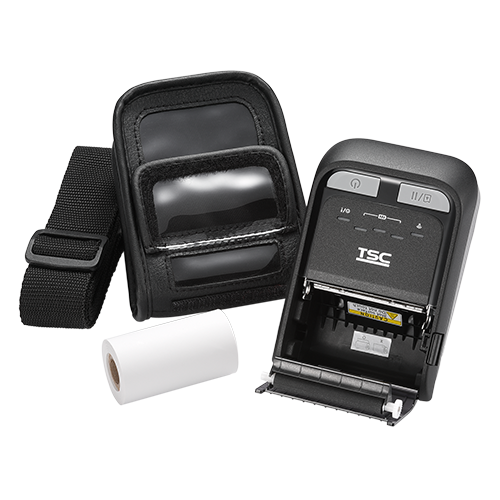
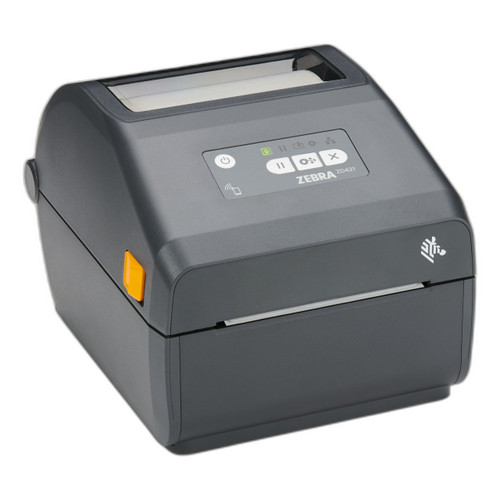
Both the TSC 99-082A101-1001 and the Zebra ZD4A042-301X01EZ are mobile handheld thermal printers designed for field label and receipt printing, making them directly cross-shoppable for warehouse, logistics, retail, and field-service deployments. The comparison spans print technology, resolution, connectivity, media handling, memory, and ecosystem support—each dimension carrying real operational cost and compatibility implications for installers and procurement teams evaluating a mobile printing platform.
In This Guide
- Which printer delivers the resolution and print method your label stock and compliance requirements actually demand?
- Does either printer provide the connectivity stack and integrated scanning capability your mobile workflow requires?
- Which unit has the processing headroom, media flexibility, and power capacity for sustained mobile shift use?
- Which should you choose: the 99-082A101-1001 or the ZD4A042-301X01EZ?
- Side-by-Side Specs
- FAQ
Which printer delivers the resolution and print method your label stock and compliance requirements actually demand?
The TSC 99-082A101-1001 uses direct thermal printing at 203 dpi (8 dots/mm), eliminating ribbon consumables entirely. Its 4 ips (102 mm/s) print speed is spec-confirmed. Direct thermal is well-suited for short-to-medium label life applications—receipts, pick tickets, shipping labels—where ribbon cost and replacement downtime are friction points in field deployments.
The Zebra ZD4A042-301X01EZ uses thermal transfer (ribbon-based) printing and delivers 300 dpi at the same 4 in./sec throughput. Thermal transfer produces more durable output resistant to heat, UV, and abrasion, which is relevant for asset tags, compliance labels, or any media needing extended readability. The 300 dpi output also meets higher GS1 barcode density requirements that 203 dpi may not satisfy for certain 2D symbologies at small print sizes.
Resolution is the clearest differentiator here: 300 dpi versus 203 dpi is a 47.8% density advantage for the Zebra. Buyers printing small 2D codes (Data Matrix, QR at narrow X-dimensions) or labels requiring FDA/GS1 compliance should weigh this heavily. Buyers prioritizing consumable simplicity and lower per-label cost should favor the ribbon-free TSC.
Does either printer provide the connectivity stack and integrated scanning capability your mobile workflow requires?
The TSC 99-082A101-1001 specifies USB, Wi-Fi, and Bluetooth 4.2 MFi. The MFi certification is a concrete spec: it enables direct pairing with iOS devices without an intermediary app layer, which is operationally significant for iOS-based WMS or field-service platforms. Programming language support is listed as TSPL-EZC and ESC-POS, covering both label-format and receipt/POS workflows from a single device.
The Zebra ZD4A042-301X01EZ specifies Wi-Fi 802.11 and Bluetooth Low Energy (BLE) with NFC (Print Touch tag included per spec). Bluetooth classic is not listed in the provided specs. The Zebra also integrates a 2D imager supporting QR Code, Data Matrix, PDF417, Code 128, Code 39, UPC, and EAN—a dedicated scan engine that the TSC does not include. This makes the Zebra a print-and-scan device; the TSC is print-only.
The operating system listed for the Zebra is Link-OS, Zebra's proprietary firmware ecosystem enabling remote management, profile deployment, and integration with Zebra's Print DNA suite. No equivalent mobile device management framework is listed in the TSC specs. For enterprise fleets requiring centralized printer management, the Link-OS platform is a functional differentiator not present in the TSC specification set.
Which unit has the processing headroom, media flexibility, and power capacity for sustained mobile shift use?
The TSC 99-082A101-1001 specifies 32 MB RAM and 16 MB Flash. Media handling covers receipts, selected labels, and linerless media with paper widths from 20 mm to 80 mm (max without hanger) and label lengths from 1 inch to 110 inches. Linerless media support is a meaningful cost and waste-reduction spec for high-volume receipt or continuous-label workflows. Battery capacity is not listed in the provided TSC specs.
The Zebra ZD4A042-301X01EZ specifies 256 MB SDRAM and 512 MB Flash—8× the RAM and 32× the Flash of the TSC by the numbers provided. A 2750 mAh lithium-ion battery is explicitly listed. Max label width is stated as 4 inches. Linerless media support is not listed in the Zebra specs. Battery capacity for the TSC is absent from the provided specification set, so a runtime comparison cannot be made on spec alone.
Memory headroom favors the Zebra substantially: 256 MB SDRAM vs 32 MB RAM and 512 MB Flash vs 16 MB Flash. This supports larger label format libraries, more complex graphics rendering, and smoother Link-OS operation in fleet-managed environments. The TSC's linerless capability is a spec the Zebra does not list, which is relevant for liner-waste reduction in receipt-heavy or continuous-media use cases.
Which should you choose: the 99-082A101-1001 or the ZD4A042-301X01EZ?
Our take: The ZD4A042-301X01EZ is the stronger choice when print quality, integrated scanning, and enterprise fleet management are the primary requirements; the 99-082A101-1001 is the stronger choice when consumable simplicity, iOS MFi compatibility, linerless media support, and lower total consumable cost are the priorities. Three concrete spec deltas: (1) resolution—Zebra at 300 dpi versus TSC at 203 dpi, a 48% density advantage meaningful for small 2D codes and GS1-compliant labels; (2) memory—Zebra at 256 MB SDRAM / 512 MB Flash versus TSC at 32 MB RAM / 16 MB Flash, supporting larger format libraries and Link-OS management overhead; (3) integrated 2D imager in the Zebra (QR, Data Matrix, PDF417, Code 128, UPC, EAN) versus no scan engine in the TSC. Platform qualifier: iOS-centric field teams using WMS with ESC-POS or TSPL workflows and linerless media should evaluate the TSC; Zebra Link-OS enterprise fleets requiring scan-and-print in a single device and durable thermal-transfer output should specify the Zebra.
Side-by-Side Comparison
Spec-for-spec, from manufacturer data.
| Specification | TSC 99-082A101-1001 | Zebra ZD4A042-301X01EZ |
|---|---|---|
| Print Method | Direct Thermal (no ribbon) | Thermal Transfer (ribbon-based) |
| Print Resolution | 203 dpi (8 dots/mm) | 300 dpi |
| Print Speed | 4 ips (102 mm/s) | 4 in./sec (102 mm/s) |
| Max Print Width | 2.83 in. (72 mm) | 4 in. |
| Paper/Media Width Range | 20 mm – 80 mm (max w/o hanger) | — |
| Label Length Range | 1 in. – 110 in. | — |
| Supported Media | Labels, receipts, linerless | Labels (linerless not listed) |
| Connectivity | USB, Wi-Fi, Bluetooth 4.2 MFi | Wi-Fi 802.11, BLE, NFC (Print Touch) |
| Programming Languages | TSPL-EZC, ESC-POS | Link-OS |
| RAM | 32 MB | 256 MB SDRAM |
| Flash Storage | 16 MB | 512 MB |
| Integrated Scan Engine | — | 2D (QR, Data Matrix, PDF417, Code 128, Code 39, UPC, EAN) |
| Battery Capacity | — (not specified) | 2750 mAh Li-Ion |
| Warranty | 2-year | 1-year |
| Form Factor | Mobile handheld | Mobile handheld |
| iOS MFi Certified | Yes (Bluetooth MFi listed) | Not listed in provided specs |
Frequently Asked Questions
Which should you choose: the 99-082A101-1001 or the ZD4A042-301X01EZ?
The ZD4A042-301X01EZ is the stronger choice when print quality, integrated scanning, and enterprise fleet management are the primary requirements; the 99-082A101-1001 is the stronger choice when consumable simplicity, iOS MFi compatibility, linerless media support, and lower total consumable cost are the priorities. Three concrete spec deltas: (1) resolution—Zebra at 300 dpi versus TSC at 203 dpi, a 48% density advantage meaningful for small 2D codes and GS1-compliant labels; (2) memory—Zebra at 256 MB SDRAM / 512 MB Flash versus TSC at 32 MB RAM / 16 MB Flash, supporting larger format libraries and Link-OS management overhead; (3) integrated 2D imager in the Zebra (QR, Data Matrix, PDF417, Code 128, UPC, EAN) versus no scan engine in the TSC. Platform qualifier: iOS-centric field teams using WMS with ESC-POS or TSPL workflows and linerless media should evaluate the TSC; Zebra Link-OS enterprise fleets requiring scan-and-print in a single device and durable thermal-transfer output should specify the Zebra.
Is the 99-082A101-1001 or ZD4A042-301X01EZ better for iOS-based field apps?
The TSC 99-082A101-1001 specifies Bluetooth 4.2 MFi certification, which is the Apple Made for iPhone/iPad credential enabling direct, validated Bluetooth pairing with iOS devices. The Zebra ZD4A042-301X01EZ lists Bluetooth Low Energy (BLE) and NFC (Print Touch), but MFi certification is not listed in the provided Zebra specs. For deployments running iOS WMS or field-service apps that require MFi-validated pairing, the TSC has a documented spec advantage; verify Zebra MFi status directly with Zebra before specifying.
Which printer handles wider label stock—the TSC 99-082A101-1001 or the Zebra ZD4A042-301X01EZ?
The Zebra ZD4A042-301X01EZ supports a maximum label width of 4 inches per the provided specs. The TSC 99-082A101-1001 lists a maximum print width of 2.83 inches (72 mm) and a maximum paper width of 80 mm (approximately 3.15 inches) without the media hanger. For standard 4-inch shipping or compliance labels, the Zebra accommodates that width by spec; the TSC does not reach 4 inches on its stated print width of 2.83 inches.
Does either printer support linerless media to reduce label waste?
Yes, but only one by the specs provided. The TSC 99-082A101-1001 explicitly lists linerless media as a supported media type alongside labels and receipts. The Zebra ZD4A042-301X01EZ's provided specs do not list linerless media as a supported type. If linerless capability is a requirement—common in high-volume receipt printing or sustainability-focused deployments—the TSC 99-082A101-1001 has that specification; the Zebra ZD4A042-301X01EZ does not per the data available.
More Label Printer Comparisons
- TSC 99-082A101-1001 vs Zebra ZD4A042-D01X01EZ
- TSC 99-082A101-1001 vs Zebra ZD4AH42-D01X01EZ
- TSC 99-082A101-1001 vs Zebra ZD4A022-D01X01EZ
- TSC 99-082A101-1001 vs TSC 99-083A501-0011
- TSC 99-082A101-1001 vs TSC 99-052A003-0411
- TSC 99-083A501-0011 vs Zebra ZD4A042-301X01EZ
Label Printer Buying Guides
Get a Second Opinion on Your Camera Choice
Share your site layout, coverage goals, and budget. Our team will validate the camera selection, flag anything we would change, and recommend products that match the use case.