
TSC 99-082A101-1001 vs Zebra ZD4AH42-D01X01EZ: Specification Comparison
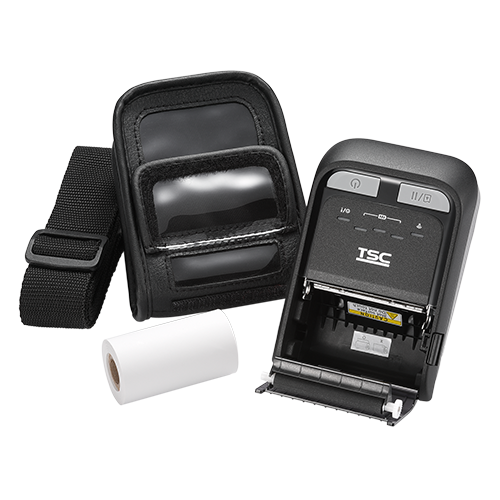
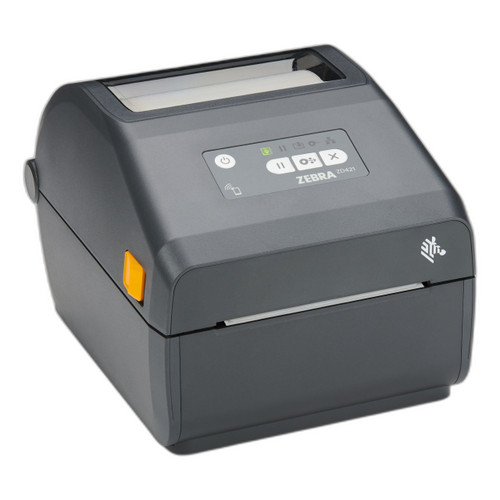
Both the TSC 99-082A101-1001 and the Zebra ZD4AH42-D01X01EZ are direct thermal mobile handheld printers targeting field and point-of-care label and receipt printing without ink or toner. Each operates wirelessly, supports standard 1D and 2D barcode symbologies, and prints at 203 dpi. The key differentiators lie in connectivity breadth, integrated scanning capability, memory architecture, battery specification, and supported programming environments — dimensions that directly affect system integration complexity, operator workflow, and total deployment cost.
In This Guide
- Which printer offers broader wireless connectivity and integration flexibility?
- How do the integrated scanning capability and memory architecture differ between the two models?
- What do the media handling and print specifications reveal about each printer's operational range?
- Which should you choose: the 99-082A101-1001 or the ZD4AH42-D01X01EZ?
- Side-by-Side Specs
- FAQ
Which printer offers broader wireless connectivity and integration flexibility?
The TSC 99-082A101-1001 provides USB, Wi-Fi, and Bluetooth 4.2 MFi connectivity. The Bluetooth 4.2 MFi certification is a specific qualification that enables direct pairing with iOS devices without third-party middleware, which is relevant for deployments running iOS-based WMS or field apps. Programming language support spans TSPL-EZC and ESC-POS, covering both label-format and receipt-printer command sets out of the box.
The Zebra ZD4AH42-D01X01EZ lists Wi-Fi 802.11 a/b/g/n/ac and Bluetooth Low Energy (BLE) with NFC Print Touch. The Wi-Fi spec explicitly names the 802.11ac (Wave 1) radio band, which is a faster standard than the TSC's unlisted Wi-Fi band. The Zebra runs Link-OS, Zebra's proprietary printer operating environment, which integrates with Zebra's broader ecosystem of device management, label design (ZPL/ZBI), and cloud printing tools. No ESC-POS support is listed for the Zebra.
For iOS-centric field teams needing Bluetooth MFi certification and dual command-set (label + receipt) support, the TSC has a clear connectivity advantage. For enterprises already standardized on Zebra's Link-OS ecosystem or requiring 802.11ac radio performance, the Zebra's wireless specification is better documented and aligns with managed Zebra fleets.
How do the integrated scanning capability and memory architecture differ between the two models?
The Zebra ZD4AH42-D01X01EZ includes an integrated 2D scan engine supporting QR Code, Data Matrix, PDF417, Code 128, Code 39, UPC, and EAN. This means a single operator can scan an existing label and immediately reprint or verify it without a separate handheld scanner, which is a workflow consolidation relevant to point-of-care, receiving, and field-service scenarios. No integrated scan engine is specified for the TSC 99-082A101-1001.
Memory is significantly asymmetric: the Zebra carries 512 MB Flash and 256 MB SDRAM, while the TSC specifies 32 MB RAM and 16 MB Flash. The Zebra's memory headroom supports larger label format libraries, firmware updates, and the Link-OS runtime without storage contention. The TSC's memory is adequate for TSPL-EZC and ESC-POS job queues in lean deployments but is not documented to support equivalent firmware complexity.
The Zebra's battery is specified at 2,750 mAh Lithium-Ion with an estimated 4–6 hours of intermittent use. No battery capacity or runtime figure is listed in the TSC specifications provided. Buyers deploying across full shifts without access to charging infrastructure should note that the TSC battery figure is absent from the available spec data and would require vendor confirmation before procurement.
What do the media handling and print specifications reveal about each printer's operational range?
Both printers share a 203 dpi print resolution and a 4 inches-per-second print speed. The TSC 99-082A101-1001 specifies a maximum print width of 2.83 inches (72 mm), a paper width range of 20 mm to 70 mm with media hanger (80 mm max without), and a label length range of 1 inch to 110 inches. Supported media explicitly includes receipts, selected labels, and linerless media — the linerless capability eliminates liner waste and is relevant for logistics and food-service receipt printing.
The Zebra ZD4AH42-D01X01EZ lists a label width range of 1 to 4 inches. The 4-inch upper limit exceeds the TSC's 2.83-inch maximum, accommodating wider label formats such as shipping labels or compliance labels that require more horizontal real estate. The Zebra spec notes a field-installable cutter option. No linerless media capability is stated for the Zebra in the provided specifications.
The Zebra also notes a print speed of 4 in./102 mm per second at 300 dpi, implying the printer can operate at 300 dpi — a higher resolution mode not listed for the TSC. If the 300 dpi figure is at full rated speed, this is meaningful for applications requiring finer barcode density or smaller font legibility. No 300 dpi mode is documented in the TSC spec data provided.
Which should you choose: the 99-082A101-1001 or the ZD4AH42-D01X01EZ?
Our take: The ZD4AH42-D01X01EZ is the stronger choice when workflow consolidation, wider media range, and enterprise memory capacity are priorities; the 99-082A101-1001 is the stronger choice when linerless media support, Bluetooth MFi iOS pairing, dual command-set flexibility, or a 2-year warranty baseline are the deciding factors. Spec delta summary: the Zebra's integrated 2D scan engine is absent on the TSC; the Zebra supports up to 4-inch label width versus the TSC's 2.83-inch maximum; and the Zebra's 512 MB Flash / 256 MB SDRAM dwarfs the TSC's 32 MB RAM / 16 MB Flash. Conversely, the TSC specifies linerless media support and a 2-year warranty versus the Zebra's 1-year. Battery runtime is documented only for the Zebra (2,750 mAh, 4–6 hr intermittent). Buyers on Zebra Link-OS managed fleets or point-of-care scan-and-print workflows should favor the Zebra; iOS-heavy or receipt-printing field deployments with linerless requirements should evaluate the TSC.
Side-by-Side Comparison
Spec-for-spec, from manufacturer data.
| Specification | TSC 99-082A101-1001 | Zebra ZD4AH42-D01X01EZ |
|---|---|---|
| Product Type | Direct Thermal Mobile Printer | Direct Thermal Mobile Printer |
| Print Method | Direct Thermal | Direct Thermal |
| Print Resolution | 203 dpi (8 dots/mm) | 203 dpi / 300 dpi (noted at 4 ips) |
| Print Speed | 4 ips (102 mm/s) | 4 in./102 mm per second |
| Max Print Width | 2.83 in. (72 mm) | 4 in. |
| Media Width Range | 20–70 mm (hanger); 80 mm max | 1–4 inches |
| Label Length Range | 1 in. to 110 in. (25.4–2,794 mm) | — |
| Supported Media | Labels, Receipts, Linerless | Labels (linerless not listed) |
| Connectivity | USB, Wi-Fi, Bluetooth 4.2 MFi | Wi-Fi 802.11 a/b/g/n/ac, BLE, NFC |
| Integrated Scanner | — | 2D (QR, Data Matrix, PDF417, Code 128, Code 39, UPC, EAN) |
| RAM | 32 MB | 256 MB SDRAM |
| Flash Storage | 16 MB | 512 MB |
| Battery Capacity | — | 2,750 mAh Lithium-Ion |
| Battery Runtime | — | 4–6 hrs intermittent use |
| Programming Languages | TSPL-EZC, ESC-POS | Link-OS (ZPL/ZBI; ESC-POS not listed) |
| Warranty | 2-Year | 1-Year |
Frequently Asked Questions
Which should you choose: the 99-082A101-1001 or the ZD4AH42-D01X01EZ?
The ZD4AH42-D01X01EZ is the stronger choice when workflow consolidation, wider media range, and enterprise memory capacity are priorities; the 99-082A101-1001 is the stronger choice when linerless media support, Bluetooth MFi iOS pairing, dual command-set flexibility, or a 2-year warranty baseline are the deciding factors. Spec delta summary: the Zebra's integrated 2D scan engine is absent on the TSC; the Zebra supports up to 4-inch label width versus the TSC's 2.83-inch maximum; and the Zebra's 512 MB Flash / 256 MB SDRAM dwarfs the TSC's 32 MB RAM / 16 MB Flash. Conversely, the TSC specifies linerless media support and a 2-year warranty versus the Zebra's 1-year. Battery runtime is documented only for the Zebra (2,750 mAh, 4–6 hr intermittent). Buyers on Zebra Link-OS managed fleets or point-of-care scan-and-print workflows should favor the Zebra; iOS-heavy or receipt-printing field deployments with linerless requirements should evaluate the TSC.
Does either printer support linerless media, and does it matter for my use case?
Yes — the TSC 99-082A101-1001 explicitly lists linerless media support in its specifications. The Zebra ZD4AH42-D01X01EZ does not list linerless capability in the provided spec data. Linerless media eliminates the backing paper liner, reducing waste and roll changeover frequency. This is particularly relevant for food-service, logistics, and retail receipt printing where liner disposal is a cost and compliance concern. If linerless media is a requirement, the TSC is the only confirmed option between these two models.
Which printer is better suited for point-of-care or clinical labeling workflows?
The Zebra ZD4AH42-D01X01EZ has a stated advantage for point-of-care labeling: its integrated 2D scan engine (QR, Data Matrix, PDF417, Code 128, UPC, EAN) allows a clinician or technician to scan a patient wristband or specimen and immediately reprint a matching label from a single device. The TSC 99-082A101-1001 has no integrated scanner listed in its specifications, requiring a separate scanning device. The Zebra also supports a wider label width (up to 4 inches) which accommodates common clinical label formats. For dedicated point-of-care workflows, the Zebra's scan-and-print consolidation is a meaningful workflow differentiator.
Is the TSC 99-082A101-1001 or the Zebra ZD4AH42-D01X01EZ a better fit for iOS-based mobile workforce apps?
The TSC 99-082A101-1001 specifies Bluetooth 4.2 MFi certification, which is Apple's Made for iPhone/iPad program. MFi certification allows direct Bluetooth communication with iOS devices using Apple's native Bluetooth stack without additional middleware. The Zebra ZD4AH42-D01X01EZ lists Bluetooth Low Energy (BLE) and NFC Print Touch, but MFi certification is not stated in the provided specifications. If your iOS app relies on MFi-certified accessories for Bluetooth pairing — common in enterprise iOS MDM environments — the TSC has documented compliance. Buyers should verify current MFi and BLE SDK support with both vendors before finalizing iOS deployment architecture.
More Label Printer Comparisons
- TSC 99-082A101-1001 vs Zebra ZD4A042-301X01EZ
- TSC 99-082A101-1001 vs Zebra ZD4A042-D01X01EZ
- TSC 99-082A101-1001 vs Zebra ZD4A022-D01X01EZ
- TSC 99-082A101-1001 vs TSC 99-083A501-0011
- TSC 99-082A101-1001 vs TSC 99-052A003-0411
- TSC 99-083A501-0011 vs Zebra ZD4A042-301X01EZ
Label Printer Buying Guides
Get a Second Opinion on Your Camera Choice
Share your site layout, coverage goals, and budget. Our team will validate the camera selection, flag anything we would change, and recommend products that match the use case.