
Vivotek ND9542P vs Hanwha XRN-3220B2: Specification Comparison
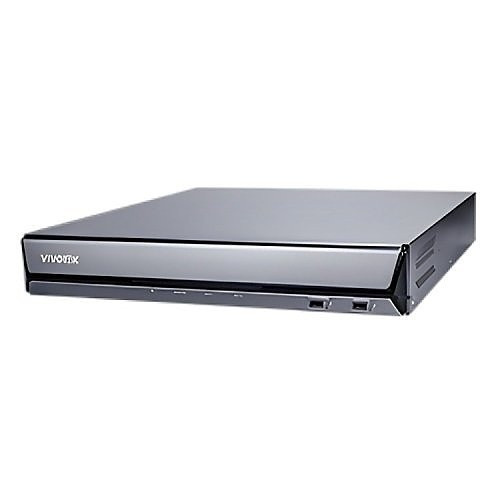
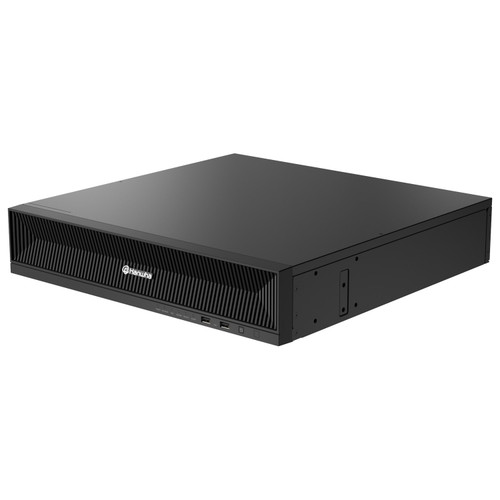
Both the Vivotek ND9542P and the Hanwha XRN-3220B2 are 32-channel embedded-Linux NVRs targeting professional IP camera deployments. The ND9542P is a PoE-integrated appliance recording at up to 8MP (4K), while the XRN-3220B2 is a standalone (no built-in PoE switch) high-density unit capable of recording at up to 32MP and shipping with 48TB of pre-installed storage. Buyers cross-shopping these models are typically evaluating channel density, maximum camera resolution, storage scalability, recording bandwidth, and cybersecurity posture for mid-to-large enterprise or campus-scale surveillance projects.
In This Guide
- How do the two NVRs compare in recording resolution, bandwidth, and storage capacity?
- What are the differences in network connectivity, PoE capability, and physical I/O?
- How do the two units differ in analytics, cybersecurity, and VMS/software compatibility?
- Which should you choose: the ND9542P or the XRN-3220B2?
- Side-by-Side Specs
- FAQ
How do the two NVRs compare in recording resolution, bandwidth, and storage capacity?
The Vivotek ND9542P records all 32 channels at up to 8MP (3840×2160) with a maximum recording throughput of 192 Mbps and a network input/output combined ceiling of 224 Mbps. Its hardware decoder supports up to 7680×2560 decoding and sustains H.265/H.264 at 3840×2160 @ 90 fps or 1920×1080 @ 360 fps. Internal storage is limited to four 3.5-inch SATA bays (HDD not included); maximum capacity is governed by Vivotek's recommended HDD list, with no figure stated in the supplied spec sheet. RAID 0, 1, and 5 are supported. USB 3.0 is available for external storage.
The Hanwha XRN-3220B2 raises the ceiling considerably: it records all 32 channels at up to 32MP simultaneously, with a distributed recording bandwidth of 520 Mbps and a normal-mode bandwidth of 300 Mbps. Playback bandwidth is rated at 200 Mbps for multi-user simultaneous access. The unit ships with 48TB across eight SATA 3.5-inch bays and is expandable to a stated maximum of 80TB. The processor is identified as 12th-generation Intel. Where the ND9542P provides RAID 0/1/5, RAID capability for the XRN-3220B2 is not stated in the supplied specifications.
What are the differences in network connectivity, PoE capability, and physical I/O?
The ND9542P includes a built-in PoE+ (802.3at) switch with 16 alarm inputs and 8 alarm outputs, dual 10/100/1000 Mbps RJ-45 ports, three USB ports (two USB 2.0 front, one USB 3.0 rear), one RS-485 port, and 3.5 mm audio in/out jacks. PoE management is listed as supported, meaning cameras can be powered directly from the NVR without a separate switch. Video outputs are HDMI and VGA, with display resolutions up to 3840×2160. Playback is limited to 4 simultaneous channels.
The XRN-3220B2 provides three RJ-45 Gigabit ports (LAN/WAN) but does not include built-in PoE—cameras require a separate PoE switch or injectors. Alarm I/O counts, USB port configuration, RS-485, and audio jack details are not provided in the supplied specifications. Video output type and count are also not stated in the provided spec data. The additional network ports (three versus two) offer more flexibility for separating management, camera, and client traffic on enterprise networks.
How do the two units differ in analytics, cybersecurity, and VMS/software compatibility?
The ND9542P offers Deep Search VCA covering people (gender, age, clothing color, accessories), vehicles (type, color), line crossing, intrusion, and loitering. It supports VCA counting, event search, Smart Search II, and fisheye dewarp (local: 1O/1R/1P/1O3R/1O8R/1P3R). Camera integration is ONVIF Profile S. Trend Micro IoT Security and Cybersecurity Management are listed as supported features. Compatible software includes Vivotek's Shepherd and VAST Security Station (VSS), plus iViewer, VIVOCloud, and VORTEX mobile apps. The unit carries CE, LVD, FCC, VCCI, C-Tick, UL, CB, BSMI, and BIS safety certifications.
The XRN-3220B2 lists analytics as Defocus, Audio, Dynamic Event, and User Event—significantly fewer named AI/VCA categories than the ND9542P, though additional analytics may be available via camera-side or VMS processing not captured in the supplied specs. Cybersecurity posture is stronger at the hardware level: the XRN-3220B2 carries NDAA compliance and an integrated TPM 2.0 security chip, neither of which is listed for the ND9542P. VMS compatibility includes ONVIF, SUNAPI (Hanwha's proprietary API), Wisenet Viewer, and Wisenet Mobile. WiseStream compression optimization is listed for the XRN-3220B2 and has no equivalent listed for the ND9542P.
Which should you choose: the ND9542P or the XRN-3220B2?
Our take: The XRN-3220B2 is the stronger choice when maximum recording resolution, raw storage capacity, and hardware-rooted cybersecurity are the primary requirements. Concretely: it records at up to 32MP versus the ND9542P's 8MP ceiling; delivers 520 Mbps distributed recording bandwidth versus 192 Mbps; and ships pre-loaded with 48TB (expandable to 80TB) versus the ND9542P's four empty bays. It also adds NDAA compliance and TPM 2.0—neither is listed for the ND9542P—making it the more defensible choice for government and regulated-enterprise procurement. Conversely, the ND9542P is the better fit when an integrated PoE+ switch (eliminating a separate switch purchase), on-box Deep Search VCA with attribute-level filtering (gender, age, vehicle type, color), and RAID 0/1/5 are valued, or when operating temperature up to 55°C matters—the XRN-3220B2 is rated only to 40°C. Platform buyers already standardized on Hanwha Wisenet/SUNAPI infrastructure should default to the XRN-3220B2.
Side-by-Side Comparison
Spec-for-spec, from manufacturer data.
| Specification | Vivotek ND9542P | Hanwha XRN-3220B2 |
|---|---|---|
| Product Type | NVR (with built-in PoE+ switch) | NVR (no built-in PoE) |
| Max Channels | 32 | 32 |
| Max Recording Resolution | 8MP (3840×2160) | 32MP |
| Recording Bandwidth | 192 Mbps | 520 Mbps distributed / 300 Mbps normal |
| Playback Bandwidth | Not stated | 200 Mbps (multi-user) |
| Internal HDD Bays | 4 × 3.5-inch SATA | 8 × 3.5-inch SATA |
| Bundled Storage | None (HDD sold separately) | 48TB included |
| Max Storage Capacity | Not stated (see Vivotek HDD list) | 80TB |
| RAID Support | RAID 0, 1, 5 | Not stated |
| Network Ports | 2 × RJ-45 1GbE | 3 × RJ-45 1GbE |
| Built-in PoE | PoE+ (802.3at) | — |
| Alarm Inputs / Outputs | 16 in / 8 out | Not stated |
| Video Compression | H.265, H.264, MJPEG | H.265, H.264, MJPEG + WiseStream |
| On-box VCA Analytics | People/vehicle attributes, line crossing, intrusion, loitering, VCA counting | Defocus, Audio, Dynamic Event, User Event |
| NDAA Compliance | Not stated | Yes |
| Hardware Security | Trend Micro IoT Security (software) | TPM 2.0 (hardware) |
| Operating Temperature | -10°C to 55°C | 0°C to 40°C |
| Weight (without HDD) | 4.6 kg | 7.3 kg |
| Warranty | 3 years | 5 years |
| Operating System | Embedded Linux | Embedded Linux |
Frequently Asked Questions
Which should you choose: the ND9542P or the XRN-3220B2?
The XRN-3220B2 is the stronger choice when maximum recording resolution, raw storage capacity, and hardware-rooted cybersecurity are the primary requirements. Concretely: it records at up to 32MP versus the ND9542P's 8MP ceiling; delivers 520 Mbps distributed recording bandwidth versus 192 Mbps; and ships pre-loaded with 48TB (expandable to 80TB) versus the ND9542P's four empty bays. It also adds NDAA compliance and TPM 2.0—neither is listed for the ND9542P—making it the more defensible choice for government and regulated-enterprise procurement. Conversely, the ND9542P is the better fit when an integrated PoE+ switch (eliminating a separate switch purchase), on-box Deep Search VCA with attribute-level filtering (gender, age, vehicle type, color), and RAID 0/1/5 are valued, or when operating temperature up to 55°C matters—the XRN-3220B2 is rated only to 40°C. Platform buyers already standardized on Hanwha Wisenet/SUNAPI infrastructure should default to the XRN-3220B2.
Is the ND9542P or XRN-3220B2 better for large-scale deployments requiring high-resolution cameras above 4K?
The XRN-3220B2 is the clear choice here. Its specified maximum recording resolution is 32MP across all 32 channels simultaneously, while the ND9542P is capped at 8MP (4K). If your camera lineup includes 12MP, 20MP, or higher-resolution sensors, the ND9542P cannot record them at full resolution, whereas the XRN-3220B2 is spec'd to handle them.
Which NVR is easier to deploy if I don't already have a PoE switch infrastructure?
The ND9542P has a built-in PoE+ (802.3at) switch with PoE management listed as a supported feature, so cameras can be powered and connected directly to the NVR without purchasing a separate switch. The XRN-3220B2's specifications do not list any integrated PoE capability, meaning cameras would require an external PoE switch or individual injectors—an additional cost and installation step.
Which unit is better suited to government or NDAA-sensitive installations?
The XRN-3220B2 is explicitly listed as NDAA-compliant in its supplied specifications; the ND9542P's supplied specifications do not include an NDAA compliance claim. For federally funded or government-site projects where NDAA Section 889 compliance is a procurement requirement, the XRN-3220B2 is the only one of the two with that certification on record.
Get a Second Opinion on Your Camera Choice
Share your site layout, coverage goals, and budget. Our team will validate the camera selection, flag anything we would change, and recommend products that match the use case.