
Vivotek ND9442P vs Hanwha ARD-1610: Specification Comparison
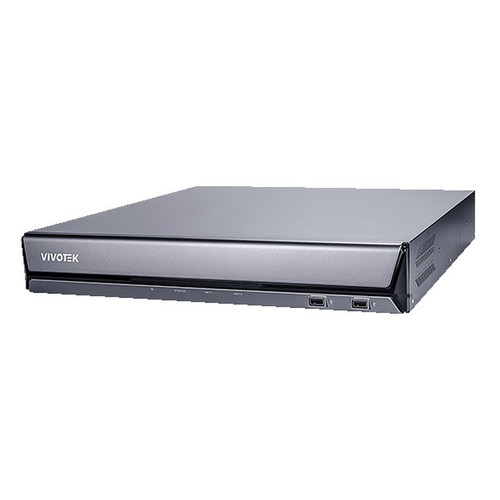
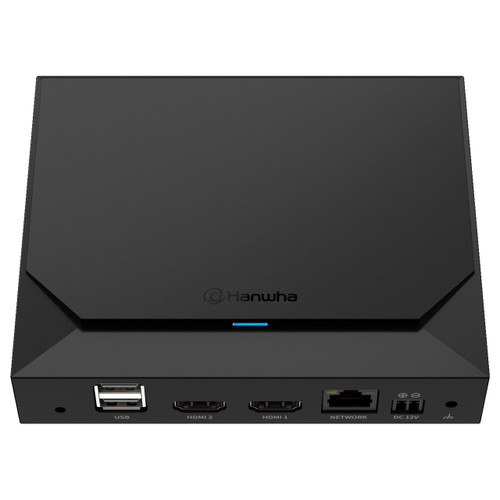
Both the Vivotek ND9442P and Hanwha ARD-1610 are 16-channel network video recorders targeting professional security installers who need centralized camera management, local storage, and multi-output display. The ND9442P is a pure-IP PoE+ NVR with four internal HDD bays and RAID support, while the ARD-1610 is a hybrid recorder accepting analog coax inputs (AHD/TVI/CVI/CVBS) plus two additional IP channels. This comparison covers recording capacity and throughput, storage and physical build, and ecosystem integration — the three axes most likely to determine which unit fits a given site.
In This Guide
- Which recorder delivers greater channel capacity, resolution, and recording throughput?
- How do the two units compare on internal storage, physical build, and operating environment?
- Which unit integrates more broadly with cameras, VMS platforms, and remote management tools?
- Which should you choose: the ND9442P or the ARD-1610?
- Side-by-Side Specs
- FAQ
Which recorder delivers greater channel capacity, resolution, and recording throughput?
The ND9442P supports exactly 16 IP channels at up to 4K (3840×2160) resolution with H.265/H.264/MJPEG compression, a recording throughput of 192 Mbps, and a decoding ceiling of 3840×2160 @ 90 fps or 1920×1080 @ 360 fps via hardware decoding. Its dual 10/100/1000 Mbps Ethernet ports yield a combined network throughput of 224 Mbps. Live-view supports 16 channels across 10 layouts up to 4K on a single HDMI output.
The ARD-1610 accepts 16 analog coax inputs (AHD/TVI/CVI/CVBS) and up to 2 additional IP channels for an 18-channel maximum. Analog record rates top out at 5MP @ 12 fps, 4MP @ 15 fps, or 2MP @ 15 fps; the overall recording bandwidth ceiling is 100 Mbps — roughly half the ND9442P's 192 Mbps. IP camera resolution ranges from CIF up to 5MP. Live display supports up to 20 divisions across 1–9 layout options at 2MP @ 240 fps aggregate. A single RJ-45 Gigabit port is specified.
For purely IP camera deployments requiring maximum throughput and 4K end-to-end recording, the ND9442P's 192 Mbps recording bandwidth and hardware-decoded 4K output hold a substantial advantage. The ARD-1610's hybrid input model offers a wider channel mix (18 total) and coaxial signal compatibility that the ND9442P cannot provide, at the cost of lower peak throughput and a 5MP analog ceiling.
How do the two units compare on internal storage, physical build, and operating environment?
The ND9442P accommodates four internal 3.5-inch SATA HDDs (purchased separately; maximum capacity deferred to Vivotek's recommended HDD list), supports RAID 0, 1, and 5, and includes HDD S.M.A.R.T. monitoring plus disk creation, formatting, and removal tools. External storage is available via a rear USB 3.0 port. The chassis measures 432 × 421 × 66 mm, weighs 4.6 kg without drives, and is rated for −10°C to 55°C operation at 0–95% humidity. Maximum power draw is 300 W (inclusive of PoE+ budgets delivered to cameras). Input voltage is 100–240 V AC.
The ARD-1610 carries two SATA bays capped at 6 TB each for a maximum of 12 TB. RAID is not specified in the provided data. The unit measures 370 × 44 × 320 mm, weighs approximately 2.4 kg without drives, and runs from a DC 12 V input jack at a maximum of 40.8 W with dual 6 TB drives fitted. Operating temperature is 0°C to 40°C at 20–85% RH — a notably narrower thermal envelope than the ND9442P. Three USB 2.0 ports (front/rear) support backup; backup file formats include BU, EXE, and AVI.
The ND9442P offers greater storage scalability (four bays vs. two, plus RAID) and a broader operating temperature range. The ARD-1610 is considerably lighter, draws far less power (40.8 W vs. up to 300 W), and suits retrofit or space-constrained installations. Installers in environments approaching 50°C should note the ARD-1610's 40°C ceiling.
Which unit integrates more broadly with cameras, VMS platforms, and remote management tools?
The ND9442P declares ONVIF Profile S compliance for third-party IP camera interoperability. Native integration includes Vivotek's Shepherd configuration tool, VAST Security Station (VSS) VMS, and cloud-connected mobile apps (iViewer, VIVOCloud, VORTEX for Android and iOS). Remote web access is Chrome-only per the spec sheet. Alarm inputs number 16 and alarm outputs 8. RS-485 is present but marked reserved. PTZ functions include direction control, home, iris, preset, and patrol (group). AI-grade analytics are available: object search (people/vehicle), scene search (line crossing, intrusion, loitering), attribute search (gender, age, clothing color, vehicle type/color), VCA counting, and Trend Micro IoT security integration.
The ARD-1610 supports ONVIF Profile S for IP cameras alongside Hanwha's proprietary SUNAPI protocol (server and client). Coaxial PTZ control covers CVBS (Pelco-C), AHD, CVI, and TVI formats with RS-485 (Samsung-T/Pelco-D/Pelco-P) for serial PTZ; up to 300 PTZ presets are supported. Remote access is provided via Wisenet Viewer, a mobile app (iOS/Android), and a web viewer compatible with Windows 10 and macOS 11+ in Chrome, Edge, and Safari. Maximum simultaneous remote users are 10 live unicast and 3 search. Security features include IP filtering, 802.1x authentication, recording/transmission/backup encryption, and Hanwha Techwin root CA device certificates. Smart search covers virtual line with direction and enter/exit zone. ARB redundant recording is supported.
The ND9442P's analytics are more granular (attribute-level person/vehicle search, VCA counting), while the ARD-1610 offers broader PTZ protocol support across analog coax and a richer security credential stack (802.1x, device certificates, multi-format encryption). Platform choice — Vivotek VSS vs. Hanwha Wisenet — is a primary differentiator for installers with an existing ecosystem.
Which should you choose: the ND9442P or the ARD-1610?
Our take: The ND9442P is the stronger choice when deploying an all-IP, 4K camera system that requires maximum recording throughput, RAID-protected multi-bay storage, and deep video analytics. It records at 192 Mbps versus the ARD-1610's 100 Mbps ceiling — a 92 Mbps advantage — supports RAID 0/1/5 across four drive bays compared to the ARD-1610's two non-RAID bays, and delivers attribute-level AI search (age, clothing color, vehicle type) absent from the ARD-1610 spec sheet. Conversely, the ARD-1610 is the correct choice for hybrid or migration projects: its 16 BNC analog inputs accept AHD/TVI/CVI/CVBS signals that the ND9442P cannot process, its 40.8 W power draw makes it suitable for constrained electrical infrastructure, and its coaxial PTZ protocol support (Pelco-C/D/P, Samsung-T) preserves existing PTZ camera investments. Installers standardized on Vivotek VSS should select the ND9442P; those on Hanwha Wisenet or managing mixed analog/IP sites should select the ARD-1610.
Side-by-Side Comparison
Spec-for-spec, from manufacturer data.
| Specification | Vivotek ND9442P | Hanwha ARD-1610 |
|---|---|---|
| Product Type | Pure-IP PoE+ NVR | Hybrid Analog/IP NVR |
| Max Channels | 16 IP | 16 analog + 2 IP = 18 total |
| Analog Input Support | — | AHD / TVI / CVI / CVBS (BNC ×16) |
| Max Recording Resolution | 3840×2160 (4K) | 5MP (analog); 5MP (IP) |
| Video Compression | H.265, H.264, MJPEG | H.265, H.264, MJPEG |
| Recording Throughput | 192 Mbps | 100 Mbps |
| HDD Bays | 4 × 3.5" SATA | 2 × SATA (max 6 TB each) |
| Max Internal Storage | Per Vivotek HDD list (not specified) | 12 TB (2 × 6 TB) |
| RAID Support | RAID 0, 1, 5 | — |
| Video Outputs | HDMI ×1, VGA ×1 (up to 4K) | HDMI ×1, VGA ×1 (up to 4K) |
| Alarm Inputs / Outputs | 16 in / 8 out | 4 in / 1 relay out |
| PoE Ports | 16-port PoE+ (integrated) | — |
| Max Power Draw | 300 W | 40.8 W (with 2 × 6 TB) |
| Input Voltage | 100–240 V AC | DC 12 V |
| Operating Temperature | −10°C to 55°C | 0°C to 40°C |
| Weight (without HDD) | 4.6 kg | 2.4 kg |
| ONVIF | Profile S | Profile S |
| Certifications | CE, LVD, FCC, VCCI, C-Tick, UL, CB, BSMI, BIS | UL, CE, FCC, KC |
| AI / Smart Search | People, Vehicle (attribute-level); VCA counting | Virtual line, Enter/Exit zone |
| Warranty | 3 Year | — |
Frequently Asked Questions
Which should you choose: the ND9442P or the ARD-1610?
The ND9442P is the stronger choice when deploying an all-IP, 4K camera system that requires maximum recording throughput, RAID-protected multi-bay storage, and deep video analytics. It records at 192 Mbps versus the ARD-1610's 100 Mbps ceiling — a 92 Mbps advantage — supports RAID 0/1/5 across four drive bays compared to the ARD-1610's two non-RAID bays, and delivers attribute-level AI search (age, clothing color, vehicle type) absent from the ARD-1610 spec sheet. Conversely, the ARD-1610 is the correct choice for hybrid or migration projects: its 16 BNC analog inputs accept AHD/TVI/CVI/CVBS signals that the ND9442P cannot process, its 40.8 W power draw makes it suitable for constrained electrical infrastructure, and its coaxial PTZ protocol support (Pelco-C/D/P, Samsung-T) preserves existing PTZ camera investments. Installers standardized on Vivotek VSS should select the ND9442P; those on Hanwha Wisenet or managing mixed analog/IP sites should select the ARD-1610.
Can the ARD-1610 replace analog cameras with IP cameras over time without replacing the recorder?
Yes, within limits. The ARD-1610 accepts up to 16 analog coax inputs (AHD/TVI/CVI/CVBS) and up to 2 additional IP camera channels for 18 channels total. As analog cameras are retired, IP replacements can occupy those 2 IP slots; however, the spec does not indicate that analog BNC ports can be repurposed as IP inputs, so a full IP migration would eventually require a dedicated IP NVR such as the ND9442P.
Is the ND9442P or ARD-1610 better for larger deployments requiring centralized VMS control?
The ND9442P integrates natively with Vivotek VAST Security Station (VSS) and the Shepherd configuration tool, and its ONVIF Profile S compliance broadens third-party VMS compatibility. The ARD-1610 pairs with Hanwha's Wisenet ecosystem via SUNAPI (server and client) and also supports ONVIF Profile S. Neither unit's spec sheet quantifies how many recorders a given VMS instance can manage, so installers should consult the respective VMS scalability documentation for multi-site deployments.
Which recorder is easier to install in a rack with limited power and cooling?
The ARD-1610 draws a maximum of 40.8 W from a DC 12 V input with two 6 TB drives installed and occupies a compact 370 × 44 × 320 mm, 2.4 kg chassis. The ND9442P draws up to 300 W (including PoE+ budgets for connected cameras) from 100–240 V AC and measures 432 × 421 × 66 mm at 4.6 kg. For power- or space-constrained racks the ARD-1610 is notably lighter and draws far less power, though the ND9442P's PoE+ eliminates separate camera power supplies entirely.
Get a Second Opinion on Your Camera Choice
Share your site layout, coverage goals, and budget. Our team will validate the camera selection, flag anything we would change, and recommend products that match the use case.