
Vivotek ND9426P vs Hanwha QRN-1630S: Specification Comparison
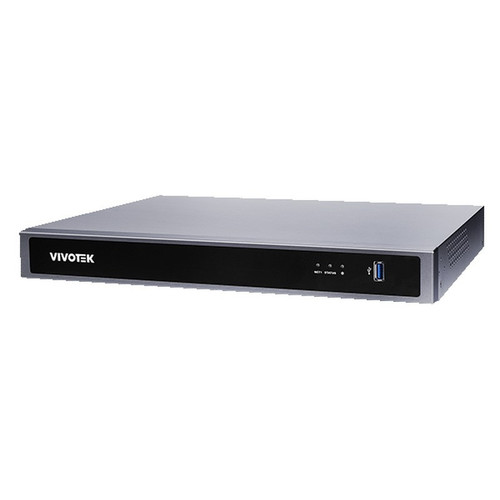
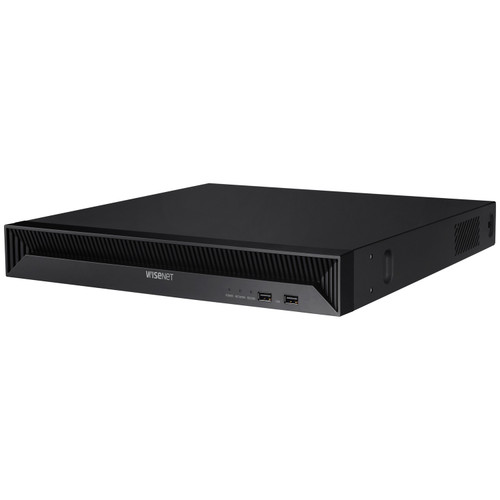
The Vivotek ND9426P and Hanwha QRN-1630S are both 16-channel PoE NVRs targeting the small-to-mid commercial surveillance market, supporting 8MP maximum camera resolution with H.265/H.264/MJPEG compression. Both ship as 1U rackmount appliances with dual internal SATA bays, onboard PoE switching, HDMI video output, and ONVIF Profile S camera compatibility. A buyer choosing between them is weighing Vivotek's higher recording throughput and integrated AI-based video analytics against Hanwha's dual HDMI outputs, N+1 failover redundancy, and Wisenet ecosystem integration.
In This Guide
- How do recording throughput, PoE budget, and storage capacity compare between the two units?
- Which unit offers more capable local display and onboard video analytics?
- How do the two NVRs compare on ecosystem integration, redundancy, and operating environment?
- Which should you choose: the ND9426P or the QRN-1630S?
- Side-by-Side Specs
- FAQ
How do recording throughput, PoE budget, and storage capacity compare between the two units?
The ND9426P specifies a maximum recording throughput of 192 Mbps and a network input/output total of 224 Mbps. The QRN-1630S lists a maximum recording bandwidth of 128 Mbps and a separate maximum playback bandwidth of 32 Mbps; its transmission bandwidth is also stated as 128 Mbps. This represents a 50% throughput advantage for the Vivotek unit, which is material in deployments mixing multiple 4K streams.
On PoE budget, the QRN-1630S explicitly states a 130 W PoE budget across its 16 PoE ports (10/100 Mbps each). The ND9426P specifies PoE+ (802.3at) support across 16 channels but does not state an aggregate PoE watt budget in the provided specifications. Buyers powering high-wattage PTZ or multi-sensor cameras should confirm the Vivotek aggregate budget directly with the datasheet.
Both units provide two internal 3.5-inch SATA HDD bays. The QRN-1630S specifies a maximum supported HDD size of 10 TB per drive (20 TB total). The ND9426P does not specify a per-drive capacity ceiling in the provided specifications. The ND9426P adds RAID 0 and RAID 1 support; no RAID capability is listed for the QRN-1630S. The ND9426P also provides a front USB 3.0 port and two rear USB 2.0 ports; the QRN-1630S provides two front USB 2.0 ports only, with no rear USB listed.
Which unit offers more capable local display and onboard video analytics?
The QRN-1630S has a clear display advantage: it ships with two HDMI outputs—HDMI1 at 3840×2160 (4K) at 30 Hz and HDMI2 at 1920×1080 at 60 Hz—and supports Clone Mode or Expand Mode across both monitors, enabling a dedicated operator workstation layout. The ND9426P provides one HDMI output (4K) and one VGA output; VGA is limited to 1080p or 720p and is not equivalent to a second digital 4K feed. The Vivotek unit's hardware decoder reaches a decoding resolution of 7680×2560 and a stated decode throughput of 3840×2160 at 120 fps or 1920×1080 at 480 fps; the QRN-1630S states local display decode at 8MP@60fps and 1080p@240fps.
The ND9426P includes onboard AI analytics: Object Search (people and vehicles), Scene Search (line crossing, intrusion, loitering), Attribute Search (gender, age, clothing color, accessories for people; type and color for vehicles), VCA Counting, VCA Event Search, Smart Search II, and fisheye dewarp modes (1O, 1P, 1R, 1O3R, 1O8R, 1P3R locally; 1O, 1R, 1P via web). It also integrates Trend Micro IoT Security for cybersecurity monitoring. The QRN-1630S lists fisheye dewarping as a CMS-side function (not local), notes Camera MD polygon setup (4- or 8-point) and hallway view as camera configuration items, and references 'Defocus, Audio, Dynamic Event, User Event' analytics, but no person/vehicle attribute or scene-based AI search is specified for the NVR itself.
How do the two NVRs compare on ecosystem integration, redundancy, and operating environment?
The QRN-1630S is built around the Hanwha Wisenet ecosystem: it supports SUNAPI (server and client) in addition to ONVIF Profile S, integrates with WAVE, SSM, Smart Viewer, and Wisenet VMS platforms, and provides 802.1x port authentication, device certificate management via Hanwha Techwin Root CA, and signed firmware verification. N+1 failover and ARB (Automatic Recovery Backup) are explicitly listed, making it suitable for deployments requiring recorder-level redundancy. Maximum concurrent remote users are stated at 10 live unicast and 20 multicast. The ND9426P integrates with Vivotek's Shepherd and VSS (VAST Security Station) platforms, supports iViewer, VIVOCloud, and VORTEX mobile apps, and lists Cybersecurity Management and Trend Micro IoT Security; however, no failover or ARB equivalent is listed in the provided specifications.
On operating environment, the ND9426P is rated for –10°C to 55°C (14°F to 131°F) and 0–95% humidity. The QRN-1630S is rated for 0°C to 40°C (32°F to 104°F) and 20–85% RH. The Vivotek unit tolerates a wider temperature range and lower humidity floor, which may matter in unconditioned equipment rooms or edge deployments. Maximum power draw is 270 W for the ND9426P versus 200 W for the QRN-1630S (the Hanwha figure includes two HDDs and PoE active). Both accept 100–240 V AC at 50/60 Hz. The ND9426P carries CE, FCC, VCCI, C-Tick, UL, CB, BSMI, and BIS certifications; the QRN-1630S does not list safety certifications in the provided specifications.
Which should you choose: the ND9426P or the QRN-1630S?
Our take: The ND9426P is the stronger choice when the priority is high-throughput AI-based analytics, broader operating temperature tolerance, and RAID-protected storage in a Vivotek camera ecosystem. It delivers 192 Mbps recording throughput versus the QRN-1630S's 128 Mbps—a 50% headroom advantage for dense 4K deployments—adds onboard person/vehicle attribute search and scene analytics absent from the QRN-1630S spec, and supports RAID 0/1 on its dual HDD bays where no RAID is listed for the Hanwha. The QRN-1630S is the stronger choice when the deployment is anchored in the Wisenet/Hanwha camera ecosystem and demands dual independent digital display outputs (4K HDMI + 1080p HDMI), explicit N+1 failover and ARB redundancy, a defined 130 W PoE budget, and an explicit 20 TB raw storage ceiling. Buyers running mixed-brand cameras via ONVIF can use either unit, but Hanwha-specific SUNAPI features and failover are exclusive to the QRN-1630S.
Side-by-Side Comparison
Spec-for-spec, from manufacturer data.
| Specification | Vivotek ND9426P | Hanwha QRN-1630S |
|---|---|---|
| Channel Count | 16 | 16 |
| Max Camera Resolution | 8MP (3840×2160) | 8MP |
| Recording Throughput | 192 Mbps | 128 Mbps |
| Video Compression | H.265, H.264, MJPEG | H.265, H.264, MJPEG |
| HDMI Outputs | 1× HDMI (4K) | 2× HDMI (4K@30Hz + 1080p@60Hz) |
| VGA Output | 1× VGA (up to 1080p) | — |
| HDD Bays | 2× internal 3.5" SATA | 2× internal SATA |
| Max Raw Storage | Not specified | 20TB (2×10TB) |
| RAID Support | RAID 0, 1 | — |
| Aggregate PoE Budget | Not specified | 130W |
| PoE Port Speed | Not specified per-port | 16× 10/100Mbps PoE |
| Uplink Ethernet | 2× 10/100/1000Mbps RJ-45 | 1× 1Gbps RJ-45 |
| Alarm Inputs / Outputs | 4 In / 1 Out | 4 In / 2 Out |
| Onboard AI Analytics | People/vehicle attribute, line crossing, intrusion, loitering, counting | Camera MD polygon, defocus, audio, dynamic event (per spec) |
| N+1 Failover / ARB | — | Supported |
| Operating Temperature | –10°C to 55°C | 0°C to 40°C |
| Max Power Draw | 270W | 200W (with 2HDD, PoE ON) |
| Cybersecurity Features | Trend Micro IoT Security, Cybersecurity Management | 802.1x, device certificate (Hanwha Root CA), signed firmware |
| VMS / Software Integration | Shepherd, VSS (VAST Security Station) | WAVE, SSM, Smart Viewer, Wisenet, Webviewer |
| Warranty | 2 Year | Not specified in provided specs |
Frequently Asked Questions
Which should you choose: the ND9426P or the QRN-1630S?
The ND9426P is the stronger choice when the priority is high-throughput AI-based analytics, broader operating temperature tolerance, and RAID-protected storage in a Vivotek camera ecosystem. It delivers 192 Mbps recording throughput versus the QRN-1630S's 128 Mbps—a 50% headroom advantage for dense 4K deployments—adds onboard person/vehicle attribute search and scene analytics absent from the QRN-1630S spec, and supports RAID 0/1 on its dual HDD bays where no RAID is listed for the Hanwha. The QRN-1630S is the stronger choice when the deployment is anchored in the Wisenet/Hanwha camera ecosystem and demands dual independent digital display outputs (4K HDMI + 1080p HDMI), explicit N+1 failover and ARB redundancy, a defined 130 W PoE budget, and an explicit 20 TB raw storage ceiling. Buyers running mixed-brand cameras via ONVIF can use either unit, but Hanwha-specific SUNAPI features and failover are exclusive to the QRN-1630S.
Can both NVRs drive two monitors independently, or does one require a workaround?
The QRN-1630S provides two full HDMI outputs—4K@30Hz and 1080p@60Hz—and natively supports Clone or Expand mode across both simultaneously. The ND9426P provides one HDMI (4K) and one VGA output; VGA tops out at 1080p and is an analog connection, so it is not equivalent to a second digital display. If independent dual-digital-monitor operation is a hard requirement, the QRN-1630S is the only unit of the two that meets it as specified.
Which NVR is better suited for a deployment using non-Hanwha cameras from multiple brands?
Both units support ONVIF Profile S, which covers the baseline interoperability most third-party IP cameras require. The ND9426P does not list any proprietary camera protocol dependency. The QRN-1630S adds SUNAPI integration, which is Hanwha-specific and provides extended feature access only with Wisenet cameras. For a genuinely mixed-brand deployment, either unit works at the ONVIF level, but neither vendor's advanced analytics or remote feature set is guaranteed with off-brand cameras—verify camera compatibility lists before specifying either model.
Does either NVR include built-in recorder failover, and what happens if the unit loses power?
The QRN-1630S explicitly lists N+1 failover and ARB (Automatic Recovery Backup) in its specifications, meaning it can hand off recording responsibility to a standby recorder in a multi-NVR deployment. The ND9426P does not list a failover or ARB function in the provided specifications. On power recovery, the ND9426P specifies automatic system restart after power restoration and includes both hardware and software watchdog timers; the QRN-1630S does not detail a power-recovery restart behavior in the provided specifications. For resilience-critical installations, the QRN-1630S's stated failover support is a differentiating factor.
Get a Second Opinion on Your Camera Choice
Share your site layout, coverage goals, and budget. Our team will validate the camera selection, flag anything we would change, and recommend products that match the use case.