
Vivotek ND9425P vs Hanwha QRN-1630S: Specification Comparison
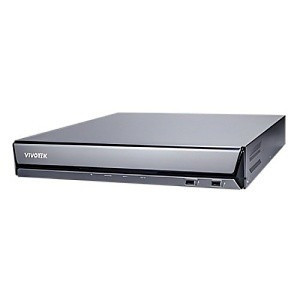
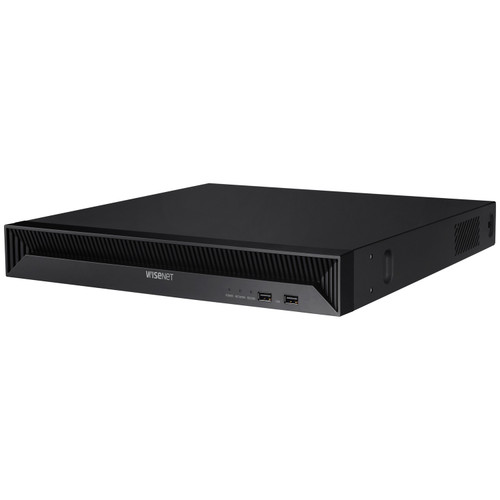
The Vivotek ND9425P and Hanwha QRN-1630S are both 16-channel, embedded-Linux PoE NVRs targeting the prosumer and commercial surveillance market. Both support 8MP/4K recording with H.265 compression, ONVIF integration, and dual internal SATA drives. A buyer choosing between them is weighing differences in throughput capacity, output flexibility, redundancy features, and ecosystem software — core decision points for multi-camera deployments in retail, education, and mid-size commercial facilities.
In This Guide
- Which NVR handles more simultaneous recording bandwidth and decoding performance?
- Which unit provides greater display flexibility and system redundancy for critical installations?
- Which NVR integrates more broadly with cameras, software platforms, and remote management tools?
- Which should you choose: the ND9425P or the QRN-1630S?
- Side-by-Side Specs
- FAQ
Which NVR handles more simultaneous recording bandwidth and decoding performance?
The QRN-1630S specifies a maximum recording bandwidth of 128 Mbps versus the ND9425P's 64 Mbps recording throughput — a 2× advantage for Hanwha at peak load. The ND9425P's aggregate network throughput (input/output combined) is listed at 88 Mbps, meaning it can be saturated before reaching the recording ceiling in high-bitrate deployments. The QRN-1630S also lists a separate playback bandwidth cap of 32 Mbps.
On decoding, the QRN-1630S specifies 8MP@60fps, 1080p@240fps, and 720p@480fps for local display. The ND9425P specifies 3840×2160@30fps on a single channel and 1920×1080@120fps across four channels via hardware decoding. Neither unit publishes a total aggregate decoding ceiling across all 16 channels simultaneously, so installers should treat the per-channel and multi-channel figures with care when planning dense 4K deployments.
Storage capacity also differs: the QRN-1630S explicitly supports HDDs up to 10TB per slot (max 20TB across two SATA bays). The ND9425P cites two internal 3.5" bays but defers maximum capacity to a recommended HDD list on the Vivotek website — no hard ceiling is provided in the supplied specifications. Both units support RAID 0 and RAID 1 (the ND9425P lists this explicitly; the QRN-1630S spec does not mention RAID modes). The ND9425P adds USB 3.0 external storage and scheduled FTP backup; the QRN-1630S supports BU/EXE/AVI and JPG/AVI backup formats with multi-channel playback up to 8CH.
Which unit provides greater display flexibility and system redundancy for critical installations?
Display output is a clear differentiator. The QRN-1630S has dual HDMI outputs: HDMI1 at 3840×2160@30Hz and HDMI2 at 1920×1080@60Hz, supporting clone and expand modes with up to 16-division multi-screen on each output simultaneously. The ND9425P has one HDMI and one VGA output, with display resolutions of 3840×2160, 1920×1080, and 1280×720 — but only a single HDMI path. For control rooms or installations requiring two independent monitor feeds, the QRN-1630S's dual HDMI is a functional requirement the ND9425P cannot meet.
On redundancy, the QRN-1630S explicitly specifies N+1 failover and ARB (Automatic Recovery Backup) support. The ND9425P does not list failover or ARB capabilities in the provided specifications. Both units include hardware and software watchdog (the ND9425P states this explicitly; the QRN-1630S does not use that term in the provided spec). Both support automatic restart after power recovery.
Alarm I/O also differs marginally: the ND9425P provides 4 alarm inputs and 1 alarm output; the QRN-1630S provides 4 alarm inputs and 2 alarm outputs — one additional relay for external device triggering. The QRN-1630S also lists a dedicated PoE budget of 130W. The ND9425P lists a max system draw of 255W but does not break out a specific PoE budget in the provided specifications.
Which NVR integrates more broadly with cameras, software platforms, and remote management tools?
Both units support ONVIF Profile S and run embedded Linux. The QRN-1630S additionally supports Hanwha's SUNAPI (both server and client roles), enabling deeper integration with the Wisenet camera line and Hanwha's VMS platforms: WAVE, SSM, Smart Viewer, and Webviewer. The ND9425P's listed software ecosystem includes Shepherd and VAST 2, plus VIVOCloud for remote access. Neither ecosystem is vendor-neutral beyond ONVIF — installers committed to Hanwha cameras gain more native feature depth on the QRN-1630S, while Vivotek-camera sites benefit from VAST 2 and VIVOCloud.
Remote access limits differ: the QRN-1630S supports up to 10 simultaneous live unicast users and 20 multicast users, with 3 remote search users and a maximum of 40 simultaneous playback channels (16 local, 8 per remote user). The ND9425P does not publish a concurrent remote user count in the provided specifications.
Cybersecurity posture is more explicitly documented for both units. The ND9425P lists Trend Micro IoT Security integration and a dedicated Cybersecurity Management feature. The QRN-1630S specifies IP address filtering, user access logging, 802.1x port authentication, device certificate support (Hanwha Techwin Root CA), and signed firmware — all auditable controls for enterprise IT policy. The ND9425P's 802.1x support is not stated in the provided specifications. Audio compression also differs: the QRN-1630S adds AAC at 16/48kHz alongside G.711 and G.726; the ND9425P lists only G.711 and G.726.
Which should you choose: the ND9425P or the QRN-1630S?
Our take: The QRN-1630S is the stronger choice when recording throughput, dual-monitor output, and documented failover redundancy are requirements. Its 128 Mbps recording bandwidth is double the ND9425P's 64 Mbps, its dual HDMI outputs (4K + 1080p independently) serve two-monitor control rooms that the single-HDMI ND9425P cannot, and its explicit N+1 failover and ARB support addresses availability requirements the ND9425P does not list. The ND9425P is the stronger fit for Vivotek-camera environments where VAST 2 VMS integration, VIVOCloud remote management, Trend Micro IoT Security, and RAID (explicitly listed) are valued — and for sites where a lighter max power draw (255W stated system maximum versus 200W for the QRN-1630S) is less of a concern than software ecosystem depth. Buyers on a Hanwha Wisenet camera platform should select the QRN-1630S; Vivotek-camera sites should select the ND9425P.
Side-by-Side Comparison
Spec-for-spec, from manufacturer data.
| Specification | Vivotek ND9425P | Hanwha QRN-1630S |
|---|---|---|
| Max Camera Channels | 16 | 16 |
| Max Recording Bandwidth | 64 Mbps | 128 Mbps |
| Network Throughput (Input+Output) | 88 Mbps | 128 Mbps |
| Video Decoding (4K) | 3840×2160@30fps (1-CH) | 8MP@60fps (local display) |
| Video Decoding (1080p) | 1920×1080@120fps (4-CH) | 1080p@240fps |
| Video Compression | H.265, H.264, MJPEG | H.265, H.264, MJPEG |
| Video Outputs | HDMI x1, VGA x1 | HDMI x2 (4K@30Hz + 1080p@60Hz) |
| Internal HDD Bays | 2 (3.5" SATA) | 2 (SATA) |
| Max Stated HDD Capacity | Not specified (see Vivotek HDD list) | 20TB (2 × up to 10TB) |
| RAID Support | RAID 0, 1 | Not stated in provided specs |
| PoE Budget | Not stated in provided specs | 130W |
| Max System Power Draw | 255W | 200W (with 2HDD, PoE ON) |
| Alarm Inputs / Outputs | 4 In / 1 Out | 4 In / 2 Out |
| N+1 Failover / ARB | Not stated in provided specs | Yes (both) |
| Audio Compression | G.711, G.726 | G.711, G.726, AAC (16/48kHz) |
| Cybersecurity Features | Trend Micro IoT Security, Cybersecurity Management | 802.1x, device certificate (Hanwha Root CA), signed firmware, IP filtering |
Frequently Asked Questions
Which should you choose: the ND9425P or the QRN-1630S?
The QRN-1630S is the stronger choice when recording throughput, dual-monitor output, and documented failover redundancy are requirements. Its 128 Mbps recording bandwidth is double the ND9425P's 64 Mbps, its dual HDMI outputs (4K + 1080p independently) serve two-monitor control rooms that the single-HDMI ND9425P cannot, and its explicit N+1 failover and ARB support addresses availability requirements the ND9425P does not list. The ND9425P is the stronger fit for Vivotek-camera environments where VAST 2 VMS integration, VIVOCloud remote management, Trend Micro IoT Security, and RAID (explicitly listed) are valued — and for sites where a lighter max power draw (255W stated system maximum versus 200W for the QRN-1630S) is less of a concern than software ecosystem depth. Buyers on a Hanwha Wisenet camera platform should select the QRN-1630S; Vivotek-camera sites should select the ND9425P.
Can either NVR drive two independent monitors at the same time?
Only the QRN-1630S supports dual independent HDMI outputs: HDMI1 at 4K (3840×2160@30Hz) and HDMI2 at 1080p (1920×1080@60Hz), with clone or expand mode and up to 16-division display on each. The ND9425P provides one HDMI and one VGA output; the two outputs are not documented as independently configurable in the provided specifications.
Which NVR is better suited for a high-camera-density deployment running high-bitrate 4K streams?
The QRN-1630S specifies a 128 Mbps maximum recording bandwidth, compared to the ND9425P's 64 Mbps recording throughput and 88 Mbps combined network throughput. For 16 cameras streaming at higher bitrates (e.g., 4K H.265 streams at 8–10 Mbps each, totaling 128–160 Mbps), the QRN-1630S provides more headroom. The ND9425P's aggregate throughput ceiling may limit simultaneous high-bitrate ingestion across all 16 channels.
Does either NVR support automatic failover if the unit loses connection to cameras?
The QRN-1630S explicitly specifies N+1 failover support and ARB (Automatic Recovery Backup). The ND9425P does not list failover or ARB capabilities in the provided specifications. Both units include automatic system restart after power recovery, but only the QRN-1630S documents structured redundancy for camera-to-recorder continuity.
Get a Second Opinion on Your Camera Choice
Share your site layout, coverage goals, and budget. Our team will validate the camera selection, flag anything we would change, and recommend products that match the use case.