
Vivotek ND9425P vs Hanwha ARD-1610: Specification Comparison
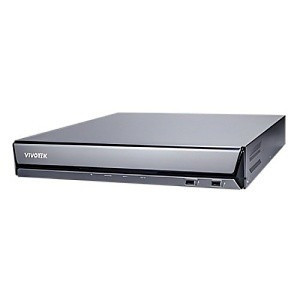
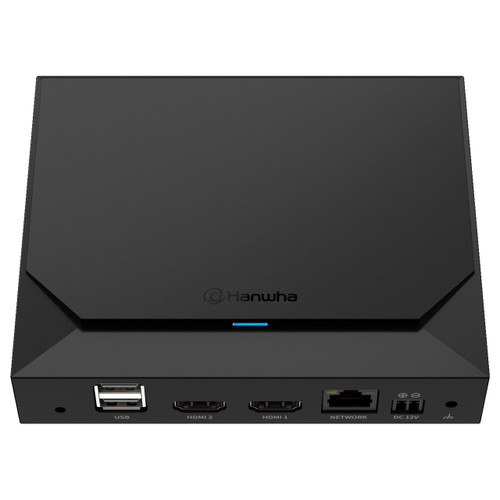
Both the Vivotek ND9425P and the Hanwha ARD-1610 are 16-channel network video recorders aimed at small-to-medium installations requiring local PoE or analog camera aggregation, H.265 recording, and 4K HDMI output. The ND9425P is a pure-IP PoE NVR with integrated switch ports, while the ARD-1610 is a hybrid DVR/NVR supporting AHD, TVI, CVI, and CVBS analog coax cameras alongside up to 2 additional IP channels. Buyers evaluating these units are typically choosing between migrating to IP-only cameras or retaining or extending an existing analog coax infrastructure.
In This Guide
- How do channel capacity, input architecture, and recording throughput compare?
- What are the storage capacity, power delivery, and operating environment differences?
- How do camera protocol support, remote access, and software ecosystem compare?
- Which should you choose: the ND9425P or the ARD-1610?
- Side-by-Side Specs
- FAQ
How do channel capacity, input architecture, and recording throughput compare?
The ND9425P accepts up to 16 IP cameras exclusively, with no analog coax inputs. It delivers 64 Mbps recording throughput and an 88 Mbps aggregate network throughput. Decoding capability is specified at 3840×2160 (4K) at 30 fps on a single channel, or 1920×1080 at 120 fps across four channels simultaneously, backed by dedicated hardware decoding. Live view supports 13 layout options across 16 channels.
The ARD-1610 accepts 16 analog coax inputs (BNC, supporting AHD/TVI/CVI/CVBS signal types) plus an additional 2 IP channels via network, yielding a maximum of 18 total channels. Recording bandwidth is specified at a maximum of 100 Mbps. Analog recording frame rates are capped by resolution: 5MP at 12 fps, 4MP at 15 fps, and 2MP at 15 fps. Live view supports up to 20 display divisions with 9 layout options. The ARD-1610 also provides a BNC spot output monitor port, which the ND9425P does not list.
For pure-IP deployments, the ND9425P's 64 Mbps recording and hardware 4K decoder are directly relevant. The ARD-1610's 100 Mbps bandwidth ceiling is higher on paper but is shared across analog and IP paths, and analog frame rates are lower at higher resolutions. The ND9425P does not support coax cameras; the ARD-1610 does not support PoE camera power delivery.
What are the storage capacity, power delivery, and operating environment differences?
The ND9425P provides two internal 3.5-inch HDD bays and supports RAID 0 and RAID 1 configurations. Maximum installed HDD capacity is not numerically stated in the provided specs (the spec references a recommended HDD list on the Vivotek website). External storage is available via USB 3.0. The unit is powered from 100–240 V AC at up to 255 W maximum, which includes its integrated PoE+ budget for connected cameras. A front USB 3.0 and rear USB 2.0 port are provided for clip export.
The ARD-1610 also provides two internal SATA HDD bays, with a stated maximum of 6 TB per drive, yielding up to 12 TB total installed capacity. No RAID modes are listed in the provided specs. The unit is DC-powered (DC 12 V input jack) and draws a maximum of 40.8 W including dual 6 TB drives. It offers three USB 2.0 ports (front and rear) and supports backup file formats including BU, EXE, and AVI. No PoE delivery is specified.
The ND9425P's RAID 0/1 capability provides either performance striping or mirrored redundancy, which the ARD-1610's spec does not mention. The ARD-1610's 12 TB ceiling (2 × 6 TB) is a concrete, numerically specified maximum; the ND9425P defers to an external compatibility list. Both units share the same operating temperature range of 0 °C to 40 °C. The ND9425P's humidity tolerance extends to 95% (non-condensing implied); the ARD-1610 specifies 20–85% RH, a narrower range.
How do camera protocol support, remote access, and software ecosystem compare?
The ND9425P supports ONVIF Profile S for third-party IP camera integration. It integrates with Vivotek's own VCA (video content analytics) suite, including motion detection, Smart VCA events, PIR detection, tampering, and crowd control. Event actions include recording, email, FTP, PTZ control, and buzzer. Remote management is provided via Vivotek's VAST 2 VMS, the iViewer mobile app (Android and iOS), and VIVOCloud. Trend Micro IoT Security is listed as a supported cybersecurity feature. PTZ presets, patrols, and direction control are supported.
The ARD-1610 supports ONVIF Profile S and Hanwha's own SUNAPI protocol for Wisenet IP cameras, enabling tighter integration with Hanwha's camera lineup. Coaxial PTZ control is available via Pelco-C (CVBS), AHD, CVI, and TVI coax, plus RS-485 serial (Pelco-D/P, Samsung-T) for legacy PTZ domes. Event triggers include motion detection, tampering, video loss, and face detection—the last of which is not listed for the ND9425P. The ARD-1610 supports up to 10 simultaneous live unicast remote users and 20 multicast users; the ND9425P does not numerically specify concurrent remote user limits in the provided specs. Security features include 802.1x authentication, ID/PW encryption, recording encryption, transmission encryption, and a Hanwha Techwin Root CA device certificate. PTZ presets are specified at 300 positions. Remote management uses Wisenet Viewer, a web viewer (Chrome, Edge, Safari on Windows 10 / macOS 11+), and a mobile app (iOS and Android).
Installers standardized on Vivotek cameras and VAST 2 VMS will find the ND9425P natively aligned. Installers maintaining Hanwha Wisenet camera ecosystems or supporting legacy analog coax cameras with AHD/TVI/CVI signals will find the ARD-1610's SUNAPI integration and hybrid input architecture directly relevant. The ARD-1610's face detection event trigger and explicit multi-user concurrency limits are specified; the ND9425P's equivalent figures are absent from the provided spec sheet.
Which should you choose: the ND9425P or the ARD-1610?
Our take: The ND9425P is the stronger choice when the deployment is entirely IP-camera-based and integrated PoE+ power delivery, hardware 4K decoding, and RAID storage redundancy are priorities. Key spec deltas: the ND9425P delivers PoE+ power to cameras (the ARD-1610 has no PoE output), supports RAID 0/1 disk redundancy (not listed for the ARD-1610), and draws up to 255 W as an all-in-one PoE switch plus recorder versus the ARD-1610's 40.8 W recorder-only load. Conversely, the ARD-1610 is the appropriate choice when coax analog cameras (AHD/TVI/CVI/CVBS) must be retained or when a Hanwha Wisenet IP camera ecosystem with SUNAPI integration is in use; its hybrid 16+2 input architecture, 12 TB specified storage ceiling, and 100 Mbps recording bandwidth suit mixed analog-IP migration sites. Neither unit should be cross-shopped for the other's primary use case: the ND9425P has no coax inputs and the ARD-1610 has no PoE output.
Side-by-Side Comparison
Spec-for-spec, from manufacturer data.
| Specification | Vivotek ND9425P | Hanwha ARD-1610 |
|---|---|---|
| Product Type | Pure-IP PoE NVR | Hybrid AHD/TVI/CVI/IP DVR/NVR |
| Max Channels | 16 IP | 16 analog + 2 IP = 18 total |
| Analog Coax Inputs | — | 16× BNC (AHD/TVI/CVI/CVBS) |
| PoE Output | PoE+ (integrated) | — |
| Video Outputs | 1× HDMI, 1× VGA | 1× HDMI, 1× VGA, 1× BNC spot out |
| Max Display Resolution | 3840×2160 (4K) | Up to 4K (HDMI) |
| Recording Throughput | 64 Mbps | 100 Mbps |
| Network Throughput | 88 Mbps aggregate | 100 Mbps |
| Video Compression | H.265, H.264, MJPEG | H.265, H.264, MJPEG |
| HDD Bays | 2× 3.5-inch SATA | 2× SATA |
| Max HDD Capacity | Not specified (see Vivotek HDD list) | 12 TB (2× 6 TB) |
| RAID Support | RAID 0, 1 | — |
| Audio I/O | 3.5mm jack (1× in, 1× out) | 4× Line in / 1× Line out (RCA) |
| Alarm Inputs / Outputs | 4 in / 1 out | 4 in / 1 out (relay NO/NC/COM) |
| Max Power Draw | 255 W | 40.8 W (with 2× 6 TB HDD) |
| Input Voltage | 100–240 V AC, 50/60 Hz | DC 12 V |
| Operating Temperature | 0 °C to 40 °C | 0 °C to 40 °C |
| Operating Humidity | 0–95% | 20–85% RH |
| Camera Protocol | ONVIF Profile S | ONVIF Profile S, SUNAPI (Wisenet) |
| PTZ Presets | Supported (count not specified) | 300 presets |
| Certifications | CE, FCC, UL, CB, VCCI, C-Tick, BSMI, BIS | UL, CE, FCC, KC |
| Weight (without HDD) | 2.5 kg | Approx. 2.4 kg |
| Warranty | 2 years | — |
Frequently Asked Questions
Which should you choose: the ND9425P or the ARD-1610?
The ND9425P is the stronger choice when the deployment is entirely IP-camera-based and integrated PoE+ power delivery, hardware 4K decoding, and RAID storage redundancy are priorities. Key spec deltas: the ND9425P delivers PoE+ power to cameras (the ARD-1610 has no PoE output), supports RAID 0/1 disk redundancy (not listed for the ARD-1610), and draws up to 255 W as an all-in-one PoE switch plus recorder versus the ARD-1610's 40.8 W recorder-only load. Conversely, the ARD-1610 is the appropriate choice when coax analog cameras (AHD/TVI/CVI/CVBS) must be retained or when a Hanwha Wisenet IP camera ecosystem with SUNAPI integration is in use; its hybrid 16+2 input architecture, 12 TB specified storage ceiling, and 100 Mbps recording bandwidth suit mixed analog-IP migration sites. Neither unit should be cross-shopped for the other's primary use case: the ND9425P has no coax inputs and the ARD-1610 has no PoE output.
Can I connect my existing analog CCTV cameras to the ND9425P or ARD-1610?
Only the ARD-1610 supports analog coax cameras. It provides 16 BNC inputs accepting AHD, TVI, CVI, and CVBS signals, plus coaxial PTZ control. The ND9425P has no analog coax inputs and accepts IP cameras exclusively via its network interface.
Does either NVR power my IP cameras directly without a separate PoE switch?
The ND9425P includes integrated PoE+ capability and can power connected IP cameras directly, up to its 255 W maximum draw. The ARD-1610 spec does not list any PoE output; a separate PoE switch or injector would be required for IP cameras connected to it.
Which unit offers better storage redundancy and capacity options?
The ND9425P explicitly supports RAID 0 and RAID 1 across its two 3.5-inch HDD bays, providing either performance striping or mirrored redundancy; the maximum HDD capacity is not numerically stated and requires consulting Vivotek's compatibility list. The ARD-1610 specifies a maximum of 12 TB total (2 × 6 TB SATA) but does not list RAID support in the provided specifications.
Get a Second Opinion on Your Camera Choice
Share your site layout, coverage goals, and budget. Our team will validate the camera selection, flag anything we would change, and recommend products that match the use case.