
Ubiquiti U7-PRO-MAX vs Ubiquiti U7-LR-US: Specification Comparison
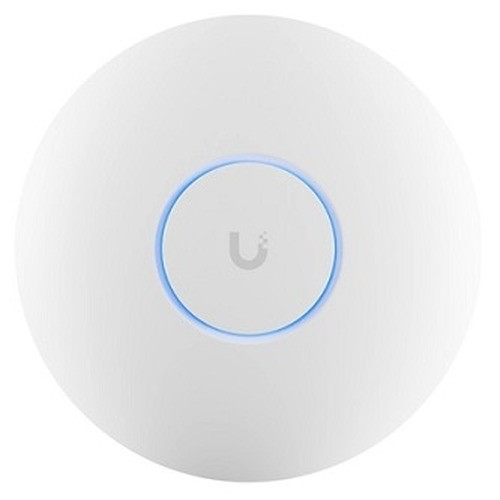
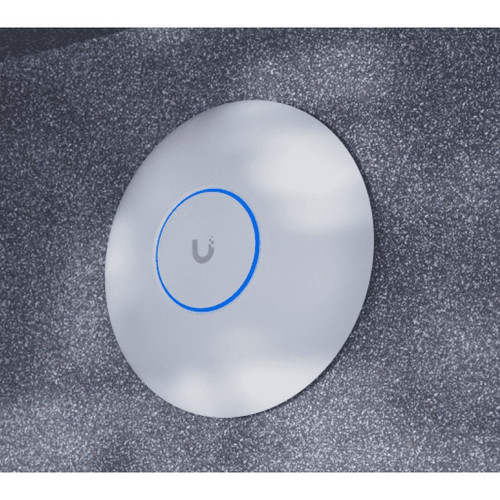
Both the U7-PRO-MAX and U7-LR-US are Ubiquiti UniFi Wi-Fi 7 (802.11be) ceiling-mount access points aimed at enterprise and commercial installers. The comparison centers on three decision-relevant axes: RF capability and client capacity, power and physical deployment, and protocol/management compatibility. The PRO-MAX is a tri-band, high-density unit; the LR-US is a dual-band, lower-power unit. Buyers cross-shopping these are typically choosing between high-density performance and simplified, low-power deployment.
In This Guide
- Which AP delivers more RF capacity and can support more concurrent clients?
- What are the power requirements and physical deployment differences between these two APs?
- How do these APs compare on wireless standards, VLAN/security features, and management compatibility?
- Which should you choose: the U7-PRO-MAX or the U7-LR-US?
- Side-by-Side Specs
- FAQ
Which AP delivers more RF capacity and can support more concurrent clients?
The U7-PRO-MAX is a tri-band (2.4 GHz, 5 GHz, 6 GHz) access point with 8 total spatial streams and rated support for 500+ concurrent clients. Aggregate throughput figures provided are 688 Mbps (2.4 GHz), 8.6 Gbps (5 GHz), and 5.8 Gbps (6 GHz at BW320). The 6 GHz band is exclusive to the PRO-MAX in this comparison.
The U7-LR-US is a dual-band (2.4 GHz and 5 GHz) access point with 5 spatial streams. Per-band throughput figures are not broken out numerically in the provided specs; the spec sheet references 'Gbps (BW160)' under antenna gain without a complete figure. No concurrent client count is specified for the LR-US in the provided data. Buyers requiring 6 GHz, higher stream counts, or documented 500+ client capacity should note this distinction directly.
What are the power requirements and physical deployment differences between these two APs?
The U7-PRO-MAX requires PoE+ (802.3at) and draws up to 25W at a voltage range of 44–57V DC. Its footprint is 206 mm in diameter and 46 mm tall, weighing 680 g (1.5 lb). The package includes a Pro Mount (ceiling/wall bracket) fabricated from stainless steel (SUS304) and galvanized steel (SGCC), with a polycarbonate and aluminum enclosure.
The U7-LR-US requires only PoE (802.3af) and draws up to 14W at 42.5–57V DC — an 11W lower power draw than the PRO-MAX. Its footprint is 175.7 mm in diameter and 43 mm tall. Published weight in the provided specs is listed as 3.55 lb (approximately 1.61 kg), which is notably higher than the PRO-MAX's 680 g; this figure may reflect packaging or a data entry anomaly, as it is the only weight datum provided and has not been independently verified here. The LR-US enclosure is polycarbonate and aluminum alloy, with a plastic mounting plate for ceiling or wall use. Installers with PoE (802.3af) infrastructure can deploy the LR-US without switch upgrades.
How do these APs compare on wireless standards, VLAN/security features, and management compatibility?
Both access points operate on Wi-Fi 7 (802.11be) and are NDAA compliant. Both carry CE, FCC, and IC certifications; the U7-PRO-MAX adds Anatel (Brazil: 08959-24-08356). Both support an operating temperature range of -30 to 50°C. Both provide a single 2.5 GbE RJ45 uplink port and are managed via Ethernet (UniFi Network platform implied by product family).
The U7-PRO-MAX explicitly documents VLAN support including dynamic RADIUS-assigned VLAN, and channel bandwidth options spanning HT 20/40, VHT 20/40/80/160, HE 20/40/80/160, and EHT 20/40/80 (up to 320 MHz on 6 GHz). The U7-LR-US spec data provided does not explicitly enumerate VLAN capabilities or channel bandwidth options beyond a reference to BW160, and does not document RADIUS-assigned VLAN. Buyers requiring documented RADIUS VLAN assignment or 320 MHz channel support should note that only the PRO-MAX provides those details in the supplied specifications.
Which should you choose: the U7-PRO-MAX or the U7-LR-US?
Our take: The U7-PRO-MAX is the stronger choice when RF density, 6 GHz spectrum access, or documented 500+ concurrent client capacity is required. Concretely: the PRO-MAX adds a full 6 GHz band absent on the LR-US, delivers 8 spatial streams versus 5, and explicitly documents 500+ concurrent client support where the LR-US provides no client-count figure in the supplied specs. The LR-US offsets this with a materially lower power draw — 14W (802.3af) versus 25W (802.3at) — making it deployable on existing 802.3af switch infrastructure without hardware upgrades, a meaningful cost factor in large-footprint rollouts. Both share the same 2.5 GbE uplink, operating temperature range, NDAA compliance, and UniFi management platform. The PRO-MAX suits high-density venues (conference centers, open offices, auditoriums); the LR-US suits medium-density environments where PoE budget or switch compatibility is the binding constraint.
Side-by-Side Comparison
Spec-for-spec, from manufacturer data.
| Specification | Ubiquiti U7-PRO-MAX | Ubiquiti U7-LR-US |
|---|---|---|
| Wi-Fi Standard | Wi-Fi 7 (802.11be) | Wi-Fi 7 (802.11be) |
| Bands | 2.4 GHz, 5 GHz, 6 GHz (tri-band) | 2.4 GHz, 5 GHz (dual-band) |
| Spatial Streams | 8 (total) | 5 (total) |
| Concurrent Clients | 500+ | — |
| Max Throughput (6 GHz) | 5.8 Gbps (BW320) | — |
| Max Throughput (5 GHz) | 8.6 Gbps | — (BW160 referenced, no figure) |
| Max Throughput (2.4 GHz) | 688 Mbps | — |
| Power Standard | PoE+ (802.3at) | PoE (802.3af) |
| Power Consumption | 25W | 14W |
| Voltage Range | 44–57V DC | 42.5–57V DC |
| Uplink Port | (1) 2.5 GbE RJ45 | (1) 2.5 GbE RJ45 |
| VLAN / RADIUS VLAN | Yes; dynamic RADIUS-assigned VLAN | — |
| Dimensions | ⌀206 × 46 mm | ⌀175.7 × 43 mm |
| Certifications | CE, FCC, IC, Anatel | CE, FCC, IC |
| NDAA Compliant | Yes | Yes |
| Operating Temp | -30 to 50°C | -30 to 50°C |
Frequently Asked Questions
Which should you choose: the U7-PRO-MAX or the U7-LR-US?
The U7-PRO-MAX is the stronger choice when RF density, 6 GHz spectrum access, or documented 500+ concurrent client capacity is required. Concretely: the PRO-MAX adds a full 6 GHz band absent on the LR-US, delivers 8 spatial streams versus 5, and explicitly documents 500+ concurrent client support where the LR-US provides no client-count figure in the supplied specs. The LR-US offsets this with a materially lower power draw — 14W (802.3af) versus 25W (802.3at) — making it deployable on existing 802.3af switch infrastructure without hardware upgrades, a meaningful cost factor in large-footprint rollouts. Both share the same 2.5 GbE uplink, operating temperature range, NDAA compliance, and UniFi management platform. The PRO-MAX suits high-density venues (conference centers, open offices, auditoriums); the LR-US suits medium-density environments where PoE budget or switch compatibility is the binding constraint.
Can I power the U7-LR-US from the same PoE switch as my existing UniFi APs?
The U7-LR-US requires only 802.3af PoE (up to 14W, 42.5–57V DC), which is the baseline PoE standard. If your existing switch ports supply 802.3af, the LR-US should be compatible. The U7-PRO-MAX requires 802.3at PoE+ (up to 25W), so it needs switch ports rated for PoE+. Verify your switch's per-port power budget before deploying either unit.
Does the U7-LR-US support the 6 GHz band like the U7-PRO-MAX?
No. Based on the provided specifications, the U7-LR-US is a dual-band AP covering 2.4 GHz and 5 GHz only. The U7-PRO-MAX is a tri-band AP that adds a 6 GHz band with up to 5.8 Gbps throughput at BW320. If 6 GHz spectrum access is required — for example, to reduce co-channel interference in dense deployments — only the PRO-MAX provides it per the supplied specs.
Is the U7-PRO-MAX or U7-LR-US better for a warehouse or large open-floor deployment?
The answer depends on client density and infrastructure. The U7-PRO-MAX documents support for 500+ concurrent clients and 8 spatial streams, making it the documented choice for high-density environments. The U7-LR-US's lower power consumption (14W vs 25W) and 802.3af compatibility can reduce switch and cabling costs in large floor plans with moderate client counts. Neither model's specs in the provided data specify an outdoor IP rating, but both are rated to -30–50°C. Consult Ubiquiti's official datasheets for coverage radius and outdoor suitability before specifying for warehouse use.
Get a Second Opinion on Your Camera Choice
Share your site layout, coverage goals, and budget. Our team will validate the camera selection, flag anything we would change, and recommend products that match the use case.