
Ubiquiti U7-PRO-MAX vs NETGEAR WBE710-100NAS: Specification Comparison
Both the Ubiquiti U7-PRO-MAX and the NETGEAR WBE710-100NAS are WiFi 7 (802.11be) tri-band ceiling- or wall-mount access points aimed at enterprise and commercial wireless deployments. This comparison covers the three dimensions most relevant to an installer or IT buyer evaluating either unit: aggregate wireless throughput and band architecture, power input and physical deployment, and management capabilities and compliance posture. Pricing is not addressed; all claims are drawn exclusively from the manufacturer specifications supplied above.
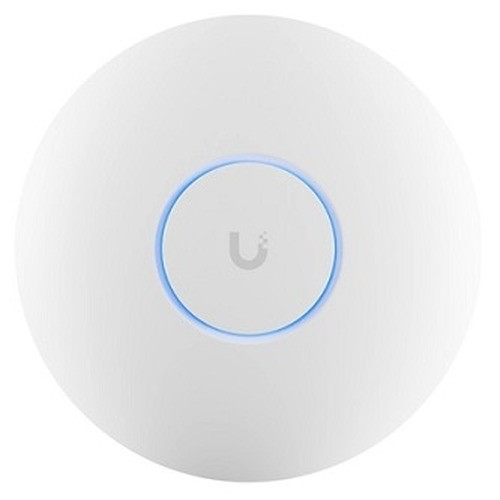
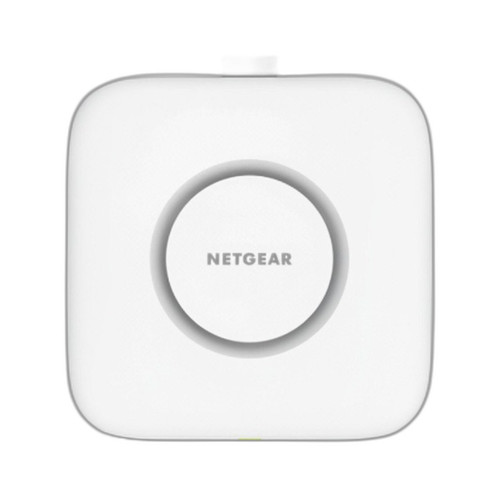
In This Guide
- Which access point delivers higher aggregate throughput and stronger per-band radio performance?
- How do the two units differ in power input, physical build, and deployment environment tolerance?
- Which unit offers stronger management integration and compliance credentials?
- Which should you choose: the U7-PRO-MAX or the WBE710-100NAS?
- Side-by-Side Specs
- FAQ
Which access point delivers higher aggregate throughput and stronger per-band radio performance?
The NETGEAR WBE710-100NAS posts a higher aggregate wireless throughput figure at 9.4 Gbps versus the Ubiquiti U7-PRO-MAX's per-band peaks of 5.8 Gbps (6 GHz / BW320), 8.6 Gbps (5 GHz), and 688 Mbps (2.4 GHz). Note that the WBE710-100NAS spec sheet does not break out per-band maximums, so direct band-for-band comparison is not possible from the provided data.
The U7-PRO-MAX specifies 8 total spatial streams (four per band) and a rated concurrent client count of 500+. The WBE710-100NAS spec sheet does not state a spatial-stream count or concurrent client ceiling in the data provided, so those axes cannot be compared.
Channel bandwidth support for the U7-PRO-MAX is explicitly documented as HT 20/40, VHT 20/40/80/160, HE 20/40/80/160, and EHT 20/40/80 (up to 320 MHz on 6 GHz). The WBE710-100NAS spec sheet does not enumerate channel bandwidth modes in the data supplied. The WBE710-100NAS lists antenna gain figures of 4.1 dBi / 4.6 dBi; the U7-PRO-MAX spec sheet does not state antenna gain values.
How do the two units differ in power input, physical build, and deployment environment tolerance?
The Ubiquiti U7-PRO-MAX is powered by PoE+ (802.3at) at 25W over its 2.5 GbE RJ45 uplink, operating within a 44–57V DC voltage range. The NETGEAR WBE710-100NAS requires PoE++ (802.3bt) via a 2.5G PoE input. PoE++ (802.3bt) can deliver up to 60–90W depending on type, meaning the WBE710-100NAS infrastructure switch or injector must support 802.3bt — a higher power budget requirement than the U7-PRO-MAX's 802.3at compatibility.
The U7-PRO-MAX specifies an operating temperature range of -30 to 50°C (-22 to 122°F), polycarbonate and aluminum enclosure, and stainless-steel (SUS304) / galvanized-steel (SGCC) mount hardware. It weighs 680 g with dimensions of ⌀206 × 46 mm. The WBE710-100NAS lists its operating temperature as 'Industrial' without a numeric range in the provided specs, and its enclosure is plastic. Direct temperature-range comparison is not possible because the NETGEAR data lacks a numeric figure.
Both units support ceiling and wall mounting. The U7-PRO-MAX ships with a Pro Mount bracket (ceiling/wall). The WBE710-100NAS lists wall and ceiling as mounting options; whether a bracket is included is not stated in the supplied data.
Which unit offers stronger management integration and compliance credentials?
The Ubiquiti U7-PRO-MAX is managed via Ethernet (UniFi controller ecosystem implied by the product line) and supports dynamic RADIUS-assigned VLANs, a feature relevant to 802.1X segmentation in enterprise environments. It carries NDAA compliance, CE, FCC, IC, and Anatel certifications. For government, education, or federal-adjacent installations where NDAA conformance is a procurement requirement, the U7-PRO-MAX satisfies that criterion as stated.
The NETGEAR WBE710-100NAS is listed in the provided specs as 'Unmanaged' with 'Bandwidth Management enabled.' This is an unusual combination for an enterprise-class WiFi 7 access point; the supplied spec data also classifies the product type as 'Switch' and lists 96 ports and '10G' speed, which are inconsistent with a single-radio access point. Buyers should verify management mode and controller compatibility directly with NETGEAR, as the spec data provided contains apparent classification inconsistencies.
The WBE710-100NAS carries a 5-year warranty per the supplied specs. The U7-PRO-MAX lists 'Manufacturer Warranty' without a duration in the provided data. NDAA compliance status for the WBE710-100NAS is not stated in the supplied specs.
Which should you choose: the U7-PRO-MAX or the WBE710-100NAS?
Our take: The U7-PRO-MAX is the stronger choice when NDAA compliance, documented concurrent-client density (500+), and lower PoE infrastructure cost are deployment priorities. Key spec deltas: the U7-PRO-MAX requires only PoE+ (802.3at, 25W) while the WBE710-100NAS requires PoE++ (802.3bt), raising switch or injector costs; the U7-PRO-MAX documents 8 spatial streams and a -30 to 50°C operating range with a metal-reinforced mount, while those figures are absent from the WBE710-100NAS data provided; and the U7-PRO-MAX carries explicit NDAA, FCC, CE, IC, and Anatel certifications versus no compliance statement for the WBE710-100NAS. The WBE710-100NAS posts a higher stated aggregate throughput (9.4 Gbps vs. 5.8 Gbps per-band peak on the 6 GHz channel), which may favor high-density throughput scenarios — but its spec data contains classification inconsistencies that buyers must resolve with NETGEAR before committing. The U7-PRO-MAX is the more fully documented option for UniFi-ecosystem deployments requiring NDAA conformance.
Side-by-Side Comparison
Spec-for-spec, from manufacturer data.
| Specification | Ubiquiti U7-PRO-MAX | NETGEAR WBE710-100NAS |
|---|---|---|
| WiFi Standard | WiFi 7 (802.11be) | WiFi 7 (802.11be) |
| Bands | Tri-band (2.4 / 5 / 6 GHz) | Tri-band |
| Aggregate Throughput | 5.8 Gbps (6 GHz peak, BW320) | 9.4 Gbps aggregate |
| Spatial Streams | 8 (4 per band) | — |
| Concurrent Clients | 500+ | — |
| Channel Bandwidth | HT 20/40; VHT 20/40/80/160; HE 20/40/80/160; EHT 20/40/80/160 | — |
| Uplink Port | 1× 2.5 GbE RJ45 | 1× 2.5G PoE input |
| Power Input | PoE+ (802.3at), 25W | PoE++ (802.3bt) |
| Power Consumption | 25W | — |
| Voltage Range | 44–57V DC | — |
| Mounting Options | Ceiling / wall (Pro Mount included) | Wall / ceiling |
| Enclosure Material | Polycarbonate + aluminum; SS/galvanized steel mount | Plastic |
| Operating Temperature | -30 to 50°C (-22 to 122°F) | Industrial (numeric range not provided) |
| NDAA Compliant | Yes | — |
| Certifications | CE, FCC, IC, Anatel | — |
| Warranty | Manufacturer warranty (duration not stated in specs) | 5 years |
| VLAN Support | Yes; dynamic RADIUS-assigned VLAN | — |
| Weight | 680 g (1.5 lb) | — |
| Dimensions | ⌀206 × 46 mm | — |
| Antenna Gain | — | 4.1 / 4.6 dBi |
Frequently Asked Questions
Which should you choose: the U7-PRO-MAX or the WBE710-100NAS?
The U7-PRO-MAX is the stronger choice when NDAA compliance, documented concurrent-client density (500+), and lower PoE infrastructure cost are deployment priorities. Key spec deltas: the U7-PRO-MAX requires only PoE+ (802.3at, 25W) while the WBE710-100NAS requires PoE++ (802.3bt), raising switch or injector costs; the U7-PRO-MAX documents 8 spatial streams and a -30 to 50°C operating range with a metal-reinforced mount, while those figures are absent from the WBE710-100NAS data provided; and the U7-PRO-MAX carries explicit NDAA, FCC, CE, IC, and Anatel certifications versus no compliance statement for the WBE710-100NAS. The WBE710-100NAS posts a higher stated aggregate throughput (9.4 Gbps vs. 5.8 Gbps per-band peak on the 6 GHz channel), which may favor high-density throughput scenarios — but its spec data contains classification inconsistencies that buyers must resolve with NETGEAR before committing. The U7-PRO-MAX is the more fully documented option for UniFi-ecosystem deployments requiring NDAA conformance.
Is the U7-PRO-MAX or WBE710-100NAS better for large deployments with many concurrent clients?
Based on the provided specs, only the U7-PRO-MAX states a concurrent client figure — 500+ — and documents 8 spatial streams. The WBE710-100NAS spec sheet does not include a concurrent client count or spatial-stream count in the data supplied, so a direct comparison on that axis is not possible. Buyers requiring a documented density rating should note that only the U7-PRO-MAX provides one in the available specs.
Do both access points work with standard PoE switches, or do they need a special power source?
No — they have different PoE requirements. The U7-PRO-MAX uses PoE+ (802.3at), a widely available standard supported by most midrange managed switches, drawing 25W. The WBE710-100NAS requires PoE++ (802.3bt), which delivers up to 60–90W and is supported by a smaller set of higher-cost switches and injectors. If your existing infrastructure is PoE+ only, the U7-PRO-MAX deploys without additional hardware investment; the WBE710-100NAS may require switch upgrades or PoE++ injectors.
Which access point is NDAA compliant for government or regulated-sector purchasing?
The U7-PRO-MAX is explicitly listed as NDAA Compliant in the provided specifications. The WBE710-100NAS spec sheet does not state NDAA compliance status in the data provided. Buyers with NDAA procurement requirements should treat the WBE710-100NAS as unverified on that criterion and confirm directly with NETGEAR.
Get a Second Opinion on Your Camera Choice
Share your site layout, coverage goals, and budget. Our team will validate the camera selection, flag anything we would change, and recommend products that match the use case.