
Ubiquiti U7-LR-US vs Ubiquiti U7-PRO: Specification Comparison
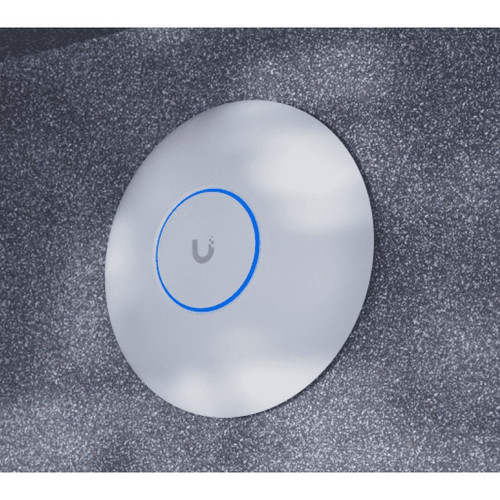
Both the Ubiquiti U7-LR-US and U7-PRO are ceiling-mount, WiFi 7 (802.11be) access points managed via Ethernet and targeted at enterprise and commercial deployments. The U7-LR-US is a dual-band unit emphasizing long-range coverage with a compact profile and lower power draw, while the U7-PRO adds a third 6 GHz band, higher client density, and a larger form factor. Buyers choosing between them are trading off spectrum availability and peak throughput against power budget and installation simplicity.

In This Guide
- Which AP delivers higher throughput and how does the radio architecture differ?
- What are the power, cabling, and physical installation requirements for each unit?
- How do operating environment ratings, certifications, and management capabilities compare?
- Which should you choose: the U7-LR-US or the U7-PRO?
- Side-by-Side Specs
- FAQ
Which AP delivers higher throughput and how does the radio architecture differ?
The U7-PRO is a tri-band 802.11be unit with explicitly published peak data rates: 5.8 Gbps on 6 GHz (BW320), 4.3 Gbps on 5 GHz, and 688 Mbps on 2.4 GHz. It supports 300+ concurrent clients per the provided specs. Channel bandwidth options extend to EHT 20/40/80/160/320, unlocking the full WiFi 7 BW320 mode on 6 GHz.
The U7-LR-US is a dual-band 802.11be unit covering 2.4 GHz and 5 GHz only — no 6 GHz radio is listed in its specifications. It provides 5 spatial streams and its antenna gain spec entry reads 'Gbps (BW160)', indicating BW160 as the maximum channel width. No peak data-rate figures in Gbps are published for the U7-LR-US in the provided specs. For deployments where the 6 GHz band is required for backhaul relief, dedicated IoT segregation, or peak throughput above what 5 GHz BW160 can deliver, the U7-PRO's tri-band architecture is the only option of the two.
What are the power, cabling, and physical installation requirements for each unit?
The U7-LR-US requires PoE 802.3af at 42.5–57V DC and consumes 14W maximum. 802.3af is the base PoE standard (up to 15.4W budget), meaning it can be powered by a wider range of existing switches without needing PoE+ ports. Its footprint is Ø175.7 × 43 mm and it weighs 3.55 lb (approximately 1.61 kg). The enclosure is polycarbonate and aluminum alloy. It includes a single 2.5 GbE RJ45 uplink port.
The U7-PRO requires PoE+ at 44–57V DC with a 21W maximum draw, necessitating 802.3at-capable switch ports. Its footprint is Ø206 × 46 mm — physically larger — and it weighs 680 g (1.5 lb), significantly lighter than the U7-LR-US. The enclosure is polycarbonate and metal, with a stainless steel (SUS304) and galvanized steel (SGCC) mount included in the box. The U7-PRO's uplink is also a 2.5 GbE RJ45 port. Installers upgrading from 802.3af-only switch infrastructure will need to verify or upgrade port budgets before deploying the U7-PRO.
How do operating environment ratings, certifications, and management capabilities compare?
The U7-LR-US is rated for operation from -30 to 50°C (-22 to 122°F), giving it a wider high-end thermal tolerance. It carries CE, FCC, and IC certifications and is confirmed NDAA compliant. Management is via Ethernet interface.
The U7-PRO is rated from -30 to 40°C (-22 to 104°F) — a 10°C narrower upper bound compared to the U7-LR-US. It carries CE, FCC, IC, and additionally Anatel certification (06370-24-08356), expanding its regulatory approval for Brazil. It is also NDAA compliant. The U7-PRO's specs include dynamic VLAN assignment and 8 BSSIDs per radio, which are not listed in the U7-LR-US specifications. Whether the U7-LR-US supports equivalent VLAN/SSID features is not determinable from the provided specs. For warehouse, manufacturing, or outdoor-adjacent installs where ambient temperatures can approach or exceed 40°C, the U7-LR-US's 50°C ceiling is a meaningful differentiator.
Which should you choose: the U7-LR-US or the U7-PRO?
Our take: The U7-LR-US is the stronger choice when installations require operation above 40°C, when existing infrastructure is limited to 802.3af PoE (14W vs. 21W), or when dual-band coverage and a smaller ceiling footprint (Ø175.7 mm vs. Ø206 mm) are the priority. The U7-PRO is the stronger choice when 6 GHz spectrum access, higher client density (300+ concurrent devices per spec), or peak throughput (5.8 Gbps on 6 GHz BW320 vs. BW160 maximum on the U7-LR-US) are required. The U7-PRO also adds dynamic VLAN assignment and 8 BSSIDs per radio per its published specs — capabilities not listed for the U7-LR-US. Both are NDAA compliant, WiFi 7, and managed via Ethernet. Select the U7-LR-US for thermally demanding or PoE-constrained environments; select the U7-PRO for high-density, tri-band enterprise deployments on PoE+ infrastructure.
Side-by-Side Comparison
Spec-for-spec, from manufacturer data.
| Specification | Ubiquiti U7-LR-US | Ubiquiti U7-PRO |
|---|---|---|
| WiFi Standard | WiFi 7 (802.11be) | WiFi 7 (802.11be) |
| Bands | 2.4 GHz & 5 GHz (dual-band) | 2.4 GHz, 5 GHz & 6 GHz (tri-band) |
| Spatial Streams | 5 | — |
| Peak Data Rate (6 GHz) | — | 5.8 Gbps (BW320) |
| Peak Data Rate (5 GHz) | — | 4.3 Gbps |
| Peak Data Rate (2.4 GHz) | — | 688 Mbps |
| Max Channel Width | BW160 | EHT BW320 (6 GHz) |
| Max Concurrent Clients | — | 300+ |
| Uplink Port | (1) 2.5 GbE RJ45 | (1) 1/2.5 GbE RJ45 |
| Power Standard | PoE 802.3af | PoE+ |
| Voltage Range | 42.5–57V DC | 44–57V DC |
| Power Consumption | 14W | 21W |
| Dimensions | Ø175.7 × 43 mm | Ø206 × 46 mm |
| Weight | 3.55 lb (~1.61 kg) | 680 g (1.5 lb) |
| Operating Temp | -30 to 50°C | -30 to 40°C |
| Certifications | CE, FCC, IC | CE, FCC, IC, Anatel |
| NDAA Compliant | Yes | Yes |
| Dynamic VLAN / BSSIDs per Radio | — | Dynamic VLAN; 8 BSSIDs |
| Enclosure | Polycarbonate, aluminum alloy | Polycarbonate, metal |
| Mount Included | Plastic mounting plate | Stainless steel (SUS304) / galvanized steel (SGCC) |
Frequently Asked Questions
Which should you choose: the U7-LR-US or the U7-PRO?
The U7-LR-US is the stronger choice when installations require operation above 40°C, when existing infrastructure is limited to 802.3af PoE (14W vs. 21W), or when dual-band coverage and a smaller ceiling footprint (Ø175.7 mm vs. Ø206 mm) are the priority. The U7-PRO is the stronger choice when 6 GHz spectrum access, higher client density (300+ concurrent devices per spec), or peak throughput (5.8 Gbps on 6 GHz BW320 vs. BW160 maximum on the U7-LR-US) are required. The U7-PRO also adds dynamic VLAN assignment and 8 BSSIDs per radio per its published specs — capabilities not listed for the U7-LR-US. Both are NDAA compliant, WiFi 7, and managed via Ethernet. Select the U7-LR-US for thermally demanding or PoE-constrained environments; select the U7-PRO for high-density, tri-band enterprise deployments on PoE+ infrastructure.
Can the U7-LR-US be powered by a standard 802.3af PoE switch, or does it need PoE+?
Yes. The U7-LR-US is specified at PoE 802.3af (42.5–57V DC, 14W maximum), so a standard 802.3af switch port is sufficient. The U7-PRO requires PoE+ (44–57V DC, 21W maximum), which means 802.3at-capable switch ports are needed for that model.
Does the U7-LR-US support the 6 GHz band like the U7-PRO?
No. Based on the provided specifications, the U7-LR-US covers 2.4 GHz and 5 GHz only. The U7-PRO is a tri-band unit and adds a 6 GHz radio with a published peak rate of 5.8 Gbps at BW320. If 6 GHz spectrum is required, only the U7-PRO qualifies.
Which unit is better suited for installations in hot environments such as warehouses or outdoor-adjacent areas?
The U7-LR-US has a specified operating temperature range of -30 to 50°C (-22 to 122°F), compared to -30 to 40°C (-22 to 104°F) for the U7-PRO. For environments where ambient temperatures may approach or exceed 40°C, the U7-LR-US provides a 10°C higher thermal ceiling per its published specifications.
Get a Second Opinion on Your Camera Choice
Share your site layout, coverage goals, and budget. Our team will validate the camera selection, flag anything we would change, and recommend products that match the use case.