
Ubiquiti U7-LITE-US vs NETGEAR WBE710-100NAS: Specification Comparison
Both the Ubiquiti U7-LITE-US and the NETGEAR WBE710-100NAS are Wi-Fi 7 (802.11be) ceiling/wall-mount access points intended for commercial and enterprise wireless deployments. This comparison evaluates them across the three dimensions that most directly affect purchasing decisions in this category: radio capability and throughput, power requirements and physical installation, and management platform integration. All figures cited are drawn strictly from the provided specifications.
In This Guide
- Which access point delivers greater wireless throughput and radio capability?
- How do the power requirements and physical installation profiles differ?
- What management platform and compatibility requirements apply to each unit?
- Which should you choose: the U7-LITE-US or the WBE710-100NAS?
- Side-by-Side Specs
- FAQ
Which access point delivers greater wireless throughput and radio capability?
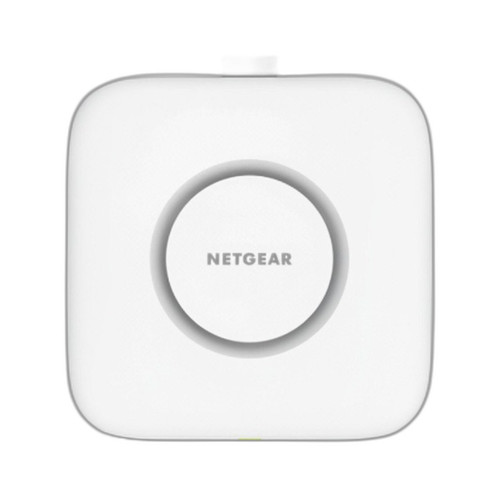
The NETGEAR WBE710-100NAS is a tri-band Wi-Fi 7 (802.11be) access point with a specified aggregate wireless throughput of 9.4 Gbps. Its antenna gain is specified at 4.1 dBi and 4.6 dBi across bands. The WBE710-100NAS also includes bandwidth management capability.
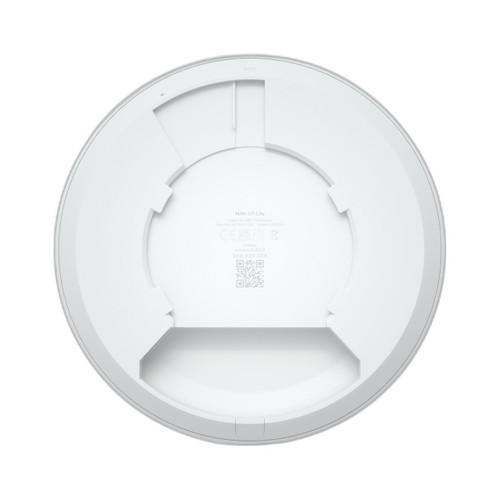
The Ubiquiti U7-LITE-US is a dual-band Wi-Fi 7 (802.11be) access point covering 2.4 GHz and 5 GHz with 4 spatial streams. No aggregate throughput figure is provided in the supplied specifications. Channel bandwidth support spans HT 20/40, VHT 20/40/80/160, HE 20/40/80/160, and EHT 20/40/80/160/240 MHz. Coverage area is specified at 115 m² (approximately 1,250 ft²).
On radio capability, the WBE710-100NAS has a named throughput advantage (9.4 Gbps aggregate) and adds a third radio band. The U7-LITE-US specifies 4 spatial streams and full EHT channel width support including 240 MHz, but no equivalent aggregate throughput figure is available for direct comparison. The WBE710-100NAS's tri-band configuration provides an additional radio for client offloading that the dual-band U7-LITE-US does not.
How do the power requirements and physical installation profiles differ?
The Ubiquiti U7-LITE-US is powered by PoE conforming to 802.3af with a maximum power consumption of 13W and a voltage range of 42.5–57V DC. Its dimensions are Ø171.5 × 33 mm and it weighs 0.750 lb. It supports ceiling and wall mounting and includes a single 2.5 GbE RJ45 uplink port.
The NETGEAR WBE710-100NAS requires PoE++ (802.3bt) input via its 2.5G PoE port. No weight, exact dimensions, or wattage figure is provided in the supplied specifications. It also supports wall and ceiling mounting. The housing is specified as plastic.
The power requirement difference is significant for infrastructure planning. The U7-LITE-US operates on standard PoE (802.3af) at 13W, meaning it is compatible with a wide range of existing PoE switches and injectors. The WBE710-100NAS requires PoE++ (802.3bt), which demands a compatible 802.3bt-capable switch or injector — a higher-power class not universally present in existing deployments. Installers should verify switch port budget compatibility before specifying the WBE710-100NAS.
What management platform and compatibility requirements apply to each unit?
The Ubiquiti U7-LITE-US integrates with the UniFi controller platform and requires UniFi Network Version 9.0.114 or later. This ties the access point to the UniFi ecosystem for configuration, monitoring, and firmware management. No standalone management interface is specified.
The NETGEAR WBE710-100NAS is described in the provided specifications as 'Unmanaged' under its management field, with 'Bandwidth Management enabled' as a separate note. No controller software, minimum firmware version, or cloud management platform is specified in the supplied data.
The management profiles represent a fundamental architectural difference. The U7-LITE-US is purpose-built for the UniFi ecosystem; buyers without an existing UniFi controller infrastructure must account for that dependency. The WBE710-100NAS's 'Unmanaged' designation suggests standalone or simpler deployment, though the absence of controller integration details in the provided specs means the full management story cannot be fully characterized from the data available. Buyers with large multi-AP deployments should investigate the WBE710-100NAS management story further before committing.
Which should you choose: the U7-LITE-US or the WBE710-100NAS?
Our take: The U7-LITE-US is the stronger choice when the existing network infrastructure runs PoE (802.3af) switches and a UniFi controller platform is already in place. It consumes only 13W on standard 802.3af, avoiding the PoE++ switch upgrade cost that the WBE710-100NAS's 802.3bt requirement would impose. The WBE710-100NAS counters with tri-band Wi-Fi 7 and a specified 9.4 Gbps aggregate wireless throughput — figures the U7-LITE-US's dual-band spec sheet does not match on paper. The U7-LITE-US's 4 spatial streams and EHT 240 MHz channel support are confirmed, but no equivalent aggregate throughput is provided for direct comparison. For greenfield deployments where PoE++ switching is already planned and maximum wireless throughput per AP is the priority, the WBE710-100NAS's radio spec is meaningfully higher. For cost-controlled retrofits into existing PoE infrastructure under UniFi management, the U7-LITE-US is the more operationally straightforward choice.
Side-by-Side Comparison
Spec-for-spec, from manufacturer data.
| Specification | Ubiquiti U7-LITE-US | NETGEAR WBE710-100NAS |
|---|---|---|
| Wi-Fi Standard | Wi-Fi 7 (802.11be) | Wi-Fi 7 (802.11be) |
| Radio Bands | Dual-band (2.4 GHz + 5 GHz) | Tri-band |
| Spatial Streams | 4 | — |
| Aggregate Wireless Throughput | — | 9.4 Gbps |
| Uplink Port | 1× 2.5 GbE RJ45 | 1× 2.5G PoE input port |
| PoE Standard Required | 802.3af | 802.3bt (PoE++) |
| Power Consumption | 13W | — |
| Voltage Range | 42.5–57V DC | — |
| Coverage Area | 115 m² (1,250 ft²) | — |
| Channel Bandwidths | HT/VHT/HE/EHT 20/40/80/160/240 MHz | — |
| Antenna Gain | — | 4.1 / 4.6 dBi |
| Mount Options | Ceiling, Wall | Wall, Ceiling |
| Dimensions | Ø171.5 × 33 mm | — |
| Weight | 0.750 lb | — |
| Housing | — | Plastic |
| Management Platform | UniFi (requires v9.0.114+) | Unmanaged; Bandwidth Management enabled |
| Warranty | Manufacturer Warranty (duration not specified) | 5 years |
| Certifications | CE, FCC, IC | — |
| Country of Origin | CN | — |
Frequently Asked Questions
Which should you choose: the U7-LITE-US or the WBE710-100NAS?
The U7-LITE-US is the stronger choice when the existing network infrastructure runs PoE (802.3af) switches and a UniFi controller platform is already in place. It consumes only 13W on standard 802.3af, avoiding the PoE++ switch upgrade cost that the WBE710-100NAS's 802.3bt requirement would impose. The WBE710-100NAS counters with tri-band Wi-Fi 7 and a specified 9.4 Gbps aggregate wireless throughput — figures the U7-LITE-US's dual-band spec sheet does not match on paper. The U7-LITE-US's 4 spatial streams and EHT 240 MHz channel support are confirmed, but no equivalent aggregate throughput is provided for direct comparison. For greenfield deployments where PoE++ switching is already planned and maximum wireless throughput per AP is the priority, the WBE710-100NAS's radio spec is meaningfully higher. For cost-controlled retrofits into existing PoE infrastructure under UniFi management, the U7-LITE-US is the more operationally straightforward choice.
Can I power the NETGEAR WBE710-100NAS from the same PoE switch I use for the Ubiquiti U7-LITE-US?
Not necessarily. The U7-LITE-US operates on PoE (802.3af) at 13W, which is compatible with most standard PoE switches. The WBE710-100NAS requires PoE++ (802.3bt), a higher-power class. If your existing switch ports only support 802.3af or 802.3at (PoE+), they will not power the WBE710-100NAS. Verify your switch's per-port PoE class before purchasing.
Do I need special software or a controller to manage the Ubiquiti U7-LITE-US or the NETGEAR WBE710-100NAS?
The U7-LITE-US requires UniFi Network Version 9.0.114 or later for management — it is not a standalone-managed device per the provided specifications. The WBE710-100NAS is listed as 'Unmanaged' in the provided specs, with bandwidth management noted as enabled. No controller software requirement is specified for the NETGEAR unit, but the full management capability of the WBE710-100NAS is not fully detailed in the available specification data.
Is the NETGEAR WBE710-100NAS or the Ubiquiti U7-LITE-US better suited for high-density client environments?
The WBE710-100NAS specifies a tri-band radio with 9.4 Gbps aggregate wireless throughput, giving it more aggregate airtime across three bands to distribute client load. The U7-LITE-US is dual-band with 4 spatial streams and supports up to 1,250 ft² coverage per unit, but no aggregate throughput figure is provided in the supplied specs. For environments where client density drives the decision, the WBE710-100NAS's tri-band configuration and named throughput figure represent a documented capability advantage, assuming compatible PoE++ infrastructure is in place.
Get a Second Opinion on Your Camera Choice
Share your site layout, coverage goals, and budget. Our team will validate the camera selection, flag anything we would change, and recommend products that match the use case.