
TSC DA210 vs TSC A001-1011: Specification Comparison
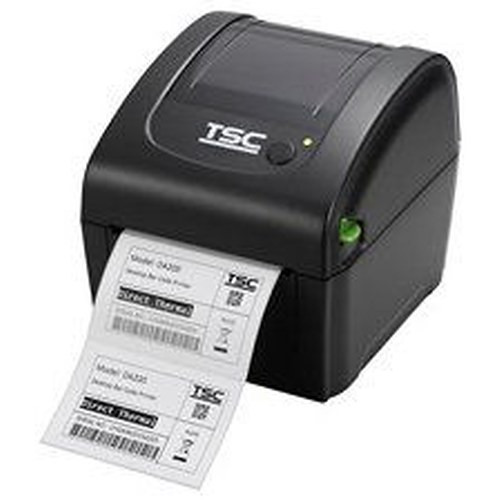
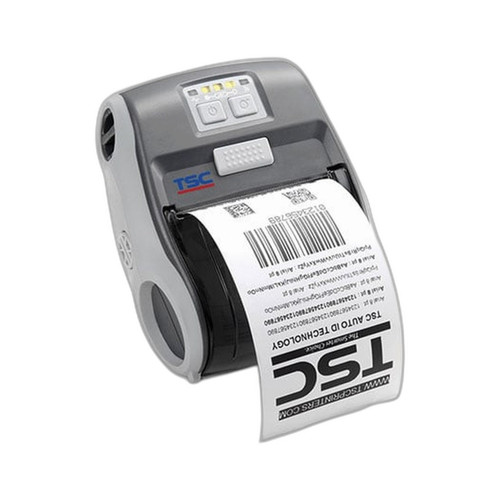
Both the TSC DA210 and TSC A001-1011 are direct thermal label printers that eliminate ribbon consumables, making them legitimate cross-shop candidates for operations evaluating label and receipt printing solutions. The DA210 is a desktop unit aimed at fixed workstations, while the A001-1011 is a mobile printer designed for field or on-the-go use. This comparison covers print quality, speed and media handling, and connectivity to help buyers determine which form factor and capability set better fits their deployment environment.
In This Guide
- Which printer delivers higher print resolution and how does that affect barcode and label quality?
- How do print speed, maximum print width, and supported media types compare between the two models?
- What connectivity options does each printer offer and how does that determine deployment flexibility?
- Which should you choose: the DA210 or the A001-1011?
- Side-by-Side Specs
- FAQ
Which printer delivers higher print resolution and how does that affect barcode and label quality?
The DA210 prints at 300 dpi while the A001-1011 prints at 203 dpi — a 48% resolution advantage for the DA210. At 300 dpi, the DA210 produces sharper barcode edges and finer text, which is particularly relevant for small-font compliance labels, GS1-128 barcodes, and dense QR codes where scan reliability under poor lighting depends on element definition. The 203 dpi output of the A001-1011 meets standard barcode readability thresholds for most logistics and retail receipt applications and is the industry norm for mobile-class printers in this width category, but it will not match the DA210 on fine-detail stock such as jewelry tags or pharmaceutical labels. Buyers printing primarily receipts, pick tickets, or standard UPC labels will find 203 dpi adequate; those printing compliance labels, small-pitch 2D codes, or high-density text should weight the DA210's 300 dpi advantage heavily.
How do print speed, maximum print width, and supported media types compare between the two models?
The DA210 prints at 6 ips across a 4.25-inch maximum print width and supports direct thermal labels and tags. The A001-1011 prints at 5 ips across a narrower 2.83-inch maximum print width but supports a broader media set: labels, receipts, and linerless media. The DA210's 4.25-inch width accommodates standard 4-inch shipping labels with bleed room, making it suitable for warehouse pick-and-pack, compliance, and logistics labeling. The A001-1011's 2.83-inch width is sufficient for receipts, small shelf labels, and field service tickets but cannot produce a full 4-inch shipping label. The DA210's 6 ips speed is 20% faster than the A001-1011's 5 ips, relevant for moderate-to-high-volume fixed print queues. The A001-1011's linerless media support is a functional differentiator where waste reduction or receipt-style output without backing liner is operationally required.
What connectivity options does each printer offer and how does that determine deployment flexibility?
The DA210 specifies USB connectivity. The A001-1011 specifies Wi-Fi and Bluetooth (noted as MFi-certified) with a color LCD display and on-printer controls. The DA210's USB-only interface requires a physical tether to a host PC or terminal, making it a fixed-station device dependent on a connected workstation for all print jobs. The A001-1011's dual wireless connectivity enables mobile device pairing over Bluetooth and enterprise network printing over Wi-Fi without a cable, directly supporting field technicians, route delivery drivers, and retail floor staff who print away from fixed infrastructure. The MFi Bluetooth certification on the A001-1011 confirms Apple iOS device compatibility for mobile print workflows. The DA210 spec sheet does not list wireless or display capabilities; buyers requiring untethered or mobile operation cannot substitute the DA210 for the A001-1011.
Which should you choose: the DA210 or the A001-1011?
Our take: The DA210 is the stronger choice when print resolution, label width, and speed are the primary requirements at a fixed workstation, while the A001-1011 is the correct choice when wireless mobility and media versatility are non-negotiable. Concretely: the DA210 leads on resolution (300 dpi vs. 203 dpi), maximum print width (4.25 in. vs. 2.83 in.), and print speed (6 ips vs. 5 ips). The A001-1011 leads on connectivity (Wi-Fi + MFi Bluetooth vs. USB only), media range (labels, receipts, linerless vs. labels and tags), and portability as a purpose-built mobile unit with a color LCD. Both carry a 2-year warranty and use ribbon-free direct thermal operation. Buyers running fixed shipping or compliance label stations should select the DA210; buyers equipping mobile workers, route drivers, or retail floor staff should select the A001-1011.
Side-by-Side Comparison
Spec-for-spec, from manufacturer data.
| Specification | TSC DA210 | TSC A001-1011 |
|---|---|---|
| Product Type | Desktop Printer | Mobile Printer |
| Print Method | Direct Thermal | Direct Thermal |
| Print Resolution | 300 dpi | 203 dpi |
| Print Speed | 6 ips | 5 ips |
| Maximum Print Width | 4.25 in. | 2.83 in. |
| Media Types Supported | Labels; Tags | Labels; Receipts; Linerless |
| Connectivity | USB | Wi-Fi; Bluetooth |
| Bluetooth Certification | — | MFi |
| Display | — | Color LCD |
| Ribbon Required | No | No |
| Warranty | 2-Year | 2-Year |
| SKU | 99-1580015-0001 | A30RB-A001-1011 |
Frequently Asked Questions
Which should you choose: the DA210 or the A001-1011?
The DA210 is the stronger choice when print resolution, label width, and speed are the primary requirements at a fixed workstation, while the A001-1011 is the correct choice when wireless mobility and media versatility are non-negotiable. Concretely: the DA210 leads on resolution (300 dpi vs. 203 dpi), maximum print width (4.25 in. vs. 2.83 in.), and print speed (6 ips vs. 5 ips). The A001-1011 leads on connectivity (Wi-Fi + MFi Bluetooth vs. USB only), media range (labels, receipts, linerless vs. labels and tags), and portability as a purpose-built mobile unit with a color LCD. Both carry a 2-year warranty and use ribbon-free direct thermal operation. Buyers running fixed shipping or compliance label stations should select the DA210; buyers equipping mobile workers, route drivers, or retail floor staff should select the A001-1011.
Is the DA210 or A001-1011 better for printing standard 4-inch shipping labels?
The DA210 is the appropriate choice. Its 4.25-inch maximum print width accommodates standard 4-inch shipping labels with margin, and its 300 dpi resolution and 6 ips speed suit fixed shipping-station workflows. The A001-1011 maxes out at 2.83 inches, which is insufficient for full-width 4-inch shipping labels.
Can either printer work with an iPhone or iPad over Bluetooth without a cable?
Only the A001-1011 supports wireless connectivity. Its spec sheet lists Bluetooth MFi certification, which confirms compatibility with Apple iOS devices, and Wi-Fi for network-based printing. The DA210 specifies USB connectivity only; no wireless or Bluetooth capability is listed in its spec data.
Do both printers require ink or toner ribbons?
Neither printer requires a ribbon. Both the DA210 and the A001-1011 use direct thermal print technology, which activates heat-sensitive media directly. This eliminates ribbon consumable costs and the mechanical complexity of ribbon loading and replacement for both models.
More Label Printer Comparisons
- Sato WWCT04241-NAR vs Zebra ZD4A043-D01X01EZ
- Sato WWCT04241-NAR vs Zebra ZT41142-T010000Z
- Sato WWCT04241-NAR vs Zebra ZT41142-T31A000Z
- Sato WWCT04241-NAR vs Sato WWCT04441-WCN
- Sato WWCT04241-NAR vs Sato WWHC03041-WAN
- Sato WWCT04441-WCN vs Zebra ZD4A043-D01X01EZ
Label Printer Buying Guides
Get a Second Opinion on Your Camera Choice
Share your site layout, coverage goals, and budget. Our team will validate the camera selection, flag anything we would change, and recommend products that match the use case.