
Speco Technologies ZIPL4B1 vs Hanwha ARD-410: Specification Comparison
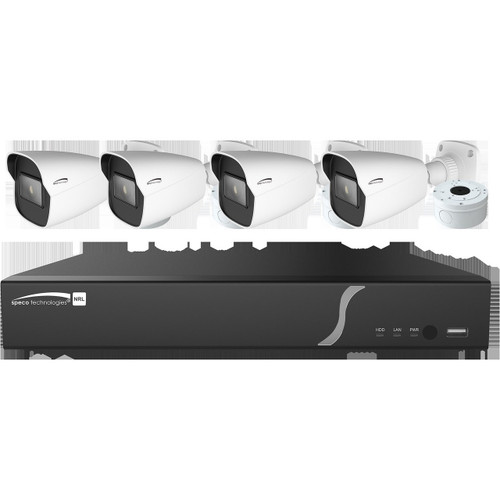
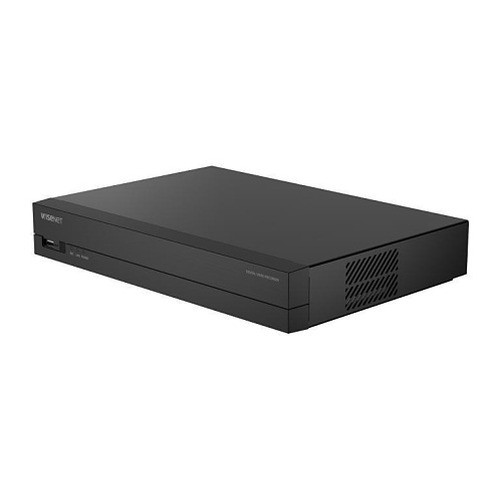
Both the Speco Technologies ZIPL4B1 and the Hanwha ARD-410 are 4-channel recording appliances, but they address different infrastructure realities. The ZIPL4B1 is a closed, IP-only NVR kit bundling four 4MP PoE bullet cameras and 1TB of storage for greenfield installations. The ARD-410 is a standalone pentabrid recorder accepting AHD, TVI, CVI, CVBS, and IP signals across up to six total channels, targeting hybrid or legacy-migration sites. Buyers choosing between them are effectively deciding between a turnkey IP deployment and a flexible multi-format recorder.
In This Guide
- How do channel capacity, camera compatibility, and storage headroom compare?
- What are the recording resolution, frame-rate, compression, and network throughput specifications?
- How do the two units compare on remote access, protocol support, security features, and physical installation requirements?
- Which should you choose: the ZIPL4B1 or the ARD-410?
- Side-by-Side Specs
- FAQ
How do channel capacity, camera compatibility, and storage headroom compare?
The ZIPL4B1 ships as a fixed 4-channel IP NVR. All four channels are pre-wired to the bundled 4MP PoE bullet cameras; no analog inputs are available, and the spec sheet does not list any IP channel expansion beyond the four included. Storage is a single internal SATA port pre-loaded with 1TB.
The ARD-410 provides 4 analog BNC inputs supporting AHD, TVI, CVI, and CVBS signals at resolutions up to 5MP, plus an additional 2 IP channels (maximum 6 total channels) at resolutions from CIF up to 5MP. Its single SATA bay supports up to 6TB — six times the ZIPL4B1's 1TB ceiling — giving significantly more headroom for extended retention or higher-bitrate streams.
For a site with exclusively new IP cameras and no future analog requirement, the ZIPL4B1's fixed architecture is sufficient. For any site carrying legacy coaxial infrastructure or expecting analog camera reuse, the ARD-410's pentabrid input set is the only viable path.
What are the recording resolution, frame-rate, compression, and network throughput specifications?
The ZIPL4B1 records at 2560×1440 (4MP) using H.265 or H.264 compression. Recording modes include continuous, motion-detection, and scheduled. Maximum network throughput is not stated in the provided specification.
The ARD-410 records analog channels at up to 5MP@12fps or 4MP@15fps and IP channels at resolutions from CIF to 5MP, with a stated maximum recording bandwidth of 30Mbps. Compression options are H.265, H.264, and MJPEG. Recording modes are Manual, Schedule, Event, and Dual Track. Event triggers include motion detection, video loss, tampering, and face detection, with event actions covering email, push notification, PTZ command, alarm, FTP, and shutdown.
The ARD-410's 30Mbps bandwidth ceiling and multi-tier event-action matrix are explicitly specified; equivalent figures are absent from the ZIPL4B1 spec sheet. Both units support H.265 and H.264 compression.
How do the two units compare on remote access, protocol support, security features, and physical installation requirements?
The ZIPL4B1 is ONVIF-compliant and described as plug-and-play with pre-integration of its bundled cameras. Remote access protocols, user limits, web-viewer OS/browser compatibility, and cybersecurity capabilities are not specified in the provided data sheet.
The ARD-410 supports a broad protocol stack: TCP/IP, UDP/IP, RTP, RTSP, NTP, HTTP, HTTPS, DHCP, PPPoE, SMTP, SNMP, ONVIF Profile-S, and Hanwha's SUNAPI. Remote access is documented at up to 10 live unicast users, 20 multicast users, and 3 simultaneous search sessions. Web viewer supports Windows 10 and macOS 11+, via Chrome, Edge, and Safari. Security features include IP address filtering, user access logs, 802.1x authentication, ID/PW encryption, recording/transmission/backup encryption, and Hanwha Techwin Root CA device certificates. It carries UL, CE, FCC, and KC certifications. The unit draws a maximum of 19.2W and operates from 0°C to +40°C on DC 12V input.
The ZIPL4B1 operates from 14°F to 122°F (−10°C to 50°C), giving it a wider stated low-end temperature range than the ARD-410's 0°C floor — relevant for unconditioned spaces. Physical mount type for the ZIPL4B1 is listed as Rack; the ARD-410 supports Wall and Rack mounting.
Which should you choose: the ZIPL4B1 or the ARD-410?
Our take: The ZIPL4B1 is the stronger choice when deploying a brand-new, IP-only 4-camera system and the buyer wants a pre-matched, out-of-box kit with no analog compatibility requirement. The ARD-410 is the stronger choice for every other scenario. Concretely: the ARD-410 supports up to 6TB storage versus the ZIPL4B1's 1TB cap; it handles up to 6 total channels (4 analog + 2 IP) versus the ZIPL4B1's fixed 4 IP-only channels; and its documented security stack — 802.1x, transmission encryption, device certificates, and access logging — is fully specified, whereas comparable security capabilities are absent from the ZIPL4B1 spec sheet. The ZIPL4B1 gains a slight edge on low-temperature tolerance (−10°C vs. 0°C) for unconditioned environments. Buyers inheriting coaxial infrastructure, requiring analog camera reuse, or needing documented enterprise-grade cybersecurity controls should select the ARD-410.
Side-by-Side Comparison
Spec-for-spec, from manufacturer data.
| Specification | Speco Technologies ZIPL4B1 | Hanwha ARD-410 |
|---|---|---|
| Product Type | 4-CH IP NVR Kit (cameras included) | 4-CH Pentabrid Recorder (recorder only) |
| Total Channels | 4 (IP only) | Up to 6 (4 analog + 2 IP) |
| Analog Input Formats | — | AHD, TVI, CVI, CVBS |
| IP Camera Resolution (max) | 4MP (2560×1440) | 5MP |
| Video Compression | H.265, H.264 | H.265, H.264, MJPEG |
| Max Recording Bandwidth | Not specified | 30 Mbps |
| Analog Record Rate (max) | — | 5MP@12fps / 4MP@15fps |
| Storage Capacity (max) | 1TB (1× SATA, pre-installed) | 6TB (1× SATA) |
| ONVIF | Yes | Yes (Profile-S) |
| Audio | Two-way | 1× line in / 1× line out, two-way |
| Remote Live Users (max) | Not specified | 10 unicast / 20 multicast |
| Security Features | Not specified | 802.1x, encryption (ID/PW, recording, transmission, backup), IP filtering, access log, device certificate |
| Operating Temperature | −10°C to +50°C | 0°C to +40°C |
| Power | Not specified | Max 19.2W, DC 12V |
| Certifications | Not specified | UL, CE, FCC, KC |
| Mount Type | Rack | Wall, Rack |
Frequently Asked Questions
Which should you choose: the ZIPL4B1 or the ARD-410?
The ZIPL4B1 is the stronger choice when deploying a brand-new, IP-only 4-camera system and the buyer wants a pre-matched, out-of-box kit with no analog compatibility requirement. The ARD-410 is the stronger choice for every other scenario. Concretely: the ARD-410 supports up to 6TB storage versus the ZIPL4B1's 1TB cap; it handles up to 6 total channels (4 analog + 2 IP) versus the ZIPL4B1's fixed 4 IP-only channels; and its documented security stack — 802.1x, transmission encryption, device certificates, and access logging — is fully specified, whereas comparable security capabilities are absent from the ZIPL4B1 spec sheet. The ZIPL4B1 gains a slight edge on low-temperature tolerance (−10°C vs. 0°C) for unconditioned environments. Buyers inheriting coaxial infrastructure, requiring analog camera reuse, or needing documented enterprise-grade cybersecurity controls should select the ARD-410.
Can either unit record analog CCTV cameras alongside IP cameras?
Only the ARD-410 supports analog cameras. It accepts AHD, TVI, CVI, and CVBS signals on four BNC inputs and can add up to two IP cameras for a six-channel total. The ZIPL4B1 is IP-only; it has no analog inputs and cannot record from coaxial cameras.
Is the ZIPL4B1 or ARD-410 better for larger deployments or longer retention periods?
The ARD-410 supports up to 6TB in its single SATA bay, compared to the ZIPL4B1's 1TB pre-installed drive. For extended retention or higher-bitrate streams, the ARD-410 offers significantly more headroom. Neither unit lists multi-bay expansion; buyers requiring more than 6TB would need to evaluate networked storage options regardless of which recorder is chosen.
Which unit is easier to install and set up?
The ZIPL4B1 is described as plug-and-play with the four bundled cameras pre-integrated, making initial setup straightforward for a new IP deployment. The ARD-410 includes an install wizard and supports auto camera registration but requires the installer to configure analog signal types (AHD/TVI/CVI/CVBS) and any IP channel additions manually. The ARD-410's broader feature set and multi-format support involve more configuration decisions at commissioning.
Get a Second Opinion on Your Camera Choice
Share your site layout, coverage goals, and budget. Our team will validate the camera selection, flag anything we would change, and recommend products that match the use case.