
Hanwha ARN-410S vs QNAP VS-2204-PRO: Specification Comparison
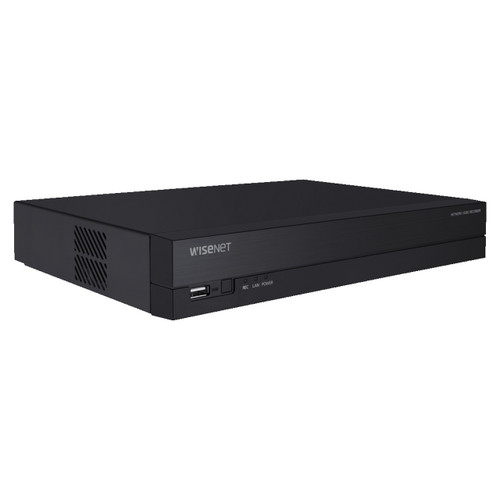
The Hanwha ARN-410S and QNAP VS-2204-PRO+ are both 4-channel network video recorders aimed at small-site deployments. The ARN-410S is a rack-mount, PoE-integrated appliance running embedded Linux, while the VS-2204-PRO+ is a tower-form NAS-style recorder with a general-purpose Intel Atom processor and two hot-swappable drive bays. This comparison examines recording throughput and storage, physical build and power, and protocol support and remote-management capabilities to help integrators and IT buyers make a platform-aligned purchasing decision.
In This Guide
- Which recorder delivers more recording bandwidth, storage headroom, and channel throughput?
- How do the two units differ in physical format, power consumption, and operating environment?
- Which unit offers broader protocol support, remote access, and VMS integration?
- Which should you choose: the ARN-410S or the VS-2204-PRO?
- Side-by-Side Specs
- FAQ
Which recorder delivers more recording bandwidth, storage headroom, and channel throughput?
The ARN-410S supports a maximum recording bandwidth of 40 Mbps and a playback bandwidth of 32 Mbps across its 4 channels, with simultaneous local 4-channel playback and up to 4 channels per remote user (max 3 remote users). Storage is limited to a single SATA HDD bay accepting up to 6 TB.
The VS-2204-PRO+ specifies recording performance of up to 30 fps at D1 or VGA resolution on its 4 channels, with megapixel recording up to 8 MP. It provides two 3.5-inch SATA II / 2.5-inch SATA / SSD bays (hot-swappable and lockable), effectively doubling raw storage slot count versus the ARN-410S. A maximum recording bandwidth figure is not published for the VS-2204-PRO+.
For storage scalability, the VS-2204-PRO+ holds an advantage with two bays versus one. The ARN-410S provides explicit bandwidth figures (40 Mbps record, 32 Mbps playback) that the VS-2204-PRO+ spec sheet does not disclose, making direct throughput comparison incomplete.
How do the two units differ in physical format, power consumption, and operating environment?
The ARN-410S ships in a rack-mount metal chassis (300 x 47 x 208.7 mm, 1.03 kg) and includes an integrated 4-port PoE switch (802.3af, 35 W PoE budget). It draws up to 52 W peak with one HDD and PoE active, powered from a 54 VDC DC adapter. Operating range is 0–40°C and 20–85% RH. No acoustic rating is published.
The VS-2204-PRO+ uses a tower form factor (150 x 102 x 216 mm, 1.74 kg net) powered by a universal 100–240 V AC, 50/60 Hz supply rated at 60 W with 25 W typical consumption. It specifies a wider humidity tolerance of 0–95% RH and publishes a noise level of 34.2 dB(A) from its single 7 cm fan. It does not include PoE.
The ARN-410S is purpose-built for rack-mount infrastructure rooms and eliminates the need for a separate PoE switch for up to 4 cameras. The VS-2204-PRO+ suits desktop or tower-rack environments, runs on standard AC power without requiring a DC adapter, and tolerates higher ambient humidity. Neither unit is rated for outdoor or harsh-environment installation.
Which unit offers broader protocol support, remote access, and VMS integration?
The ARN-410S publishes an extensive protocol list including IPv4/IPv6, TCP/IP, RTP (UDP and TCP), RTSP, ONVIF Profile-S, SUNAPI (server and client), HTTPS, SNMP, DDNS, and 802.1x. Security features include IP address filtering, user access logging, device certificate via Hanwha Techwin Root CA, and signed firmware. Remote access supports up to 10 live unicast and 20 multicast streams. Compatible viewers include WAVE, SSM, Webviewer, Wisenet Viewer, and mobile apps for iOS and Android. Failover (N+1) and ARB are listed. P2P via QR code is supported.
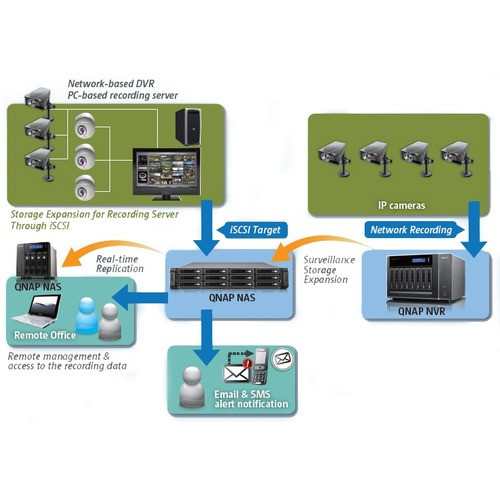
The VS-2204-PRO+ lists H.264 / MPEG-4 / M-JPEG / MxPEG video compression and supports multi-server monitoring of up to 128 channels in aggregate, with remote display modes up to 42-channel. Specific network protocols, security certifications, VMS software compatibility, and remote user limits are not published in the provided specifications.
The ARN-410S provides a significantly more detailed and verifiable integration profile for enterprise and government deployments requiring ONVIF compliance, encrypted transport, or integration into Hanwha VMS platforms. The VS-2204-PRO+ multi-server aggregation (128-channel view) is notable for operators managing multiple recorders, but the absence of published security and protocol details makes verification for sensitive deployments difficult.
Which should you choose: the ARN-410S or the VS-2204-PRO?
Our take: The ARN-410S is the stronger choice when the deployment targets a Hanwha camera ecosystem, requires a rack-mount form factor with built-in PoE, or must meet documented security and protocol compliance requirements. Three concrete spec deltas support this: (1) the ARN-410S includes a 4-port 802.3af PoE switch with a 35 W budget, eliminating a separate switch entirely; (2) it publishes explicit recording and playback bandwidth figures of 40 Mbps and 32 Mbps respectively and confirms ONVIF Profile-S compliance, while the VS-2204-PRO+ discloses neither; (3) the ARN-410S specifies N+1 failover and signed firmware, credentials the VS-2204-PRO+ does not list. The VS-2204-PRO+ is better suited when buyers need two hot-swappable drive bays for greater on-site storage flexibility, prefer universal AC power over a DC adapter, or operate QNAP-centric multi-site environments where the 128-channel multi-server monitoring view delivers operational value.
Side-by-Side Comparison
Spec-for-spec, from manufacturer data.
| Specification | Hanwha ARN-410S | QNAP VS-2204-PRO |
|---|---|---|
| Channel Capacity | 4 CH | 4 CH |
| Video Compression | H.265 / H.264 / MJPEG | H.264 / MPEG-4 / M-JPEG / MxPEG |
| Max Recording Bandwidth | 40 Mbps | — |
| Max Playback Bandwidth | 32 Mbps | — |
| Max Resolution | 8 MP | 8 MP |
| Frame Rate | 30 fps | 30 fps at D1/VGA |
| HDD Bays | 1 x SATA (max 6 TB) | 2 x SATA II / SSD hot-swap |
| Built-in PoE | 4-port 802.3af, 35 W budget | — |
| LAN Ports | 4 x PoE RJ-45 (LAN) + 1 x RJ-45 (WAN) | 2 x Gigabit RJ-45 |
| ONVIF | Profile-S | — (not specified) |
| Form Factor | Rack-mount (1U) | Tower |
| Power Input | 54 VDC / 1.20 A (DC adapter) | 100-240 V AC, 50/60 Hz |
| Max Power Draw | 52 W (1 HDD + PoE on) | 25 W typical / 60 W supply rated |
| Operating Humidity | 20–85% RH | 0–95% RH |
| Noise Level | — (not specified) | 34.2 dB(A) |
| Warranty | 3-year | — (not specified) |
Frequently Asked Questions
Which should you choose: the ARN-410S or the VS-2204-PRO?
The ARN-410S is the stronger choice when the deployment targets a Hanwha camera ecosystem, requires a rack-mount form factor with built-in PoE, or must meet documented security and protocol compliance requirements. Three concrete spec deltas support this: (1) the ARN-410S includes a 4-port 802.3af PoE switch with a 35 W budget, eliminating a separate switch entirely; (2) it publishes explicit recording and playback bandwidth figures of 40 Mbps and 32 Mbps respectively and confirms ONVIF Profile-S compliance, while the VS-2204-PRO+ discloses neither; (3) the ARN-410S specifies N+1 failover and signed firmware, credentials the VS-2204-PRO+ does not list. The VS-2204-PRO+ is better suited when buyers need two hot-swappable drive bays for greater on-site storage flexibility, prefer universal AC power over a DC adapter, or operate QNAP-centric multi-site environments where the 128-channel multi-server monitoring view delivers operational value.
Does either recorder require a separate PoE switch to connect IP cameras?
The ARN-410S includes four built-in 802.3af PoE ports with a combined 35 W budget, so no external PoE switch is needed for up to four cameras within that power envelope. The VS-2204-PRO+ does not include PoE; a separate 802.3af/at switch or mid-span injector is required for each PoE-powered camera.
Which unit gives me more local storage capacity?
The VS-2204-PRO+ provides two hot-swappable SATA bays accepting 3.5-inch or 2.5-inch drives or SSDs, allowing two drives to be installed and swapped without powering down. The ARN-410S offers a single SATA bay rated for a maximum of 6 TB. If maximizing on-device storage without external NAS is a priority, the VS-2204-PRO+ has the physical bay advantage.
Are these recorders compatible with third-party ONVIF cameras?
The ARN-410S explicitly lists ONVIF Profile-S compliance, meaning it is designed to register and record from any ONVIF Profile-S conformant IP camera. The VS-2204-PRO+ does not list ONVIF support in the provided specifications; buyers requiring third-party ONVIF camera integration should verify compatibility directly with QNAP before purchase.
Get a Second Opinion on Your Camera Choice
Share your site layout, coverage goals, and budget. Our team will validate the camera selection, flag anything we would change, and recommend products that match the use case.