
Hanwha ARN-410S vs Hanwha ARD-410: Specification Comparison
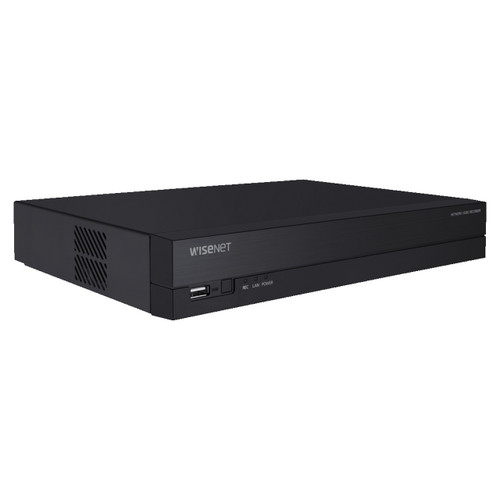
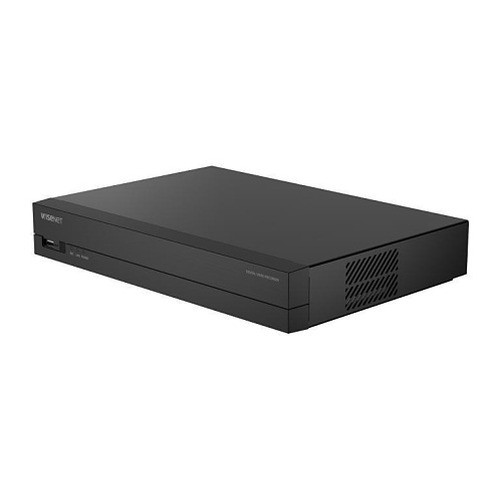
The Hanwha ARN-410S and ARD-410 are both 4-channel recorders sharing identical physical dimensions (300 x 47 x 208.7 mm) and the same single-SATA-slot, 6 TB storage ceiling. The ARN-410S is a pure IP NVR capped at 8 MP per channel with integrated 4-port PoE switching, while the ARD-410 is a pentabrid hybrid DVR/NVR accepting AHD, TVI, CVI, CVBS analog signals on BNC inputs plus up to two additional IP channels, topping out at 5 MP analog or 5 MP IP. Buyers choosing between a fully IP infrastructure and a site retaining analog cameras are the primary audience for this comparison.
In This Guide
Camera Compatibility and Channel Capacity
The ARN-410S accepts only IP cameras on its four PoE RJ-45 ports, each running at 10/100 Mbps on the LAN side, plus a separate 10/100 WAN port. It delivers up to 8 MP (3840x2160) per channel at 30 fps, and its 35 W PoE budget is shared across all four ports at 802.3af standard, meaning each port is capped at roughly 15.4 W under that standard. There is no BNC, no VGA, and no coaxial-control path; the unit is exclusively designed for modern IP cameras.
The ARD-410 accepts four analog signals via BNC (1 Vp-p, 75 ohm) in any mix of AHD, TVI, CVI, or CVBS, and adds up to two IP channels via the single RJ-45 LAN port for a maximum of six total channels. Analog live resolution reaches 2 MP at 120 fps aggregate, while analog recording tops out at 5 MP at 12 fps or 4 MP at 15 fps. IP cameras on the ARD-410 are limited to 5 MP maximum resolution. The unit also provides RS-485 PTZ control (Samsung-T, Pelco-D, Pelco-P protocols) and coaxial PTZ control over CVBS/AHD/CVI/TVI, capabilities entirely absent from the ARN-410S. There is no PoE on the ARD-410; cameras must be powered separately.
Both units support 300 PTZ presets and ONVIF Profile-S for IP camera interoperability. The ARN-410S adds fisheye dewarping in both GUI and web interfaces; the ARD-410 limits dewarping to web and CMS only.
Recording Throughput, Compression and Storage
The ARN-410S sustains a maximum recording bandwidth of 40 Mbps and a playback bandwidth of 32 Mbps, both higher than the ARD-410's 30 Mbps recording and transmission ceiling. Both units support H.265, H.264, and MJPEG compression. The ARN-410S records in Normal, Dual Stream, Schedule, Event, and Bookmark modes; the ARD-410 records in Manual, Schedule, Event, and Dual Track modes.
Storage is identical at the hardware level: one internal SATA bay accepting up to 6 TB. The ARN-410S also mentions a microSD slot for local redundancy; the ARD-410 specs do not list one. Both units log up to 100,000 entries each for System Log and Event Log.
Power draw diverges substantially. The ARN-410S requires up to 52 W at full load (one HDD, PoE active) running from a 54 VDC / 1.20 A DC adapter. The ARD-410 draws a maximum of 19.2 W from a DC 12 V supply, reflecting the absence of PoE circuitry. Simultaneous playback on the ARN-410S reaches 16 channels (4 local, 4 remote per user); the ARD-410 supports 6-channel local and 6-channel CMS playback, with mobile capped at 4 channels at 2 MP maximum.
Connectivity, Integration and Management
Network connectivity on the ARN-410S is split across two ports: four PoE RJ-45 LAN ports and one dedicated WAN RJ-45, all at 10/100 Mbps. The ARD-410 provides a single 10/100 BASE-T RJ-45 LAN port with no PoE and additionally supports PPPoE for direct ISP connections, a feature not listed for the ARN-410S.
The ARN-410S supports a broader protocol stack including SUNAPI, IPv6, and Hanwha DDNS, and adds security features not listed for the ARD-410: N+1 failover, signed firmware, and a device certificate anchored to the Hanwha Techwin Root CA. Both units share IP filtering, user access logs, 802.1x authentication, and ID/PW and transmission encryption. The ARD-410 specs do not list failover or signed firmware.
Management software differs: the ARN-410S is compatible with Hanwha WAVE VMS and SSM enterprise platforms in addition to the shared Webviewer, Wisenet Viewer, and mobile apps. The ARD-410 lists only Webviewer, Wisenet Viewer, and mobile app — WAVE and SSM are not listed. Both support Windows 10 and macOS, though the ARD-410 specifies macOS 11 Big Sur or later while the ARN-410S lists macOS 10.13. Both support Chrome, Edge, and Safari. Easy-configuration differs: the ARN-410S uses P2P via QR code; the ARD-410 uses an install wizard. The ARD-410 carries UL, CE, FCC, and KC certifications; certifications are not listed in the provided ARN-410S specs. Warranty is 3 years for the ARN-410S; warranty is not specified in the provided ARD-410 specs.
Which should you choose: the ARN-410S or the ARD-410?
Our take: The ARN-410S is the stronger choice when the installation is entirely IP-based and demands higher per-channel resolution (8 MP vs. 5 MP), higher recording bandwidth (40 Mbps vs. 30 Mbps), and integrated PoE switching (35 W across four 802.3af ports) that eliminates a separate PoE switch. Its N+1 failover, signed firmware, and WAVE/SSM VMS compatibility also make it the better fit for enterprise or multi-site deployments managed through Hanwha's full software stack. The ARD-410 is the correct choice when a site retains analog cameras — AHD, TVI, CVI, or CVBS — on existing coaxial runs, or requires RS-485 and coaxial PTZ control, a VGA output, alarm relay contacts (4 inputs / 1 relay output), or a lower-power 19.2 W DC 12 V installation. The ARD-410's PPPoE support also suits remote sites with a direct ISP connection. Choose the ARN-410S for greenfield all-IP; choose the ARD-410 for analog-migration or mixed-signal sites.
Side-by-Side Comparison
Spec-for-spec, from manufacturer data.
| Specification | Hanwha ARN-410S | Hanwha ARD-410 |
|---|---|---|
| Type | Pure IP NVR | Pentabrid DVR/NVR (AHD/TVI/CVI/CVBS/IP) |
| Max Channels | 4 IP | 4 analog + 2 IP (6 total) |
| Max Resolution | 8MP (3840x2160) | 5MP analog / 5MP IP |
| Max Frame Rate | 30fps at 8MP | 2MP @ 120fps aggregate (analog); 5MP @ 12fps analog record |
| Compression | H.265, H.264, MJPEG | H.265, H.264, MJPEG |
| Recording Bandwidth | Max 40Mbps | Max 30Mbps |
| HDD Slot / Max Capacity | 1x SATA, max 6TB | 1x SATA, max 6TB |
| PoE | 4x 802.3af PoE RJ-45, 35W shared | None |
| BNC / VGA | — / — | 4CH BNC in + 1CH BNC out (spot) / 1x VGA |
| HDMI | 1x HDMI (3840x2160 30Hz) | 1x HDMI (up to 3840x2160) |
| Alarm I/O | — | 4 inputs / 1 relay output (NO/NC/COM) |
| RS-485 / Coaxial PTZ | — / — | Yes (Samsung-T/Pelco-D/Pelco-P) / Yes (CVBS/AHD/CVI/TVI) |
| Power Consumption | Max 52W (54VDC, PoE on, 1HDD) | Max 19.2W (DC12V, 1x 6TB HDD) |
| VMS Compatibility | WAVE, SSM, Webviewer, Wisenet Viewer | Webviewer, Wisenet Viewer (WAVE/SSM not listed) |
| Failover / Signed Firmware | N+1 failover / Yes | Not specified / Not specified |
| Certifications | Not listed in provided specs | UL, CE, FCC, KC |
Frequently Asked Questions
Which should you choose: the ARN-410S or the ARD-410?
The ARN-410S is the stronger choice when the installation is entirely IP-based and demands higher per-channel resolution (8 MP vs. 5 MP), higher recording bandwidth (40 Mbps vs. 30 Mbps), and integrated PoE switching (35 W across four 802.3af ports) that eliminates a separate PoE switch. Its N+1 failover, signed firmware, and WAVE/SSM VMS compatibility also make it the better fit for enterprise or multi-site deployments managed through Hanwha's full software stack. The ARD-410 is the correct choice when a site retains analog cameras — AHD, TVI, CVI, or CVBS — on existing coaxial runs, or requires RS-485 and coaxial PTZ control, a VGA output, alarm relay contacts (4 inputs / 1 relay output), or a lower-power 19.2 W DC 12 V installation. The ARD-410's PPPoE support also suits remote sites with a direct ISP connection. Choose the ARN-410S for greenfield all-IP; choose the ARD-410 for analog-migration or mixed-signal sites.
Can I connect my existing analog cameras to the ARN-410S?
No. The ARN-410S is a pure IP NVR with no BNC inputs, no coaxial signal support, and no analog-to-digital conversion. It accepts only IP cameras on its four PoE RJ-45 ports. If you have AHD, TVI, CVI, or CVBS analog cameras, the ARD-410 is the appropriate unit, as it accepts those signal types on four BNC inputs.
Does either recorder include a built-in PoE switch to power IP cameras directly?
Only the ARN-410S includes integrated PoE. It provides four 802.3af PoE RJ-45 ports with a shared 35 W budget, powering cameras directly without a separate switch. The ARD-410 has a single standard 10/100 BASE-T LAN port with no PoE capability; IP cameras connected to it must be powered by an external PoE injector or switch.
Which recorder works with Hanwha WAVE or SSM enterprise VMS software?
The ARN-410S lists WAVE and SSM compatibility in its supported viewer software. The ARD-410 specifications list only Webviewer, Wisenet Viewer, and the mobile app — WAVE and SSM are not listed for the ARD-410. Both units support ONVIF Profile-S for third-party VMS integration.
Get a Second Opinion on Your Camera Choice
Share your site layout, coverage goals, and budget. Our team will validate the camera selection, flag anything we would change, and recommend products that match the use case.