
Hanwha XRN-420S vs Hanwha ARN-410S: Specification Comparison
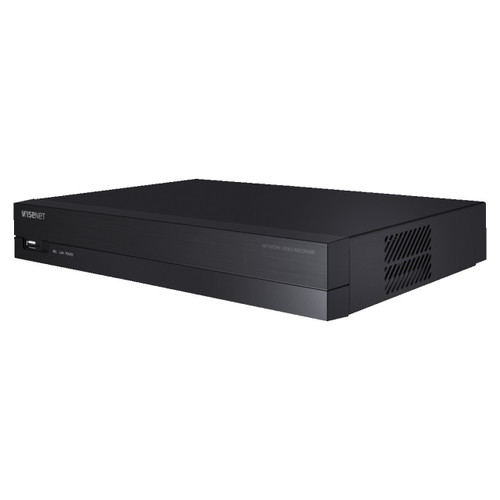
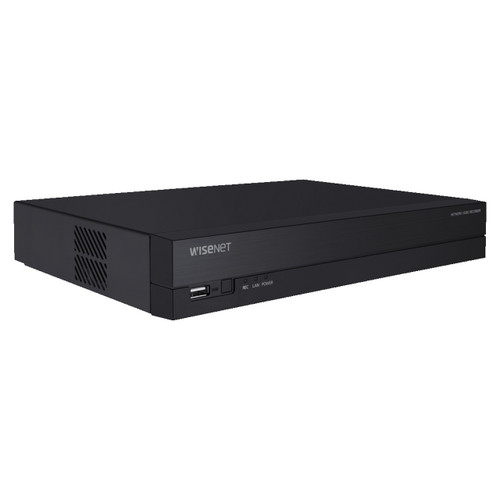
Both the Hanwha XRN-420S and ARN-410S are 4-channel, 8MP embedded Linux NVRs from Hanwha's Wisenet line, each offering H.265 compression, integrated PoE ports, a single SATA HDD slot up to 6TB, and ONVIF/SUNAPI compatibility. They target small-site IP camera deployments and are direct cross-shop candidates. The comparison turns on meaningful differences in PoE standard and budget, recording bandwidth, display outputs, WAN port speed, power supply type, and event trigger depth.
In This Guide
- How do recording bandwidth, PoE budget, and WAN throughput differ between the two units?
- What display outputs, power characteristics, and physical differences separate these recorders?
- How do event handling, analytics integration, and software ecosystem compare?
- Which should you choose: the XRN-420S or the ARN-410S?
- Side-by-Side Specs
- FAQ
How do recording bandwidth, PoE budget, and WAN throughput differ between the two units?
The XRN-420S specifies a maximum recording bandwidth of 50 Mbps versus 40 Mbps for the ARN-410S — a 25% advantage that matters when all four channels stream at high bitrates simultaneously. Transmission bandwidth mirrors the same gap: 64 Mbps on the XRN-420S versus 40 Mbps on the ARN-410S.
PoE standard and budget diverge significantly. The XRN-420S ships with PoE+ (802.3at) ports and a 50W PoE budget across its four LAN ports. The ARN-410S provides PoE (802.3af) ports with a 35W budget — a 15W reduction that limits which cameras can be powered, ruling out higher-draw PTZ or multi-sensor units requiring PoE+ without a midspan injector.
The WAN port also differs: the XRN-420S provides a 1 Gbps uplink, while the ARN-410S specifies 10/100 Mbps on its WAN port. For sites pushing high-bitrate remote viewing or VMS integration over the WAN, the XRN-420S's Gigabit uplink is a practical advantage. Playback bandwidth is identical at 32 Mbps on both models.
What display outputs, power characteristics, and physical differences separate these recorders?
The XRN-420S provides two display outputs: one HDMI at 3840×2160 30Hz and one VGA at 1920×1080 30Hz, enabling dual-monitor operation and up to four simultaneous screen layouts across both outputs. The ARN-410S provides a single HDMI output at 3840×2160 30Hz; VGA is absent from its spec sheet. Dual-monitor deployments — common in control rooms or reception desks with a dedicated operator display — require the XRN-420S.
Power consumption and supply differ. The XRN-420S draws a maximum of 67W (1 HDD, PoE on) and accepts 100–240 VAC ±10% at 50/60 Hz via DC adaptor, making it compatible with any standard AC outlet globally. The ARN-410S draws a maximum of 52W (1 HDD, PoE on) and is specified at 54 VDC / 1.20A — a DC-only input. Installers must verify the supply source for the ARN-410S; the XRN-420S is more universally field-deployable.
Physically, both units share a nearly identical footprint (XRN-420S: 300.0 × 47.1 × 208.4 mm; ARN-410S: 300.0 × 47.0 × 208.7 mm) and are finished in black metal with a white housing color designation. Weight is comparable: 1.06 kg (XRN-420S) vs. 1.03 kg (ARN-410S). Local storage differs: the XRN-420S specifies a SATA HDD slot; the ARN-410S additionally lists microSD as a local storage medium, though HDD is also supported up to 6TB on both.
How do event handling, analytics integration, and software ecosystem compare?
Both NVRs support SUNAPI and ONVIF Profile-S, operate on embedded Linux, and connect to WAVE, SSM, and Webviewer platforms. Mobile support covers iOS and Android via RTP/RTSP/HTTP/CGI(SUNAPI) on both units. PTZ preset capacity is 300 on both, and N+1 failover with ARB is supported on both.
Event trigger scope differs. The XRN-420S lists Alarm Input, Video Loss, Camera Event, Defocus, and Audio as triggers. The ARN-410S lists Alarm Input, Video Loss, Camera Event, and Dynamic Event — replacing Defocus and Audio with Dynamic Event. Installers relying on audio-triggered recording or defocus detection at the NVR layer (rather than at the camera) should note this distinction; Dynamic Event on the ARN-410S broadens analytics passthrough from AI-capable cameras.
The XRN-420S explicitly lists AI Search with object attribute compatibility for Wisenet AI cameras and includes Smart Viewer in its software roster alongside WAVE/SSM/Webviewer. The ARN-410S lists Wisenet Viewer but does not explicitly call out AI Search or AI camera attribute compatibility in the provided specs. Both include P2P QR-code setup, identical security features (802.1x, IP filtering, signed firmware, Hanwha Techwin Root CA certificate), and support for up to 20 multicast live viewers.
Which should you choose: the XRN-420S or the ARN-410S?
Our take: The XRN-420S is the stronger choice when PoE+ cameras, dual-monitor operation, or higher sustained recording bandwidth are required. Concretely: its PoE budget is 50W versus 35W on the ARN-410S — a gap that determines whether PoE+ cameras (PTZ, multi-sensor) can be powered without additional hardware; its recording bandwidth is 50 Mbps versus 40 Mbps, meaningful when all four channels run at high resolution simultaneously; and its WAN port runs at 1 Gbps versus 10/100 Mbps on the ARN-410S, which matters for high-bitrate remote access or VMS integration. The ARN-410S is the appropriate choice where a simpler, lower-power (52W max vs. 67W) deployment is planned with standard PoE cameras, a single display, and a DC power source already in the design, and where the Dynamic Event trigger scope aligns with the installed AI camera base. Both units are Hanwha-platform native and suit 4-camera small-site installs; the decision pivot is camera type and site infrastructure.
Side-by-Side Comparison
Spec-for-spec, from manufacturer data.
| Specification | Hanwha XRN-420S | Hanwha ARN-410S |
|---|---|---|
| Max Camera Channels | 4CH | 4CH |
| Max Resolution | 8MP | 8MP |
| Recording Bandwidth | Max. 50 Mbps | Max. 40 Mbps |
| Transmission Bandwidth | Max. 64 Mbps | Max. 40 Mbps |
| Playback Bandwidth | Max. 32 Mbps | Max. 32 Mbps |
| PoE Standard | PoE+ (802.3at) | PoE (802.3af) |
| PoE Budget | 50W | 35W |
| WAN Port Speed | 1 Gbps | 10/100 Mbps |
| Display Outputs | HDMI (4K) + VGA (1080p) | HDMI (4K) only |
| HDD Slot / Max Capacity | SATA 1ea / 6TB | SATA 1ea / 6TB |
| Local Storage Media | HDD | HDD + microSD |
| Compression | H.265, H.264, MJPEG | H.265, H.264, MJPEG |
| Event Triggers | Alarm In, Video Loss, Camera Event, Defocus, Audio | Alarm In, Video Loss, Camera Event, Dynamic Event |
| Max Power (1HDD, PoE On) | 67W | 52W |
| Input Voltage | 100–240 VAC 50/60 Hz | 54 VDC / 1.20A |
| Weight | 1.06 kg | 1.03 kg |
Frequently Asked Questions
Which should you choose: the XRN-420S or the ARN-410S?
The XRN-420S is the stronger choice when PoE+ cameras, dual-monitor operation, or higher sustained recording bandwidth are required. Concretely: its PoE budget is 50W versus 35W on the ARN-410S — a gap that determines whether PoE+ cameras (PTZ, multi-sensor) can be powered without additional hardware; its recording bandwidth is 50 Mbps versus 40 Mbps, meaningful when all four channels run at high resolution simultaneously; and its WAN port runs at 1 Gbps versus 10/100 Mbps on the ARN-410S, which matters for high-bitrate remote access or VMS integration. The ARN-410S is the appropriate choice where a simpler, lower-power (52W max vs. 67W) deployment is planned with standard PoE cameras, a single display, and a DC power source already in the design, and where the Dynamic Event trigger scope aligns with the installed AI camera base. Both units are Hanwha-platform native and suit 4-camera small-site installs; the decision pivot is camera type and site infrastructure.
Can I power a PTZ camera directly from either NVR?
The XRN-420S provides PoE+ (802.3at) ports with a 50W total budget, so higher-draw PTZ cameras within that budget can be powered directly. The ARN-410S provides standard PoE (802.3af) ports with a 35W budget; cameras requiring more than 15.4W per port or exceeding 35W total will need a separate PoE+ midspan injector and cannot draw full power from the ARN-410S ports directly.
Is the ARN-410S or XRN-420S the right pick for a two-screen monitoring station?
The XRN-420S is the correct choice. It specifies both HDMI (3840×2160 30Hz) and VGA (1920×1080 30Hz) outputs and supports dual-monitor layouts. The ARN-410S lists only a single HDMI output in its provided specifications; VGA is not listed, making dual-monitor operation unsupported per spec.
Do both NVRs work with Wisenet AI cameras for object search?
The XRN-420S explicitly specifies AI Search with object attribute compatibility for Wisenet AI cameras. The ARN-410S does not list AI Search or AI camera attribute compatibility in its provided specifications. Installers planning AI-based search workflows should confirm ARN-410S AI Search support directly with Hanwha before specifying it for that use case.
Get a Second Opinion on Your Camera Choice
Share your site layout, coverage goals, and budget. Our team will validate the camera selection, flag anything we would change, and recommend products that match the use case.