
Hanwha XRN-420S vs QNAP VS-2204-PRO: Specification Comparison
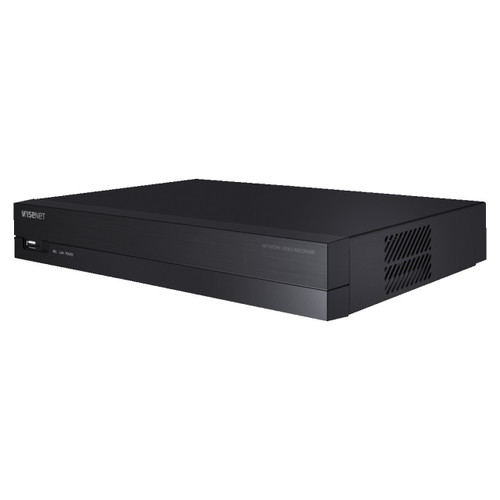
Both the Hanwha XRN-420S and the QNAP VS-2204-PRO+-US are 4-channel NVRs positioned for small-site IP camera deployments. The comparison covers recording architecture, storage capacity and hardware build, and remote access plus software ecosystem. The XRN-420S is a purpose-built Wisenet appliance with integrated PoE switching; the VS-2204-PRO+-US is a general-purpose NVR built on a PC-style Intel Atom platform. Buyers evaluating these will typically be choosing between a closed, camera-vendor-aligned solution and an open, multi-brand platform.
In This Guide
- Which NVR delivers better recording capacity and throughput for 4 channels?
- How do the two units compare on storage expansion, power draw, and physical installation?
- Which unit offers broader camera compatibility and remote management capabilities?
- Which should you choose: the XRN-420S or the VS-2204-PRO?
- Side-by-Side Specs
- FAQ
Which NVR delivers better recording capacity and throughput for 4 channels?
The XRN-420S supports recording resolutions from CIF up to 8MP and delivers a maximum recording bandwidth of 50 Mbps with H.265, H.264, and MJPEG compression. Decoding is specified at 8MP@30fps or 1080p@120fps locally. The VS-2204-PRO+-US also supports up to 8MP capture but its recording performance specification is stated only as 'up to 30fps at D1 or VGA,' with no explicit megapixel framerate ceiling published. Compression on the QNAP covers H.264, MPEG-4, M-JPEG, and MxPEG but omits H.265, which matters for storage efficiency at higher resolutions.
For local display, the XRN-420S provides both HDMI at 4K (3840x2160@30Hz) and VGA at 1080p, supporting dual-monitor layouts across up to 4 screens. The VS-2204-PRO+-US lists a single VGA output capped at 1920x1080 with no HDMI specified. The QNAP's remote monitoring display mode extends to 36- or 42-channel virtual layouts and multi-server aggregation up to 128 channels, which has no direct equivalent listed for the XRN-420S in standalone mode.
How do the two units compare on storage expansion, power draw, and physical installation?
Storage architecture differs significantly. The XRN-420S has a single SATA slot supporting a maximum of 6TB per the specification. The VS-2204-PRO+-US provides two hot-swappable, lockable 3.5-inch SATA II bays accepting HDDs or SSDs; maximum per-drive capacity is not stated in the provided specs, but two populated bays inherently exceed the XRN-420S's single-drive ceiling. Hot-swap capability on the QNAP also reduces downtime for drive replacement, a meaningful operational difference in production environments.
Power consumption diverges substantially. The XRN-420S draws up to 67W maximum with one HDD installed and PoE active, plus it allocates 50W of that budget across its four PoE+ (802.3at) ports, meaning cameras draw from the same power envelope. The VS-2204-PRO+-US is rated at 25W consumption from a 60W supply and carries no PoE; cameras require separate PoE switches or injectors. The XRN-420S's physical form is wider and shorter (300 x 47.1 x 208.4 mm, 1.06 kg) suited for shelf or rack-adjacent mounting; the QNAP is a tower (150 x 102 x 216 mm, 1.74 kg). The QNAP specifies an audible fan at 34.2 dB; no noise figure is published for the XRN-420S.
Which unit offers broader camera compatibility and remote management capabilities?
The XRN-420S is a Hanwha/Wisenet-native appliance: it supports SUNAPI and ONVIF Profile-S, integrates directly with Wisenet AI cameras for object-attribute smart search, and is managed through WAVE VMS, SSM, Smart Viewer, and Wisenet mobile apps on iOS and Android. PTZ control reaches 300 presets. Security features include 802.1x port authentication, signed firmware, device certificates issued by Hanwha Techwin Root CA, and IP address filtering. N+1 failover and ARB (Automatic Recovery Backup) are listed. Remote user limits are 3 concurrent search sessions, 10 live unicast, and 20 multicast.
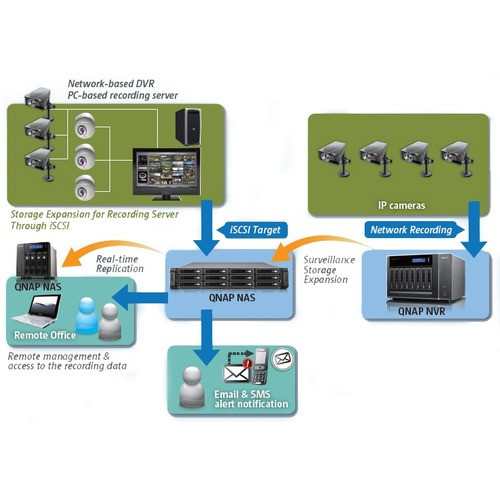
The VS-2204-PRO+-US runs on an Intel Atom processor under its own OS and is designed as an open platform supporting cameras from multiple vendors without a single-vendor dependency. It lists H.264, MPEG-4, M-JPEG, and MxPEG — covering a wider range of older camera compression formats — and its remote monitoring client supports display grids up to 42 channels and multi-server views up to 128 channels, indicating integration with larger QNAP NVR deployments. Specific VMS software names, mobile app support, security protocols, and failover capabilities are not provided in the supplied specifications for the VS-2204-PRO+-US.
Which should you choose: the XRN-420S or the VS-2204-PRO?
Our take: The XRN-420S is the stronger choice when cameras are Hanwha Wisenet or ONVIF-compliant and cabling infrastructure is not yet in place, because its four built-in PoE+ ports (50W budget, 802.3at) eliminate a separate switch and its H.265 engine keeps storage demand lower at the same 8MP resolution. Three concrete spec deltas: the XRN-420S supports H.265 compression while the VS-2204-PRO+-US does not list it; the XRN-420S outputs 4K over HDMI versus the QNAP's 1080p VGA-only display; and the XRN-420S specifies 50 Mbps recording bandwidth with a defined megapixel framerate, while the QNAP's recording spec is stated only at D1/VGA resolution. The VS-2204-PRO+-US is the more appropriate selection for mixed-brand camera environments requiring an open platform, two hot-swappable drive bays for higher raw storage capacity, and lower operating power draw (25W versus up to 67W) where cameras are powered separately.
Side-by-Side Comparison
Spec-for-spec, from manufacturer data.
| Specification | Hanwha XRN-420S | QNAP VS-2204-PRO |
|---|---|---|
| Channel Capacity | Max. 4CH | Up to 4CH |
| Max Recording Resolution | 8MP | Up to 8MP |
| Video Compression | H.265, H.264, MJPEG | H.264, MPEG-4, M-JPEG, MxPEG |
| Max Recording Bandwidth | 50 Mbps | — |
| Recording Performance (specified) | 8MP@30fps; 1080p@120fps | Up to 30fps at D1/VGA |
| HDD Bays | 1 x SATA (max 6TB) | 2 x 3.5" SATA II hot-swap |
| Max Local Storage | 6TB (single drive) | — (2-bay; per-drive capacity not specified) |
| PoE Ports | 4 x PoE+ 802.3at (50W budget) | None |
| LAN Ports | 4x PoE+ RJ-45 (LAN, 10/100) + 1x 1Gbps WAN | 2 x Gigabit RJ-45 |
| Local Display Output | HDMI 4K (3840x2160@30Hz) + VGA 1080p | VGA 1920x1080 (1 port only) |
| Power Consumption (max) | 67W (1HDD, PoE on) | 25W |
| Camera Protocols | SUNAPI, ONVIF Profile-S | — |
| Supported VMS / Apps | WAVE, SSM, Smart Viewer, Wisenet mobile (iOS/Android) | — |
| N+1 Failover / ARB | Yes | — |
| Operating Temperature | 0°C to +40°C | 0°C to +40°C |
| Weight | 1.06 kg | 1.74 kg |
Frequently Asked Questions
Which should you choose: the XRN-420S or the VS-2204-PRO?
The XRN-420S is the stronger choice when cameras are Hanwha Wisenet or ONVIF-compliant and cabling infrastructure is not yet in place, because its four built-in PoE+ ports (50W budget, 802.3at) eliminate a separate switch and its H.265 engine keeps storage demand lower at the same 8MP resolution. Three concrete spec deltas: the XRN-420S supports H.265 compression while the VS-2204-PRO+-US does not list it; the XRN-420S outputs 4K over HDMI versus the QNAP's 1080p VGA-only display; and the XRN-420S specifies 50 Mbps recording bandwidth with a defined megapixel framerate, while the QNAP's recording spec is stated only at D1/VGA resolution. The VS-2204-PRO+-US is the more appropriate selection for mixed-brand camera environments requiring an open platform, two hot-swappable drive bays for higher raw storage capacity, and lower operating power draw (25W versus up to 67W) where cameras are powered separately.
Do I still need a PoE switch if I buy the XRN-420S or the VS-2204-PRO+-US?
No for the XRN-420S — it includes four PoE+ (802.3at) LAN ports with a shared 50W budget, so cameras connect directly. Yes for the VS-2204-PRO+-US — it has two standard Gigabit Ethernet ports and no PoE capability, so a separate PoE switch or injector is required for each camera.
Which unit gives me more on-board storage room to grow?
The VS-2204-PRO+-US has two hot-swappable 3.5-inch SATA bays, allowing two drives to be installed and swapped without powering down. The XRN-420S has a single SATA slot capped at 6TB. If raw local storage capacity is the priority, the QNAP's dual-bay design provides more expansion headroom, though the maximum per-drive size is not stated in the provided specifications.
Will the VS-2204-PRO+-US work with my existing non-QNAP cameras?
The VS-2204-PRO+-US is built as an open platform supporting H.264, MPEG-4, M-JPEG, and MxPEG streams, and is not tied to a single camera brand. The XRN-420S supports ONVIF Profile-S cameras from any manufacturer in addition to Hanwha SUNAPI cameras, but its advanced features — AI object search, ARB failover, and full camera configuration menus — are documented only for Wisenet cameras. For a fully mixed-brand install requiring broad legacy codec support, the QNAP platform is the more flexible option based on the provided specifications.
Get a Second Opinion on Your Camera Choice
Share your site layout, coverage goals, and budget. Our team will validate the camera selection, flag anything we would change, and recommend products that match the use case.