
Hanwha ARN-410S vs Speco Technologies D4WVN10TB: Specification Comparison
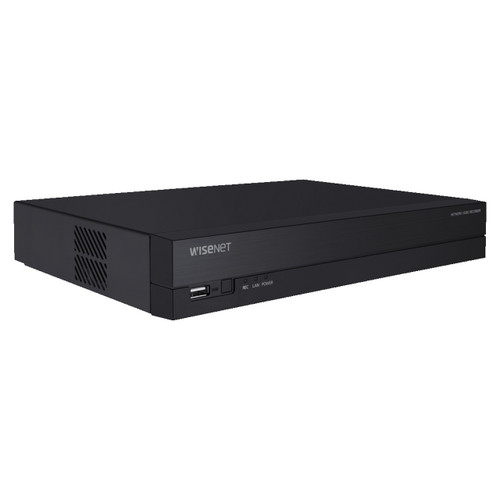
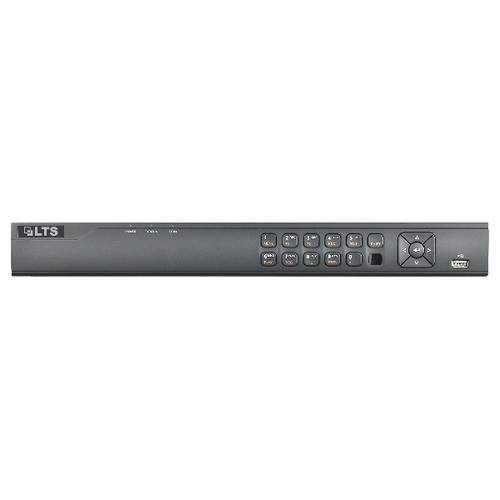
Both the Hanwha ARN-410S and Speco Technologies D4WVN10TB are 4-channel video recorders aimed at small-site surveillance deployments. However, they differ fundamentally in recorder type, camera technology, and physical form factor: the ARN-410S is an IP-based NVR accepting network cameras over built-in PoE ports, while the D4WVN10TB is a TVI-based DVR designed for coaxial-connected analog 4K TVI cameras in a wall-mount chassis. This comparison examines channel capacity and storage, connectivity and power architecture, and compliance, integration, and management software.
In This Guide
- How do channel capacity, resolution, and onboard storage compare between the ARN-410S and D4WVN10TB?
- What are the differences in camera connectivity, network architecture, and power delivery?
- Which unit offers stronger compliance credentials, remote management, and VMS integration?
- Which should you choose: the ARN-410S or the D4WVN10TB?
- Side-by-Side Specs
- FAQ
How do channel capacity, resolution, and onboard storage compare between the ARN-410S and D4WVN10TB?
Both units support exactly 4 channels. The ARN-410S is specified at 8MP (3840×2160) native resolution per channel at 30 fps, with a maximum recording bandwidth of 40 Mbps and playback bandwidth of 32 Mbps. It ships without an internal HDD but accepts one SATA drive up to 6TB, plus a microSD slot for local backup. Compression is H.265 (WiseStream II), H.264, and MJPEG, which directly affects how much footage the single 6TB drive can hold.
The D4WVN10TB is specified as a 4K TVI recorder and ships with 10TB of onboard storage pre-installed. No per-channel recording bandwidth or fps figure is listed in the provided specs, nor is a maximum storage ceiling beyond the installed 10TB stated. Compression is H.265 and H.264. The 10TB pre-installed drive gives the D4WVN10TB a significant raw storage advantage at purchase over the ARN-410S, which must be purchased and installed separately up to a 6TB cap.
What are the differences in camera connectivity, network architecture, and power delivery?
The ARN-410S is a pure IP NVR. It includes 4 PoE RJ-45 LAN ports (10/100) for IP cameras and 1 RJ-45 WAN port (10/100) for upstream network connection, with a total PoE budget of 35W across all four ports (specified as 802.3af). Power is supplied via DC adapter at 54VDC/1.20A, with a maximum system draw of 52W under full PoE load. Local display is via a single HDMI output at up to 3840×2160 at 30Hz. Two USB 2.0 ports (front and rear) support peripheral and backup devices. The unit runs Embedded Linux.
The D4WVN10TB is a TVI DVR, meaning cameras connect via coaxial cable—no PoE ports are present or relevant. The spec sheet lists PoE+ (802.3at) as an attribute, but given the unit is explicitly described as a 4K TVI Wallmount DVR accepting TVI cameras over coax, this specification appears inconsistent with the device type as described; buyers should verify directly with Speco. IP ratings of IP67 and IK10 are listed, which are atypical attributes for an indoor DVR chassis and should also be verified. No input voltage, power draw, WAN port count, or display output type is provided in the available specs.
Which unit offers stronger compliance credentials, remote management, and VMS integration?
The ARN-410S supports ONVIF Profile-S and SUNAPI (both server and client), enabling broad third-party IP camera interoperability. Remote management is extensive: up to 10 simultaneous live unicast users, 20 multicast users, 3 concurrent search users, and supported VMS platforms include WAVE, SSM, Webviewer, Wisenet Viewer, and a mobile app (iOS and Android). Security features include IP address filtering, user access logging, 802.1x port authentication, TLS/HTTPS encryption, device certificates via Hanwha Techwin Root CA, and signed firmware. P2P onboarding via QR code is supported. N+1 failover and ARB (Automatic Recovery Backup) are listed. Remote browser support covers Chrome, Edge, and Safari on Windows 10 and macOS 10.13. The system log holds up to 100,000 entries each for system and event logs.
The D4WVN10TB is certified TAA and NDAA compliant, which is a decisive credential for U.S. federal, state, and government procurement environments where Section 889 compliance is mandatory. ONVIF is listed as supported, though the scope (Profile-S, Profile-T, etc.) is not specified. Analytics are noted but not enumerated. Two-way audio with a built-in microphone is listed. No VMS software compatibility list, remote user limits, security feature details, log capacity, mobile app support, or browser compatibility information is provided in the available specs.
Which should you choose: the ARN-410S or the D4WVN10TB?
Our take: The ARN-410S is the stronger choice when deploying new IP camera infrastructure that demands rich remote management, documented cybersecurity controls, and deep VMS integration; the D4WVN10TB is the stronger choice when government or federal compliance (TAA/NDAA) is a hard procurement requirement or when the installation is extending an existing TVI coaxial infrastructure. On concrete spec deltas: the ARN-410S supports up to 6TB HDD (self-sourced) versus the D4WVN10TB's pre-installed 10TB—a meaningful storage advantage for the Speco at purchase. The ARN-410S provides 40 Mbps documented recording throughput and four 802.3af PoE ports eliminating separate camera power runs; the D4WVN10TB lists no throughput figure and requires coaxial camera cabling. The ARN-410S supports up to 10 simultaneous live unicast remote sessions with named VMS platforms; the D4WVN10TB's remote access and software ecosystem are unspecified. Buyers replacing analog TVI cameras or operating under federal compliance mandates should favor the D4WVN10TB; IP-native greenfield deployments benefit from the ARN-410S's documented bandwidth, PoE integration, and cybersecurity stack.
Side-by-Side Comparison
Spec-for-spec, from manufacturer data.
| Specification | Hanwha ARN-410S | Speco Technologies D4WVN10TB |
|---|---|---|
| Device Type | IP NVR | TVI DVR |
| Channels | 4 | 4 |
| Max Resolution | 8MP (3840×2160) | 4K TVI |
| Frame Rate | 30 fps | Not specified |
| Recording Bandwidth | Max 40 Mbps | Not specified |
| Playback Bandwidth | Max 32 Mbps | Not specified |
| HDD Capacity | Up to 6TB (1× SATA, self-supplied) | 10TB (pre-installed) |
| Camera Connection | 4× PoE RJ-45 (802.3af) | Coaxial (TVI) |
| PoE Budget | 35W total | Not applicable (TVI DVR) |
| Video Compression | H.265, H.264, MJPEG | H.265, H.264 |
| ONVIF Support | Yes (Profile-S) | Yes (profile not specified) |
| Local Display Output | HDMI (3840×2160 @ 30Hz) | Not specified |
| Max Simultaneous Remote Users (Live) | 10 unicast, 20 multicast | Not specified |
| TAA / NDAA Compliant | Not specified | Yes (TAA and NDAA) |
| Operating Temperature | 0°C to +40°C (32°F to 104°F) | Not specified |
| Warranty | 3-year | 3-year |
Frequently Asked Questions
Which should you choose: the ARN-410S or the D4WVN10TB?
The ARN-410S is the stronger choice when deploying new IP camera infrastructure that demands rich remote management, documented cybersecurity controls, and deep VMS integration; the D4WVN10TB is the stronger choice when government or federal compliance (TAA/NDAA) is a hard procurement requirement or when the installation is extending an existing TVI coaxial infrastructure. On concrete spec deltas: the ARN-410S supports up to 6TB HDD (self-sourced) versus the D4WVN10TB's pre-installed 10TB—a meaningful storage advantage for the Speco at purchase. The ARN-410S provides 40 Mbps documented recording throughput and four 802.3af PoE ports eliminating separate camera power runs; the D4WVN10TB lists no throughput figure and requires coaxial camera cabling. The ARN-410S supports up to 10 simultaneous live unicast remote sessions with named VMS platforms; the D4WVN10TB's remote access and software ecosystem are unspecified. Buyers replacing analog TVI cameras or operating under federal compliance mandates should favor the D4WVN10TB; IP-native greenfield deployments benefit from the ARN-410S's documented bandwidth, PoE integration, and cybersecurity stack.
Can I use my existing TVI cameras with the ARN-410S or my existing IP cameras with the D4WVN10TB?
No on both counts as specified. The ARN-410S is an IP NVR: it accepts network cameras over its four PoE RJ-45 ports and is compatible with ONVIF Profile-S and Hanwha SUNAPI cameras. It will not accept coaxial TVI cameras. The D4WVN10TB is a TVI DVR: it is specified for 4K TVI cameras connected via coaxial cable. No IP camera or PoE port functionality is described in the provided D4WVN10TB specs. Mixing camera types between these two units is not supported by the published specifications.
Which recorder is compliant for U.S. government or federally funded projects?
The D4WVN10TB is explicitly specified as TAA and NDAA compliant, making it the documented choice for U.S. federal, state, and municipal procurements subject to Section 889 of the NDAA or the Trade Agreements Act. The ARN-410S specifications do not list TAA or NDAA compliance in the provided data. Buyers with federal compliance requirements should verify current certification status directly with each manufacturer, but on available specs only the D4WVN10TB carries these credentials.
Is the ARN-410S or D4WVN10TB better suited for a site that needs to scale to more cameras later?
Neither unit exceeds 4 channels as specified, so neither scales beyond 4 cameras natively. The ARN-410S does support N+1 failover and ARB (Automatic Recovery Backup), and integrates with Hanwha's WAVE and SSM VMS platforms which can manage larger multi-recorder deployments from a single interface—providing a growth path at the VMS level rather than the recorder level. The D4WVN10TB provides no information on VMS integration or failover capability in the available specs. If multi-site or multi-recorder scalability is a priority, the ARN-410S's documented VMS ecosystem is an advantage.
Get a Second Opinion on Your Camera Choice
Share your site layout, coverage goals, and budget. Our team will validate the camera selection, flag anything we would change, and recommend products that match the use case.