
Hanwha XRN-420S vs Speco Technologies D4WVN6TB: Specification Comparison
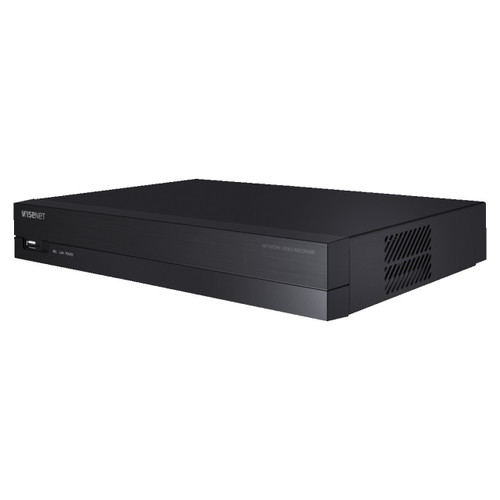
The Hanwha XRN-420S and Speco D4WVN6TB are both compact 4-channel recorders sized for small installations, but they represent a fundamental infrastructure fork: the XRN-420S is an IP NVR that records H.265/H.264 streams from network cameras over built-in PoE+ ports, while the D4WVN6TB is a 4K TVI DVR designed for analog coax-connected cameras. Integrators and IT buyers cross-shop these at the system-design stage when deciding whether to deploy an IP camera plant or a TVI analog plant on a tight 4-channel budget.
In This Guide
- What are the recording architecture, channel capacity, and storage differences?
- How do the two units compare for connectivity, I/O, power, and physical installation?
- What are the integration, security compliance, and remote management capabilities of each unit?
- Which should you choose: the XRN-420S or the D4WVN6TB?
- Side-by-Side Specs
- FAQ
What are the recording architecture, channel capacity, and storage differences?
The XRN-420S records exclusively from IP cameras, accepting streams from 8MP down to CIF resolution and supporting H.265, H.264, and MJPEG compression. Its maximum recording bandwidth is 50 Mbps, with decoding capability of 8MP at 30 fps, 1080p at 120 fps, and 720p at 120 fps. A single internal SATA bay accepts up to a 6 TB HDD. Recording modes include Normal, Dual Stream, Scheduled, and Event-triggered recording, and the unit logs up to 100,000 system and event entries each.
The D4WVN6TB records from 4K TVI analog cameras over coaxial cable. It ships with a 6 TB HDD pre-installed. It supports H.265 and H.264 compression. Recording bandwidth, frame-rate ceilings, and recording mode options are not specified in the available product data. The pre-installed storage removes the buyer's initial drive-selection step, whereas the XRN-420S ships without a drive and requires a separately purchased SATA HDD up to 6 TB.
How do the two units compare for connectivity, I/O, power, and physical installation?
The XRN-420S provides four PoE+ (802.3at) RJ-45 ports for IP cameras with a combined PoE budget of 50 W, plus a dedicated Gigabit WAN RJ-45 port. Display outputs are HDMI (3840×2160 at 30 Hz) and VGA (1920×1080 at 30 Hz), enabling dual-monitor operation. Alarm I/O consists of 4 inputs and 2 outputs. Two USB 2.0 ports (front and rear) support backup. The unit is black metal, weighs 1.06 kg (2.33 lb), and measures 300.0 × 47.1 × 208.4 mm. It is powered by a DC adapter accepting 100–240 VAC, with maximum draw of 67 W under full PoE load. Operating temperature is rated 0 °C to +40 °C.
The D4WVN6TB connects to TVI cameras via coaxial cable and does not provide PoE ports; camera power must be supplied separately. Display outputs are not specified in the available product data. Alarm I/O is not specified. The unit weighs 8.0 lbs (approximately 3.6 kg) and measures 17.5 × 15.5 × 4.8 inches, making it considerably larger and heavier than the XRN-420S. It carries an IP67 ingress-protection rating and an IK10 impact rating, and supports wall, ceiling, pole, pendant, corner, and rack mounting. The housing is white. Operating temperature is not specified in the available product data.
What are the integration, security compliance, and remote management capabilities of each unit?
The XRN-420S supports ONVIF Profile-S and Hanwha's SUNAPI, enabling integration with third-party IP cameras and VMS platforms including WAVE, SSM, and Smart Viewer. Remote access reaches a maximum of 10 simultaneous live unicast users or 20 multicast users, with up to 3 concurrent search sessions. Security features include IP address filtering, user access logging, 802.1x authentication, encryption, a device certificate issued by Hanwha Techwin Root CA, and signed firmware. P2P setup via QR code is supported. Failover N+1 and ARB redundancy are available. Web viewer support covers Windows 10 and macOS 10.13 via Chrome, Edge, and Safari. Certifications are not specified in the provided specifications.
The D4WVN6TB declares ONVIF compliance and holds TAA and NDAA certification, which are relevant for U.S. federal procurement and DoD-aligned projects. VMS compatibility is listed as 4K TVI; broader third-party VMS or SDK integration details are not specified in the available product data. Protocols beyond ONVIF are not specified. Remote user limits, security features, and web-viewer support are not specified. A built-in microphone and two-way audio are noted. Analytics support is indicated but no detail on analytic types is provided. The unit carries a 3-year manufacturer warranty; warranty terms for the XRN-420S are not specified in the provided specifications.
Which should you choose: the XRN-420S or the D4WVN6TB?
Our take: The D4WVN6TB is the stronger choice when the installation site already has coaxial cable infrastructure, when TAA or NDAA compliance is a hard procurement requirement, when the recorder must withstand physical impact or outdoor-adjacent environments (IK10, IP67), or when a pre-installed 6 TB drive and a 3-year warranty simplify a fixed-budget deployment. The XRN-420S is the stronger choice when the camera plant is IP-based or being built new, when granular remote-access controls matter (10 unicast live users, 802.1x, signed firmware, device certificates), when dual-monitor output and 4K HDMI display are required, or when integration with a broader Hanwha VMS ecosystem — including WAVE, SSM, failover, and AI-camera search — is part of the system design. The fundamental decision driver is camera infrastructure: TVI coax favors the D4WVN6TB; IP Ethernet favors the XRN-420S.
Side-by-Side Comparison
Spec-for-spec, from manufacturer data.
| Specification | Hanwha XRN-420S | Speco Technologies D4WVN6TB |
|---|---|---|
| Device Type | IP NVR | TVI DVR |
| Channels | 4 | 4 |
| Camera Connection | IP over Ethernet / PoE+ | TVI analog over coax |
| Pre-installed Storage | None (SATA bay, max 6 TB) | 6 TB included |
| Compression | H.265, H.264, MJPEG | H.265, H.264 |
| Max Recording Bandwidth | 50 Mbps | — |
| Decoding Resolution | 8MP@30fps; 1080p@120fps | — |
| PoE Budget | 50 W (4x PoE+ 802.3at ports) | — |
| Display Outputs | HDMI 4K@30Hz + VGA 1080p@30Hz | — |
| Alarm I/O | 4 inputs / 2 outputs | — |
| Environmental Rating | 0°C to 40°C operating; no IP/IK rating specified | IP67; IK10; operating temp not specified |
| NDAA / TAA Compliance | Not specified | TAA and NDAA certified |
| VMS / Protocol Ecosystem | WAVE, SSM, SUNAPI, ONVIF Profile-S, IPv4/IPv6 full stack | ONVIF; 4K TVI; additional protocols not specified |
| Max Remote Live Users | 10 unicast / 20 multicast | — |
| Cybersecurity Features | 802.1x, device certificate, signed firmware, IP filtering | — |
| Warranty | Not specified | 3 years |
| Weight | 1.06 kg (2.33 lb) | 8.0 lbs (3.6 kg) |
| Dimensions | 300.0 x 47.1 x 208.4 mm | 17.5 x 15.5 x 4.8 in |
Frequently Asked Questions
Which should you choose: the XRN-420S or the D4WVN6TB?
The D4WVN6TB is the stronger choice when the installation site already has coaxial cable infrastructure, when TAA or NDAA compliance is a hard procurement requirement, when the recorder must withstand physical impact or outdoor-adjacent environments (IK10, IP67), or when a pre-installed 6 TB drive and a 3-year warranty simplify a fixed-budget deployment. The XRN-420S is the stronger choice when the camera plant is IP-based or being built new, when granular remote-access controls matter (10 unicast live users, 802.1x, signed firmware, device certificates), when dual-monitor output and 4K HDMI display are required, or when integration with a broader Hanwha VMS ecosystem — including WAVE, SSM, failover, and AI-camera search — is part of the system design. The fundamental decision driver is camera infrastructure: TVI coax favors the D4WVN6TB; IP Ethernet favors the XRN-420S.
Can I use IP cameras with the Speco D4WVN6TB or TVI cameras with the Hanwha XRN-420S?
No. The D4WVN6TB is a TVI DVR and is designed to record from analog TVI cameras connected via coaxial cable; it does not natively record standard IP camera streams. The XRN-420S is an IP NVR and records only from network cameras connected over Ethernet or its built-in PoE+ ports; it does not accept coaxial TVI inputs. Choosing between them requires committing to one camera infrastructure type.
Which unit is better suited for a U.S. federal or government installation?
The Speco D4WVN6TB holds explicit TAA and NDAA certifications, which are commonly required for U.S. federal, DoD, and government-funded projects. The Hanwha XRN-420S does not list TAA or NDAA certification in the provided specifications, so its compliance status for those programs cannot be confirmed from available data. Buyers with federal compliance requirements should verify current certification status directly with each manufacturer.
How do the two units compare for remote monitoring and cybersecurity?
The XRN-420S provides detailed remote-access specifications: up to 10 simultaneous live unicast users, 3 concurrent search users, and 20 multicast users, with security features including IP address filtering, 802.1x authentication, device certificates from Hanwha Techwin Root CA, encrypted communications, and signed firmware. The D4WVN6TB confirms ONVIF support but does not specify remote user limits, authentication mechanisms, or cybersecurity features in the available product data. Buyers with defined remote-access or network-security requirements have more documented information available for the XRN-420S.
Get a Second Opinion on Your Camera Choice
Share your site layout, coverage goals, and budget. Our team will validate the camera selection, flag anything we would change, and recommend products that match the use case.