
Hanwha XRN-420S vs Hanwha ARD-410: Specification Comparison
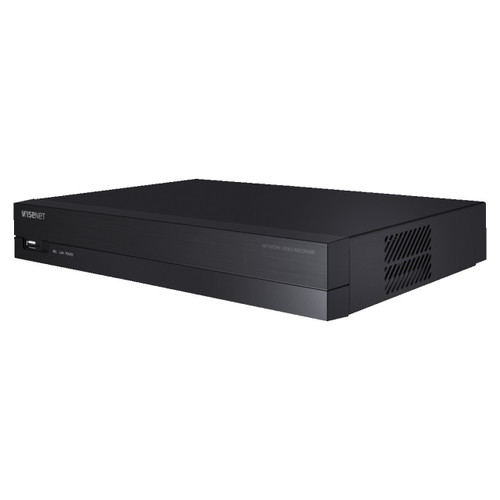
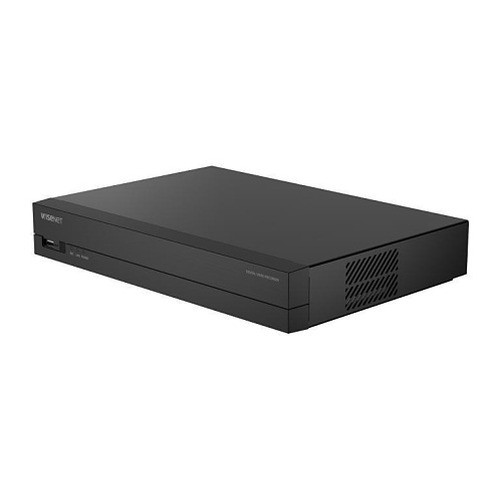
Both the Hanwha XRN-420S and ARD-410 are 4-channel, 1U compact recorders sharing nearly identical physical dimensions, a single SATA bay (up to 6TB), and Hanwha's embedded Linux platform. The critical divergence is input architecture: the XRN-420S is a pure IP/NVR accepting only network cameras, while the ARD-410 is a pentabrid DVR/NVR hybrid that accepts analog signals (AHD, TVI, CVI, CVBS) on four BNC inputs plus up to two additional IP channels. Buyers cross-shopping these are typically deciding between a clean IP migration and a hybrid analog-retention strategy.
In This Guide
What camera types and resolutions does each recorder support?
The XRN-420S accepts up to 4 IP network cameras exclusively, supporting resolutions from CIF up to 8MP (4K). It decodes 8MP at 30fps and handles 1080p or 720p at 120fps simultaneously. All four channels draw from a PoE+ switch built into the unit (4× RJ-45 PoE+, 10/100, with a 50W PoE budget), so cameras can be powered directly without a separate switch.
The ARD-410 accepts 4 analog cameras via BNC (AHD/TVI/CVI/CVBS, 1Vp-p, 75Ω) and adds up to 2 additional IP channels for a 6-channel maximum. Analog resolution tops out at 5MP on the analog inputs (at 12fps for 5MP, 15fps for 4MP or 1080p). IP channel resolution reaches 5MP. The ARD-410 provides no PoE ports; IP cameras require an external switch or PoE injector. A BNC spot output is also provided for secondary analog monitoring.
For a site running or planning to run only IP cameras, the XRN-420S delivers higher maximum resolution (8MP vs. 5MP) and integrated PoE power. For a site with existing analog cabling or cameras, the ARD-410 is the only viable option of the two.
How do recording bandwidth, power draw, and operating environment compare?
Recording bandwidth is a significant differentiator. The XRN-420S supports a maximum recording bandwidth of 50Mbps and a transmission bandwidth of 64Mbps, accommodating high-bitrate 8MP streams across all four channels. Playback bandwidth is rated at 32Mbps maximum. The ARD-410 is rated for 30Mbps recording and 30Mbps transmission, consistent with its lower analog and IP resolution ceiling.
Power draw differs substantially. The XRN-420S consumes up to 67W maximum (with one HDD installed and PoE enabled), reflecting the integrated PoE+ budget of 50W. The ARD-410 draws a maximum of 19.2W (with one 6TB HDD), operating from a DC 12V input. The XRN-420S requires 100–240VAC (50/60Hz) via DC adapter; the ARD-410 requires DC 12V from its power inlet. Input voltage source for the ARD-410's power supply is not specified in the provided data.
Both units share identical operating temperature (0°C to +40°C) and humidity (20%–85% RH) ratings. The ARD-410 carries UL, CE, FCC, and KC certifications per its specs; no certifications are listed in the XRN-420S spec data provided.
Which recorder offers broader integration, remote management, and cybersecurity features?
Protocol depth favors the XRN-420S. Its network protocol list includes IPv4, IPv6, TCP/IP, UDP/IP, RTP (UDP/TCP), RTSP, NTP, HTTP, DHCP (Server/Client), SMTP, ICMP, IGMP, ARP, DNS, DDNS, uPnP, HTTPS, SNMP, ONVIF (Profile-S), and SUNAPI (Server/Client). The ARD-410 covers a similar set but omits IPv6 and adds PPPoE; IPv6 support is not listed in the ARD-410 specs provided.
The XRN-420S supports N+1 failover redundancy and ARB (Automatic Recovery Backup). The ARD-410 lists ARB support but does not specify N+1 failover in the provided specs. The XRN-420S also supports P2P configuration via QR code; the ARD-410 offers an install wizard. The ARD-410 adds RS-485 serial control (Samsung-T/Pelco-D/Pelco-P) for PTZ over coax, which the XRN-420S does not list, as coaxial PTZ is irrelevant to a pure IP device.
Security features are closely matched: both list IP address filtering, user access logging, 802.1x authentication, Hanwha Techwin Root CA device certificates, and ID/PW encryption. The XRN-420S additionally specifies signed firmware in its security feature list; this is not listed for the ARD-410 in the provided specs. Compatible viewer software differs: the XRN-420S supports WAVE, SSM, Webviewer, Smart Viewer, and Wisenet Mobile; the ARD-410 supports Webviewer, Wisenet Viewer, and a mobile app. WAVE and SSM enterprise VMS compatibility is listed only for the XRN-420S.
Which should you choose: the XRN-420S or the ARD-410?
Our take: The XRN-420S is the stronger choice when the installation is fully IP-based and maximum resolution, integrated PoE power delivery, and enterprise VMS compatibility are priorities. It records at up to 8MP versus the ARD-410's 5MP ceiling, supports 50Mbps recording bandwidth versus 30Mbps, and includes a built-in 50W PoE+ switch that eliminates a separate powered switch for up to four cameras. It also adds WAVE and SSM VMS support, N+1 failover, signed firmware, and IPv6, none of which appear in the ARD-410's provided specs. The ARD-410 is the correct choice when analog cameras or cabling must be retained: it accepts AHD, TVI, CVI, and CVBS signals on four BNC inputs (expandable to six channels with two IP additions), runs at a much lower 19.2W, and includes RS-485 coaxial PTZ control. Platform qualifier: the XRN-420S fits IP-native or greenfield Wisenet/ONVIF deployments; the ARD-410 fits analog-retention or mixed migration sites.
Side-by-Side Comparison
Spec-for-spec, from manufacturer data.
| Specification | Hanwha XRN-420S | Hanwha ARD-410 |
|---|---|---|
| Product Type | NVR (IP-only) | Pentabrid DVR/NVR (Analog + IP) |
| Analog Inputs | — | 4× BNC (AHD/TVI/CVI/CVBS) |
| IP Camera Inputs | 4CH (max) | 2CH additional (6CH total) |
| Max Camera Resolution | 8MP | 5MP (analog); 5MP (IP) |
| Built-in PoE | 4× PoE+ RJ-45, 50W budget | — |
| Max Recording Bandwidth | 50 Mbps | 30 Mbps |
| Max Transmission Bandwidth | 64 Mbps | 30 Mbps |
| Max Playback Bandwidth | 32 Mbps | Not specified |
| Video Compression | H.265, H.264, MJPEG | H.265, H.264, MJPEG |
| HDD Slots / Capacity | 1× SATA, up to 6TB | 1× SATA, up to 6TB |
| HDMI Output | 1× (3840×2160 @ 30Hz) | 1× (up to 3840×2160) |
| VGA Output | 1× (1920×1080 @ 30Hz) | 1× |
| Power Consumption (Max) | 67W (1 HDD, PoE on) | 19.2W (1× 6TB HDD) |
| Input Voltage | 100–240 VAC, 50/60Hz | DC 12V |
| N+1 Failover / ARB | Failover + ARB | ARB only (failover not listed) |
| Certifications | Not listed in specs provided | UL, CE, FCC, KC |
| VMS Compatibility | WAVE, SSM, Webviewer, Smart Viewer, Wisenet Mobile | Webviewer, Wisenet Viewer, Mobile App |
| IPv6 Support | Yes | Not listed in specs provided |
| RS-485 PTZ Control | — | Yes (Samsung-T/Pelco-D/Pelco-P) |
Frequently Asked Questions
Which should you choose: the XRN-420S or the ARD-410?
The XRN-420S is the stronger choice when the installation is fully IP-based and maximum resolution, integrated PoE power delivery, and enterprise VMS compatibility are priorities. It records at up to 8MP versus the ARD-410's 5MP ceiling, supports 50Mbps recording bandwidth versus 30Mbps, and includes a built-in 50W PoE+ switch that eliminates a separate powered switch for up to four cameras. It also adds WAVE and SSM VMS support, N+1 failover, signed firmware, and IPv6, none of which appear in the ARD-410's provided specs. The ARD-410 is the correct choice when analog cameras or cabling must be retained: it accepts AHD, TVI, CVI, and CVBS signals on four BNC inputs (expandable to six channels with two IP additions), runs at a much lower 19.2W, and includes RS-485 coaxial PTZ control. Platform qualifier: the XRN-420S fits IP-native or greenfield Wisenet/ONVIF deployments; the ARD-410 fits analog-retention or mixed migration sites.
Can the ARD-410 replace my existing analog cameras, or do I need new IP cameras?
The ARD-410 is designed specifically for analog camera retention. It accepts AHD, TVI, CVI, and CVBS signals directly on four BNC inputs at resolutions up to 5MP, so existing coax-wired analog cameras can connect without replacement. It also adds up to two IP channels if you want to mix in network cameras. The XRN-420S has no BNC inputs and accepts only IP network cameras, so it requires a full IP camera infrastructure.
Do I need a separate PoE switch if I buy the XRN-420S?
No. The XRN-420S includes four built-in PoE+ (802.3at) RJ-45 ports with a combined 50W PoE budget, so it can power up to four IP cameras directly. The ARD-410 has no PoE ports; any IP cameras added to its two IP channels would require an external PoE switch or injector.
Is the XRN-420S or ARD-410 compatible with Hanwha's WAVE or SSM enterprise VMS?
Based on the provided specs, WAVE and SSM compatibility is listed only for the XRN-420S. The ARD-410's listed viewer software is Webviewer, Wisenet Viewer, and a mobile app. If integration with a Hanwha enterprise VMS platform is a requirement, the XRN-420S is the specified-compatible unit; WAVE or SSM compatibility for the ARD-410 is not confirmed by the specs provided.
Get a Second Opinion on Your Camera Choice
Share your site layout, coverage goals, and budget. Our team will validate the camera selection, flag anything we would change, and recommend products that match the use case.