
Speco Technologies O4FT1M vs Vivotek TT9333-E: Specification Comparison
Both the Speco Technologies O4FT1M and the Vivotek TT9333-E(7MM) are 4MP IP turret cameras positioned for outdoor surveillance, but they target meaningfully different deployment scenarios. The O4FT1M is a conventional visible-light turret with AI edge analytics and a motorized varifocal lens, while the TT9333-E(7MM) is a bi-spectrum unit combining 4MP visible imaging with thermal sensing, covert 940nm IR, and a ruggedized vandal-resistant housing. Buyers cross-shopping these cameras are weighing standard AI-enabled visible imaging against dual-spectrum thermal detection capability at higher cost and power requirements.
In This Guide
How do the imaging specs compare?
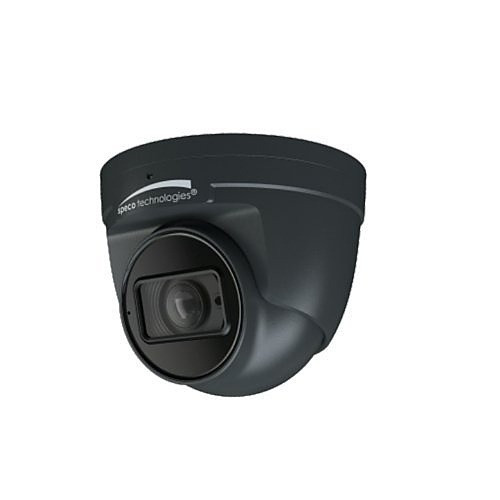
The O4FT1M delivers 4MP visible resolution at a maximum of 2576×1452 pixels using a 1/1.8-inch CMOS sensor with a motorized 2.8–12mm varifocal lens, providing optical zoom flexibility for scene framing during installation. It supports H.265+, H.264+, and MJPEG compression at up to 30fps, and features True WDR for high-contrast scenes. Night-vision capability is listed as Day/Night with the Flexible Intensifier designation; however, no specific IR range in meters or minimum illumination figure is provided in the supplied specifications.
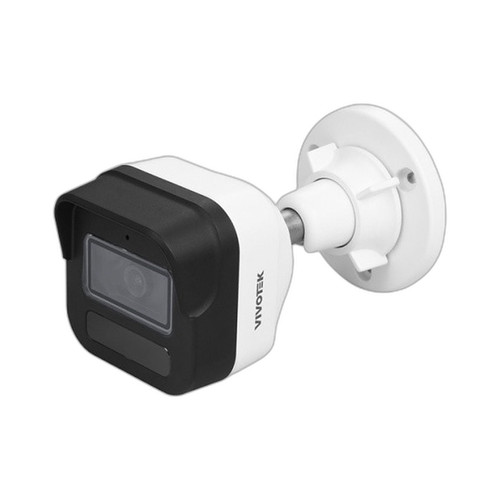
The TT9333-E(7MM) pairs 4MP visible imaging with a dedicated thermal channel, making it a bi-spectrum device. The visible channel uses a 5–50mm motorized P-iris lens with 10× optical zoom, and the IR system operates at 940nm (covert/invisible) with a stated 50m range. It offers WDR PRO II and supports H.265, H.264, and MJPEG at 30fps. The thermal channel enables detection through fog, smoke, and complete darkness where standard visible cameras fail. No minimum illumination lux figure or thermal sensor resolution is stated in the provided specifications for the Vivotek.
What about installation and environment?
The O4FT1M carries an IP67 ingress rating and an operating temperature range of -40°F to 140°F (-40°C to approximately 60°C). It weighs 1.45 lbs and draws a maximum of 7.0W, compatible with standard 802.3af PoE or DC 12V — meaning any standard PoE switch port will suffice. Housing is white and rated for outdoor use. No IK impact rating is specified for this model.
The TT9333-E(7MM) is rated IP68 (submersion-rated, one level above IP67) and IK10 (vandal-resistant to EN62262 impact standard), and holds a NEMA 4X certification. Its operating temperature extends from -40°C to +70°C, which is a higher upper limit than the O4FT1M's ~60°C ceiling. Power is supplied via PoE++ (802.3bt) Class 4, requiring a PoE++ capable switch or injector — a more demanding and potentially costlier infrastructure requirement than the O4FT1M's 802.3af compatibility. Mounting options listed include wall, recessed, pole, and rack.
Which fits your VMS and analytics better?
The O4FT1M conforms to ONVIF Profile T, and its edge analytics suite includes Motion Detection, Line Crossing, Intrusion Detection, Face Detection, and Vehicle Detection — five discrete engines. Audio support is listed as a built-in microphone (receive only; no two-way audio is specified). No on-board edge storage specification is provided in the supplied data.
The TT9333-E(7MM) supports ONVIF Profile S, T, and G, as well as named VMS compatibility with AXIS Camera Station and Milestone. Its analytics leverage Deep Learning for Object Detection and People Counting. Audio is two-way with a built-in microphone. The ONVIF Profile G support implies on-board recording capability (edge storage), though no specific storage slot or capacity is stated in the provided specifications. The broader ONVIF profile set and named VMS integrations give the Vivotek a wider documented interoperability footprint.
Which should you choose: the O4FT1M or the TT9333-E?
Our take: The O4FT1M is the stronger choice when budget, infrastructure simplicity, and AI-driven visible-light analytics are the primary drivers. It operates on standard 802.3af PoE (7.0W maximum) versus the TT9333-E(7MM)'s PoE++ (802.3bt) Class 4 requirement, reducing switch upgrade costs in existing deployments. Its five named edge analytics engines (Face Detection, Vehicle Detection, Line Crossing, Intrusion Detection, Motion Detection) versus the Vivotek's three (Object Detection, People Counting, Motion) may better suit access-control-adjacent or perimeter counting use cases on a tighter analytics budget. However, the TT9333-E(7MM) is the correct specification where invisible-IR (940nm, 50m range), thermal bi-spectrum detection, IP68 submersion resistance, IK10 vandal protection, NEMA 4X certification, or a wider -40°C to +70°C operating window are required. Choose the Vivotek for critical-infrastructure or harsh-environment perimeters; choose the Speco for cost-effective AI-analytics deployments on standard PoE infrastructure.
Side-by-Side Comparison
Spec-for-spec, from manufacturer data.
| Specification | Speco Technologies O4FT1M | Vivotek TT9333-E |
|---|---|---|
| Resolution | 4MP (2576×1452) | 4MP visible + thermal |
| Image Sensor | 1/1.8" CMOS | Not specified |
| Lens / Focal Length | Motorized varifocal 2.8–12mm | Motorized P-iris 5–50mm (10× optical zoom) |
| IR Range | Not specified | 50m (940nm covert IR) |
| Thermal Channel | — | Yes (bi-spectrum) |
| WDR | True WDR | WDR PRO II |
| Min Illumination | Not specified | Not specified |
| Max Frame Rate | 30fps | 30fps |
| Video Compression | H.265+, H.264+, MJPEG | H.265, H.264, MJPEG |
| IP Rating | IP67 | IP68 |
| IK / Impact Rating | — | IK10 |
| NEMA Rating | — | NEMA 4X |
| Operating Temperature | -40°F to 140°F (~-40°C to ~60°C) | -40°C to +70°C |
| Power Input / PoE Class | PoE 802.3af or DC 12V; 7.0W max | PoE++ 802.3bt Class 4 |
| Audio | Built-in microphone (one-way) | Two-way; built-in microphone |
| Edge Analytics | Motion Detection, Line Crossing, Intrusion, Face Detection, Vehicle Detection | Deep Learning: Object Detection, People Counting |
| ONVIF | Profile T | Profile S, T, G |
| VMS Compatibility | ONVIF Profile T | ONVIF S/T/G; AXIS Camera Station; Milestone |
| Warranty | 3-year | Not specified |
| Weight | 1.45 lbs | Not specified |
Frequently Asked Questions
Which should you choose: the O4FT1M or the TT9333-E?
The O4FT1M is the stronger choice when budget, infrastructure simplicity, and AI-driven visible-light analytics are the primary drivers. It operates on standard 802.3af PoE (7.0W maximum) versus the TT9333-E(7MM)'s PoE++ (802.3bt) Class 4 requirement, reducing switch upgrade costs in existing deployments. Its five named edge analytics engines (Face Detection, Vehicle Detection, Line Crossing, Intrusion Detection, Motion Detection) versus the Vivotek's three (Object Detection, People Counting, Motion) may better suit access-control-adjacent or perimeter counting use cases on a tighter analytics budget. However, the TT9333-E(7MM) is the correct specification where invisible-IR (940nm, 50m range), thermal bi-spectrum detection, IP68 submersion resistance, IK10 vandal protection, NEMA 4X certification, or a wider -40°C to +70°C operating window are required. Choose the Vivotek for critical-infrastructure or harsh-environment perimeters; choose the Speco for cost-effective AI-analytics deployments on standard PoE infrastructure.
Is the O4FT1M or TT9333-E better for low-light and covert night surveillance?
The TT9333-E(7MM) has a documented advantage here: it uses 940nm covert (invisible to the human eye) IR with a stated 50m range, plus a thermal imaging channel that operates in complete darkness and through obscurants like fog or smoke. The O4FT1M lists Day/Night capability with a Flexible Intensifier designation and True WDR, but no IR range or minimum illumination figure is provided in its specifications, making a direct lux-level comparison impossible from the supplied data.
Can both cameras work with my existing PoE switch?
Not necessarily. The O4FT1M draws only 7.0W and is compatible with 802.3af (15.4W budget) PoE, so any standard PoE switch port will power it. The TT9333-E(7MM) requires PoE++ (802.3bt) Class 4, which delivers up to 90W at the PSE and requires a PoE++-capable switch or injector. If your infrastructure is 802.3af or 802.3at only, you will need hardware upgrades or a separate injector to deploy the Vivotek.
Which camera offers better vandal and weather resistance?
The TT9333-E(7MM) is rated IP68 (continuous submersion), IK10 (vandal-impact resistant per EN62262), and NEMA 4X, and operates up to 70°C. The O4FT1M is rated IP67 (momentary immersion) with no IK rating stated and an upper operating limit of approximately 60°C (140°F). For installations at risk of physical attack, flooding, or extreme heat, the Vivotek's certifications are materially stronger on the supplied specifications.
More IP Camera Comparisons
Get a Second Opinion on Your Camera Choice
Share your site layout, coverage goals, and budget. Our team will validate the camera selection, flag anything we would change, and recommend products that match the use case.