
Digital Watchdog DWC-VSTB04Bi vs Speco Technologies O4FT1M: Specification Comparison
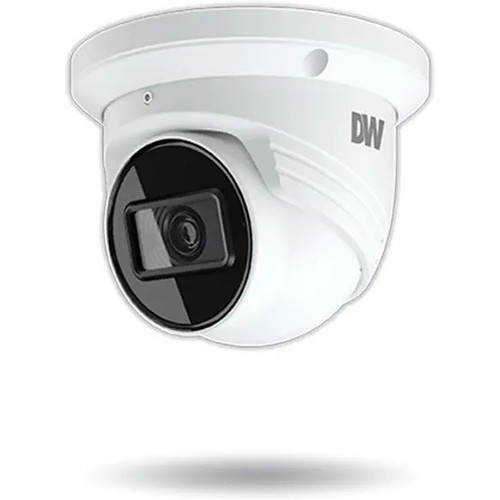
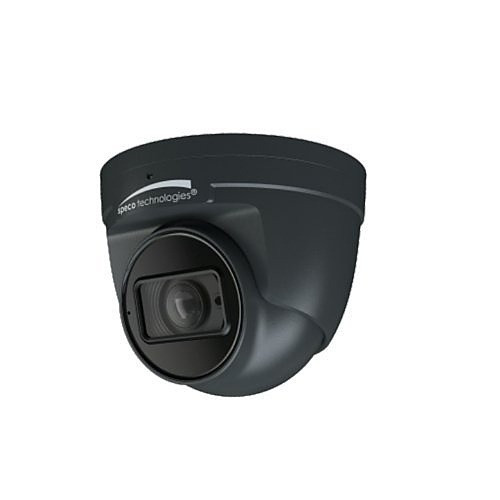
Both the Digital Watchdog DWC-VSTB04Bi and the Speco Technologies O4FT1M are 4MP outdoor IP turret cameras aimed at the same commercial surveillance segment. This comparison covers the key specification differences an installer or IT buyer would weigh before committing to either unit: imaging capability (sensor, lens, low-light, WDR), environmental and installation characteristics (IP/IK rating, power, temperature range), and system integration factors (VMS compatibility, edge analytics, audio, and onboard storage).
In This Guide
How do the imaging specs compare?
The DWC-VSTB04Bi uses a 1/3" CMOS sensor resolving 2560×1440 (4MP) with a fixed 2.8mm lens at 94° HFOV, while the O4FT1M uses the notably larger 1/1.8" CMOS sensor resolving 2576×1452 at a spec-stated 30fps via a motorized 2.8–12mm varifocal lens. The larger sensor in the Speco generally captures more light per pixel; however, neither manufacturer's spec sheet states a quantified minimum illumination figure for the O4FT1M, whereas Digital Watchdog specifies 0.005 lux (color) and 0.0 lux (B/W) for the DWC-VSTB04Bi. The DWC-VSTB04Bi also specifies 100-foot Smart IR range, a figure absent from the O4FT1M spec sheet.
Both cameras claim True WDR, but only the DWC-VSTB04Bi quantifies it at 120dB. The O4FT1M lists True WDR without a dB rating. The DWC-VSTB04Bi is fixed-lens only, limiting repositioning flexibility after installation. The O4FT1M's motorized varifocal lens (2.8–12mm) allows remote optical zoom adjustment post-mount, a meaningful advantage in installations where coverage angles must be fine-tuned without a technician physically repositioning the camera. The O4FT1M also specifies H.265+ and H.264+ (extended compression), whereas the DWC-VSTB04Bi specifies standard H.265/H.264.
What about installation and environment?
Both cameras carry an IP67 ingress protection rating. The DWC-VSTB04Bi adds an IK10 vandal-resistance rating and specifies aluminum die-cast construction, an important differentiator for exposed or high-risk mounting locations; the O4FT1M spec sheet does not state an IK rating. The DWC-VSTB04Bi operating temperature range is -22°F to 140°F (-30°C to 60°C), while the O4FT1M extends the cold end to -40°F, offering a wider low-temperature envelope for outdoor deployments in cold climates.
Power consumption differs: the DWC-VSTB04Bi draws a maximum of 5W via PoE (802.3af-class), while the O4FT1M draws 7.0W and supports both PoE and DC 12V input. The higher wattage of the O4FT1M may influence switch port budgeting on PoE-constrained infrastructure. The DWC-VSTB04Bi dimensions are 4.25" × 3.77" (108×96mm) and it weighs 1.01 lbs (0.46 kg); the O4FT1M weighs 1.45 lbs. Mounting accessory compatibility details are not specified for the O4FT1M in the provided spec sheet.
Which fits your VMS and analytics better?
Both cameras support ONVIF, but at different profile levels: the O4FT1M explicitly certifies ONVIF Profile T (which includes H.265, metadata streaming, and PTZ-profile elements), while the DWC-VSTB04Bi lists ONVIF conformance without specifying a named profile. The DWC-VSTB04Bi is also listed as compatible with DW Spectrum® IPVMS and any ONVIF-conformant CMS. The O4FT1M spec sheet does not name a proprietary VMS partner.
Edge analytics coverage differs in scope: the DWC-VSTB04Bi specifies Line Crossing, Perimeter Intrusion, and Tampering Detection. The O4FT1M specifies Motion Detection, Line Crossing, Intrusion Detection, Face Detection, and Vehicle Detection — a broader set that includes face and vehicle classification without an add-on license per the product listing. On audio, the DWC-VSTB04Bi provides one audio input, one audio output, a built-in microphone, and G.711A/U compression. The O4FT1M lists a built-in microphone but no audio output or compression codec in the provided specs. For onboard storage, the DWC-VSTB04Bi supports MicroSD/SDHC/SDXC up to 1TB; no edge storage specification is stated for the O4FT1M.
Which should you choose: the DWC-VSTB04Bi or the O4FT1M?
Our take: The DWC-VSTB04Bi is the stronger choice when vandal resistance, quantified low-light performance, and audio I/O are the primary requirements. It carries an IK10 impact rating (absent on the O4FT1M), specifies minimum illumination at 0.005 lux color / 0.0 lux B/W (no equivalent figure provided for the O4FT1M), and offers a full audio loop (mic-in plus line-out) versus the O4FT1M's mic-only. Conversely, the O4FT1M is the stronger choice when optical flexibility and advanced AI classification matter most: its motorized 2.8–12mm varifocal lens eliminates fixed-angle constraints, its larger 1/1.8" sensor captures more light per pixel by geometry, its cold-temperature rating extends to -40°F versus -22°F, and it delivers five edge-analytics engines including Face Detection and Vehicle Detection without naming an additional license. Platform integrators already standardized on DW Spectrum IPVMS will find the DWC-VSTB04Bi a natural fit; ONVIF Profile T deployments gain more metadata richness from the O4FT1M.
Side-by-Side Comparison
Spec-for-spec, from manufacturer data.
| Specification | Digital Watchdog DWC-VSTB04Bi | Speco Technologies O4FT1M |
|---|---|---|
| Resolution | 4MP (2560×1440) | 4MP (2576×1452) |
| Image Sensor | 1/3" CMOS | 1/1.8" CMOS |
| Lens / Focal Length | 2.8mm Fixed | 2.8–12mm Motorized Varifocal |
| Horizontal FOV | 94° | — |
| Min. Illumination (Color) | 0.005 lux | — |
| Min. Illumination (B/W) | 0.0 lux | — |
| IR Range | 100 ft (30 m) Smart IR | — |
| Wide Dynamic Range | True WDR 120dB | True WDR (dB not stated) |
| Max Frame Rate | 30fps (all resolutions) | 30fps |
| Video Compression | H.265, H.264, MJPEG | H.265+, H.264+, MJPEG |
| IP Rating | IP67 | IP67 |
| IK / Impact Rating | IK10 | — |
| Operating Temperature | -22°F to 140°F (-30°C to 60°C) | -40°F to 140°F |
| Power Input | PoE (max 5W) | PoE or DC 12V (7.0W) |
| Edge Storage | MicroSD/SDHC/SDXC up to 1TB | — |
| Audio | 1 in / 1 out / Built-in mic / G.711A-U | Built-in mic (no output or codec stated) |
| Edge Analytics | Line Crossing, Perimeter Intrusion, Tampering | Motion Detection, Line Crossing, Intrusion, Face Detection, Vehicle Detection |
| ONVIF | ONVIF (profile not stated) | ONVIF Profile T |
| Housing Material | Aluminum die-cast | — |
| Weight | 1.01 lbs (0.46 kg) | 1.45 lbs |
| Warranty | 5 years | 3 years |
Frequently Asked Questions
Which should you choose: the DWC-VSTB04Bi or the O4FT1M?
The DWC-VSTB04Bi is the stronger choice when vandal resistance, quantified low-light performance, and audio I/O are the primary requirements. It carries an IK10 impact rating (absent on the O4FT1M), specifies minimum illumination at 0.005 lux color / 0.0 lux B/W (no equivalent figure provided for the O4FT1M), and offers a full audio loop (mic-in plus line-out) versus the O4FT1M's mic-only. Conversely, the O4FT1M is the stronger choice when optical flexibility and advanced AI classification matter most: its motorized 2.8–12mm varifocal lens eliminates fixed-angle constraints, its larger 1/1.8" sensor captures more light per pixel by geometry, its cold-temperature rating extends to -40°F versus -22°F, and it delivers five edge-analytics engines including Face Detection and Vehicle Detection without naming an additional license. Platform integrators already standardized on DW Spectrum IPVMS will find the DWC-VSTB04Bi a natural fit; ONVIF Profile T deployments gain more metadata richness from the O4FT1M.
Is the DWC-VSTB04Bi or O4FT1M better for low-light performance?
Based on available specs, the DWC-VSTB04Bi is the only model with a published minimum illumination figure: 0.005 lux in color and 0.0 lux in B/W with its 100-foot Smart IR active. The O4FT1M spec sheet does not state a minimum illumination value. While the O4FT1M's larger 1/1.8" sensor (versus the DWC-VSTB04Bi's 1/3" sensor) typically captures more light per pixel by sensor physics, no lux rating is available to confirm real-world low-light performance for that model from the provided data.
Which camera is easier to aim and adjust after mounting?
The O4FT1M has a clear advantage here: its motorized 2.8–12mm varifocal lens allows remote optical zoom and focus adjustment without a technician physically repositioning the camera. The DWC-VSTB04Bi has a fixed 2.8mm lens with a set 94° horizontal field of view, so coverage angle is locked at installation. If scene coverage requirements may change or need fine-tuning after deployment, the O4FT1M's motorized lens reduces return visits.
Which camera is better suited for high-vandalism or harsh outdoor environments?
The DWC-VSTB04Bi is the stronger choice for vandal-prone locations. It specifies an IK10 impact rating and aluminum die-cast housing, while the O4FT1M spec sheet does not state an IK rating. Both carry IP67 weatherproofing. For extreme cold, the O4FT1M's -40°F lower operating limit outperforms the DWC-VSTB04Bi's -22°F floor, making the O4FT1M preferable in arctic or severe-winter climates.
More IP Camera Comparisons
Get a Second Opinion on Your Camera Choice
Share your site layout, coverage goals, and budget. Our team will validate the camera selection, flag anything we would change, and recommend products that match the use case.