
Speco Technologies O4FT1M vs Speco Technologies O4KT1: Specification Comparison
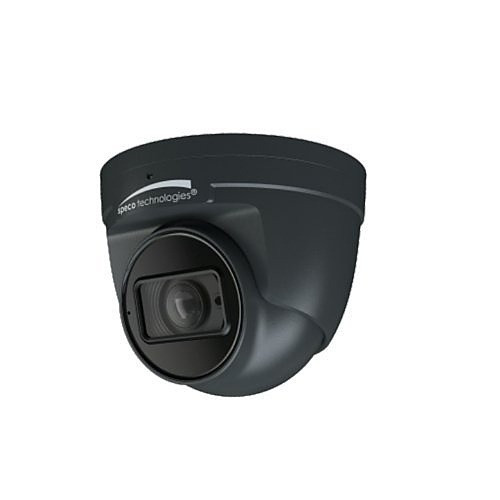
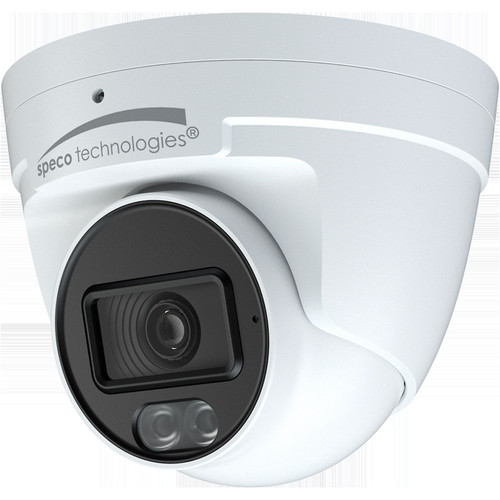
Both the Speco Technologies O4FT1M and O4KT1 are 4MP IP turret cameras aimed at outdoor fixed surveillance installations. The O4FT1M positions itself as a flexible intensifier AI camera with motorized varifocal optics and a multi-engine edge analytics suite, while the O4KT1 is a fixed-lens IR turret with local storage capability and NDAA compliance. This comparison examines how they differ across imaging performance, physical installation requirements, and VMS/analytics integration to help integrators and IT buyers select the right fit for their deployment.
In This Guide
How do the imaging specs compare?
The O4FT1M resolves at 2576×1452 on a 1/1.8" CMOS sensor and delivers up to 30 fps with H.265+, H.264+, and MJPEG compression. It uses a motorized 2.8–12mm varifocal lens, giving installers remote zoom and focus adjustment post-mount. Its low-light approach is described as a 'flexible intensifier' paired with True WDR; a minimum illumination figure is not provided in the supplied specs. The O4KT1 resolves at 2560×1440 on a smaller 1/3" CMOS sensor and delivers a maximum of 20 fps with H.265 and H.264 compression. It uses a fixed 2.8mm lens with no remote adjustment capability.
On low-light performance, the O4KT1 provides concrete figures: 0.005 lux at F1.6 with AGC on, and 0 lux with IR active, with an IR range of 98 ft. The O4FT1M lists no minimum illumination value in its supplied specifications. The O4KT1's larger IR throw is a quantifiable nighttime advantage; the O4FT1M's intensifier-based approach cannot be directly compared without a published lux rating. Both cameras support WDR, though the O4FT1M specifies 'True WDR' while the O4KT1 lists 'WDR' without further qualification.
What about installation and environment?
Both cameras carry an IP67 ingress protection rating, confirming dust-tight and temporary-immersion resistance for outdoor use. Neither spec sheet lists an IK impact rating. The O4FT1M specifies a wider operating temperature range of -40°F to 140°F and weighs 1.45 lbs; no dimensions are provided in the supplied specs. The O4KT1 does not list an operating temperature range or weight in its supplied specifications.
Both cameras accept PoE (IEEE 802.3af) and DC 12V power. The O4FT1M lists a maximum power consumption of 7.0W. The O4KT1 notes the power supply is not included but does not list a wattage figure. The O4KT1 specifies four mount types—wall, ceiling, pole, and corner—while the O4FT1M does not enumerate mounting options in the supplied specs. The O4KT1 also includes onboard microSD storage up to 256 GB; the O4FT1M lists no local storage capability in its supplied specifications.
Which fits your VMS and analytics better?
The O4FT1M is ONVIF Profile T compliant and supports five named edge analytics engines: motion detection, line crossing, intrusion detection, face detection, and vehicle detection. Profile T is the current ONVIF standard covering advanced video streaming, PTZ, and metadata, which aids interoperability with modern VMS platforms. The O4FT1M includes a built-in microphone for audio capture. No cybersecurity feature set is listed in its supplied specifications.
The O4KT1 is ONVIF-compliant and additionally supports RTSP and HTTPS streaming. It does not specify a Profile level (S, G, T) in its supplied specs. Its edge analytics capabilities are not itemized beyond what is implied by the WDR and IR features. The O4KT1 includes a built-in microphone and an audio input port. It also lists a defined cybersecurity feature set: user ID and password protection, IP/MAC filtering, 802.1X authentication, and digest authentication—none of which are mentioned in the O4FT1M's supplied specifications. The O4KT1 is certified NDAA-compliant and FCC-certified; the O4FT1M lists neither certification in its supplied specifications.
Which should you choose: the O4FT1M or the O4KT1?
Our take: The O4FT1M is the stronger choice when flexible lens positioning, a richer edge analytics suite, and ONVIF Profile T interoperability are the primary requirements. Its motorized 2.8–12mm varifocal lens eliminates post-mount refocus trips, a practical advantage on elevated or hard-to-access installations. It also delivers 30 fps versus the O4KT1's 20 fps, which matters for capturing fast-moving subjects and smoother forensic review. Its five named AI analytics engines—including face and vehicle detection—exceed the O4KT1's unlisted analytics. Conversely, the O4KT1 holds measurable advantages in several areas: a published IR range of 98 ft. with 0 lux capability, onboard microSD storage up to 256 GB, NDAA compliance, a documented cybersecurity feature set, and a longer 5-year warranty versus the O4FT1M's 3-year coverage. Buyers in federally sensitive environments or those needing local edge recording should favor the O4KT1.
Side-by-Side Comparison
Spec-for-spec, from manufacturer data.
| Specification | Speco Technologies O4FT1M | Speco Technologies O4KT1 |
|---|---|---|
| Resolution | 2576×1452 (4MP) | 2560×1440 (4MP) |
| Image Sensor | 1/1.8" CMOS | 1/3" CMOS |
| Lens / Focal Length | Motorized varifocal 2.8–12mm | Fixed 2.8mm |
| Min Illumination | — | 0.005 lux @ F1.6 (AGC ON); 0 lux (IR on) |
| IR Range | — | 98 ft |
| WDR | True WDR | WDR |
| Max Frame Rate | 30 fps | 20 fps |
| Video Compression | H.265+, H.264+, MJPEG | H.265, H.264 |
| IP Rating | IP67 | IP67 |
| Operating Temperature | -40°F to 140°F | — |
| Power Input / PoE Class | PoE (802.3af), DC 12V; 7.0W max | PoE (IEEE 802.3af), DC 12V; wattage not specified |
| Edge Storage | — | microSD up to 256 GB |
| Audio | Built-in microphone | Built-in mic; audio input port |
| Edge Analytics | Motion detection, line crossing, intrusion, face detection, vehicle detection | Not specified in supplied specs |
| ONVIF | Profile T | Yes (profile level not specified) |
| Cybersecurity Features | — | User ID/password, IP/MAC filtering, 802.1X, digest authentication |
| NDAA Compliance | — | Yes |
| Weight | 1.45 lbs | — |
| Warranty | 3 years | 5 years |
Frequently Asked Questions
Which should you choose: the O4FT1M or the O4KT1?
The O4FT1M is the stronger choice when flexible lens positioning, a richer edge analytics suite, and ONVIF Profile T interoperability are the primary requirements. Its motorized 2.8–12mm varifocal lens eliminates post-mount refocus trips, a practical advantage on elevated or hard-to-access installations. It also delivers 30 fps versus the O4KT1's 20 fps, which matters for capturing fast-moving subjects and smoother forensic review. Its five named AI analytics engines—including face and vehicle detection—exceed the O4KT1's unlisted analytics. Conversely, the O4KT1 holds measurable advantages in several areas: a published IR range of 98 ft. with 0 lux capability, onboard microSD storage up to 256 GB, NDAA compliance, a documented cybersecurity feature set, and a longer 5-year warranty versus the O4FT1M's 3-year coverage. Buyers in federally sensitive environments or those needing local edge recording should favor the O4KT1.
Is the O4FT1M or O4KT1 better for low-light and nighttime use?
Based on the supplied specifications, the O4KT1 has a clear, quantified low-light advantage: 0.005 lux at F1.6 with AGC on and 0 lux with IR active, with IR coverage to 98 ft. The O4FT1M describes a 'flexible intensifier' technology but does not list a minimum illumination value or IR range in its supplied specifications, so a direct numeric comparison cannot be made.
Which camera is better suited for government or federally regulated deployments?
The O4KT1 is the appropriate choice for those environments. It lists NDAA compliance in its supplied specifications, which is typically required for federal and many state government video surveillance procurements. The O4FT1M does not list NDAA compliance in its supplied specifications.
Can either camera record locally without a NVR or VMS?
Only the O4KT1 supports onboard local storage, accepting a microSD card up to 256 GB per its supplied specifications. The O4FT1M lists no local storage option in its supplied specifications, meaning it requires a network recorder or VMS for continuous recording.
More IP Camera Comparisons
Get a Second Opinion on Your Camera Choice
Share your site layout, coverage goals, and budget. Our team will validate the camera selection, flag anything we would change, and recommend products that match the use case.