
Digital Watchdog DWC-VSTB04Bi vs Vivotek TT9333-E: Specification Comparison
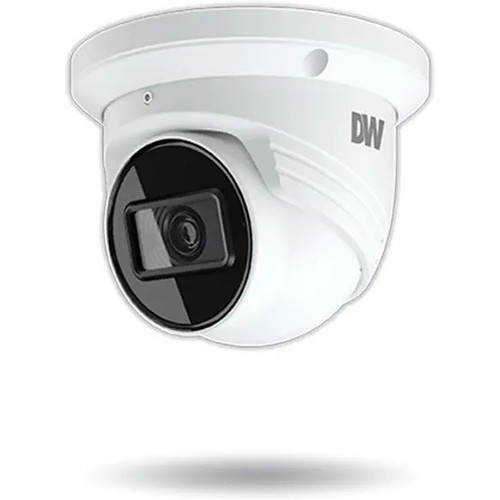
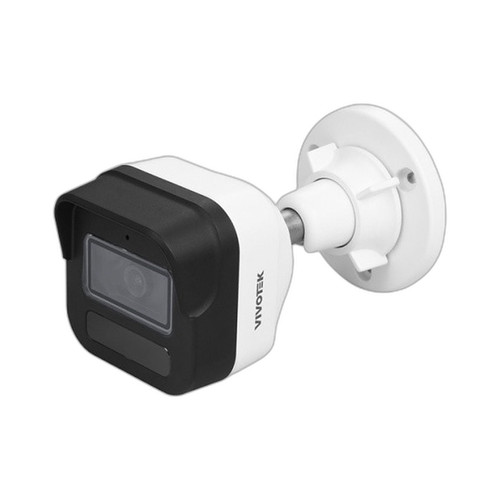
Both the Digital Watchdog DWC-VSTB04Bi and the Vivotek TT9333-E(7MM) are 4MP turret-form IP cameras aimed at outdoor security installations, but they serve meaningfully different deployment profiles. The DWC-VSTB04Bi is a conventional visible-light turret with Smart IR and WDR, while the TT9333-E(7MM) is a bi-spectrum thermal-plus-visible unit with a motorized zoom lens and extreme-environment ratings. This comparison examines imaging capability, installation requirements, and integration compatibility across both platforms.
In This Guide
How do the imaging specs compare?
The DWC-VSTB04Bi delivers a 4MP (2560×1440) image from a 1/3" CMOS sensor through a fixed 2.8mm lens at 94° horizontal field of view, with Smart IR illumination reaching 100 feet (30 m) and a minimum scene illumination of 0.0 lux in B/W mode and 0.005 lux in color. Its True WDR is rated at 120dB, and shutter speed ranges from 1/30 to 1/100,000 sec. Frame rate is variable, up to 30fps across all supported resolutions (4MP, 3MP, 2.1MP, 1080P, 720P, D1, CIF) in dual-stream configuration. The fixed 2.8mm lens provides no optical zoom capability.
The Vivotek TT9333-E(7MM) pairs a 4MP visible sensor with a simultaneous thermal imaging channel — a fundamentally different imaging architecture. Its visible-channel lens is a 5–50mm motorized P-iris with 10x optical zoom, providing far greater scene flexibility than the DWC-VSTB04Bi's fixed 2.8mm. Night vision uses 940nm covert (invisible) IR with an IR range of 50m, and the thermal channel maintains detection through fog, smoke, and zero-light conditions where visible-light IR cannot. WDR is listed as WDR PRO II; a specific dB rating is not provided in the available specs. Frame rate is listed at 30fps. The thermal channel specification (resolution, sensitivity) is not detailed in the provided specs.
What about installation and environment?
The DWC-VSTB04Bi carries an IP67 rating (dust-tight, withstands temporary immersion) and an IK10 vandal rating in an aluminum die-cast housing. It operates from -22°F to 140°F (-30°C to 60°C) and is powered via PoE (802.3af compatible) at a maximum of 5W, or DC 12V at up to 5W/416.6mA. The low power draw means any standard 802.3af switch port is sufficient. Mounting accessories are sold separately. Camera dimensions are 4.25" H × 3.77" W (108 × 96 mm) and weight is 1.01 lbs (0.46 kg).
The Vivotek TT9333-E(7MM) exceeds the DWC-VSTB04Bi on environmental hardening in two areas: its IP rating is IP68 (rated for continuous submersion beyond 1m, depth/duration per manufacturer spec not provided) versus IP67, and its operating temperature extends to -40°C to +70°C — a significantly wider range especially at the cold end (-40°C vs -30°C). It also holds a NEMA 4X certification. Power is PoE++ (802.3bt) Class 4, requiring a PoE++ capable switch or injector — a more demanding infrastructure requirement than the DWC-VSTB04Bi's 802.3af. Mount types include wall, recessed, pole, and rack. Physical dimensions and weight are not provided in the available specs.
Which fits your VMS and analytics better?
The DWC-VSTB04Bi supports ONVIF conformance and is natively compatible with DW Spectrum IPVMS, as well as any ONVIF-conformant CMS. Edge analytics include Line Crossing, Perimeter Intrusion, and Tampering Detection. Audio features include G.711A/U compression, one audio input, one audio output, and a built-in microphone. On-board storage supports Micro SD/SDHC/SDXC cards up to 1TB. Security features cover 802.1x, digest authentication, IP filtering, and MAC filtering. Operational notifications are available via email and FTP.
The Vivotek TT9333-E(7MM) supports ONVIF Profile S, T, and G — a broader profile set than the DWC-VSTB04Bi's ONVIF conformance claim (no specific profile listed). It is also explicitly compatible with AXIS Camera Station and Milestone VMS platforms. Edge analytics leverage Deep Learning for Object Detection and People Counting — more sophisticated than the DWC-VSTB04Bi's rule-based analytics. Audio is two-way with a built-in microphone. On-board storage capability is not specified in the available specs. The combination of thermal imaging data and deep-learning analytics positions this unit for perimeter and detection-critical integrations where false-alarm reduction is a priority.
Which should you choose: the DWC-VSTB04Bi or the TT9333-E?
Our take: The DWC-VSTB04Bi is the stronger choice when budget, simplicity, and standard PoE infrastructure are the primary constraints. It delivers 4MP visible imaging with 120dB True WDR and 100-foot IR on a single 802.3af PoE connection drawing just 5W — easy to power from any existing switch. By contrast, the TT9333-E(7MM) adds thermal bi-spectrum detection and a 10x optical zoom (5–50mm motorized) that the DWC-VSTB04Bi entirely lacks, and it extends cold-end operation to -40°C versus -30°C. The TT9333-E(7MM) also requires PoE++ (802.3bt) Class 4 infrastructure and carries IP68 plus NEMA 4X ratings versus the DWC-VSTB04Bi's IP67. Choose the DWC-VSTB04Bi for cost-effective standard outdoor surveillance with 1TB edge storage and broad ONVIF VMS support; choose the TT9333-E(7MM) for perimeter and extreme-environment deployments where thermal detection, covert 940nm IR, deep-learning analytics, and submersion-rated housing justify the higher infrastructure and unit cost.
Side-by-Side Comparison
Spec-for-spec, from manufacturer data.
| Specification | Digital Watchdog DWC-VSTB04Bi | Vivotek TT9333-E |
|---|---|---|
| Camera Type | Turret (visible) | Bi-Spectrum Turret (visible + thermal) |
| Resolution | 4MP (2560 × 1440) | 4MP visible + thermal (thermal res. not specified) |
| Image Sensor | 1/3" CMOS | Not specified in available specs |
| Lens / Focal Length | 2.8mm fixed | 5–50mm motorized P-iris, 10x optical zoom |
| Horizontal FOV | 94° | Not specified in available specs |
| Min. Illumination | 0.0 lux (B/W); 0.005 lux (color) | Not specified; thermal channel provides zero-light detection |
| IR Range | 100 ft (30 m) Smart IR | 50 m; 940nm covert (invisible) IR |
| WDR | True WDR 120dB | WDR PRO II (dB rating not specified) |
| Video Compression | H.264, H.265, MJPEG | H.265, H.264, MJPEG |
| Max Frame Rate | Up to 30fps at all resolutions | 30fps |
| IP Rating | IP67 | IP68 |
| IK / Impact Rating | IK10 | IK10 |
| NEMA Rating | Not specified | NEMA 4X |
| Operating Temperature | -30°C to +60°C (-22°F to 140°F) | -40°C to +70°C |
| Power Input / PoE Class | PoE 802.3af; DC 12V; max 5W | PoE++ 802.3bt Class 4 |
| Audio | G.711A/U; 1 in / 1 out; built-in mic | Two-way; built-in microphone |
| Edge Storage | Micro SD/SDHC/SDXC up to 1TB | Not specified in available specs |
| ONVIF | ONVIF conformant (profile not specified) | ONVIF Profile S/T/G |
| VMS Compatibility | DW Spectrum IPVMS; any ONVIF CMS | AXIS Camera Station; Milestone; ONVIF Profile S/T/G |
| Edge Analytics | Line Crossing; Perimeter Intrusion; Tampering Detection | Deep Learning; Object Detection; People Counting |
| Housing Material | Aluminum die-casting | Not specified in available specs |
| Dimensions | 4.25" H × 3.77" W (108 × 96 mm) | Not specified in available specs |
| Weight | 1.01 lbs (0.46 kg) | Not specified in available specs |
| Warranty | 5 years | Not specified in available specs |
Frequently Asked Questions
Which should you choose: the DWC-VSTB04Bi or the TT9333-E?
The DWC-VSTB04Bi is the stronger choice when budget, simplicity, and standard PoE infrastructure are the primary constraints. It delivers 4MP visible imaging with 120dB True WDR and 100-foot IR on a single 802.3af PoE connection drawing just 5W — easy to power from any existing switch. By contrast, the TT9333-E(7MM) adds thermal bi-spectrum detection and a 10x optical zoom (5–50mm motorized) that the DWC-VSTB04Bi entirely lacks, and it extends cold-end operation to -40°C versus -30°C. The TT9333-E(7MM) also requires PoE++ (802.3bt) Class 4 infrastructure and carries IP68 plus NEMA 4X ratings versus the DWC-VSTB04Bi's IP67. Choose the DWC-VSTB04Bi for cost-effective standard outdoor surveillance with 1TB edge storage and broad ONVIF VMS support; choose the TT9333-E(7MM) for perimeter and extreme-environment deployments where thermal detection, covert 940nm IR, deep-learning analytics, and submersion-rated housing justify the higher infrastructure and unit cost.
Is the DWC-VSTB04Bi or TT9333-E better for low-light performance?
The DWC-VSTB04Bi reaches 0.0 lux in B/W mode with its Smart IR system at up to 100 feet. The TT9333-E(7MM) uses 940nm covert (invisible) IR at a stated 50m range and adds a thermal imaging channel that operates through complete darkness, fog, and smoke regardless of visible-light IR range. For scenes requiring covert illumination or detection in obscured conditions, the TT9333-E(7MM)'s thermal channel provides capability the DWC-VSTB04Bi cannot match. For standard night-vision with visible IR, both cameras cover comparable IR distances.
Can I power both cameras from a standard PoE switch?
No — only the DWC-VSTB04Bi can be powered from a standard 802.3af PoE switch, drawing a maximum of 5W. The Vivotek TT9333-E(7MM) requires PoE++ (802.3bt) Class 4 power, which demands a PoE++ capable switch or midspan injector. If your existing infrastructure is 802.3af or 802.3at, the TT9333-E(7MM) will require a switch or injector upgrade; the DWC-VSTB04Bi will not.
Which camera supports on-board SD card storage?
The DWC-VSTB04Bi explicitly supports Micro SD/SDHC/SDXC cards up to 1TB for local edge recording. The Vivotek TT9333-E(7MM)'s on-board storage capability is not specified in the available product specifications — confirm with the manufacturer's full datasheet before assuming local storage is available on that model.
More IP Camera Comparisons
Get a Second Opinion on Your Camera Choice
Share your site layout, coverage goals, and budget. Our team will validate the camera selection, flag anything we would change, and recommend products that match the use case.