
Speco Technologies O4KT1 vs Vivotek TT9333-E: Specification Comparison
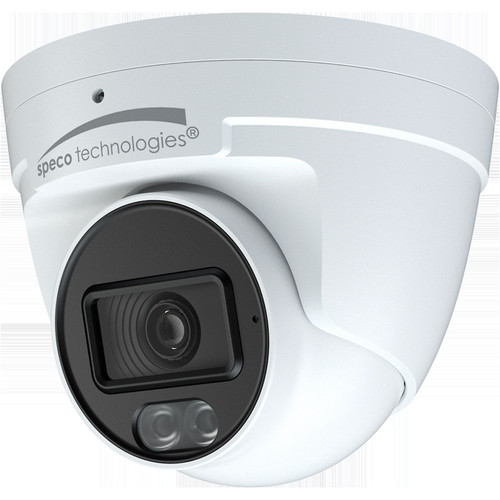
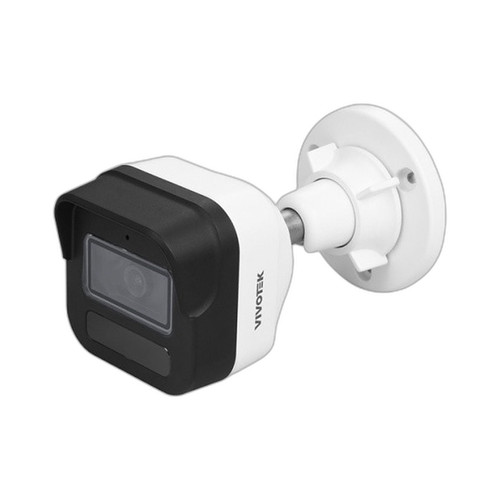
Both the Speco Technologies O4KT1 and the Vivotek TT9333-E(7MM) are 4MP IP turret cameras, placing them in the same resolution class and form factor. However, they serve markedly different deployment profiles: the O4KT1 is a conventional fixed-lens single-sensor camera designed for cost-efficient indoor/outdoor coverage, while the TT9333-E(7MM) is a bi-spectrum thermal/visible camera with a motorized zoom lens engineered for perimeter detection under extreme environmental and lighting conditions. Buyers considering both are typically evaluating whether advanced thermal capability justifies the added infrastructure cost.
In This Guide
How do the imaging specs compare?
The O4KT1 delivers 4MP (2560×1440) visible imaging at up to 20 fps through a fixed 2.8 mm lens on a 1/3" CMOS sensor. Low-light performance is rated at 0.005 lux at F1.6 (AGC ON) and 0 lux with IR active. Its IR illuminators reach 98 ft (approximately 30 m), and the camera includes WDR for challenging contrast scenes. The fixed 2.8 mm lens provides a wide-angle field of view suited to general area surveillance but offers no zoom capability.
The TT9333-E(7MM) provides simultaneous 4MP visible and thermal imaging channels. The visible channel uses a 5–50 mm motorized P-iris lens with 10x optical zoom, giving operators the ability to digitally and optically close in on targets. Its IR illuminators operate at 940 nm (covert/invisible) with a specified range of 50 m. The thermal channel enables detection through fog, smoke, and complete darkness where visible sensors fail entirely. WDR PRO II is specified for the visible channel. No minimum illumination figure is provided in the supplied specs for the TT9333-E(7MM).
What about installation and environment?
The O4KT1 carries an IP67 rating (dust-tight, temporary immersion), accepts 802.3af PoE (<13 W) or 12 VDC, and supports wall, ceiling, pole, and corner mounting. No IK impact rating or operating temperature range is specified in the provided data. The camera is NDAA-compliant and FCC-certified, and its color is listed as white.
The TT9333-E(7MM) steps up to IP68 (continuous immersion) and IK10 (vandal-resistant) with a NEMA 4X enclosure rating, making it suitable for wash-down environments and sites with physical attack risk. It requires PoE++ (802.3bt) Class 4, drawing significantly more power than 802.3af—installers must verify that switches or injectors support 802.3bt. The operating temperature range is specified as -40°C to +70°C, covering arctic and desert extremes. Mounting options include wall, recessed, pole, and rack. No NDAA compliance statement is present in the supplied specs for the TT9333-E(7MM).
Which fits your VMS and analytics better?
The O4KT1 supports ONVIF, RTSP, and HTTPS for VMS integration, and includes cybersecurity features: user ID/password, IP/MAC filtering, 802.1X, and digest authentication. It provides on-board storage via microSD up to 256 GB and includes a built-in microphone with audio input. No edge analytics capabilities are specified in the provided data.
The TT9333-E(7MM) supports ONVIF Profile S/T/G and has verified compatibility with AXIS Camera Station and Milestone XProtect, offering a broader named-VMS compatibility statement. It includes deep learning-based edge analytics covering object detection and people counting. Two-way audio with a built-in microphone is specified. No on-board edge storage specification is provided in the supplied data for the TT9333-E(7MM).
Which should you choose: the O4KT1 or the TT9333-E?
Our take: The O4KT1 is the stronger choice when the deployment requires a straightforward, budget-conscious 4MP fixed turret with 802.3af PoE compatibility, NDAA compliance, and on-board microSD storage up to 256 GB. Its 0.005 lux minimum illumination and 98 ft IR range cover standard indoor and outdoor scenarios adequately, and its 5-year warranty exceeds what is specified for the TT9333-E(7MM) (no warranty term is provided in the supplied specs). The TT9333-E(7MM) is the appropriate choice for perimeter, critical infrastructure, or harsh-environment deployments where IP68/IK10 ingress and impact resistance, -40°C operating temperature, covert 940 nm IR, simultaneous thermal imaging, 10x optical zoom, and deep-learning edge analytics are required. Its 802.3bt PoE++ requirement means infrastructure upgrades may be necessary. Choose the O4KT1 for cost-efficient general surveillance; choose the TT9333-E(7MM) for mission-critical perimeter detection where environmental severity or detection-through-obscurant capability is non-negotiable.
Side-by-Side Comparison
Spec-for-spec, from manufacturer data.
| Specification | Speco Technologies O4KT1 | Vivotek TT9333-E |
|---|---|---|
| Resolution | 4MP (2560×1440) | 4MP visible + thermal |
| Image Sensor | 1/3" CMOS | — |
| Lens / Focal Length | 2.8 mm fixed | 5–50 mm motorized P-iris, 10x optical zoom |
| Min Illumination | 0.005 lux @ F1.6 (AGC ON); 0 lux (IR on) | — |
| IR Range | 98 ft (~30 m) | 50 m (940 nm covert IR) |
| Thermal Imaging | — | Yes (bi-spectrum) |
| WDR | WDR | WDR PRO II |
| Max Frame Rate | 20 fps | 30 fps (per environment spec) |
| Video Compression | H.265; H.264 | H.265; H.264; MJPEG |
| IP Rating | IP67 | IP68 |
| IK / Impact Rating | — | IK10 |
| NEMA Rating | — | NEMA 4X |
| Operating Temperature | — | -40°C to +70°C |
| Power Input / PoE Class | 802.3af PoE or 12 VDC | PoE++ (802.3bt) Class 4 |
| Edge Storage | microSD up to 256 GB | — |
| Audio | Built-in mic; audio input (one-way input) | Two-way; built-in microphone |
| Edge Analytics | — | Deep Learning; Object Detection; People Counting |
| ONVIF | Yes | Yes (Profile S/T/G) |
| VMS Compatibility | ONVIF; RTSP; HTTPS | ONVIF Profile S/T/G; AXIS Camera Station; Milestone |
| Certifications | FCC; NDAA-compliant | NEMA 4X |
| Form Factor | Turret | Turret |
| Mount Type | Wall; Ceiling; Pole; Corner | Wall; Recessed; Pole; Rack |
| Warranty | 5 Year(s) | — |
Frequently Asked Questions
Which should you choose: the O4KT1 or the TT9333-E?
The O4KT1 is the stronger choice when the deployment requires a straightforward, budget-conscious 4MP fixed turret with 802.3af PoE compatibility, NDAA compliance, and on-board microSD storage up to 256 GB. Its 0.005 lux minimum illumination and 98 ft IR range cover standard indoor and outdoor scenarios adequately, and its 5-year warranty exceeds what is specified for the TT9333-E(7MM) (no warranty term is provided in the supplied specs). The TT9333-E(7MM) is the appropriate choice for perimeter, critical infrastructure, or harsh-environment deployments where IP68/IK10 ingress and impact resistance, -40°C operating temperature, covert 940 nm IR, simultaneous thermal imaging, 10x optical zoom, and deep-learning edge analytics are required. Its 802.3bt PoE++ requirement means infrastructure upgrades may be necessary. Choose the O4KT1 for cost-efficient general surveillance; choose the TT9333-E(7MM) for mission-critical perimeter detection where environmental severity or detection-through-obscurant capability is non-negotiable.
Is the O4KT1 or TT9333-E better for low-light performance?
The O4KT1 specifies a minimum illumination of 0.005 lux at F1.6 (AGC ON) and 0 lux with IR active, with IR range reaching 98 ft. The TT9333-E(7MM) adds a thermal imaging channel that enables detection in complete darkness and through obscurants such as fog and smoke—a capability the O4KT1 lacks entirely. No minimum lux figure is provided in the supplied specs for the TT9333-E(7MM)'s visible channel. For scenes where zero-light or obscured conditions are a real risk, the TT9333-E(7MM)'s thermal channel is the decisive differentiator.
Can I power both cameras from a standard 802.3af PoE switch?
The O4KT1 is powered by 802.3af PoE (under 13 W) or 12 VDC, so it works with any standard PoE switch or injector. The TT9333-E(7MM) requires PoE++ (802.3bt) Class 4, which draws substantially more power. Standard 802.3af or 802.3at switches cannot supply 802.3bt levels; installers must use 802.3bt-capable switches or injectors for the TT9333-E(7MM).
Which camera is better suited for vandal-prone or wash-down environments?
The TT9333-E(7MM) is rated IP68 (continuous immersion) and IK10 (vandal-resistant impact) with a NEMA 4X enclosure, making it explicitly designed for harsh physical environments. The O4KT1 is rated IP67 (dust-tight and temporary immersion) but carries no IK impact rating in the supplied specifications. For locations with a credible vandalism risk or regular high-pressure wash-downs, the TT9333-E(7MM)'s enclosure ratings are materially stronger.
More IP Camera Comparisons
Get a Second Opinion on Your Camera Choice
Share your site layout, coverage goals, and budget. Our team will validate the camera selection, flag anything we would change, and recommend products that match the use case.