
Speco Technologies AP620HA vs Speco Technologies AP640HA: Specification Comparison
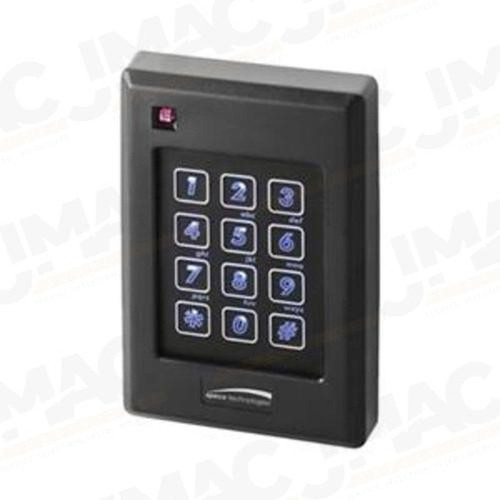
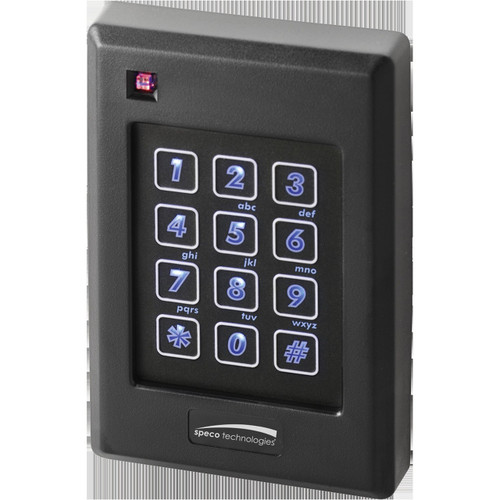
The Speco Technologies AP620HA and AP640HA are both 125 kHz proximity card readers with integrated numeric keypads, designed for access control deployments in indoor and outdoor environments. Both use Wiegand output protocol and carry IP67 weather ratings, making them direct cross-shop candidates for installers specifying mullion or wall-mount reader positions. The key differentiators under evaluation are read range, mounting form factor, warranty coverage, and power requirements—each of which can drive a project decision depending on site layout, existing hardware, and integration constraints.
In This Guide
- Which reader delivers better card detection distance and credential compatibility?
- How do the two units differ in mounting form factor and environmental resilience?
- What are the power requirements and warranty terms, and how do they affect system integration?
- Which should you choose: the AP620HA or the AP640HA?
- Side-by-Side Specs
- FAQ
Which reader delivers better card detection distance and credential compatibility?
The AP640HA specifies a read range of up to 7 inches (176 mm), while the AP620HA is rated at 5 inches (approximately 127 mm). Both units read HID and AWID 125 kHz credentials and output via Wiegand protocol, so credential-type compatibility is equivalent. The 2-inch advantage on the AP640HA translates to a more forgiving presentation zone—relevant for high-throughput entryways, accessible-design compliance, or installations where card holders are unlikely to bring a credential close to the reader face. The AP620HA's tighter 5-inch range is adequate for controlled, lower-traffic posts but may require more deliberate card presentation from users.
How do the two units differ in mounting form factor and environmental resilience?
Both readers are rated IP67 and operate across an identical temperature range of -40°F to 149°F (-40°C to 65°C), so environmental protection is equivalent. The distinction lies in mounting geometry. The AP620HA is a mullion-format reader designed for installation on window frames, door mullions, and flat surfaces—a narrower, taller profile suited to tight frame spaces. The AP640HA is a wall-mount, single-gang form factor, fitting a standard electrical box cutout used in most North American new-construction and retrofit projects. Installers should match the form factor to the door hardware already in place; mullion readers and single-gang boxes are not interchangeable without additional rough-in work.
What are the power requirements and warranty terms, and how do they affect system integration?
Power requirements diverge between the two models. The AP640HA explicitly specifies 12VDC input, which aligns with the majority of access control panel power outputs. The AP620HA does not list a supply voltage in the provided specifications; buyers must verify power compatibility with the panel vendor before ordering. Notably, the AP640HA spec sheet references PoE (802.3af), though this conflicts with the 12VDC listing—installers should confirm with Speco documentation which power delivery method is actually supported on this SKU. On warranty, the AP640HA carries a 3-year term versus the AP620HA's 2-year term. Both units output Wiegand, ensuring compatibility with virtually all legacy and current access control panels.
Which should you choose: the AP620HA or the AP640HA?
Our take: The AP640HA is the stronger choice when read range and a standard single-gang mounting footprint are the primary installation drivers. It offers a 7-inch read range versus the AP620HA's 5 inches—a 40% improvement in detection distance—and adds one additional year of warranty coverage (3-year vs. 2-year). The AP620HA's mullion form factor is the decisive advantage for projects where door frames or narrow surface profiles preclude a single-gang box; no adapter can replicate a true mullion-mount profile. Power compatibility should be confirmed for both units before ordering, as the AP620HA does not publish a supply voltage in the available specs and the AP640HA carries a conflicting PoE notation that warrants clarification with Speco. Both units are equivalent on IP67 sealing, operating temperature, credential protocol, and Wiegand output, so the choice should hinge on mounting geometry and read-range requirements for the specific opening.
Side-by-Side Comparison
Spec-for-spec, from manufacturer data.
| Specification | Speco Technologies AP620HA | Speco Technologies AP640HA |
|---|---|---|
| SKU | AP620HA | AP640HA |
| Form Factor / Mounting | Mullion, window frame, flat surface | Wall-mount, single-gang |
| Read Range | 5 inches (125 kHz RFID) | Up to 7 inches (176 mm) |
| Credential Protocol | HID & AWID 125 kHz | HID & AWID 125 kHz |
| Output Interface | Wiegand | Wiegand |
| Keypad | Integrated numeric keypad | Integrated numeric keypad |
| IP Rating | IP67 | IP67 |
| Operating Temperature | -40°F to 149°F (-40°C to 65°C) | -40°F to 149°F |
| Environment Rating | Outdoor | Outdoor |
| Power Supply | Not specified in provided specs | 12VDC (PoE 802.3af also noted — confirm with Speco) |
| Housing Color | White (black snap-on cover included) | White |
| Weight | 4 oz (113 g) | 4 oz |
| Warranty | 2 years | 3 years |
| Certifications | FCC, ICC, CE, C-Tick, ETL-listed | ONVIF Compliant (per provided specs) |
| Audio Feedback | Tone beeper included | — |
| Datasheet | /content/product-datasheets/AP620HA.pdf | /content/product-datasheets/AP640HA.pdf |
Frequently Asked Questions
Which should you choose: the AP620HA or the AP640HA?
The AP640HA is the stronger choice when read range and a standard single-gang mounting footprint are the primary installation drivers. It offers a 7-inch read range versus the AP620HA's 5 inches—a 40% improvement in detection distance—and adds one additional year of warranty coverage (3-year vs. 2-year). The AP620HA's mullion form factor is the decisive advantage for projects where door frames or narrow surface profiles preclude a single-gang box; no adapter can replicate a true mullion-mount profile. Power compatibility should be confirmed for both units before ordering, as the AP620HA does not publish a supply voltage in the available specs and the AP640HA carries a conflicting PoE notation that warrants clarification with Speco. Both units are equivalent on IP67 sealing, operating temperature, credential protocol, and Wiegand output, so the choice should hinge on mounting geometry and read-range requirements for the specific opening.
Is the AP620HA or AP640HA a better fit for a standard door with a single-gang electrical box already roughed in?
The AP640HA is the better fit. Its wall-mount, single-gang form factor is designed to drop into a standard electrical box cutout. The AP620HA is a mullion-format reader intended for window frames and narrow door-frame surfaces, and would require a different rough-in or an adapter plate to mount on a single-gang box.
Which reader gives users more margin when presenting their access card?
The AP640HA, with a specified read range of up to 7 inches (176 mm), provides more presentation margin than the AP620HA's 5-inch range. The difference matters most in high-traffic lanes, accessible-design applications, or environments where users are likely to be hands-full or moving quickly past the reader.
Do both units work with my existing Wiegand-based access control panel?
Yes—both the AP620HA and AP640HA output via standard Wiegand protocol and read HID and AWID 125 kHz credentials, so either will integrate with any Wiegand-compatible access control panel. The credential and output interface are equivalent between the two models; the primary variables are mounting style, read range, power supply voltage, and warranty term.
More Access Control Reader Comparisons
- SDC 923P vs Ubiquiti UA-G3-FLEX-B
- SDC 923P vs Kantech KT-SIG-20KTKS-01
- SDC 923P vs Speco Technologies AP620HA
- SDC 923P vs DMP 7463-W
- SDC 923P vs SDC 920P
- Ubiquiti UA-G3-FLEX-B vs Kantech KT-SIG-20KTKS-01
Access Control Reader Buying Guides
Get a Second Opinion on Your Camera Choice
Share your site layout, coverage goals, and budget. Our team will validate the camera selection, flag anything we would change, and recommend products that match the use case.