
Speco Technologies AP620HA vs DMP 7463-W: Specification Comparison
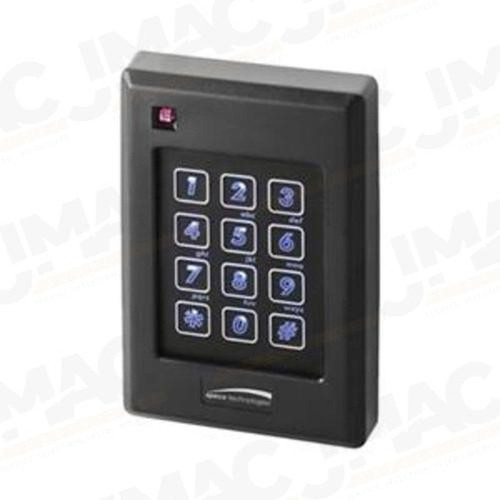
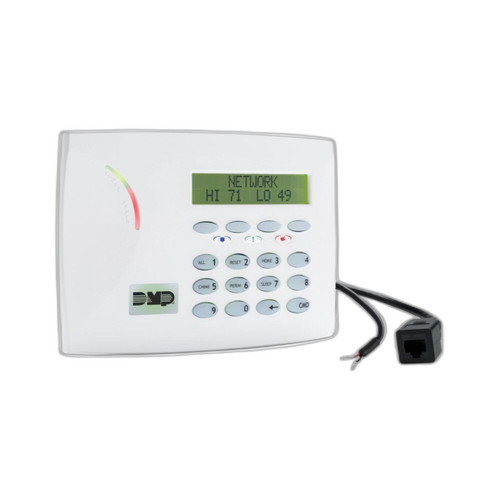
The Speco Technologies AP620HA and DMP 7463-W are both access control credential devices combining proximity card reading with keypad PIN entry — the core class a buyer evaluates when specifying a dual-credential reader at a door or gate. The AP620HA is a mullion-form-factor outdoor proximity reader with an integrated keypad, while the 7463-W is a thinline network LCD keypad with an integrated proximity reader. Both accept PIN and proximity card credentials, making them directly cross-shoppable for installations requiring dual-factor access at a single point.
In This Guide
- Which device handles harsher installation environments and broader credential compatibility?
- How do these devices communicate with the wider access control system, and which integration path is simpler to wire?
- What are the power requirements, user feedback mechanisms, and backup provisions for each device?
- Which should you choose: the AP620HA or the 7463-W?
- Side-by-Side Specs
- FAQ
Which device handles harsher installation environments and broader credential compatibility?
The AP620HA carries an IP67 ingress-protection rating and a documented operating range of -40°F to 149°F (-40°C to 65°C), making it explicitly specified for outdoor use including extreme cold and heat. Its HID- and AWID-compatible 125 kHz RFID engine with a 5-inch read range is verified against two credential ecosystems, and it ships FCC-, ICC-, CE-, C-Tick-, and ETL-listed. The 7463-W specifies 'Commercial and Light Industrial' installation environments but carries no published IP rating, no temperature range, and no ingress-protection spec in the provided data. For any outdoor or environmentally exposed deployment, the AP620HA is the only device here with a documented environmental rating.
How do these devices communicate with the wider access control system, and which integration path is simpler to wire?
The AP620HA outputs over the Wiegand protocol — the near-universal RS-485/Wiegand bus used by virtually every legacy and current access control panel. No additional network infrastructure is required; it connects directly to an access controller's Wiegand input. The 7463-W communicates over a Network Protocol, meaning it runs over Ethernet or a proprietary network bus (specific protocol not further detailed in the provided specs). The 7463-W's network communication, per its own bullet, 'eliminates dedicated wiring runs, simplifying multi-keypad deployments' — an advantage in multi-door sites already cabled with Cat5/6, but a dependency on network infrastructure that the AP620HA does not impose. Buyers on DMP panels with network keypad bus support will find the 7463-W native; those on Wiegand-based third-party panels will require the AP620HA.
What are the power requirements, user feedback mechanisms, and backup provisions for each device?
The AP620HA is powered from the access controller (voltage not specified in the provided data) and provides audible feedback via a tone beeper and visual LED feedback at the keypad — standard for a proximity/keypad combo reader. The 7463-W specifies an 8.5–15VDC input range (with 15VDC noted as the primary figure), includes a thinline LCD display for richer user prompting, and ships with a harness and a four-hour backup battery for standby power during AC loss — a meaningful self-contained resilience feature not present in the AP620HA spec. The LCD also allows the keypad to turn red in an alarm condition, providing a visual alarm state that the AP620HA's LED-only interface does not document. The AP620HA does not spec an onboard backup battery; the 7463-W includes one in the box.
Which should you choose: the AP620HA or the 7463-W?
Our take: The AP620HA is the stronger choice when the installation is outdoors, environmentally exposed, or requires Wiegand integration with a third-party access control panel. Its IP67 rating, -40°F to 149°F operating range, and dual HID/AWID credential compatibility are hard specs the 7463-W cannot match — the DMP device provides no published IP rating or temperature range. Conversely, the 7463-W is the stronger choice for commercial multi-door DMP-panel deployments: its network communication simplifies multi-keypad cabling, its built-in four-hour backup battery provides AC-loss resilience the AP620HA does not document, and its LCD with alarm-state color change provides richer user feedback. Platform lock is decisive — the 7463-W is designed for DMP panel ecosystems, while the AP620HA's Wiegand output works with virtually any panel. Specify the AP620HA for outdoor or panel-agnostic Wiegand sites; specify the 7463-W for indoor DMP networked installations.
Side-by-Side Comparison
Spec-for-spec, from manufacturer data.
| Specification | Speco Technologies AP620HA | DMP 7463-W |
|---|---|---|
| Device Class | Mullion Keypad & Proximity Reader | Network LCD Keypad with Proximity Reader |
| Form Factor | Mullion | Thinline |
| Credential Types | Proximity Card (HID/AWID 125 kHz) + PIN Keypad | Proximity Card + PIN Keypad |
| Read Range | 5 inches (125 kHz RFID) | — |
| Credential Protocol | HID & AWID 125 kHz, Wiegand output | Proximity Card; PIN |
| Communication / Output | Wiegand Protocol | Network Protocol |
| Display / Feedback | LED + Tone Beeper | LCD (turns red in alarm) + Tone |
| Ingress Protection | IP67 | — |
| Operating Temperature | -40°F to 149°F (-40°C to 65°C) | — |
| Environment Rating | Outdoor | Commercial and Light Industrial |
| Voltage / Power Input | — | 8.5–15VDC (15VDC specified) |
| Backup Battery | — | 4 hours standby (included) |
| Housing Color | White (black snap-on cover included) | — |
| Weight | 4 oz (113 g) | — |
| Warranty | 2-Year | Manufacturer Warranty (duration not specified) |
| Certifications | FCC, ICC, CE, C-Tick, ETL | — |
Frequently Asked Questions
Which should you choose: the AP620HA or the 7463-W?
The AP620HA is the stronger choice when the installation is outdoors, environmentally exposed, or requires Wiegand integration with a third-party access control panel. Its IP67 rating, -40°F to 149°F operating range, and dual HID/AWID credential compatibility are hard specs the 7463-W cannot match — the DMP device provides no published IP rating or temperature range. Conversely, the 7463-W is the stronger choice for commercial multi-door DMP-panel deployments: its network communication simplifies multi-keypad cabling, its built-in four-hour backup battery provides AC-loss resilience the AP620HA does not document, and its LCD with alarm-state color change provides richer user feedback. Platform lock is decisive — the 7463-W is designed for DMP panel ecosystems, while the AP620HA's Wiegand output works with virtually any panel. Specify the AP620HA for outdoor or panel-agnostic Wiegand sites; specify the 7463-W for indoor DMP networked installations.
Can the AP620HA or 7463-W be used in an outdoor parking garage or exterior door?
Only the AP620HA carries a documented outdoor environmental rating — IP67 ingress protection and an operating range of -40°F to 149°F. The 7463-W is specified for 'Commercial and Light Industrial' use with no published IP rating or temperature range, so it cannot be confirmed suitable for exposed outdoor locations based on available specs.
Will either device work with my existing non-DMP access control panel?
The AP620HA outputs standard Wiegand protocol, which is compatible with virtually all major access control panels regardless of brand. The 7463-W communicates via a Network Protocol that, based on the provided specs, appears oriented to DMP panel ecosystems. Buyers should verify 7463-W network protocol compatibility with any non-DMP panel before specifying it; the AP620HA's Wiegand output requires no such verification for standard panels.
Which device keeps working longer during a power outage?
The 7463-W ships with a built-in backup battery rated for four hours of standby power during AC loss — no external enclosure required. The AP620HA spec does not document an onboard backup battery. For resilience during power outages, the 7463-W has a documented advantage based on available specifications.
More Access Control Reader Comparisons
- SDC 923P vs Ubiquiti UA-G3-FLEX-B
- SDC 923P vs Kantech KT-SIG-20KTKS-01
- SDC 923P vs Speco Technologies AP620HA
- SDC 923P vs DMP 7463-W
- SDC 923P vs SDC 920P
- Ubiquiti UA-G3-FLEX-B vs Kantech KT-SIG-20KTKS-01
Access Control Reader Buying Guides
Get a Second Opinion on Your Camera Choice
Share your site layout, coverage goals, and budget. Our team will validate the camera selection, flag anything we would change, and recommend products that match the use case.