
Sato WWHC04041-NHN vs Sato WWCT04241-NAR: Specification Comparison
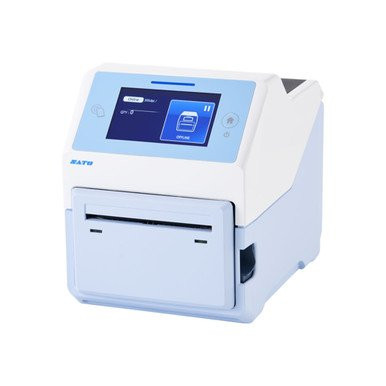
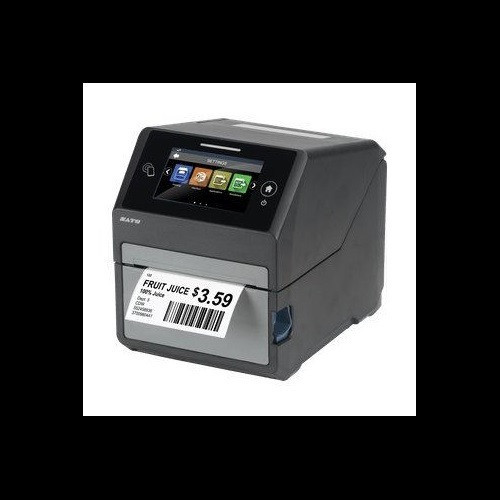
Both the Sato WWHC04041-NHN CT4-LX-HC and the Sato WWCT04241-NAR CT4-LX are 305 dpi desktop direct thermal/thermal transfer label printers sharing the same physical platform, print speed, connectivity suite, and memory configuration. The comparison centers on the WWHC04041-NHN's healthcare-specific antimicrobial housing and the WWCT04241-NAR's integrated UHF RFID encoding capability — two distinct feature layers added to an otherwise identical base unit, making them genuine cross-shop candidates for buyers choosing between clinical labeling and RFID-enabled tracking workflows.
In This Guide
- Do both printers deliver the same core print performance and media handling?
- What specialized capabilities separate the healthcare model from the RFID model?
- Are connectivity, display, and operating environment equivalent between the two models?
- Which should you choose: the WWHC04041-NHN or the WWCT04241-NAR?
- Side-by-Side Specs
- FAQ
Do both printers deliver the same core print performance and media handling?
Yes. Both models share identical core print specifications: 305 dpi resolution, 8 ips print speed, and a maximum print width of 4.09 inches. Media handling is also matched — each accepts media widths from 1 inch to 4.1 inches, accommodates a maximum roll diameter of 5 inches, and supports ribbon lengths up to 984 feet. Both support direct thermal and thermal transfer print methods.
Memory is identical across both units: 4 GB Flash, 1 GB DDR3, and 2 GB user storage. The WWHC04041-NHN weighs 8.0 lbs versus 7.3 lbs for the WWCT04241-NAR — a modest 0.7 lb difference likely attributable to housing material differences. Neither printer holds a print-performance advantage over the other based on the provided specifications.
What specialized capabilities separate the healthcare model from the RFID model?
The WWHC04041-NHN CT4-LX-HC is distinguished by its antimicrobial, disinfectant-resistant plastic housing — a material specification directly relevant to clinical environments where frequent surface wipe-downs with hospital-grade disinfectants are standard practice. No RFID capability is listed for this model.
The WWCT04241-NAR adds integrated UHF RFID encoding operating across 860–960 MHz and conforming to the EPC Class 1 Generation 2 (EPC C1G2) standard. This enables simultaneous barcode printing and RFID tag programming in a single pass. The RFID antenna optimization feature is noted in the specifications. The WWCT04241-NAR does not list antimicrobial or disinfectant-resistant housing. These two feature layers are mutually exclusive between models as specified.
Are connectivity, display, and operating environment equivalent between the two models?
Connectivity is effectively identical: both include Ethernet, Wi-Fi, Bluetooth, and USB. The WWCT04241-NAR specification explicitly identifies USB 2.0; the WWHC04041-NHN lists USB without a version qualifier. Both units feature a 4.3-inch full-color touchscreen display.
Operating temperature range is the same for both: 32°F to 104°F (0°C to 40°C). Power input is identical at AC 100–240V, 50/60Hz, confirming global voltage compatibility. Physical footprint is the same at 7.0 x 9.375 x 8.4375 inches. Both carry a 1-year warranty. Neither model lists an IP rating or drop-resistance specification in the provided data.
Which should you choose: the WWHC04041-NHN or the WWCT04241-NAR?
Our take: The WWHC04041-NHN is the stronger choice when the deployment environment demands infection-control compliance, such as hospital nursing stations, pharmacy counters, or laboratory benchtops subject to regular disinfectant wipe-downs. Its antimicrobial, disinfectant-resistant housing is a material spec the WWCT04241-NAR does not list. Conversely, the WWCT04241-NAR is the clear choice when the workflow requires simultaneous label printing and UHF RFID tag encoding at 860–960 MHz (EPC C1G2) — a capability entirely absent from the WWHC04041-NHN. The weight difference (8.0 lbs vs. 7.3 lbs) and all print-performance metrics (305 dpi, 8 ips, 4.09" max width, identical media and memory specs) are equivalent, so neither unit holds a production-throughput edge. Buyers should select on use case: clinical labeling and infection control point to the WWHC04041-NHN; asset tracking, inventory management, or supply-chain RFID tagging point to the WWCT04241-NAR.
Side-by-Side Comparison
Spec-for-spec, from manufacturer data.
| Specification | Sato WWHC04041-NHN | Sato WWCT04241-NAR |
|---|---|---|
| SKU | WWHC04041-NHN | WWCT04241-NAR |
| Model | CT4-LX-HC | CT4-LX |
| Print Method | Direct Thermal / Thermal Transfer | Direct Thermal / Thermal Transfer |
| Resolution | 305 dpi | 305 dpi |
| Print Speed | 8 ips | 8 ips |
| Max Print Width | 4.09" | 4.09" |
| Media Width Range | 1" to 4.1" | 1" to 4.1" |
| Max Roll Diameter | 5" | 5" |
| Max Ribbon Length | 984 ft | 984 ft |
| Display | 4.3" Full-Color Touchscreen | 4.3" Touchscreen |
| Connectivity | Ethernet, Wi-Fi, Bluetooth, USB | Ethernet, Wi-Fi, Bluetooth, USB 2.0 |
| Memory (Flash / DDR3 / User) | 4 GB / 1 GB / 2 GB | 4 GB / 1 GB / 2 GB |
| RFID Encoding | — | UHF 860–960 MHz, EPC C1G2 |
| Housing | Antimicrobial, disinfectant-resistant | — |
| Weight | 8.0 lbs | 7.3 lbs |
| Operating Temperature | 32°F to 104°F | 32°F to 104°F |
| Power Input | AC 100–240V, 50/60Hz | AC 100–240V, 50/60Hz |
| Dimensions (W x D x H) | 7.0" x 9.375" x 8.4375" | 7.0" x 9.375" x 8.4375" |
| Mount Type | Desktop | Desktop |
| Warranty | 1-year | 1-year |
Frequently Asked Questions
Which should you choose: the WWHC04041-NHN or the WWCT04241-NAR?
The WWHC04041-NHN is the stronger choice when the deployment environment demands infection-control compliance, such as hospital nursing stations, pharmacy counters, or laboratory benchtops subject to regular disinfectant wipe-downs. Its antimicrobial, disinfectant-resistant housing is a material spec the WWCT04241-NAR does not list. Conversely, the WWCT04241-NAR is the clear choice when the workflow requires simultaneous label printing and UHF RFID tag encoding at 860–960 MHz (EPC C1G2) — a capability entirely absent from the WWHC04041-NHN. The weight difference (8.0 lbs vs. 7.3 lbs) and all print-performance metrics (305 dpi, 8 ips, 4.09" max width, identical media and memory specs) are equivalent, so neither unit holds a production-throughput edge. Buyers should select on use case: clinical labeling and infection control point to the WWHC04041-NHN; asset tracking, inventory management, or supply-chain RFID tagging point to the WWCT04241-NAR.
Can either printer handle both barcode labels and RFID tags in the same print job?
Only the WWCT04241-NAR supports RFID encoding. It integrates UHF RFID at 860–960 MHz conforming to EPC C1G2, enabling simultaneous barcode printing and RFID tag programming. The WWHC04041-NHN has no listed RFID capability and cannot encode RFID tags.
Is the WWHC04041-NHN safe to wipe down with hospital disinfectants?
Based on the provided specifications, yes — the WWHC04041-NHN housing is explicitly listed as antimicrobial and disinfectant-resistant plastic, a designation specific to clinical environments. The WWCT04241-NAR does not carry this housing specification.
Are the two printers otherwise interchangeable if the specialized feature is not needed?
On core print performance they are identical: same 305 dpi resolution, 8 ips speed, 4.09" max print width, identical media range, memory, connectivity (Ethernet/Wi-Fi/Bluetooth/USB), display size, operating temperature, and power input. The only functional differences are the WWHC04041-NHN's antimicrobial housing and the WWCT04241-NAR's UHF RFID encoder — and a minor 0.7 lb weight difference.
More Label Printer Comparisons
- Sato WWCT04241-NAR vs Zebra ZD4A043-D01X01EZ
- Sato WWCT04241-NAR vs Zebra ZT41142-T010000Z
- Sato WWCT04241-NAR vs Zebra ZT41142-T31A000Z
- Sato WWCT04241-NAR vs Sato WWCT04441-WCN
- Sato WWCT04241-NAR vs Sato WWHC03041-WAN
- Sato WWCT04441-WCN vs Zebra ZD4A043-D01X01EZ
Label Printer Buying Guides
Get a Second Opinion on Your Camera Choice
Share your site layout, coverage goals, and budget. Our team will validate the camera selection, flag anything we would change, and recommend products that match the use case.