
Sato WWHC03041-NHN vs Sato WWCLP1701-WAR: Specification Comparison
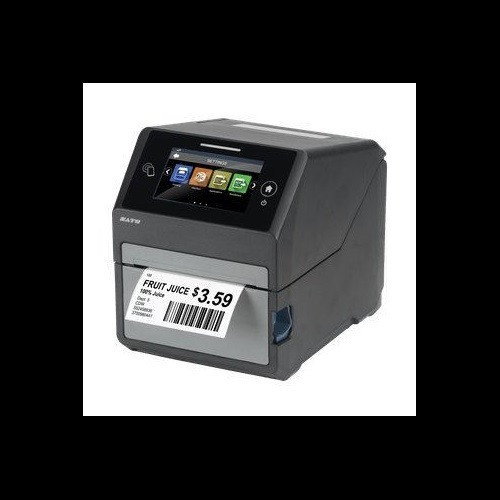
Both the Sato CT4-LX-HC (WWHC03041-NHN) and the Sato CL4NX Plus (WWCLP1701-WAR) are 203 dpi direct thermal/thermal transfer label printers sharing the same maximum print width of 4.09 inches and the same AC 100–240 V power supply. Despite that common ground, they are engineered for very different operational contexts: the CT4-LX-HC targets clinical and healthcare environments, while the CL4NX Plus is an industrial-grade printer built around UHF RFID smart-label production. This comparison examines print throughput and media capacity, environmental hardening and form factor, and connectivity plus intelligence features.
In This Guide
- Which printer delivers higher throughput and greater media capacity?
- How do the two printers differ in physical footprint, weight, and operating environment?
- Which unit offers broader connectivity and smarter label-production capabilities?
- Which should you choose: the WWHC03041-NHN or the WWCLP1701-WAR?
- Side-by-Side Specs
- FAQ
Which printer delivers higher throughput and greater media capacity?
Print speed is a clear differentiator. The WWCLP1701-WAR is rated at 14 ips, compared to 8 ips for the WWHC03041-NHN — a 75% speed advantage at the same 203 dpi resolution. For high-volume label runs this directly affects labels-per-hour output.
Media capacity also favors the WWCLP1701-WAR substantially. It accepts roll stock up to 10 inches in outer diameter versus 5 inches for the WWHC03041-NHN, allowing longer uninterrupted runs before a roll change. Ribbon capacity mirrors this gap: the WWCLP1701-WAR supports ribbon up to 1,968 feet, versus 984 feet for the WWHC03041-NHN. The WWCLP1701-WAR's media width range (0.87" to 5.04") is also wider than the WWHC03041-NHN's 1" to 4.1" range, giving it slightly more label-format flexibility.
On memory, the WWHC03041-NHN holds an advantage: 4 GB flash and 2 GB user storage versus 2 GB flash and 100 MB user storage on the WWCLP1701-WAR (which specifies 256 MB SDRAM; the WWHC03041-NHN lists 1 GB DDR3). The WWHC03041-NHN's larger onboard storage suits format-heavy clinical environments storing many label templates.
How do the two printers differ in physical footprint, weight, and operating environment?
The WWCLP1701-WAR is a substantially larger and heavier unit: 10.66" × 17.99" × 12.63" and 33 lbs. The WWHC03041-NHN is a compact desktop device at 7.0" × 9.375" × 8.4375" and 8.0 lbs — less than one-quarter the weight. The WWHC03041-NHN is clearly designed for point-of-care or countertop deployment where space and portability matter.
The WWHC03041-NHN specifies an antimicrobial, disinfectant-resistant housing — a purpose-built feature for clinical environments where regular surface cleaning with hospital-grade agents is mandatory. The WWCLP1701-WAR's specifications do not include any antimicrobial or chemical-resistance claim.
Both units share a 104°F (40°C) upper operating temperature limit. The WWCLP1701-WAR's lower bound is 41°F (5°C) versus 32°F (0°C) for the WWHC03041-NHN, giving the CT4-LX-HC a marginal cold-environment edge, though neither is rated for freezer or outdoor use. Both accept the same AC 100–240 V, 50/60 Hz power input.
Which unit offers broader connectivity and smarter label-production capabilities?
The WWHC03041-NHN includes Ethernet, Wi-Fi, Bluetooth, and USB 2.0 — four interfaces. The WWCLP1701-WAR provides Ethernet, Wi-Fi, and USB 2.0 but does not list Bluetooth in its specifications. For environments that pair the printer with a mobile device or tablet at the bedside, Bluetooth on the WWHC03041-NHN is a practical advantage.
The WWCLP1701-WAR's defining differentiator is integrated UHF RFID (860–960 MHz, EPC Class 1 Gen 2). This enables simultaneous barcode printing and RFID inlay encoding in a single pass — a capability the WWHC03041-NHN does not offer. The RFID feature is specifically noted with SATO RF Analyze support for tag verification. No RFID capability is listed for the WWHC03041-NHN.
Both units feature a full-color touchscreen: 4.3 inches on the WWHC03041-NHN and 3.5 inches on the WWCLP1701-WAR. The WWHC03041-NHN also specifies tool-free printhead replacement — a service-convenience feature not mentioned in the WWCLP1701-WAR specifications. Both carry a stated 1-year warranty.
Which should you choose: the WWHC03041-NHN or the WWCLP1701-WAR?
Our take: The WWHC03041-NHN is the stronger choice when the deployment is a clinical or healthcare setting requiring a compact, disinfectable printer with broad wireless connectivity including Bluetooth. Its antimicrobial housing, tool-free printhead replacement, 4 GB flash with 2 GB user storage, and Bluetooth interface address hospital workflow needs that the WWCLP1701-WAR does not cover in its specifications. Conversely, the WWCLP1701-WAR is the correct selection for industrial or logistics environments demanding high throughput (14 ips vs 8 ips), large-roll capacity (10" OD vs 5" OD), extended ribbon runs (1,968 ft vs 984 ft), and — critically — UHF RFID smart-label encoding (860–960 MHz, EPC C1G2), a capability entirely absent from the WWHC03041-NHN. Buyers cross-shopping these two should anchor the decision on use case: RFID-required or high-volume industrial label production points unambiguously to the WWCLP1701-WAR; point-of-care or clinical label printing points to the WWHC03041-NHN.
Side-by-Side Comparison
Spec-for-spec, from manufacturer data.
| Specification | Sato WWHC03041-NHN | Sato WWCLP1701-WAR |
|---|---|---|
| SKU | WWHC03041-NHN | WWCLP1701-WAR |
| Print Resolution | 203 dpi | 203 dpi |
| Print Speed | 8 ips | 14 ips |
| Print Method | Direct Thermal / Thermal Transfer | Direct Thermal / Thermal Transfer |
| Max Print Width | 4.09" | 4.09" |
| Media Width Range | 1" to 4.1" | 0.87" to 5.04" |
| Max Roll Diameter | 5" | 10" |
| Max Ribbon Length | 984 ft | 1,968 ft |
| RFID | — | UHF 860–960 MHz, EPC C1G2 |
| Connectivity | Ethernet, Wi-Fi, Bluetooth, USB 2.0 | Ethernet, Wi-Fi, USB 2.0 |
| Display | 4.3" Full-Color Touchscreen | 3.5" Full-Color LCD |
| Flash Memory | 4 GB | 2 GB |
| RAM | 1 GB DDR3 | 256 MB SDRAM |
| User Storage | 2 GB | 100 MB |
| Operating Temperature | 32°F to 104°F | 41°F to 104°F |
| Weight | 8.0 lbs | 33 lbs |
| Dimensions (W×D×H) | 7.0" × 9.375" × 8.4375" | 10.66" × 17.99" × 12.63" |
| Special Features | Antimicrobial housing, tool-free printhead replacement | — |
| Power | AC 100–240V, 50/60Hz | AC 100–240V, 50/60Hz |
| Warranty | 1-year | 1-year |
Frequently Asked Questions
Which should you choose: the WWHC03041-NHN or the WWCLP1701-WAR?
The WWHC03041-NHN is the stronger choice when the deployment is a clinical or healthcare setting requiring a compact, disinfectable printer with broad wireless connectivity including Bluetooth. Its antimicrobial housing, tool-free printhead replacement, 4 GB flash with 2 GB user storage, and Bluetooth interface address hospital workflow needs that the WWCLP1701-WAR does not cover in its specifications. Conversely, the WWCLP1701-WAR is the correct selection for industrial or logistics environments demanding high throughput (14 ips vs 8 ips), large-roll capacity (10" OD vs 5" OD), extended ribbon runs (1,968 ft vs 984 ft), and — critically — UHF RFID smart-label encoding (860–960 MHz, EPC C1G2), a capability entirely absent from the WWHC03041-NHN. Buyers cross-shopping these two should anchor the decision on use case: RFID-required or high-volume industrial label production points unambiguously to the WWCLP1701-WAR; point-of-care or clinical label printing points to the WWHC03041-NHN.
Can either printer encode RFID smart labels?
Only the WWCLP1701-WAR supports RFID encoding. It is specified with UHF RFID operating at 860–960 MHz and compliant with the EPC Class 1 Gen 2 standard, enabling simultaneous barcode printing and RFID inlay programming. The WWHC03041-NHN has no RFID capability listed in its specifications.
Is the WWHC03041-NHN or WWCLP1701-WAR better for a busy clinical ward with frequent printer cleaning?
The WWHC03041-NHN is purpose-built for that environment. Its specifications explicitly call out an antimicrobial, disinfectant-resistant housing — a requirement in most healthcare settings where surfaces are wiped down with hospital-grade chemicals. The WWCLP1701-WAR's specifications include no such housing claim. The WWHC03041-NHN's smaller footprint (8 lbs, desktop-sized) and Bluetooth connectivity for mobile device pairing also suit point-of-care deployment better than the 33 lb WWCLP1701-WAR.
Which printer is better suited to high-volume continuous label production?
The WWCLP1701-WAR is the higher-throughput unit. It prints at 14 ips versus 8 ips for the WWHC03041-NHN, accepts media rolls up to 10 inches in outer diameter (versus 5 inches), and supports ribbon lengths up to 1,968 feet (versus 984 feet). These three factors — speed, roll capacity, and ribbon capacity — all favor the WWCLP1701-WAR for sustained, high-volume industrial or warehouse label runs with fewer interruptions for media and ribbon changes.
More Label Printer Comparisons
- Sato WWCLP1701-WAR vs Zebra ZD421
- Sato WWCLP1701-WAR vs Sato WWCLP1C01-WAR
- Sato WWCLP1701-WAR vs Sato WWFX31241-WDB
- Sato WWCLP1C01-WAR vs Zebra ZD421
- Sato WWCLP1C01-WAR vs Sato WWFX31241-WDB
- Zebra ZD421 vs Sato WWFX31241-WDB
Label Printer Buying Guides
Get a Second Opinion on Your Camera Choice
Share your site layout, coverage goals, and budget. Our team will validate the camera selection, flag anything we would change, and recommend products that match the use case.