
Sato WWCLP1B01-WAR vs Zebra ZT62062-T210100Z: Specification Comparison
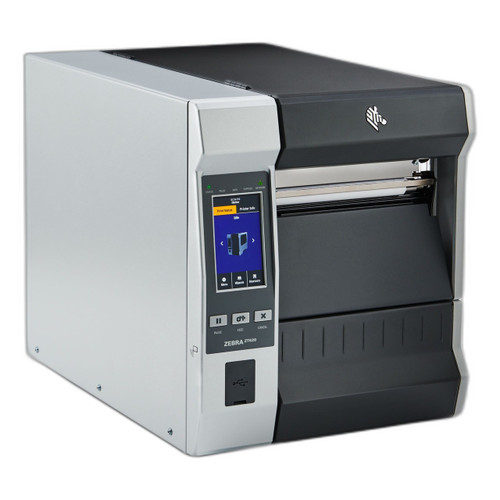
Both the Sato WWCLP1B01-WAR (CL4NX Plus) and the Zebra ZT62062-T210100Z are industrial-class 203 dpi thermal label printers aimed at high-volume labeling operations. The Sato unit adds HF RFID encoding and thermal transfer capability, while the Zebra is a direct-thermal-only 6-inch wide-format printer with an integrated rewind mechanism. Buyers evaluating either are likely prioritizing throughput, media flexibility, and connectivity in a warehouse or manufacturing environment, making a side-by-side comparison relevant despite the differing print widths and feature sets.
In This Guide
- Which printer handles wider media and higher throughput demands?
- Which printer offers broader connectivity and advanced encoding features?
- How do the two printers differ in physical footprint, media handling, and finishing options?
- Which should you choose: the WWCLP1B01-WAR or the ZT62062-T210100Z?
- Side-by-Side Specs
- FAQ
Which printer handles wider media and higher throughput demands?
The Zebra ZT62062-T210100Z supports a 6-inch print width, meaningfully wider than the Sato WWCLP1B01-WAR's 4.09-inch maximum print width. This makes the Zebra better suited for wide-format shipping labels, pallet tags, or compliance labels requiring wider real estate.
On print speed, the Sato WWCLP1B01-WAR is specified at 14 ips. The Zebra ZT62062-T210100Z does not provide a print speed figure in the supplied specifications, so a direct throughput comparison cannot be made on that dimension.
The Sato supports both Direct Thermal and Thermal Transfer print methods, giving operators the choice of ribbon-based printing for durability on labels exposed to heat, chemicals, or abrasion. The Zebra ZT62062-T210100Z is Direct Thermal only — no ribbon capability is listed — limiting it to applications where label durability under thermal transfer conditions is not required.
Which printer offers broader connectivity and advanced encoding features?
The Sato WWCLP1B01-WAR includes HF RFID encoding at 13.56 MHz with SATO RF Analyze tuning — a capability absent entirely from the Zebra ZT62062-T210100Z's specifications. For operations requiring simultaneous barcode printing and RFID tag encoding on labels, the Sato is the only viable choice between these two.
On connectivity, the Sato lists Ethernet, Wi-Fi, USB, Bluetooth, and RS-232C. The Zebra lists USB, Ethernet, and Parallel — no Wi-Fi is specified. The Zebra does carry Bluetooth 5.3 for wireless host connectivity, while the Sato's Bluetooth version is not specified.
For onboard memory, the Sato carries 2 GB Flash, 256 MB SDRAM, and 100 MB user storage. The Zebra specifies 1 GB RAM; Flash storage capacity and user-accessible storage are not specified for the Zebra, limiting a complete memory comparison.
How do the two printers differ in physical footprint, media handling, and finishing options?
The Sato WWCLP1B01-WAR weighs 33 lbs (15 kg) and measures 10.66" × 17.99" × 12.63". The Zebra ZT62062-T210100Z weighs significantly more at 75.65 lbs, though its physical dimensions are not provided in the supplied specifications. The weight difference is substantial and affects bench placement and portability.
The Sato accommodates media widths from 0.87" to 5.04" with a maximum roll diameter of 10" and supports ribbon lengths up to 1,968 ft. The Zebra's minimum media width and maximum roll diameter are not specified, though its 6-inch print width implies a wider media range at the upper end.
The Zebra ZT62062-T210100Z includes an integrated standard rewind mechanism and a front-mount guillotine cutter — two finishing options not listed for the Sato WWCLP1B01-WAR. For high-volume shipping label runs requiring automatic label collection or cutting, the Zebra's built-in finishing hardware is a relevant differentiator. The Sato's operating temperature range is specified as 41°F–104°F (5°C–40°C); the Zebra's operating temperature is not provided.
Which should you choose: the WWCLP1B01-WAR or the ZT62062-T210100Z?
Our take: The WWCLP1B01-WAR is the stronger choice when HF RFID encoding, thermal transfer printing, or multi-protocol wireless connectivity is required. It adds 13.56 MHz RFID encoding, supports both direct thermal and thermal transfer methods (versus the Zebra's direct thermal only), and includes Wi-Fi and RS-232C alongside Ethernet and USB — connectivity options not available on the ZT62062-T210100Z. It also carries more specified onboard memory (2 GB Flash, 256 MB SDRAM vs. the Zebra's 1 GB RAM only) and weighs less than half as much (33 lbs vs. 75.65 lbs). Conversely, the ZT62062-T210100Z is the stronger choice for wide-format label applications — its 6-inch print width exceeds the Sato's 4.09-inch maximum — and it ships with integrated rewind and a guillotine cutter, which the Sato does not list. Buyers running wide shipping labels at high volume without RFID requirements should favor the Zebra; those needing RFID, thermal transfer, or lighter deployable hardware should select the Sato.
Side-by-Side Comparison
Spec-for-spec, from manufacturer data.
| Specification | Sato WWCLP1B01-WAR | Zebra ZT62062-T210100Z |
|---|---|---|
| Print Method | Direct Thermal / Thermal Transfer | Direct Thermal only |
| Resolution | 203 dpi | 203 dpi |
| Print Speed | 14 ips | Not specified |
| Max Print Width | 4.09" | 6" |
| Max Media Width | 5.04" | Not specified |
| Min Media Width | 0.87" | Not specified |
| Max Media Roll Diameter | 10" | Not specified |
| Max Ribbon Length | 1,968 ft | N/A (no ribbon) |
| RFID | HF 13.56 MHz encoding | — |
| Connectivity | Ethernet, Wi-Fi, USB, Bluetooth, RS-232C | USB, Ethernet, Parallel, Bluetooth 5.3 |
| Memory | 2 GB Flash / 256 MB SDRAM / 100 MB user storage | 1 GB RAM (Flash not specified) |
| Display | 3.5" Full-Color LCD | Not specified |
| Integrated Rewind | Not specified | Standard |
| Integrated Cutter | Not specified | Front-mount guillotine |
| Weight | 33 lbs (15 kg) | 75.65 lbs |
| Warranty | 1-year | 1-year |
Frequently Asked Questions
Which should you choose: the WWCLP1B01-WAR or the ZT62062-T210100Z?
The WWCLP1B01-WAR is the stronger choice when HF RFID encoding, thermal transfer printing, or multi-protocol wireless connectivity is required. It adds 13.56 MHz RFID encoding, supports both direct thermal and thermal transfer methods (versus the Zebra's direct thermal only), and includes Wi-Fi and RS-232C alongside Ethernet and USB — connectivity options not available on the ZT62062-T210100Z. It also carries more specified onboard memory (2 GB Flash, 256 MB SDRAM vs. the Zebra's 1 GB RAM only) and weighs less than half as much (33 lbs vs. 75.65 lbs). Conversely, the ZT62062-T210100Z is the stronger choice for wide-format label applications — its 6-inch print width exceeds the Sato's 4.09-inch maximum — and it ships with integrated rewind and a guillotine cutter, which the Sato does not list. Buyers running wide shipping labels at high volume without RFID requirements should favor the Zebra; those needing RFID, thermal transfer, or lighter deployable hardware should select the Sato.
Can either printer encode RFID tags, or is that a separate device?
Only the Sato WWCLP1B01-WAR includes RFID encoding — specifically HF 13.56 MHz — as a built-in feature. The Zebra ZT62062-T210100Z has no RFID capability listed in its specifications. If your labeling workflow requires simultaneous barcode printing and RFID tag encoding, the Sato is the only option between these two.
Which printer is better for high-volume shipping label runs with wide label stock?
The Zebra ZT62062-T210100Z supports a 6-inch print width and includes an integrated rewind mechanism and front-mount guillotine cutter, making it more suited to wide-format, high-volume shipping label output where automatic label handling matters. The Sato WWCLP1B01-WAR tops out at a 4.09-inch print width and does not list integrated rewind or cutting in its specifications.
Is the Sato WWCLP1B01-WAR or the Zebra ZT62062-T210100Z easier to integrate into a mixed wired/wireless network?
The Sato WWCLP1B01-WAR lists Ethernet, Wi-Fi, USB, Bluetooth, and RS-232C, providing both wired and wireless network paths including legacy serial. The Zebra ZT62062-T210100Z lists USB, Ethernet, Parallel, and Bluetooth 5.3, but does not specify Wi-Fi. For environments requiring wireless LAN integration without a wired drop at the printer, the Sato has a documented Wi-Fi interface; the Zebra does not list one.
More Label Printer Comparisons
- Sato WM8430031 vs Zebra ZT62062-T210100Z
- Sato WM8430031 vs Sato WM8430231
- Sato WM8430031 vs Sato WM8430221
- Sato WM8430231 vs Sato WM8430221
- Sato WM8430221 vs Zebra ZT62062-T210100Z
- Sato WM8430021 vs Zebra ZT62062-T210100Z
Label Printer Buying Guides
Get a Second Opinion on Your Camera Choice
Share your site layout, coverage goals, and budget. Our team will validate the camera selection, flag anything we would change, and recommend products that match the use case.