
Sato WM8430021 vs Sato WM8430231: Specification Comparison
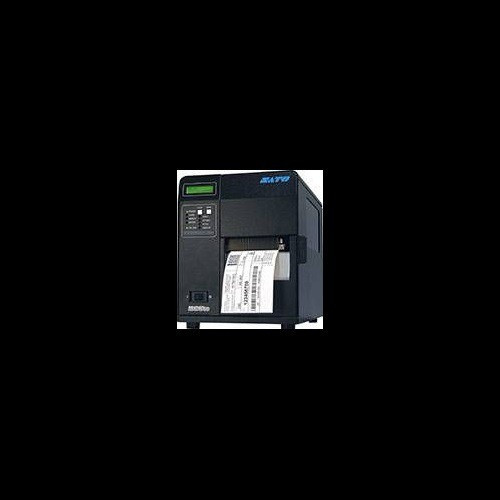
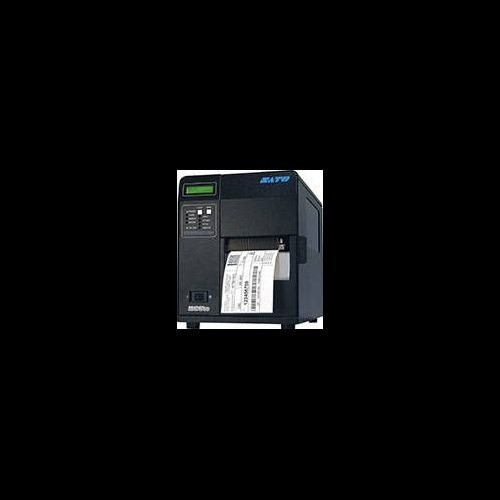
Both units are the Sato M84Pro 4.1-inch industrial thermal printer, sharing the same chassis, print engine, and baseline 203 dpi resolution. The WM8430021 and WM8430231 are the same device class — direct thermal/thermal transfer production-floor label printers — differing primarily in SKU designation and the granularity of published specifications. Buyers evaluating either model for warehouse, manufacturing, or logistics labeling will find these units cross-shoppable on print performance, media handling, connectivity, and environmental operating range.
In This Guide
- How do print speed, resolution, and field-changeability compare between the WM8430021 and WM8430231?
- Are media handling, ribbon capacity, and maximum print width identical across both models?
- Do the two models differ in connectivity options, operating environment, or display and housing specs?
- Which should you choose: the WM8430021 or the WM8430231?
- Side-by-Side Specs
- FAQ
How do print speed, resolution, and field-changeability compare between the WM8430021 and WM8430231?
Both printers share an identical baseline print resolution of 203 dpi at 10 ips, and both support direct thermal and thermal transfer print modes. The WM8430021 explicitly documents field-changeable resolution options of 203 dpi, 305 dpi, and 609 dpi, making it adaptable for applications requiring finer detail — such as pharmaceutical serialization or small-part traceability — without replacing the unit. The WM8430231 specifications state only 203 dpi at 10 ips and do not document field-changeable resolution options. Buyers requiring confirmed upgrade paths to 305 or 609 dpi should note this distinction: the WM8430021 spec sheet substantiates that capability; the WM8430231 spec sheet does not.
Are media handling, ribbon capacity, and maximum print width identical across both models?
Media handling specs are effectively identical across both units. Each supports a media width range of 1 inch to 4.5 inches, a maximum roll outer diameter of 8.6 inches, and a maximum ribbon length of 1,968 feet (600 meters per the WM8430231 spec). Maximum print width is 4.1 inches on both. Both units accommodate the same range of label stocks and ribbon formats, making them interchangeable from a media-compatibility standpoint. Neither spec set documents minimum ribbon length or specific media thickness tolerances, so buyers with edge-case media requirements should consult Sato directly for both models.
Do the two models differ in connectivity options, operating environment, or display and housing specs?
Connectivity is functionally equivalent: both units include USB 2.0, Ethernet, RS-232C, and Parallel interfaces, enabling integration with legacy host systems and modern network infrastructure. Both feature a 3.5-inch color LCD with day/night mode, industrial metal housing, and identical power input of AC 100–240V, 50/60Hz. Operating temperature range is 41°F to 104°F (5°C to 40°C) on both — the WM8430231 spec explicitly lists the Celsius range while the WM8430021 provides only Fahrenheit values. Memory is identical: 2 MB Flash, 16 MB SDRAM, 2 MB user storage. Physical dimensions (15.0" x 10.6" x 11.6") and weight (39.7 lbs) are the same across both SKUs.
Which should you choose: the WM8430021 or the WM8430231?
Our take: The WM8430021 is the stronger choice when confirmed field-upgradeable resolution is a requirement. Its published specifications explicitly document field-changeable resolution options at 203 dpi, 305 dpi, and 609 dpi — a concrete capability the WM8430231 spec sheet does not substantiate. In all other measurable dimensions the two units are spec-identical: 10 ips print speed, 4.1-inch maximum print width, 1"–4.5" media range, 8.6-inch max roll OD, 1,968 ft maximum ribbon length, identical four-port connectivity (USB 2.0, Ethernet, RS-232C, Parallel), the same 3.5-inch color LCD, industrial metal housing, and 39.7 lb weight. For buyers whose application is fixed at 203 dpi and who do not anticipate a resolution upgrade, either SKU meets the same operational specification. Installations requiring a documented path to 305 or 609 dpi — such as fine-pitch barcode, serialization, or compliance labeling — should specify the WM8430021.
Side-by-Side Comparison
Spec-for-spec, from manufacturer data.
| Specification | Sato WM8430021 | Sato WM8430231 |
|---|---|---|
| Print Resolution (Standard) | 203 dpi | 203 dpi |
| Field-Changeable Resolutions | 203 / 305 / 609 dpi | — |
| Print Speed | 10 ips | 10 ips |
| Max Print Width | 4.1" | 4.1" |
| Print Modes | Direct Thermal / Thermal Transfer | Direct Thermal / Thermal Transfer |
| Media Width Range | 1" to 4.5" | 1" to 4.5" |
| Max Roll Diameter | 8.6" | 8.6" |
| Max Ribbon Length | 1,968 ft | 1,968 ft (600 m) |
| Display | 3.5" Color LCD | 3.5" Color LCD |
| Day/Night Mode | Yes | Yes |
| Connectivity | USB 2.0, Ethernet, RS-232C, Parallel | USB 2.0, Ethernet, RS-232C, Parallel |
| Power Input | AC 100–240V, 50/60Hz | AC 100–240V, 50/60Hz |
| Operating Temperature | 41°F to 104°F | 41°F to 104°F (5°C to 40°C) |
| Housing | Industrial metal | — |
| Weight | 39.7 lbs | 39.7 lbs (11.0 kg) |
| Memory (Flash / SDRAM / User) | 2 MB / 16 MB / 2 MB | 2 MB / 16 MB / 2 MB |
| Warranty | 1-year | 1-year |
| Dimensions (L x W x H) | 15.0" x 10.6" x 11.6" | 15.0" x 10.6" x 11.6" |
Frequently Asked Questions
Which should you choose: the WM8430021 or the WM8430231?
The WM8430021 is the stronger choice when confirmed field-upgradeable resolution is a requirement. Its published specifications explicitly document field-changeable resolution options at 203 dpi, 305 dpi, and 609 dpi — a concrete capability the WM8430231 spec sheet does not substantiate. In all other measurable dimensions the two units are spec-identical: 10 ips print speed, 4.1-inch maximum print width, 1"–4.5" media range, 8.6-inch max roll OD, 1,968 ft maximum ribbon length, identical four-port connectivity (USB 2.0, Ethernet, RS-232C, Parallel), the same 3.5-inch color LCD, industrial metal housing, and 39.7 lb weight. For buyers whose application is fixed at 203 dpi and who do not anticipate a resolution upgrade, either SKU meets the same operational specification. Installations requiring a documented path to 305 or 609 dpi — such as fine-pitch barcode, serialization, or compliance labeling — should specify the WM8430021.
Can the WM8430021 or WM8430231 print at resolutions higher than 203 dpi?
The WM8430021 spec sheet explicitly lists field-changeable resolutions of 203 dpi, 305 dpi, and 609 dpi, meaning the resolution can be upgraded in the field without replacing the unit. The WM8430231 specifications only document 203 dpi; higher resolutions are not confirmed in its published spec data. If higher-resolution printing is a current or future requirement, the WM8430021 is the documented choice.
Do the WM8430021 and WM8430231 support the same connectivity interfaces?
Yes. Both models include USB 2.0, Ethernet, RS-232C, and Parallel interfaces per their published specifications. This makes both units compatible with modern networked environments as well as legacy host systems using serial or parallel connections.
Is there any difference in physical size, weight, or power requirements between these two models?
No. Both models share identical dimensions (15.0" x 10.6" x 11.6"), weight (39.7 lbs), and power input (AC 100–240V, 50/60Hz). Operating temperature range is also the same — 41°F to 104°F — on both units.
More Label Printer Comparisons
- Sato WM8430031 vs Zebra ZT62062-T210100Z
- Sato WM8430031 vs Sato WM8430231
- Sato WM8430031 vs Sato WM8430221
- Sato WM8430231 vs Sato WM8430221
- Sato WM8430221 vs Zebra ZT62062-T210100Z
- Sato WM8430021 vs Zebra ZT62062-T210100Z
Label Printer Buying Guides
Get a Second Opinion on Your Camera Choice
Share your site layout, coverage goals, and budget. Our team will validate the camera selection, flag anything we would change, and recommend products that match the use case.