
Pelco SRXP4-3V10-IMD vs Pelco SRXV2-2F3-EWD-IR: Specification Comparison
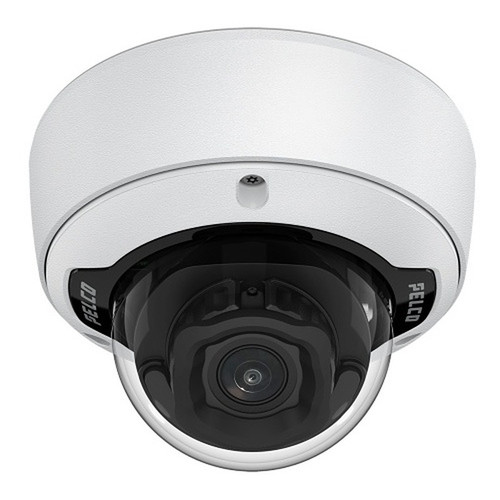
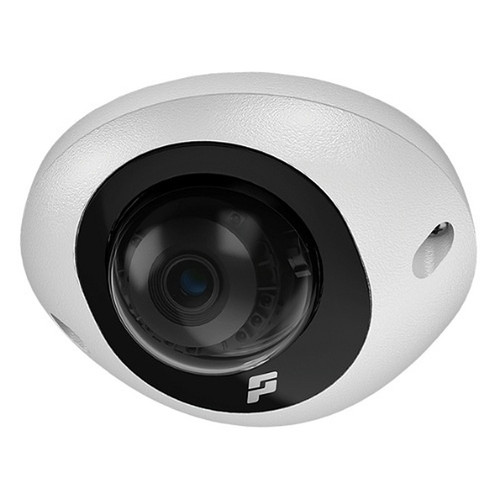
Both the Pelco SRXP4-3V10-IMD and the SRXV2-2F3-EWD-IR are 2MP (1920×1080) fixed IP dome cameras sharing the same sensor class and IK09 vandal rating, making them legitimate cross-shop candidates. The SRXP4-3V10-IMD belongs to the Sarix Professional 4 series and targets indoor deployments with a motorized varifocal lens and advanced edge analytics. The SRXV2-2F3-EWD-IR sits in the entry-level Sarix Value 2 series and is rated for outdoor use with integrated IR illumination and a fixed 2.8 mm lens. This comparison covers imaging performance, installation and environmental fit, and VMS/analytics integration.
In This Guide
How do the imaging specs compare?
Both cameras share a 1/2.8-inch progressive scan CMOS sensor and an F1.4 aperture, giving them the same fundamental light-gathering geometry. The SRXP4-3V10-IMD, however, delivers a 60 fps maximum frame rate versus 30 fps on the SRXV2-2F3-EWD-IR — a meaningful advantage for capturing fast motion such as walking subjects or vehicle license plates in high-traffic corridors. WDR performance also differs: the Professional 4 model specifies 130 dB SureVision WDR, while the Value 2 model specifies 120 dB WDR, a 10 dB advantage that can matter at high-contrast entryways or atria.
On low-light sensitivity, the SRXP4-3V10-IMD reaches 0.01 lux in color mode and 0.003 lux monochrome without IR, relying on sensor sensitivity alone for indoor dark-area coverage. The SRXV2-2F3-EWD-IR achieves 0 lux monochrome via its integrated 850 nm IR illuminator, which provides true zero-light night vision — a capability the indoor model lacks entirely. The SRXV2-2F3-EWD-IR uses a fixed 2.8 mm lens, while the SRXP4-3V10-IMD offers a motorized varifocal 4.4–9.3 mm lens covering a 32–109° HFOV range, enabling remote zoom and focus adjustment without physical access to the camera head.
What about installation and environment?
The environmental ratings define two very different deployment envelopes. The SRXV2-2F3-EWD-IR carries an IP42 ingress protection rating — dust-protected and resistant to water dripping at up to 15° from vertical — and is rated for outdoor use in temperatures from 0°C to +50°C. Note that IP42 provides limited protection and would not suit high-pressure wash-down or heavy rain exposure without supplementary housing. The SRXP4-3V10-IMD specifies an IP66 rating in catalog data, indicating full dust exclusion and protection against powerful water jets, yet its environment rating is listed as Indoor; installers should verify mounting suitability against the manufacturer datasheet before outdoor deployment.
Both cameras are PoE Class 3 (802.3af), simplifying single-cable infrastructure. The SRXP4-3V10-IMD's operating temperature range is stated as -10°C to +70°C, while the SRXV2-2F3-EWD-IR lists -40°C to +60°C for storage temperature; an operating range for the Value 2 model is separately specified as 0°C to +50°C. Both ship in a dome form factor with IK09 vandal resistance. The Value 2 model uses an M12 D-coded connector (with an included M12-to-RJ45 adapter), which adds a step to standard RJ45 patch installations. Mount options differ slightly: the Professional 4 supports wall, ceiling, and pendant; the Value 2 supports wall, pendant, and rack.
Which fits your VMS and analytics better?
ONVIF compliance diverges between the two models. The SRXP4-3V10-IMD is certified for ONVIF Profile S, Profile T, Profile G, and Profile M — the broadest set, with Profile G covering on-board recording and Profile M covering metadata for analytics. The SRXV2-2F3-EWD-IR supports only ONVIF Profile S and Profile T, which covers live streaming and PTZ/imaging configuration but omits on-board recording and metadata profiles. Buyers integrating with VMS platforms that leverage Profile G or M should treat this as a functional gap in the Value 2 model.
Edge analytics also differ substantially. The SRXP4-3V10-IMD includes on-camera Smart Analytics covering Person/Vehicle Detection, Directional Violation, Loitering, Beam Crossing, Crowd Detection, and Tamper Alert — reducing VMS server load and enabling camera-level rule triggers. The SRXV2-2F3-EWD-IR lists no edge analytics in its specifications. Both cameras support microSD on-board storage, HTTPS encryption, and H.265/H.264 compression; the Value 2 adds Motion JPEG as a third codec option. The Professional 4 includes 1 GB RAM and 512 MB Flash; the Value 2 specifies 512 MB RAM and 256 MB Flash. Audio: the Professional 4 specs note microphone support; no audio capability is listed for the Value 2.
Which should you choose: the SRXP4-3V10-IMD or the SRXV2-2F3-EWD-IR?
Our take: The SRXP4-3V10-IMD is the stronger choice when analytics depth, flexible field of view, and full ONVIF profile breadth are priorities — particularly in indoor environments where zero-light IR is not required. Concretely: it delivers a 60 fps frame rate versus 30 fps on the Value 2, 130 dB WDR versus 120 dB, and ONVIF Profile G/M support that the Value 2 lacks entirely. Its motorized varifocal 4.4–9.3 mm lens also removes the need for on-site refocus during commissioning. Conversely, the SRXV2-2F3-EWD-IR is the practical selection for budget-constrained outdoor deployments where 0-lux IR night vision is non-negotiable, frame rate above 30 fps is not required, and the simplified fixed-lens installation fits the site. Its -40°C storage rating and NDAA Section 889 compliance also give it an edge for government or cold-climate procurement. Neither model's outdoor IP suitability should be assumed without cross-referencing the manufacturer datasheet.
Side-by-Side Comparison
Spec-for-spec, from manufacturer data.
| Specification | Pelco SRXP4-3V10-IMD | Pelco SRXV2-2F3-EWD-IR |
|---|---|---|
| Series | Sarix Professional 4 | Sarix Value 2 |
| Resolution | 2MP (1920 × 1080) | 2MP (1920 × 1080) |
| Image Sensor | 1/2.8" Progressive Scan CMOS | 1/2.8" Progressive Scan CMOS |
| Aperture | F1.4 | F1.4 |
| Lens / Focal Length | 4.4–9.3 mm Motorized Varifocal | 2.8 mm Fixed |
| HFOV | 32–109° | — |
| Max Frame Rate | 60 fps | 30 fps |
| Min Illumination | 0.01 lux color / 0.003 lux B/W | 0.02 lux color / 0 lux IR |
| IR Illumination | — | 850 nm integrated IR |
| WDR | 130 dB SureVision | 120 dB |
| Video Compression | H.265; H.264; Smart Compression | H.265; H.264; Motion JPEG |
| ONVIF Profiles | Profile S, T, G, M | Profile S, T |
| Edge Analytics | Person/Vehicle, Loitering, Beam Crossing, Directional Violation, Crowd Detection, Tamper Alert | — |
| IP Rating | IP66 (per catalog) | IP42 |
| IK / Impact Rating | IK09 | IK09 |
| Environment Rating | Indoor | Outdoor |
| Operating Temperature | -10°C to +70°C | 0°C to +50°C |
| Power Input / PoE Class | PoE 802.3af / Class 3 | PoE 802.3af / Class 3 |
| Edge Storage | microSD | microSD |
| Audio | Microphone supported | — |
| RAM / Flash | 1 GB RAM / 512 MB Flash | 512 MB RAM / 256 MB Flash |
| NDAA Section 889 | — | Compliant |
| Dimensions | — | 111.5 mm × 111 mm × 57.6 mm |
| Weight | 0.81 kg | 409 g |
| Warranty | 5-year | 5-year |
Frequently Asked Questions
Which should you choose: the SRXP4-3V10-IMD or the SRXV2-2F3-EWD-IR?
The SRXP4-3V10-IMD is the stronger choice when analytics depth, flexible field of view, and full ONVIF profile breadth are priorities — particularly in indoor environments where zero-light IR is not required. Concretely: it delivers a 60 fps frame rate versus 30 fps on the Value 2, 130 dB WDR versus 120 dB, and ONVIF Profile G/M support that the Value 2 lacks entirely. Its motorized varifocal 4.4–9.3 mm lens also removes the need for on-site refocus during commissioning. Conversely, the SRXV2-2F3-EWD-IR is the practical selection for budget-constrained outdoor deployments where 0-lux IR night vision is non-negotiable, frame rate above 30 fps is not required, and the simplified fixed-lens installation fits the site. Its -40°C storage rating and NDAA Section 889 compliance also give it an edge for government or cold-climate procurement. Neither model's outdoor IP suitability should be assumed without cross-referencing the manufacturer datasheet.
Is the SRXP4-3V10-IMD or SRXV2-2F3-EWD-IR better for low-light performance?
It depends on the type of low light. The SRXP4-3V10-IMD reaches 0.01 lux color and 0.003 lux monochrome through sensor sensitivity alone, which suits dimly lit indoor areas. The SRXV2-2F3-EWD-IR achieves 0 lux monochrome via its integrated 850 nm IR illuminator, making it the only option of the two for scenes with complete darkness — typical of outdoor perimeter or parking applications after hours.
Can the SRXV2-2F3-EWD-IR run edge analytics like the SRXP4-3V10-IMD?
No. The SRXP4-3V10-IMD specifies on-camera Smart Analytics including Person/Vehicle Detection, Loitering, Beam Crossing, Directional Violation, and Crowd Detection. The SRXV2-2F3-EWD-IR lists no edge analytics in its published specifications. Buyers who need camera-level rule triggers without server-side video analytics processing should select the Professional 4 model.
Which camera is rated for outdoor installation?
The SRXV2-2F3-EWD-IR is explicitly rated for outdoor use with an IP42 ingress protection rating and an operating temperature of 0°C to +50°C. The SRXP4-3V10-IMD is classified as an Indoor camera despite catalog data referencing IP66; installers should verify against the manufacturer datasheet before any outdoor deployment of the Professional 4 model.
Get a Second Opinion on Your Camera Choice
Share your site layout, coverage goals, and budget. Our team will validate the camera selection, flag anything we would change, and recommend products that match the use case.