
Hanwha QNV-6082R1 vs i-PRO X35302-F2LM: Specification Comparison
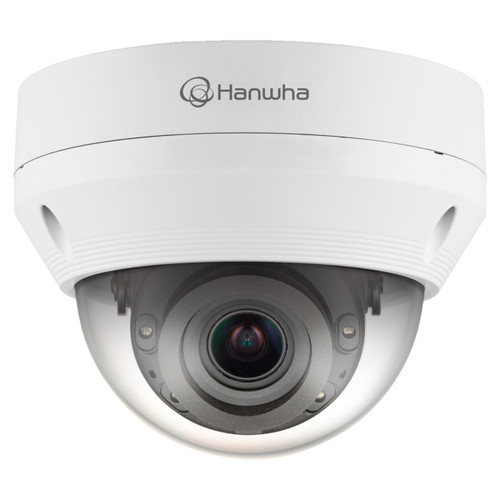
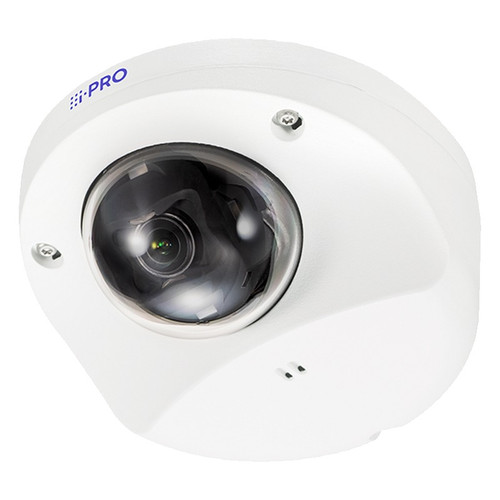
Both the Hanwha QNV-6082R1 and the i-PRO WV-X35302-F2LM are 2MP outdoor vandal-resistant dome cameras targeting perimeter and general-area surveillance. The Hanwha unit ships with a 3.2–10mm motorized varifocal lens and 30m IR, while the i-PRO unit uses a fixed 2.4mm wide-angle lens with 21m IR and an onboard AI SoC. This comparison covers imaging capability, installation and environmental resilience, and VMS/analytics integration to help integrators and IT buyers identify which camera better fits a given deployment scenario.
In This Guide
How do the imaging specs compare?
The QNV-6082R1 uses a 1/2.8" 2MP CMOS delivering 1920×1080 at 30fps with a 3.2–10mm (3.1×) motorized varifocal lens, an F1.6 maximum aperture at wide end, and a 120dB WDR rating. Minimum illumination is 0.03 lux color / 0 lux with IR, and the built-in IR illuminator reaches 30m. DORI metrics at wide angle show Detect at 27.4m and Identify at 2.7m; at tele, Detect extends to 128.8m and Identify to 12.9m—benefiting significantly from the optical zoom.
The WV-X35302-F2LM also uses a 1/2.8" CMOS but outputs at 2048×1536 (3MP native resolution despite the 2MP marketing class designation in the spec header) with a fixed 2.4mm lens, F2.1 aperture, and 132° horizontal field of view. Its Super Dynamic WDR is rated at 144dB—24dB higher than the Hanwha. Minimum illumination is 0.02 lux color / 0 lux B&W with IR, and IR range is 21m at 30IRE. DORI at its fixed focal length shows Detect at 17.1m and Identify at 1.7m. The i-PRO's extra zoom function provides up to 3× digital zoom at 640×360 resolution only; optical zoom is not available.
What about installation and environment?
Both cameras share IP66 and IK10 ratings, PoE power, and white aluminum housings. The Hanwha QNV-6082R1 accepts PoE IEEE 802.3af Class 3 or 12VDC, draws up to 7.7W, and operates from -30°C to +55°C. It includes pan 0°–350°, tilt 0°–67°, and rotate 0°–355° adjustment ranges, and supports single/double/4" octagon gangbox conduit cutouts. The i-PRO WV-X35302-F2LM is PoE Class 0, draws up to 8.6W, and has a notably wider operating range of -40°C to +60°C (power-on at -20°C). In addition to IP66, it is rated NEMA 4X (UL50E) and carries UL 62368-1 / c-UL / CE safety certifications and EN50155/EN50121 railway/vehicle application ratings—specs absent on the Hanwha. The i-PRO unit is lighter at approximately 475g vs. 710g for the Hanwha.
The Hanwha uses an M12 connector is not mentioned; it uses a standard RJ-45 (10/100BASE-T) port. The i-PRO uses a 10BASE-T/100BASE-TX interface with an M12 connector, which is relevant for installations requiring ingress-protected cable connections. The i-PRO also specifies wind resistance up to 40 m/s (~89 mph), a parameter not provided for the Hanwha.
Which fits your VMS and analytics better?
Both cameras support ONVIF Profile S/G/T and H.265/H.264 compression. The Hanwha QNV-6082R1 additionally supports MJPEG, Hanwha's proprietary SUNAPI/HTTP API, and WiseStream II smart codec. It streams up to 3 simultaneous profiles to 6 unicast users. Edge analytics include defocus detection, directional detection, enter/exit, virtual line, and tampering. Audio input is listed in the spec as present (Audio In field), though Audio Out is listed as None. It supports 802.1X (EAP-TLS, EAP-LEAP) and includes alarm I/O (1 input / 1 output). Edge storage is microSD/SDHC/SDXC up to 128GB.
The i-PRO WV-X35302-F2LM runs on an Ambarella CV25M SoC and delivers on-camera AI analytics including AI Video Motion Detection, Face Detection, People Detection, and Vehicle Detection, plus AI Sound Classification (gunshot, yell, vehicle horn, glass break). It supports audio compression (G.726 32/16 kbps, G.711 64 kbps) and built-in audio detection. It supports up to 14 simultaneous users. Security is FIPS 140-2 Level 3 certified—a requirement in many government and critical infrastructure deployments. Edge storage is microSD up to 512GB. ONVIF Profile G/M/S/T is supported. SFTP and MQTT are listed protocols not present in the Hanwha spec.
Which should you choose: the QNV-6082R1 or the X35302-F2LM?
Our take: The QNV-6082R1 is the stronger choice when variable scene depth and optical zoom flexibility are required: its 3.1× motorized varifocal lens extends DORI Detect range to 128.8m at tele versus the i-PRO's fixed-lens 17.1m, and its 30m IR outreaches the i-PRO's 21m. However, the WV-X35302-F2LM holds clear advantages in three measurable areas: WDR depth (144dB vs. 120dB), operating temperature floor (-40°C vs. -30°C), and onboard AI analytics (face, people, vehicle, and AI sound classification vs. the Hanwha's line/zone-based analytics). The i-PRO's FIPS 140-2 Level 3 certification and NEMA 4X rating make it the appropriate selection for government, transit, or harsh-environment projects with compliance requirements. Where those certifications are not mandated and zoom reach or cost is the deciding factor, the Hanwha is the operationally pragmatic choice.
Side-by-Side Comparison
Spec-for-spec, from manufacturer data.
| Specification | Hanwha QNV-6082R1 | i-PRO X35302-F2LM |
|---|---|---|
| Resolution | 1920×1080 (2MP) | 2048×1536 (listed as 2MP class) |
| Image Sensor | 1/2.8" 2MP CMOS | Approx. 1/2.8" CMOS; scanning area 5.57×3.13mm |
| Lens / Focal Length | 3.2–10mm motorized varifocal (3.1×) | 2.4mm fixed |
| Max Aperture | F1.6 (wide) / F2.9 (tele) | F2.1 |
| Horizontal Field of View | 109.0° (wide) | 132° (16:9) |
| Min Illumination (Color / B&W) | 0.03 lux / 0 lux (IR) | 0.02 lux / 0 lux (B&W with IR) |
| IR Range | 30m | 21m (30IRE) / 15m (50IRE) |
| Wide Dynamic Range | 120dB | 144dB (Super Dynamic, Level 31) |
| Max Frame Rate | 30fps | Variable (max not numerically specified in provided specs) |
| Video Compression | H.265, H.264 (Main/High), MJPEG | H.265, H.264 |
| IP Rating | IP66 | IP66, NEMA 4X (UL50E) |
| IK / Impact Rating | IK10 | IK10 |
| Operating Temperature | -30°C to +55°C | -40°C to +60°C (power-on at -20°C) |
| Power Input / PoE Class | PoE IEEE 802.3af Class 3 or 12VDC; 7.7W max | PoE Class 0; 8.6W max |
| Edge Storage | microSD/SDHC/SDXC up to 128GB | microSD up to 512GB |
| Audio | Audio input (no output per spec) | Audio input/output; AI Sound Classification |
| AI / On-Camera Analytics | Directional, enter/exit, virtual line, tampering, defocus | Face, People, Vehicle Detection; AI Sound Classification; VMD |
| Security Certification | 802.1X (EAP-TLS, EAP-LEAP), HTTPS/SSL | FIPS 140-2 Level 3, HTTPS, 802.1X |
| ONVIF Profile | S / G / T | G / M / S / T |
| Dimensions | Ø137.0×106.1mm | 109mm (W) × 53mm (H) × 119mm (D) |
| Weight | 710g (1.57 lb) | ~475g (1.05 lb) |
| Warranty | 3-year | 5-year |
Frequently Asked Questions
Which should you choose: the QNV-6082R1 or the X35302-F2LM?
The QNV-6082R1 is the stronger choice when variable scene depth and optical zoom flexibility are required: its 3.1× motorized varifocal lens extends DORI Detect range to 128.8m at tele versus the i-PRO's fixed-lens 17.1m, and its 30m IR outreaches the i-PRO's 21m. However, the WV-X35302-F2LM holds clear advantages in three measurable areas: WDR depth (144dB vs. 120dB), operating temperature floor (-40°C vs. -30°C), and onboard AI analytics (face, people, vehicle, and AI sound classification vs. the Hanwha's line/zone-based analytics). The i-PRO's FIPS 140-2 Level 3 certification and NEMA 4X rating make it the appropriate selection for government, transit, or harsh-environment projects with compliance requirements. Where those certifications are not mandated and zoom reach or cost is the deciding factor, the Hanwha is the operationally pragmatic choice.
Is the QNV-6082R1 or WV-X35302-F2LM better for low-light performance?
Both cameras reach 0 lux operation with IR active. In color mode, the i-PRO WV-X35302-F2LM has a slight edge at 0.02 lux versus the Hanwha QNV-6082R1 at 0.03 lux. For IR reach, the Hanwha extends to 30m while the i-PRO is rated at 21m (30IRE). If color low-light sensitivity is the priority, the i-PRO has a marginal advantage; if IR illumination distance matters more, the Hanwha reaches farther.
Which camera is better suited for government or transit installations?
The i-PRO WV-X35302-F2LM carries FIPS 140-2 Level 3 security certification, NEMA 4X (UL50E) rating, and EN50155/EN50121 railway/vehicle application compliance—specifications the Hanwha QNV-6082R1 does not list. If a project requires any of these certifications, the i-PRO is the only option between the two that meets them.
Does either camera support built-in AI analytics without a separate server?
Yes—the i-PRO WV-X35302-F2LM includes an Ambarella CV25M AI SoC that provides on-camera Face Detection, People Detection, Vehicle Detection, AI Video Motion Detection, and AI Sound Classification (gunshot, yell, vehicle horn, glass break). The Hanwha QNV-6082R1 offers video analytics (directional detection, enter/exit, virtual line, tampering) but does not specify an AI-class SoC or object-classification analytics in the provided specifications.
Get a Second Opinion on Your Camera Choice
Share your site layout, coverage goals, and budget. Our team will validate the camera selection, flag anything we would change, and recommend products that match the use case.