
Hanwha QNV-6012R1 vs i-PRO S35302-F2L1: Specification Comparison
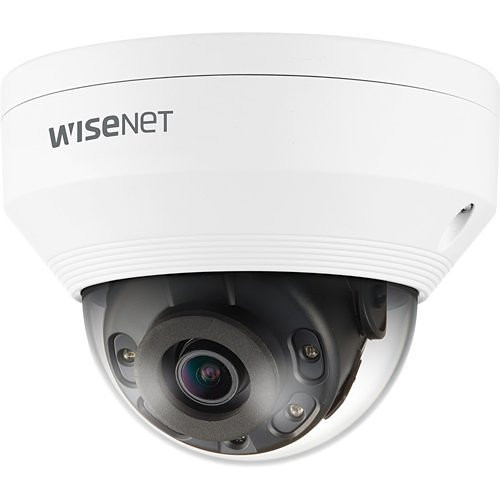
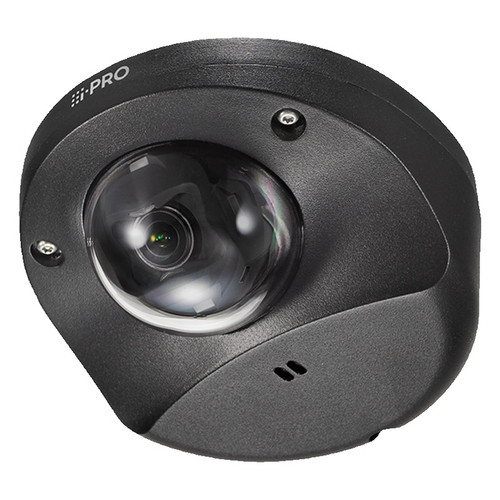
Both the Hanwha QNV-6012R1 and the i-PRO WV-S35302-F2L1 are fixed outdoor IR dome cameras rated at 2MP, making them direct cross-shop candidates for perimeter and general-purpose surveillance installations. The Hanwha targets cost-sensitive deployments with a straightforward feature set, while the i-PRO brings a higher-grade AI analytics engine, a wider dynamic range specification, and broader environmental certifications. This comparison examines imaging performance, installation suitability, and VMS/analytics integration using only published specifications for each model.
In This Guide
How do the imaging specs compare?
Both cameras share a 1/2.8-inch 2MP CMOS sensor, but their output resolutions differ: the QNV-6012R1 delivers 1920×1080 (1080p), while the WV-S35302-F2L1 produces 2048×1536 (3:4 aspect, ~3.1MP effective pixel count despite the '2MP' class label). The i-PRO also edges ahead on minimum illumination at 0.02 Lux color versus the Hanwha's 0.03 Lux color, though both reach 0 Lux in IR mode. The i-PRO's 144 dB Super Dynamic WDR significantly exceeds the Hanwha's 120 dB WDR rating. IR range is comparable—21 m (30 IRE) for the i-PRO versus 20 m for the Hanwha—though the i-PRO specifies a 15 m figure at the stricter 50 IRE threshold, which the Hanwha does not document.
Lens characteristics diverge meaningfully. The QNV-6012R1 uses a 2.8 mm fixed lens with a 113.7° horizontal field of view and an F2.0 aperture. The WV-S35302-F2L1 uses a 2.4 mm fixed lens delivering a wider 132° horizontal FOV at F2.1—useful for covering broader scenes with fewer cameras. DORI detection distances favor the Hanwha: its published detect range is 25.1 m versus 17.1 m for the i-PRO, reflecting the tighter focal length concentrating pixels on a narrower scene. The Hanwha specifies analog CVBS output for installation alignment; the i-PRO does not list this feature. The Hanwha documents up to 3 simultaneous streams (6 unicast users); the i-PRO supports up to 14 simultaneous users.
What about installation and environment?
Both cameras carry IP66 and IK10 ratings, confirming dust-tight ingress protection and resistance to 20-joule impacts, suitable for outdoor vandal-prone locations. The i-PRO adds NEMA 4X and UL Type 4X certifications and specifies wind resistance up to 40 m/s (~89 mph), neither of which appears in the Hanwha's published specs. Operating temperature range differs substantially: the i-PRO is rated −40 °C to +50 °C, making it viable in extreme cold climates, while the Hanwha is rated −10 °C to +55 °C (with a spec field elsewhere listing −30 °C—the datasheet primary value is −10 °C and should be confirmed before deployment in sub-zero environments). The i-PRO's aluminum die-cast housing contrasts with the Hanwha's plastic construction.
Power draw is close: the QNV-6012R1 draws up to 7.4 W (PoE IEEE 802.3af, Class 3), and the WV-S35302-F2L1 draws up to 8.6 W (PoE 802.3af, Class 0 per product attribute). The Hanwha also accepts 12 VDC as an alternative power input; the i-PRO specs do not list a DC input option. The QNV-6012R1 physical footprint is Ø110 × 86 mm at 255 g; the i-PRO is 109 × 53 × 119 mm at approximately 475 g—notably heavier, consistent with its metal housing.
Which fits your VMS and analytics better?
Both cameras support ONVIF Profile S, G, T, and M, providing broad VMS compatibility. The Hanwha adds Wisenet SUNAPI and the Wisenet open platform SDK for tighter integration with Wisenet VMS environments and third-party applications. The i-PRO publishes FIPS 140-2 Level 3 security compliance and supports IEEE 802.1X on both IPv4 and IPv6 stacks; the Hanwha lists 802.1X (EAP-TLS, EAP-LEAP) on IPv4. The i-PRO also documents SFTP and MQTT support, which the Hanwha spec does not include.
On-camera analytics differ in depth. The Hanwha provides defocus detection, directional detection, virtual line, enter/exit, and tampering. The i-PRO adds AI-powered face detection, people detection, vehicle detection, and AI sound classification (gunshot, yell, vehicle horn, glass break) via its Ambarella CV25M SoC—capabilities not listed for the Hanwha. The i-PRO also specifies Scene Change Detection and audio input/output with compression (G.726, G.711); the Hanwha lists no audio input or output. Edge storage capacity is higher on the i-PRO at up to 512 GB microSD versus 128 GB on the Hanwha. The Hanwha warranty is 3 years; the i-PRO warranty is 5 years.
Which should you choose: the QNV-6012R1 or the S35302-F2L1?
Our take: The WV-S35302-F2L1 is the stronger choice when AI analytics depth, extreme-temperature tolerance, and long-term warranty coverage are decision drivers. Its 144 dB Super Dynamic WDR outpaces the QNV-6012R1's 120 dB rating, its on-camera AI classifies faces, people, vehicles, and specific sound events that the Hanwha does not specify, and its −40 °C operating floor extends deployment options to climates where the Hanwha's −10 °C lower limit (per primary datasheet) would be disqualifying. The i-PRO also carries NEMA 4X and FIPS 140-2 Level 3 certifications and a 5-year warranty versus the Hanwha's 3-year coverage. Conversely, the QNV-6012R1 is the pragmatic choice for Wisenet VMS environments—it offers native SUNAPI integration, accepts 12 VDC in addition to PoE, costs less to power at 7.4 W versus 8.6 W, and its 2.8 mm lens provides a longer DORI detect range (25.1 m vs. 17.1 m) when pixel density on a specific zone matters more than field width.
Side-by-Side Comparison
Spec-for-spec, from manufacturer data.
| Specification | Hanwha QNV-6012R1 | i-PRO S35302-F2L1 |
|---|---|---|
| Resolution | 1920×1080 | 2048×1536 |
| Image Sensor | 1/2.8" 2MP CMOS | Approx. 1/2.8" CMOS |
| Lens / Focal Length | 2.8 mm fixed | 2.4 mm fixed |
| Max Aperture | F2.0 | F2.1 |
| Horizontal FOV | 113.7° | 132° |
| Min. Illumination (Color / IR) | 0.03 Lux / 0 Lux | 0.02 Lux / 0 Lux |
| IR Range | 20 m (65 ft) | 21 m @ 30 IRE / 15 m @ 50 IRE |
| Wide Dynamic Range | 120 dB | 144 dB |
| Video Compression | H.265, H.264, MJPEG | H.265, H.264, JPEG |
| ONVIF Profiles | S / G / T | G / M / S / T |
| AI / On-Camera Analytics | Motion, tamper, defocus, virtual line, enter/exit, directional | AI VMD, face, people, vehicle detection; AI sound classification |
| Audio | None specified | Input/Output; G.726, G.711 compression; AI sound classification |
| Edge Storage | microSD up to 128 GB | microSD up to 512 GB |
| IP / Ingress Rating | IP66 | IP66, NEMA 4X, UL Type 4X |
| IK / Impact Rating | IK10 | IK10 |
| Operating Temperature | −10 °C to +55 °C | −40 °C to +50 °C |
| Power Input / Max Draw | PoE 802.3af (Class 3) / 12 VDC; 7.4 W | PoE 802.3af; 8.6 W |
| Housing Material | Plastic | Aluminum die cast |
| Dimensions | Ø110 × 86 mm | 109 × 53 × 119 mm |
| Weight | 255 g (0.56 lb) | ~475 g (1.05 lb) |
| Security Certifications | HTTPS, 802.1X (EAP-TLS, EAP-LEAP) | FIPS 140-2 Level 3, HTTPS, IEEE 802.1X |
| Warranty | 3 years | 5 years |
Frequently Asked Questions
Which should you choose: the QNV-6012R1 or the S35302-F2L1?
The WV-S35302-F2L1 is the stronger choice when AI analytics depth, extreme-temperature tolerance, and long-term warranty coverage are decision drivers. Its 144 dB Super Dynamic WDR outpaces the QNV-6012R1's 120 dB rating, its on-camera AI classifies faces, people, vehicles, and specific sound events that the Hanwha does not specify, and its −40 °C operating floor extends deployment options to climates where the Hanwha's −10 °C lower limit (per primary datasheet) would be disqualifying. The i-PRO also carries NEMA 4X and FIPS 140-2 Level 3 certifications and a 5-year warranty versus the Hanwha's 3-year coverage. Conversely, the QNV-6012R1 is the pragmatic choice for Wisenet VMS environments—it offers native SUNAPI integration, accepts 12 VDC in addition to PoE, costs less to power at 7.4 W versus 8.6 W, and its 2.8 mm lens provides a longer DORI detect range (25.1 m vs. 17.1 m) when pixel density on a specific zone matters more than field width.
Is the QNV-6012R1 or WV-S35302-F2L1 better for low-light performance?
Both cameras reach 0 Lux in IR mode. In color/ambient light, the i-PRO WV-S35302-F2L1 specifies a slightly lower minimum illumination of 0.02 Lux versus 0.03 Lux for the QNV-6012R1. The i-PRO also specifies 144 dB WDR compared to 120 dB for the Hanwha, which provides more headroom in scenes with simultaneous bright and dark areas. IR range is similar—21 m (i-PRO, at 30 IRE) versus 20 m (Hanwha)—though the i-PRO additionally documents a 15 m range at the stricter 50 IRE standard; the Hanwha does not publish a 50 IRE figure.
Can either camera handle sub-zero outdoor installations in cold climates?
The i-PRO WV-S35302-F2L1 is rated for operation down to −40 °C, making it suitable for harsh cold-climate deployments. The Hanwha QNV-6012R1 primary datasheet specifies a lower operating limit of −10 °C (a separate spec field lists −30 °C—installers should confirm against the official datasheet before deploying in sub-zero environments). For confirmed extreme-cold installations, the i-PRO's −40 °C rating provides a clear specification advantage.
Which camera is better suited for a Wisenet VMS versus a third-party or open platform VMS?
For Wisenet VMS environments, the QNV-6012R1 integrates natively via Hanwha's SUNAPI (HTTP API) and the Wisenet open platform SDK, enabling full feature access without relying solely on ONVIF. For third-party or open VMS platforms, both cameras support ONVIF Profile S/G/T/M. The i-PRO additionally supports MQTT and SFTP—protocols not listed in the Hanwha's published specs—which can benefit integrations with modern IoT and cloud-connected VMS or PSIM platforms.
Get a Second Opinion on Your Camera Choice
Share your site layout, coverage goals, and budget. Our team will validate the camera selection, flag anything we would change, and recommend products that match the use case.