
Hanwha QNV-6082R1 vs i-PRO X25300-V3LN: Specification Comparison
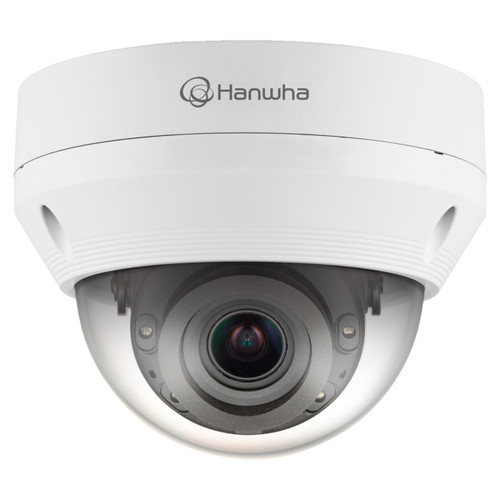
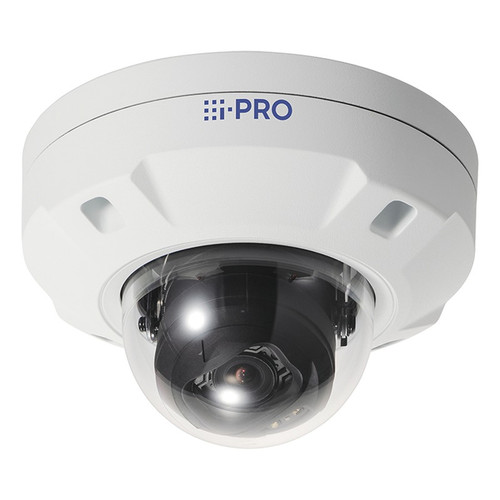
Both the Hanwha QNV-6082R1 and the i-PRO WV-X25300-V3LN are 2MP (1920×1080) fixed outdoor vandal-resistant dome cameras with motorized varifocal lenses, IR illumination, and PoE network connectivity. A buyer evaluating mid-range outdoor domes for perimeter or general-area surveillance would legitimately cross-shop these two models. The comparison covers imaging performance, environmental and installation factors, and VMS/analytics integration to help integrators and IT buyers determine which unit better suits a given deployment.
In This Guide
How do the imaging specs compare?
Both cameras share a 1/2.8" 2MP CMOS sensor and deliver 1920×1080 at 30fps. The QNV-6082R1 specifies a minimum illumination of 0.03 lux color / 0 lux IR and a 120dB WDR (SSDR/BLC). The WV-X25300-V3LN specifies a significantly lower minimum illumination of 0.005 lux (B&W, 50IRE, F1.5, 1/30s) and a wider dynamic range of up to 144dB with Super Dynamic enabled at level 31, plus a dedicated fog compensation control (0–8 range). For scenes with extreme contrast or persistent haze, the i-PRO's published figures show a measurable advantage in both low-light sensitivity and dynamic range.
On optics, the QNV-6082R1 uses a 3.2–10mm DC auto-iris motorized varifocal lens (3.1× zoom) with a maximum aperture of F1.6 at wide end. The WV-X25300-V3LN uses a 2.9–9mm motorized zoom/focus lens (3.1× zoom) with a maximum aperture of F1.3 at wide. The wider aperture on the i-PRO (F1.3 vs F1.6) contributes to its lower minimum illumination figure. IR range diverges sharply: Hanwha rates IR illumination at 30m (98.4ft), while i-PRO rates IR at 70m (230ft). DORI detection distances at tele also reflect this—Hanwha 128.8m vs i-PRO 118.2m at tele—though the Hanwha's 10mm tele focal length versus the i-PRO's 9mm accounts for the slightly longer DORI tele figure despite the shorter IR throw. The i-PRO additionally lists an electronic image stabilizer with built-in gyro (30fps mode); the QNV-6082R1 does not specify image stabilization.
What about installation and environment?
Both cameras carry IP66 and IK10 ratings. The WV-X25300-V3LN additionally specifies IP67, NEMA 4X (UL50E), 50J shock resistance per IEC 60068-2-75, and wind resistance up to 40 m/s (~89 mph)—none of these supplemental ratings appear in the QNV-6082R1 spec sheet. Operating temperature range is -30°C to +55°C for the QNV-6082R1 (power-on), and -30°C to +55°C power-on for the WV-X25300-V3LN (storage ambient starts at -40°C). The Hanwha unit specifies a storage temperature up to +60°C; the i-PRO ambient storage lower limit is -40°C.
Power requirements differ: the QNV-6082R1 accepts PoE IEEE 802.3af (Class 3) or 12VDC, with a maximum draw of 7.7W. The WV-X25300-V3LN requires PoE+ (IEEE 802.3at, Class 4, spec states DC12V 1.2A or PoE+ 14W). Installers must confirm switch port PoE budget accordingly—802.3af switches will not power the i-PRO without an injector or midspan. On form factor, the Hanwha body is Ø137×106.1mm at 710g (1.57 lb); the i-PRO is Ø154×105mm at 1.1 kg (2.43 lb). The QNV-6082R1 lists compatible accessory mounts (SBP-301HMW2 hanging mount, SBV-136BW backbox) and conduit compatibility (single, double, 4" octagon). The WV-X25300-V3LN lists mount type as wall/rack in the product attributes; supplemental mount accessories are not detailed in the provided spec data.
Which fits your VMS and analytics better?
Both cameras support ONVIF Profile S, G, and T. The WV-X25300-V3LN additionally supports ONVIF Profile M, which enables metadata streaming for AI-based analytics—relevant for VMS platforms that consume Profile M metadata. The QNV-6082R1 supports Wisenet SUNAPI (HTTP API) and Wisenet open platform, which are proprietary to Hanwha-ecosystem VMS (Wisenet WAVE, SSM). The i-PRO does not list a comparable proprietary SDK in the provided specs. The WV-X25300-V3LN supports FIPS 140-2 Level 3 security certification, signed firmware, and secure boot—attributes not present in the QNV-6082R1 spec sheet—which matter for government, defense, or compliance-sensitive deployments.
On onboard analytics, the QNV-6082R1 lists defocus detection, directional detection, motion detection, enter/exit, tampering, and virtual line—all video-content analytics. The WV-X25300-V3LN adds AI motion, face detection, people detection, vehicle detection, AI sound classification (gunshot, yell, vehicle horn, glass break), audio detection, and scene change detection (SCD). Audio I/O is present on the i-PRO (3.5mm stereo mini jack input, 3.5mm mono output; G.726/G.711/AAC-LC compression; 2 alarm inputs, 2 alarm outputs); the QNV-6082R1 spec lists alarm input/output (1 in, 1 out) but no audio in or out. Edge storage maximum is 128GB microSD on the Hanwha versus 512GB microSDXC on the i-PRO. Simultaneous stream users are 6 (unicast) on the Hanwha versus up to 14 on the i-PRO.
Which should you choose: the QNV-6082R1 or the X25300-V3LN?
Our take: The WV-X25300-V3LN is the stronger choice when the deployment demands superior low-light performance, longer IR reach, or compliance-grade security features. Its minimum illumination of 0.005 lux versus the QNV-6082R1's 0.03 lux represents a six-fold published sensitivity advantage; its IR illumination reaches 70m compared to 30m on the Hanwha—a decisive gap for parking lots, loading docks, or long perimeters. Dynamic range of 144dB versus 120dB further benefits scenes with bright headlights or direct sun. However, the i-PRO requires PoE+ (14W, Class 4); any site without 802.3at switch infrastructure incurs added injector cost or switch upgrade. The QNV-6082R1 at 7.7W on standard 802.3af is simpler and lighter to deploy in brownfield environments. For Wisenet-ecosystem VMS sites needing tight proprietary integration via SUNAPI, or where 802.3af-only switches are fixed, the Hanwha is the pragmatic fit. The i-PRO is the correct call for AI analytics, audio monitoring, compliance mandates, or harsh-weather exposed sites requiring NEMA 4X and 40 m/s wind rating.
Side-by-Side Comparison
Spec-for-spec, from manufacturer data.
| Specification | Hanwha QNV-6082R1 | i-PRO X25300-V3LN |
|---|---|---|
| Resolution | 1920×1080 | 1920×1080 |
| Image Sensor | 1/2.8" 2MP CMOS | 1/2.8" type CMOS |
| Lens / Focal Length | 3.2–10mm motorized varifocal (3.1×) | 2.9–9mm motorized zoom/focus (3.1×) |
| Max Aperture | F1.6 (Wide) / F2.9 (Tele) | F1.3 (Wide) / F2.5 (Tele) |
| Min. Illumination | 0.03 lux color / 0 lux IR | 0.005 lux B&W (50IRE, F1.5, 1/30s) |
| IR Range | 30m (98.4ft) | 70m (230ft) |
| Wide Dynamic Range | 120dB | 144dB (Super Dynamic level 31) |
| Max Frame Rate | 30fps | 30fps |
| Video Compression | H.265, H.264 (Main/High), MJPEG | H.265, H.264, MJPEG |
| IP Rating | IP66 | IP66 / IP67 / NEMA 4X |
| IK / Impact Rating | IK10 | IK10 (50J per IEC 60068-2-75) |
| Operating Temperature | -30°C to +55°C | -30°C to +55°C (power-on); storage from -40°C |
| Power Input / PoE Class | PoE 802.3af Class 3 / 12VDC; max 7.7W | PoE+ 802.3at Class 4 / DC12V 1.2A; max 14W |
| Alarm I/O | 1 input / 1 output | 2 inputs / 2 outputs |
| Audio | — | 3.5mm stereo input / 3.5mm mono output; G.726, G.711, AAC-LC |
| Edge Storage | microSD/SDHC/SDXC up to 128GB | microSDXC up to 512GB |
| ONVIF Profiles | S, G, T | S, G, T, M |
| AI / Edge Analytics | Directional, enter/exit, virtual line, tampering, defocus | Face, people, vehicle, AI motion, AI sound classification |
| Image Stabilization | — | Built-in gyro (30fps mode) |
| Dimensions | Ø137×106.1mm | Ø154×105mm |
| Weight | 710g (1.57 lb) | 1.1kg (2.43 lb) |
| Warranty | 3-year | 5-year |
Frequently Asked Questions
Which should you choose: the QNV-6082R1 or the X25300-V3LN?
The WV-X25300-V3LN is the stronger choice when the deployment demands superior low-light performance, longer IR reach, or compliance-grade security features. Its minimum illumination of 0.005 lux versus the QNV-6082R1's 0.03 lux represents a six-fold published sensitivity advantage; its IR illumination reaches 70m compared to 30m on the Hanwha—a decisive gap for parking lots, loading docks, or long perimeters. Dynamic range of 144dB versus 120dB further benefits scenes with bright headlights or direct sun. However, the i-PRO requires PoE+ (14W, Class 4); any site without 802.3at switch infrastructure incurs added injector cost or switch upgrade. The QNV-6082R1 at 7.7W on standard 802.3af is simpler and lighter to deploy in brownfield environments. For Wisenet-ecosystem VMS sites needing tight proprietary integration via SUNAPI, or where 802.3af-only switches are fixed, the Hanwha is the pragmatic fit. The i-PRO is the correct call for AI analytics, audio monitoring, compliance mandates, or harsh-weather exposed sites requiring NEMA 4X and 40 m/s wind rating.
Is the QNV-6082R1 or the WV-X25300-V3LN better for low-light and night surveillance?
Based on published specs, the WV-X25300-V3LN has a measurable advantage: its minimum illumination is 0.005 lux (B&W) versus 0.03 lux color on the QNV-6082R1, and its IR illumination reaches 70m compared to 30m. If low-light range is a primary criterion, the i-PRO's figures are significantly stronger.
Can I power either camera from a standard 802.3af PoE switch?
The QNV-6082R1 is rated for PoE IEEE 802.3af (Class 3, max 7.7W) and will operate on any 802.3af-compliant switch port. The WV-X25300-V3LN requires PoE+ (802.3at, Class 4, 14W); a standard 802.3af port does not supply sufficient power, so a PoE+ switch or midspan injector is required.
Which camera offers better onboard AI analytics—the Hanwha QNV-6082R1 or the i-PRO WV-X25300-V3LN?
The WV-X25300-V3LN specifies AI-based face detection, people detection, vehicle detection, AI motion detection, and AI sound classification (gunshot, yell, vehicle horn, glass break). The QNV-6082R1 lists video-content analytics (directional detection, enter/exit, virtual line, tampering, defocus) but does not specify AI object classification or audio analytics in the provided spec data. For deployments requiring classified object or audio event detection at the edge, the i-PRO's published feature set is broader.
Get a Second Opinion on Your Camera Choice
Share your site layout, coverage goals, and budget. Our team will validate the camera selection, flag anything we would change, and recommend products that match the use case.