
Pelco SRXP4-3V10-EBT-IR vs Pelco SRXV2-2V13-EBT-IR: Specification Comparison
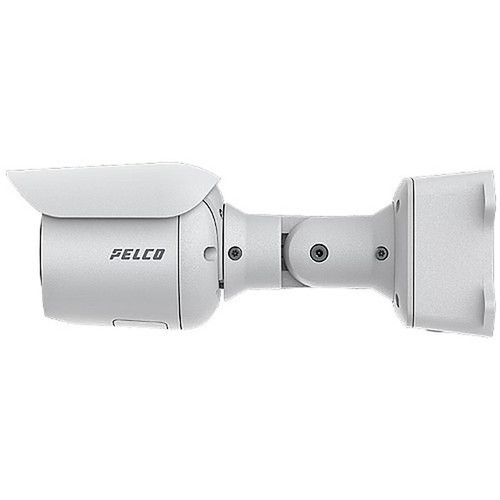
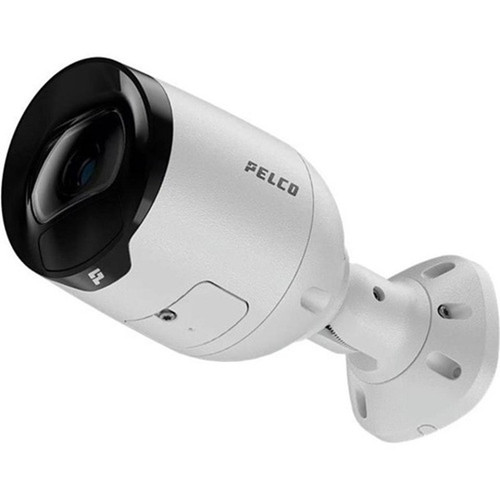
Both the Pelco SRXP4-3V10-EBT-IR (Sarix Pro 4) and the SRXV2-2V13-EBT-IR (Sarix Value 2) are 2MP outdoor bullet cameras with IR illumination, PoE power, and IK09-rated housings — a configuration commonly cross-shopped for perimeter and general-surveillance deployments. The comparison focuses on where the two models diverge: frame rate, WDR depth, lens flexibility, edge analytics capability, ONVIF profile breadth, and onboard memory — all factors that affect site design, VMS compatibility, and total installed cost.
In This Guide
How do the imaging specs compare?
Both cameras share a 1/2.8-inch progressive-scan CMOS sensor and a 1920×1080 maximum resolution, so pixel density is identical. The Sarix Pro 4 (SRXP4-3V10-EBT-IR) delivers up to 60 fps versus 30 fps on the Sarix Value 2 (SRXV2-2V13-EBT-IR) — a meaningful difference for capturing fast-moving subjects or reducing motion blur in forensic review. Wide dynamic range is 130 dB SureVision on the Pro 4 against 120 dB on the Value 2, giving the Pro 4 a 10 dB advantage in scenes with simultaneous bright and shadowed zones. Low-light color sensitivity is 0.01 lux on the Pro 4 versus 0.02 lux on the Value 2; both reach 0 lux in IR mode.
Lens configuration differs substantially. The Pro 4 uses a 4.4–9.3 mm motorized varifocal lens covering a 32–109° horizontal field of view, allowing remote zoom and focus adjustment without a technician at the camera. The Value 2 is specified with a 13 mm fixed focal length in the product title and marketing copy, though the _Lens_Focal_Length field lists 'Varifocal 2.7–13.5 mm' with remote zoom and autofocus noted — the fixed-13mm descriptor in the SKU name and tagline should be verified against the physical unit before installation. Both use an F1.4 aperture and 850 nm IR with an IR cut filter for day/night switching.
What about installation and environment?
Both cameras carry an IP66 ingress-protection rating and an IK09 vandal-impact rating, placing them on equal footing for outdoor enclosure integrity and resistance to deliberate tampering. Both are PoE Class 3, compatible with 802.3af switches. The operating temperature range is where they diverge: the Value 2 is rated from -40°C to +60°C, a wide envelope suited to extreme-climate deployments. The Pro 4's specified storage temperature range is -10°C to +70°C; a dedicated operating temperature range is not explicitly stated in the provided specs — installers working in sub-zero environments should verify the Pro 4's rated operating minimum with Pelco before specifying it.
Mounting options listed for the Pro 4 include wall, ceiling, and pendant. The Value 2 adds pole and corner mounts to that list. Both ship in a white housing. The Value 2 carries an NDAA Section 889 compliance approval listed in its specs; no such compliance designation appears in the Pro 4 spec data provided — federal or government-adjacent projects should confirm NDAA status with Pelco for the Pro 4.
Which fits your VMS and analytics better?
ONVIF profile support is broader on the Pro 4: it is listed as compliant with Profile S, Profile T, Profile G, and Profile M. The Value 2 is listed as compliant with Profile S and Profile T only. Profile G (on-camera recording and retrieval) and Profile M (metadata and analytics) are relevant for VMS platforms that rely on standardized event metadata or edge-recording integration — the Pro 4's broader profile set reduces integration risk in those environments.
Edge analytics are present only on the Pro 4, which includes Smart Analytics covering person and vehicle detection, directional violation, loitering, beam crossing, crowd detection, and tamper alert. No analytics capability is listed in the Value 2 spec data. Both cameras support microSD on-board storage and HTTPS encryption. The Pro 4 is specified with 1 GB RAM and 512 MB Flash; the Value 2 carries 512 MB RAM and 256 MB Flash — the Pro 4's larger memory footprint supports its analytics workload. Audio microphone support is noted for the Pro 4; no audio capability is listed for the Value 2. Both support H.264 and H.265; the Value 2 adds Motion JPEG while the Pro 4 lists Smart Compression (Pelco's proprietary bitrate management).
Which should you choose: the SRXP4-3V10-EBT-IR or the SRXV2-2V13-EBT-IR?
Our take: The SRXP4-3V10-EBT-IR is the stronger choice when the deployment demands edge analytics, higher frame rates, or broader ONVIF integration. Concretely: the Pro 4 delivers 60 fps versus 30 fps on the Value 2 — critical for fast-moving targets; its WDR is 130 dB versus 120 dB, providing a measurable advantage in high-contrast lighting; and it supports ONVIF Profile G and Profile M in addition to S and T, reducing integration effort with VMS platforms that consume analytics metadata or standardized on-camera recordings. The Pro 4 also includes onboard Smart Analytics (person, vehicle, loitering, crowd, tamper) where the Value 2 lists none. The SRXV2-2V13-EBT-IR is the pragmatic choice for straightforward fixed-focal perimeter monitoring in extreme-cold environments (rated to -40°C, with the Pro 4's low-end operating temperature unconfirmed in the provided specs) or where NDAA Section 889 compliance is required — a designation confirmed for the Value 2 but not documented in the Pro 4 spec data provided.
Side-by-Side Comparison
Spec-for-spec, from manufacturer data.
| Specification | Pelco SRXP4-3V10-EBT-IR | Pelco SRXV2-2V13-EBT-IR |
|---|---|---|
| Series | Sarix Professional 4 | Sarix Value 2 |
| Resolution | 2MP (1920×1080) | 2MP (1920×1080) |
| Image Sensor | 1/2.8" Progressive Scan CMOS | 1/2.8" Progressive Scan CMOS |
| Max Frame Rate | 60 fps | 30 fps |
| Lens / Focal Length | 4.4–9.3 mm motorized varifocal | 13 mm fixed (SKU); 2.7–13.5 mm varifocal per spec field — verify |
| Horizontal FOV | 32–109° | Not specified |
| Aperture | F1.4 | F1.4 |
| Min Illumination (Color / IR) | 0.01 lux / 0 lux | 0.02 lux / 0 lux |
| IR Wavelength | 850 nm | 850 nm |
| Wide Dynamic Range | 130 dB SureVision | 120 dB |
| Video Compression | H.265; H.264; Smart Compression | H.265; H.264; Motion JPEG |
| ONVIF Profiles | S, T, G, M | S, T |
| Edge Analytics | Person/Vehicle, Directional, Loitering, Beam Crossing, Crowd, Tamper | — |
| IP Rating | IP66 | IP66 |
| IK / Impact Rating | IK09 | IK09 |
| Operating Temperature | Not explicitly stated in provided specs | -40°C to +60°C |
| Power / PoE Class | PoE 802.3af / Class 3 | PoE 802.3af / Class 3 |
| Onboard Memory | 1 GB RAM, 512 MB Flash | 512 MB RAM, 256 MB Flash |
| Edge Storage | microSD | microSD |
| Audio | Microphone supported | — |
| Mount Types | Wall; Ceiling; Pendant | Wall; Ceiling; Pole; Pendant; Corner |
| NDAA Section 889 | Not listed in provided specs | Compliant |
| Warranty | 5-year | 5-year |
Frequently Asked Questions
Which should you choose: the SRXP4-3V10-EBT-IR or the SRXV2-2V13-EBT-IR?
The SRXP4-3V10-EBT-IR is the stronger choice when the deployment demands edge analytics, higher frame rates, or broader ONVIF integration. Concretely: the Pro 4 delivers 60 fps versus 30 fps on the Value 2 — critical for fast-moving targets; its WDR is 130 dB versus 120 dB, providing a measurable advantage in high-contrast lighting; and it supports ONVIF Profile G and Profile M in addition to S and T, reducing integration effort with VMS platforms that consume analytics metadata or standardized on-camera recordings. The Pro 4 also includes onboard Smart Analytics (person, vehicle, loitering, crowd, tamper) where the Value 2 lists none. The SRXV2-2V13-EBT-IR is the pragmatic choice for straightforward fixed-focal perimeter monitoring in extreme-cold environments (rated to -40°C, with the Pro 4's low-end operating temperature unconfirmed in the provided specs) or where NDAA Section 889 compliance is required — a designation confirmed for the Value 2 but not documented in the Pro 4 spec data provided.
Is the SRXP4-3V10-EBT-IR or SRXV2-2V13-EBT-IR better for low-light performance?
Both cameras reach 0 lux in IR mode using 850 nm illumination. In color/day mode, the Pro 4 (SRXP4-3V10-EBT-IR) specifies a minimum illumination of 0.01 lux versus 0.02 lux on the Value 2 (SRXV2-2V13-EBT-IR), so the Pro 4 has a slight edge in marginal-light color imaging. The WDR advantage (130 dB vs 120 dB) also favors the Pro 4 in mixed high-contrast scenes such as entrances with direct sunlight and deep shadows.
Can either camera run video analytics without a server?
Only the SRXP4-3V10-EBT-IR (Sarix Pro 4) includes documented edge analytics: person and vehicle detection, directional violation, loitering, beam crossing, crowd detection, and tamper alert — all processed on the camera. The SRXV2-2V13-EBT-IR (Sarix Value 2) does not list any edge analytics capability in the provided specifications; analytics would need to be performed by the connected VMS or a separate analytics server.
Which camera is better suited for government or federally funded projects requiring NDAA compliance?
The SRXV2-2V13-EBT-IR (Sarix Value 2) explicitly lists NDAA Section 889 compliance in its specifications. NDAA Section 889 compliance is not listed in the SRXP4-3V10-EBT-IR (Sarix Pro 4) spec data provided. Buyers with federal procurement requirements should verify the Pro 4's NDAA status directly with Pelco before specifying it on government projects.
Get a Second Opinion on Your Camera Choice
Share your site layout, coverage goals, and budget. Our team will validate the camera selection, flag anything we would change, and recommend products that match the use case.