
Pelco SRXP4-2V10-EMD vs Pelco SRXV2-2F3-EWD-IR: Specification Comparison
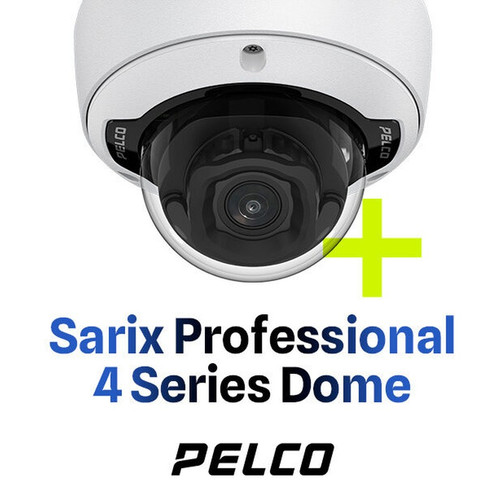
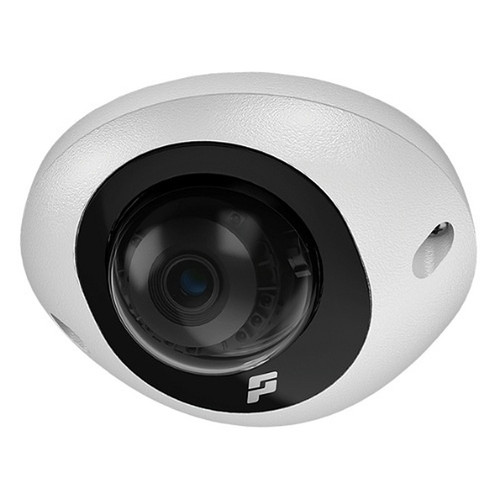
Both the Pelco SRXP4-2V10-EMD (Sarix Pro 4) and the SRXV2-2F3-EWD-IR (Sarix Value 2) are 2MP outdoor IP dome cameras sharing the same 1/2.8-inch progressive-scan CMOS sensor format, IK09 vandal rating, and PoE Class 3 power. A buyer choosing between them is trading the Pro 4's motorized varifocal optics, higher frame rate, superior WDR, and edge analytics suite against the Value 2's integrated IR illumination, Motion JPEG codec support, M12 connector, and lower entry cost implied by the value-series positioning.
In This Guide
How do the imaging specs compare?
Both cameras resolve 1920×1080 at the same 1/2.8-inch CMOS sensor size and share an F1.4 aperture, so the raw photon-gathering geometry is identical. The divergence begins at frame rate: the SRXP4-2V10-EMD is rated at 60 fps versus the SRXV2-2F3-EWD-IR's 30 fps—a meaningful difference for capturing fast-moving subjects such as vehicles at entry lanes. WDR also separates the two: the Pro 4 delivers 130 dB SureVision while the Value 2 offers 120 dB, a 10 dB advantage that translates to noticeably better handling of high-contrast scenes like backlit lobby doors.
Low-light performance diverges in kind rather than just degree. The SRXP4-2V10-EMD achieves 0.01 lux color / 0.003 lux B/W with no onboard IR illuminator, relying on scene lighting or a separate illuminator. The SRXV2-2F3-EWD-IR reaches 0 lux monochrome via integrated 850 nm IR, providing self-contained darkness operation without auxiliary lighting infrastructure. Lens flexibility also differs substantially: the Pro 4 carries a 4.4–9.3 mm motorized varifocal covering 32–109° HFOV for remote focus and zoom adjustment after mounting, whereas the Value 2 uses a fixed 2.8 mm lens—convenient for commissioning but non-adjustable once installed.
What about installation and environment?
Ingress protection is a critical differentiator: the SRXP4-2V10-EMD is rated IP66 (dust-tight, powerful water jet resistant), making it suitable for exposed outdoor locations subject to rain wash-down or pressure cleaning. The SRXV2-2F3-EWD-IR is rated only IP42 (protected against 1 mm solid objects and water dripping at an angle up to 15°), which limits it to sheltered or semi-outdoor installations despite its 'outdoor' marketing label. Both carry IK09 vandal resistance. Operating temperature also favors the Value 2 in extreme cold: its storage spec extends to -40°C, and its operating range of 0°C to +50°C is noted; the Pro 4's spec sheet lists a storage temperature range of -10°C to +70°C without a separate explicit operating-temperature spec being provided in the supplied data.
Both cameras are powered by PoE Class 3 (802.3af) and require a single Ethernet run, simplifying cabling. The Value 2 uses an M12 D-coded 4-pin female connector (with an M12-to-RJ45 adapter included), which provides a locking, vibration-resistant interface suited to mobile or high-vibration environments. The Pro 4 uses a standard RJ45 interface per the supplied spec data. Mount types differ slightly: the Pro 4 supports wall, ceiling, and pendant mounting; the Value 2 supports wall, pendant, and rack. The Pro 4 weighs 0.81 kg (camera body) while the Value 2 is 409 g, and the Value 2's footprint is specified as 111.5 mm × 111 mm × 57.6 mm; equivalent dimensions for the Pro 4 are not cleanly stated in the supplied spec data.
Which fits your VMS and analytics better?
ONVIF compliance is broader on the SRXP4-2V10-EMD, which supports Profile S, Profile T, Profile G, and Profile M. Profile G adds server-side recording management and on-board edge storage interoperability, while Profile M covers metadata and analytics event streams—relevant for any VMS that consumes smart-analytics events. The SRXV2-2F3-EWD-IR is certified for Profile S and Profile T only, which covers basic video streaming and H.265/H.264 transport but does not extend to analytics metadata exchange via ONVIF. Both support HTTPS encryption and microSD edge storage.
Edge analytics is a Pro 4 exclusive per the supplied specifications: Person/Vehicle Detection, Directional Violation, Loitering, Beam Crossing, Crowd Detection, and Tamper Alert run on-camera, reducing VMS server load and enabling standalone alerting. The Value 2's supplied spec data lists 'Analytics: Specifications' without enumerating any specific on-camera analytics. Audio input (microphone supported) is specified for the Pro 4; the Value 2's spec data does not mention audio capability. Video compression on the Value 2 adds Motion JPEG alongside H.265/H.264, which can aid forensic single-frame extraction workflows that rely on MJPEG streams, whereas the Pro 4 offers H.264, H.265, and Smart Compression (a bandwidth-reduction codec) but no MJPEG per supplied data. The Value 2 is noted as NDAA Section 889 compliant; this compliance status is not stated in the Pro 4's supplied spec data.
Which should you choose: the SRXP4-2V10-EMD or the SRXV2-2F3-EWD-IR?
Our take: The SRXP4-2V10-EMD is the stronger choice when the deployment demands flexible optics, high-frame-rate capture, or on-camera analytics in a fully exposed outdoor environment. Its 4.4–9.3 mm motorized varifocal versus the Value 2's fixed 2.8 mm lens allows post-installation focus trimming without a technician climbing a ladder; its 60 fps versus 30 fps supports reliable vehicle-plate and fast-motion capture; and its 130 dB SureVision WDR versus 120 dB handles ten additional decibels of contrast range in backlit scenes. ONVIF Profile G and M support further extends VMS compatibility for analytics-driven deployments. Conversely, the SRXV2-2F3-EWD-IR is the correct choice where integrated IR illumination is required for zero-lux operation, where an M12 locking connector suits a vibration-prone or mobile install, where NDAA Section 889 compliance is a procurement requirement, or where the IP42-rated sheltered location does not demand IP66-level water resistance.
Side-by-Side Comparison
Spec-for-spec, from manufacturer data.
| Specification | Pelco SRXP4-2V10-EMD | Pelco SRXV2-2F3-EWD-IR |
|---|---|---|
| Series | Sarix Pro 4 | Sarix Value 2 |
| Resolution | 2MP (1920×1080) | 2MP (1920×1080) |
| Image Sensor | 1/2.8" progressive scan CMOS | 1/2.8" progressive scan CMOS |
| Aperture | F1.4 | F1.4 |
| Lens / Focal Length | 4.4–9.3 mm motorized varifocal | 2.8 mm fixed |
| HFOV | 32–109° | — |
| Max Frame Rate | 60 fps | 30 fps |
| Min Illumination | 0.01 lux color / 0.003 lux B/W | 0.02 lux color / 0 lux IR |
| IR Illumination | None (no onboard IR) | 850 nm integrated IR; 0 lux monochrome |
| WDR | 130 dB SureVision | 120 dB |
| Video Compression | H.265; H.264; Smart Compression | H.265; H.264; Motion JPEG |
| IP Rating | IP66 | IP42 |
| IK / Impact Rating | IK09 | IK09 |
| Operating Temperature | — | 0°C to +50°C |
| Power Input / PoE Class | PoE 802.3af / Class 3 | PoE 802.3af / Class 3 |
| Network Connector | RJ45 (Ethernet) | M12 D-coded 4-pin female (M12-to-RJ45 adapter included) |
| ONVIF Profiles | Profile S; T; G; M | Profile S; T |
| Edge Analytics | Person/Vehicle Detection, Directional Violation, Loitering, Beam Crossing, Crowd Detection, Tamper Alert | Not specified in supplied data |
| Audio | Microphone supported | — |
| Edge Storage | microSD | microSD |
| HTTPS Encryption | Yes | Yes |
| NDAA Section 889 | — | Compliant |
| Weight | 0.81 kg | 409 g |
| Dimensions (L×W×H) | — | 111.5 mm × 111 mm × 57.6 mm |
| Warranty | 5-year | 5-year |
Frequently Asked Questions
Which should you choose: the SRXP4-2V10-EMD or the SRXV2-2F3-EWD-IR?
The SRXP4-2V10-EMD is the stronger choice when the deployment demands flexible optics, high-frame-rate capture, or on-camera analytics in a fully exposed outdoor environment. Its 4.4–9.3 mm motorized varifocal versus the Value 2's fixed 2.8 mm lens allows post-installation focus trimming without a technician climbing a ladder; its 60 fps versus 30 fps supports reliable vehicle-plate and fast-motion capture; and its 130 dB SureVision WDR versus 120 dB handles ten additional decibels of contrast range in backlit scenes. ONVIF Profile G and M support further extends VMS compatibility for analytics-driven deployments. Conversely, the SRXV2-2F3-EWD-IR is the correct choice where integrated IR illumination is required for zero-lux operation, where an M12 locking connector suits a vibration-prone or mobile install, where NDAA Section 889 compliance is a procurement requirement, or where the IP42-rated sheltered location does not demand IP66-level water resistance.
Is the SRXP4-2V10-EMD or SRXV2-2F3-EWD-IR better for low-light and night-time use?
It depends on whether you have scene lighting available. The SRXV2-2F3-EWD-IR includes integrated 850 nm IR illumination and reaches 0 lux monochrome, so it operates in complete darkness without any external light source. The SRXP4-2V10-EMD reaches 0.01 lux color / 0.003 lux B/W but has no onboard IR; it requires ambient light or a separately specified IR illuminator to achieve usable images in darkness.
Can either camera be installed in a fully exposed outdoor location subject to rain or wash-down?
Only the SRXP4-2V10-EMD is rated IP66, meaning it is dust-tight and protected against powerful water jets, making it appropriate for exposed outdoor installations including roof soffits, parking structures, and areas subject to pressure washing. The SRXV2-2F3-EWD-IR carries an IP42 rating, which covers only protection against solid objects larger than 1 mm and dripping water at limited angles; it should be installed under a canopy, soffit, or other weather shelter despite its outdoor classification.
Which camera is required if my procurement rules mandate NDAA Section 889 compliance?
The SRXV2-2F3-EWD-IR is explicitly listed as NDAA Section 889 compliant in its supplied specifications. NDAA Section 889 compliance is not stated in the supplied spec data for the SRXP4-2V10-EMD; buyers subject to federal or state NDAA procurement requirements should verify that status directly with Pelco before specifying the Pro 4.
Get a Second Opinion on Your Camera Choice
Share your site layout, coverage goals, and budget. Our team will validate the camera selection, flag anything we would change, and recommend products that match the use case.