
Pelco SRXP4-2V10-EMD-IR vs Pelco SRXV2-2F3-EWD-IR: Specification Comparison
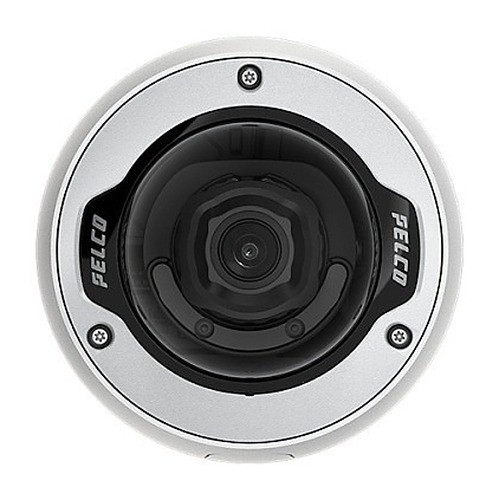
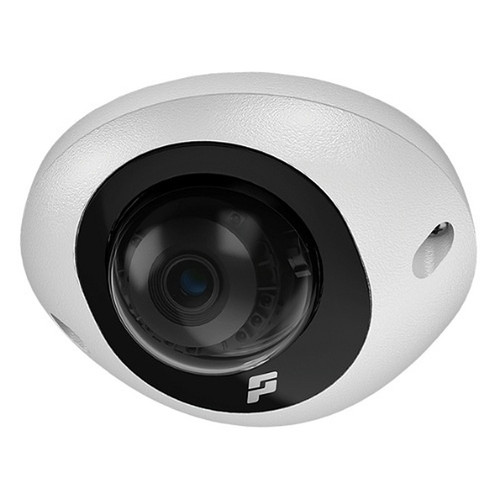
Both the Pelco SRXP4-2V10-EMD-IR and SRXV2-2F3-EWD-IR are 2MP (1920×1080) outdoor IP dome cameras with integrated 850nm IR, PoE Class 3 power, IK09 vandal resistance, and a shared 1/2.8-inch progressive-scan CMOS sensor. They occupy the same resolution class and form factor, making them a legitimate cross-shop decision. The SRXP4-2V10-EMD-IR belongs to Pelco's Sarix Professional 4 series while the SRXV2-2F3-EWD-IR is from the entry-tier Sarix Value 2 series—a positioning difference that surfaces in lens flexibility, frame rate, WDR depth, analytics, and environmental ratings.
In This Guide
How do the imaging specs compare?
Both cameras share a 1/2.8-inch progressive-scan CMOS sensor producing 1920×1080 output, but their lenses diverge significantly. The SRXP4-2V10-EMD-IR carries a motorized varifocal lens with a 4.4–9.3 mm focal range (32–109° HFOV) and an F1.4 aperture, allowing operators to adjust framing remotely without repositioning the camera. The SRXV2-2F3-EWD-IR uses a fixed 2.8 mm lens (F1.4 aperture), which locks the field of view at installation and cannot be adjusted after mounting. The Professional 4 also supports up to 60 fps, doubling the Value 2's 30 fps ceiling—relevant for capturing fast motion without blur.
Wide dynamic range performance also diverges: the SRXP4-2V10-EMD-IR specifies 130 dB via Pelco's SureVision technology, versus 120 dB on the SRXV2-2F3-EWD-IR. Both cameras claim 0 Lux IR (monochrome) minimum illumination, but the SRXP4-2V10-EMD-IR adds a 0.01 Lux color threshold versus 0.02 Lux color on the Value 2—a modest but measurable advantage in near-dark color imaging. The SRXV2-2F3-EWD-IR adds Motion JPEG as a third compression codec; both support H.264 and H.265. The Professional 4 uses Pelco Smart Compression; the Value 2 uses Smart Codec with Dynamic GOP.
What about installation and environment?
The ingress protection ratings represent a critical divergence. The SRXP4-2V10-EMD-IR carries an IP66 rating (dust-tight, protected against powerful water jets), making it suitable for exposed outdoor installations including rooftops, building perimeters, and locations subject to direct rain or wash-down. The SRXV2-2F3-EWD-IR is rated IP42—protected against solid objects greater than 1mm and dripping water at up to 15° tilt—which is a significantly lower environmental tolerance and typically limits deployment to sheltered or semi-outdoor locations. Both cameras share IK09 vandal impact resistance.
Operating temperature ranges also differ materially. The SRXV2-2F3-EWD-IR specifies 0°C to +50°C (32°F to 122°F), while storage temperature data provided for it extends to -40°C to +60°C. The SRXP4-2V10-EMD-IR lists storage temperature of -10°C to +70°C; no separate operating temperature range is stated in the provided specs for Product A—buyers should verify this against the datasheet. Both cameras are powered by PoE Class 3 (802.3af) over Ethernet. The Value 2 uses an M12 D-coded 4-pin connector with an included M12-to-RJ45 adapter, adding a connector-compatibility consideration in standard RJ45 deployments. Mounting options for both include wall and pendant; the Professional 4 adds ceiling mount and the Value 2 adds rack mount per the provided specs.
Which fits your VMS and analytics better?
ONVIF compliance is broader on the SRXP4-2V10-EMD-IR, which supports Profile S, Profile T, Profile G, and Profile M. Profile G adds on-camera recording and retrieval standards, and Profile M adds metadata and analytics event support—both relevant for VMS platforms leveraging ONVIF-native edge storage or analytics pipelines. The SRXV2-2F3-EWD-IR supports only Profile S and Profile T, which covers live streaming and PTZ/configuration but omits the G and M profiles.
Edge analytics is a major differentiator. The SRXP4-2V10-EMD-IR includes named Smart Analytics: Person Detection, Vehicle Detection, Directional Violation, Loitering, Beam Crossing, Crowd Detection, and Tamper Alert—all specified in the provided data. The SRXV2-2F3-EWD-IR lists 'Analytics: Specifications' without enumerating any analytics capabilities in the provided specs, so no edge analytics can be confirmed for that model. Both cameras support microSD on-board storage and HTTPS encryption. Audio microphone support is specified for the SRXP4-2V10-EMD-IR; the SRXV2-2F3-EWD-IR does not list audio capability in the provided specs. The Professional 4 is equipped with 1 GB RAM and 512 MB Flash; the Value 2 carries 512 MB RAM and 256 MB Flash.
Which should you choose: the SRXP4-2V10-EMD-IR or the SRXV2-2F3-EWD-IR?
Our take: The SRXP4-2V10-EMD-IR is the stronger choice when the installation demands flexible framing, true outdoor exposure tolerance, or on-camera analytics. Three concrete spec deltas drive this: (1) IP66 vs IP42—the Professional 4 withstands direct water jets while the Value 2 tolerates only drip conditions, disqualifying the Value 2 from most fully exposed outdoor locations; (2) 130 dB SureVision WDR vs 120 dB, a 10 dB advantage in high-contrast scenes such as entry points with sunlit backgrounds; (3) a motorized 4.4–9.3 mm varifocal lens vs a fixed 2.8 mm lens, enabling remote framing adjustments and covering a 32–109° HFOV range versus a single locked angle. The SRXV2-2F3-EWD-IR may be appropriate for budget-constrained, sheltered semi-outdoor deployments on VMSs that do not require Profile G/M or edge analytics, and where a fixed wide-angle view is acceptable.
Side-by-Side Comparison
Spec-for-spec, from manufacturer data.
| Specification | Pelco SRXP4-2V10-EMD-IR | Pelco SRXV2-2F3-EWD-IR |
|---|---|---|
| Series | Sarix Professional 4 | Sarix Value 2 |
| Resolution | 2MP (1920×1080) | 2MP (1920×1080) |
| Image Sensor | 1/2.8" Progressive Scan CMOS | 1/2.8" Progressive Scan CMOS |
| Lens / Focal Length | 4.4–9.3 mm Motorized Varifocal | 2.8 mm Fixed |
| HFOV | 32–109° | — |
| Aperture | F1.4 | F1.4 |
| Max Frame Rate | 60 fps | 30 fps |
| WDR | 130 dB SureVision | 120 dB |
| Min Illumination (Color) | 0.01 Lux | 0.02 Lux |
| Min Illumination (IR) | 0 Lux | 0 Lux |
| IR Illumination | 850nm integrated | 850nm integrated |
| Video Compression | H.265; H.264; Smart Compression | H.265; H.264; Motion JPEG |
| IP Rating | IP66 | IP42 |
| IK / Impact Rating | IK09 | IK09 |
| Operating Temperature | Not stated in provided specs | 0°C to +50°C |
| Power / PoE Class | PoE Class 3 (802.3af) | PoE Class 3 (802.3af) |
| ONVIF Profiles | S, T, G, M | S, T |
| Edge Analytics | Person/Vehicle Detection, Directional Violation, Loitering, Beam Crossing, Crowd Detection, Tamper Alert | Not specified in provided specs |
| Audio | Microphone supported | — |
| On-Board Storage | microSD | microSD |
| HTTPS Encryption | Yes | Yes |
| Memory | 1 GB RAM, 512 MB Flash | 512 MB RAM, 256 MB Flash |
| Dimensions | Not reliably stated in provided specs | 111.5 × 111 × 57.6 mm |
| Weight | 0.81 kg (approx.) | 409 g |
| Network Connector | RJ45 (Ethernet) | M12 D-coded 4-pin (M12-to-RJ45 adapter included) |
| NDAA Section 889 Compliant | — | Yes |
| Warranty | 5-year | 5-year |
Frequently Asked Questions
Which should you choose: the SRXP4-2V10-EMD-IR or the SRXV2-2F3-EWD-IR?
The SRXP4-2V10-EMD-IR is the stronger choice when the installation demands flexible framing, true outdoor exposure tolerance, or on-camera analytics. Three concrete spec deltas drive this: (1) IP66 vs IP42—the Professional 4 withstands direct water jets while the Value 2 tolerates only drip conditions, disqualifying the Value 2 from most fully exposed outdoor locations; (2) 130 dB SureVision WDR vs 120 dB, a 10 dB advantage in high-contrast scenes such as entry points with sunlit backgrounds; (3) a motorized 4.4–9.3 mm varifocal lens vs a fixed 2.8 mm lens, enabling remote framing adjustments and covering a 32–109° HFOV range versus a single locked angle. The SRXV2-2F3-EWD-IR may be appropriate for budget-constrained, sheltered semi-outdoor deployments on VMSs that do not require Profile G/M or edge analytics, and where a fixed wide-angle view is acceptable.
Is the SRXP4-2V10-EMD-IR or SRXV2-2F3-EWD-IR better for low-light performance?
Both cameras reach 0 Lux in monochrome IR mode. In near-dark color mode, the SRXP4-2V10-EMD-IR specifies 0.01 Lux versus 0.02 Lux for the SRXV2-2F3-EWD-IR—a modest advantage for the Professional 4 in transitional lighting. The Professional 4 also offers 130 dB WDR versus 120 dB, which benefits scenes with simultaneous bright and dark zones rather than pure low-light conditions.
Can I mount either camera in a fully exposed outdoor location subject to rain?
Only the SRXP4-2V10-EMD-IR (IP66) is rated for direct water jet exposure and is suited for fully exposed outdoor installations. The SRXV2-2F3-EWD-IR carries an IP42 rating, which covers dripping water only and is generally appropriate for sheltered or semi-outdoor locations. Verify site conditions against the rated ingress protection before specifying.
Does either camera support on-camera analytics without a separate server?
Yes—the SRXP4-2V10-EMD-IR specifies on-board Smart Analytics including Person Detection, Vehicle Detection, Directional Violation, Loitering, Beam Crossing, Crowd Detection, and Tamper Alert. The SRXV2-2F3-EWD-IR does not enumerate any edge analytics capabilities in the provided specifications, so on-camera analytics cannot be confirmed for that model.
Get a Second Opinion on Your Camera Choice
Share your site layout, coverage goals, and budget. Our team will validate the camera selection, flag anything we would change, and recommend products that match the use case.